
The culture represents much more than just a simple set of traditions. It is the very foundation of our identity and our place in the world. This article explores this fundamental question that touches every aspect of our existence.
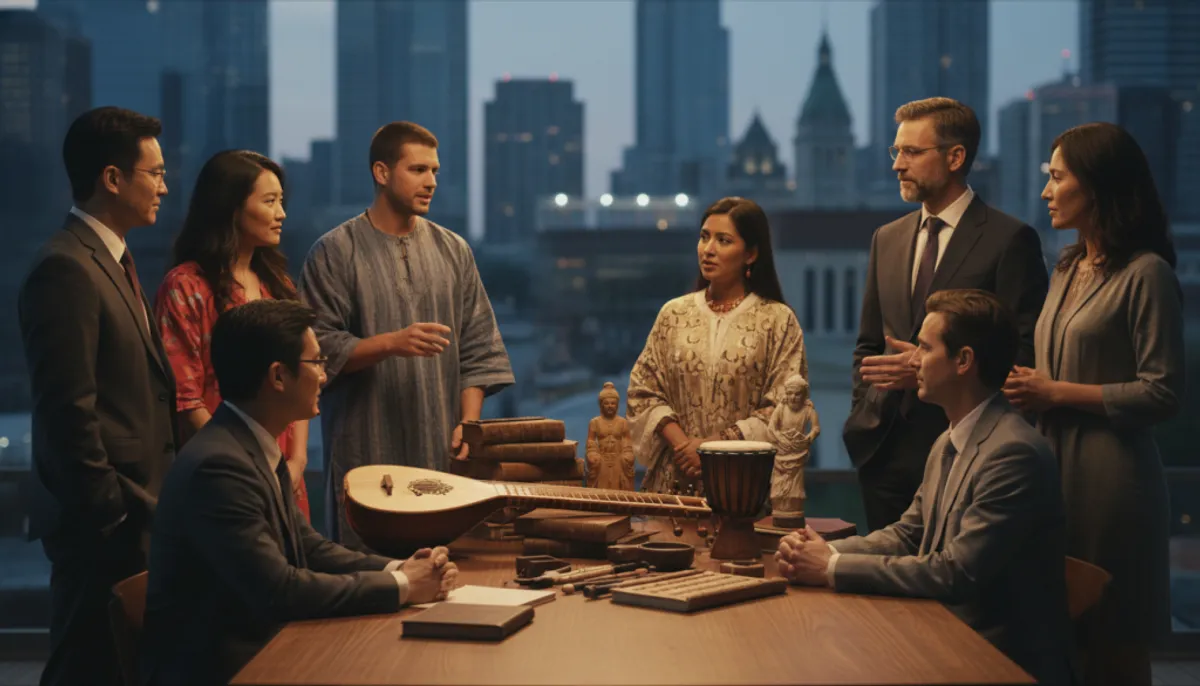
We will see how this essential dimension shapes our worldview. It influences our relationships, our values, and our way of understanding reality. The culture gives a profound meaning to our daily life.
The man cannot be defined without reference to this collective heritage. He actively participates in its creation and transmission. This constant dynamic enriches our shared humanity.
Through a multidimensional approach, we will analyze the different facets of this phenomenon. We will discover its impact on all dimensions of existence. This guide will allow you to fully grasp this fundamental importance.
The culture is both a heritage to preserve and a horizon to build. It unites past and future generations in a continuous dialogue. This exploration will reveal why it remains essential to our flourishing.
Introduction to human culture
Our modern societies inherit a conception of culture that comes directly from ancient Rome. This notion has evolved significantly over the centuries to encompass our current vision.
Definition and origins of culture
The term “culture” finds its origin in the Latin “cultura.” Originally, it referred to the cultivation of the land. Gradually, this concept expanded to include the intellectual development of man.
The culture today represents the whole of the traits that characterize a society. It includes both spiritual and material dimensions. These elements structure our view of the world.
Culture in daily life in France and around the world
In our everyday life, culture is omnipresent. It manifests in our food traditions and social codes. Every daily gesture reflects this shared heritage.
There are no people devoid of culture. This fundamental dimension transcends all human societies. It gives a meaning to our collective existence.
| Cultural Aspect | Traditional Expression | Contemporary Manifestation | Social Impact |
|---|---|---|---|
| Food | Ancestral recipes | Culinary fusion | Identity preservation |
| Language | Local expressions | Digital neologisms | Generational transmission |
| Arts | Classical techniques | Hybrid forms | Creative innovation |
| Values | Established principles | Modern adaptation | Community cohesion |
The culture is constantly evolving over time. It adapts to societal transformations while preserving its essence. This dynamic ensures its longevity throughout history.
Philosophical and historical foundations of culture
Three great figures of Western thought have particularly marked our conception of human foundations. Their reflections illuminate how culture transforms our original nature.
The contributions of Rousseau, Kant, and Aristotle
Rousseau demonstrates that an isolated man without any collective heritage would remain a “stupid and narrow-minded animal.” According to him, standing upright, speech, and thought require an educational social environment.
Kant introduces an original vision where culture is “pathologically extorted.” Our cultural development first emerges from natural needs before becoming a conscious quest.
Aristotle establishes a fundamental distinction. Deprived of instruction, the human being would become a brute. Inscribed in a cultural heritage, he accesses his full humanity.
Natural culture versus acquired culture
The historical example of Victor, the wild child of Aveyron, illustrates this theory. Found in a state of pure nature, he did not master either standing or language.
This distinction reveals that man is not born fully human. He becomes so over the course of his existence through a process of cultural humanization. Our human nature is therefore an acquired nature.
These philosophical foundations give a profound meaning to our unique ability to transform our own nature through cultural heritage. They show how culture truly shapes our humanity.
What is the importance of culture for man
From a young age, we are immersed in a cultural environment that shapes our perception. This early immersion durably influences our way of understanding the world and ourselves.
Influence on education, development, and the meaning of life
Cultural activities allow children to gradually build themselves. They teach how to recognize emotions and verbalize their effect on our psyche.
Education benefits significantly from this dimension. It improves academic success by developing critical thinking. Learning processes gain depth and effectiveness.
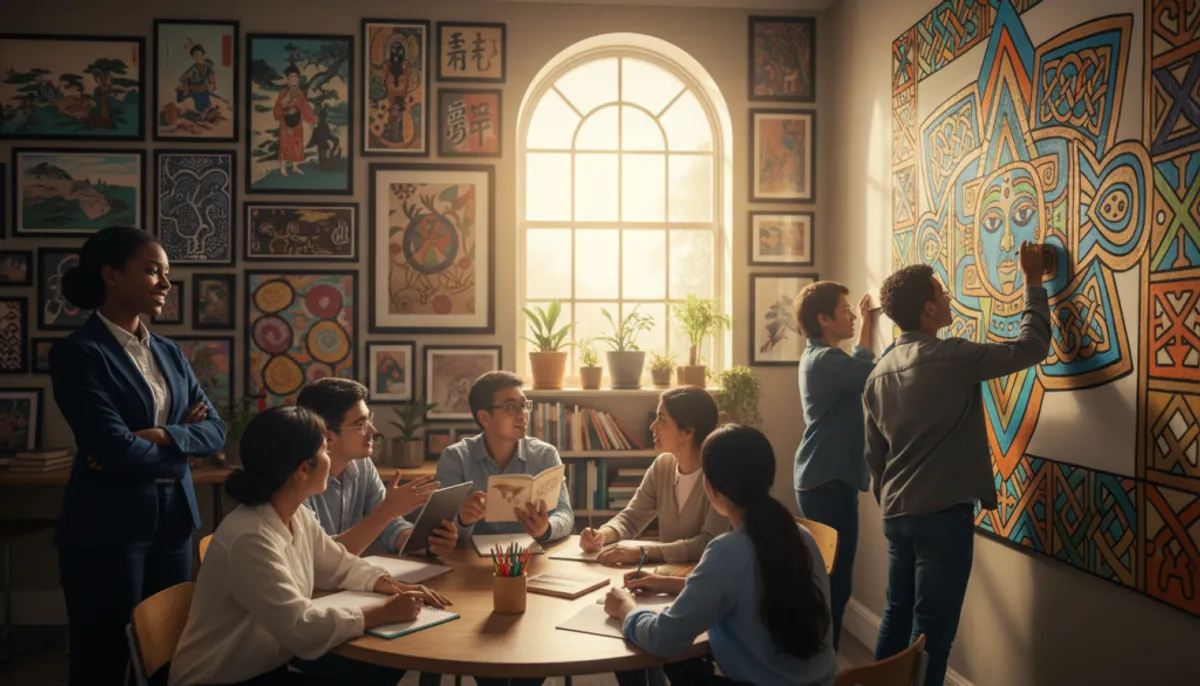
The development of physical and intellectual abilities accelerates thanks to this stimulation. Cultural immersion fosters the natural curiosity of individuals. It opens the mind to new perspectives.
Culture and the construction of individual identity
Our personal identity draws its roots from this collective heritage. Culture helps us understand our place in society. It gives a concrete meaning to our daily existence.
This influence goes beyond our simple biological nature. It transforms our way of interpreting events. Our perception of reality is profoundly modified.
The man thus becomes a fully human being thanks to this heritage. Culture allows him to transcend his original condition. It provides the necessary tools for realizing his unique potential.
Mechanisms of cultural transmission and renewal
Our cultural heritage circulates through multiple channels that connect generations. This dynamic cultural transmission ensures the longevity of knowledge while allowing for its constant evolution.
Role of institutions and artistic practices
Cultural institutions are essential pillars of this transmission. Museums, libraries, and theaters preserve our heritage over time.
Artistic practices offer a living vector for sharing. Artists embody expressions that transcend their commercial value. Their encounter awakens our intellectual curiosity.
Intergenerational transmission and diversity of knowledge
This transmission is not limited to identical reproduction. Each generation reinterprets the received heritage, creating a constant renewal.
The diversity of transmitted knowledge reflects the richness of our heritage. Man can thus rely on the whole of previous acquisitions.
This process enriches his own cultural nature. It avoids starting from scratch while promoting innovation.
The role of cultural activities in contemporary society
Cultural spaces are essential meeting places in our modern society. They allow people to connect with a shared heritage.
This immersion in history and artistic creation enriches collective life. It fosters dialogue between generations.
Museums, monuments, and heritage sites
The discovery of various institutions like museums or castles stimulates curiosity. These visits offer direct contact with works and architecture.
They transform our relationship with time by linking past and present. Each visit becomes a personal and collective adventure.
Impact of Covid and revitalization through cultural tourism
The pandemic abruptly interrupted this dynamic. The number of visitors experienced a historic drop, revealing a strong dependence.
Cultural tourism now appears as a lever for rebirth. It attracts people from around the world eager for discoveries.
| Year | Number of entries (in millions) | Trend | Impact on the sector |
|---|---|---|---|
| 2019 | 63.1 | Stability | Normal activity |
| 2020 | 16.3 | Collapse | Deep crisis |
| 2021 | 20.5 | Tentative recovery | Gradual restart |
This recovery shows the resilience of our attachment to culture. In the coming years, innovation will be crucial.
The man finds in these places a precious anchor. They allow him to understand how his social nature is constructed.
The interaction between ethnic culture and humanistic culture
Exploring cultural duality reveals two essential facets of our humanity. These distinct yet complementary approaches enrich our understanding of the world.
Differentiations and complementarities
Ethnic culture refers to the specific ways of thinking and acting of a community. It reflects the rich diversity of human cultures around the globe.
Each community develops its own values and traditions. This plurality shows that there is not a single culture but a multitude.
Humanistic culture transcends these particularisms. It celebrates humanity in its universality, uniting all human beings.
Overcoming ethnocentrism to promote open-mindedness
Ethnocentrism represents a major obstacle to mutual understanding. It drives some people to judge other cultures as inferior.
As Lévi-Strauss pointed out, “the barbarian is primarily the one who believes in barbarism.” This narrow vision distances us from our own humanity.
To cultivate oneself means to develop one’s open-mindedness and critical sense. This enables man to honor his roots while opening up to the universal.
This dual dimension enriches our human nature. It invites us to recognize the value of each cultural expression.
Culture and social transformation
Social transformation finds in culture a powerful engine of evolution. It shapes our way of thinking and acting collectively.
Development of critical abilities and morality
According to Gusdorf, culture represents “the promotion of humanity in the world and in the man.” This moral elevation goes beyond our simple original nature.
Kant emphasizes that morality consists of fulfilling one’s duty. Becoming capable of this morality requires a profound cultural process.
The human being thus transforms his natural state into autonomous moral capacity. Civilization allows this essential actualization.
The evolution of norms and its impact on social cohesion
Social norms evolve through critical reflections nourished by culture. Individuals thus question the received heritage.
This dynamic fosters social cohesion by creating shared values. Collective action then finds a common meaning.
Culture is therefore not a passive heritage but a living process. Man continually shapes his relationship to human nature and to society.
Concrete strategies to enhance and promote culture
The digital landscape today offers unprecedented opportunities to disseminate our cultural heritage. These modern tools allow for innovative enhancement to a wider audience.
Use of social networks and digital tools
Social networks are becoming essential levers for sharing cultural experiences. Posting your artistic discoveries inspires others to explore the heritage.
These digital practices create a virtuous circle of promotion. Each share contributes to the visibility of artists and places.
Local initiatives and innovative ticketing tools
Platforms like Diptick revolutionize access to cultural activities. Online booking simplifies the organization of visits.
This post-pandemic moment is ideal for rediscovering museums and castles. Digital tools facilitate this cultural renaissance.
The man thus enriches his social nature through these new practices. The encounter with creators becomes more accessible.
Contemporary challenges: cultural diversity and human rights
Our century must meet the challenge of reconciling cultural diversity and universal principles. This fundamental question touches the very essence of our shared humanity.
Challenges of cultural relativism and ethnocentrism
Cultural relativism asserts that no culture is superior to another. Every human being has the right to live according to their traditions.
This position encourages tolerance and respect for differences. It recognizes the richness of multiple cultures around the world.
But a problem arises with certain practices. Can we accept female genital mutilation or stoning in the name of relativism?
Culture as a lever for transformation in a globalized world
Human rights are presented as universal. Yet, they emerge from a specific Western thought.
Can man impose his values on other societies? This question divides contemporary thinkers.
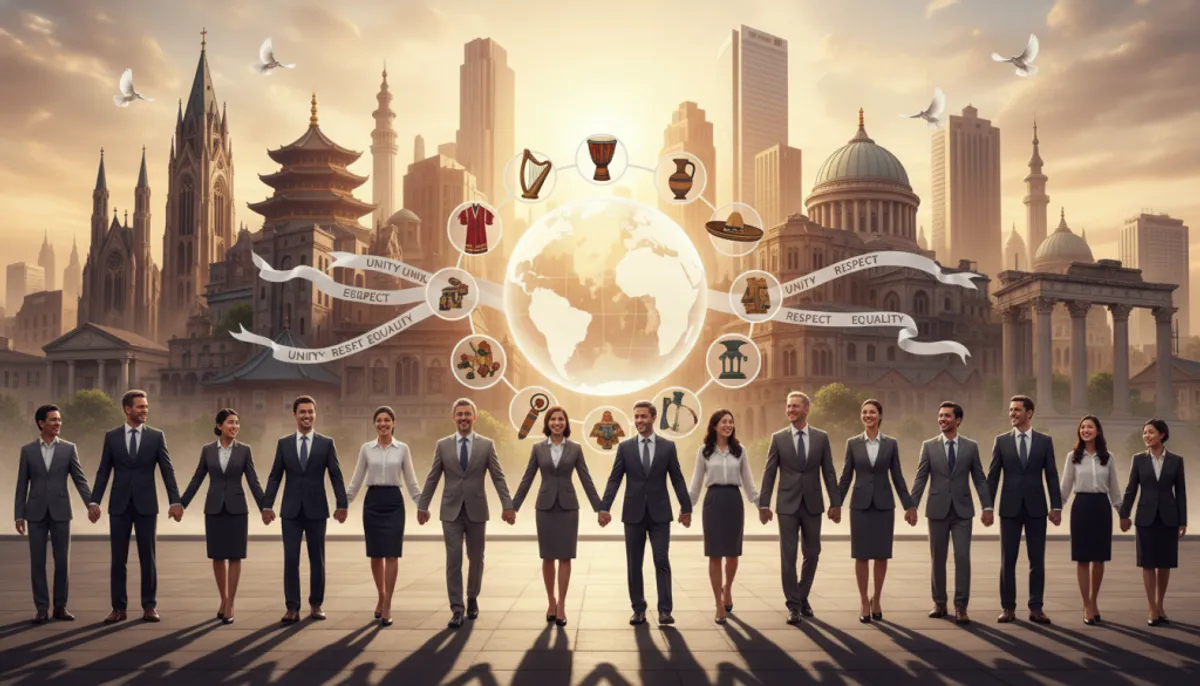
Culture becomes a bridge between particularisms and universality. It allows for a respectful dialogue of diversity, fostering a legitimate culture that embraces both uniqueness and shared values.
Our challenge: to protect the dignity of every human being while honoring cultural differences. This balance defines the humanity of tomorrow.
Conclusion
At the end of this exploration, one truth imposes itself with force. Culture represents much more than an accessory in our life. It is the very foundation of our humanity.
This article has shown how it shapes education and personal development. It gives a profound meaning to our collective existence. Every human being draws their identity from it.
Over time, culture has played an essential role in transmission. It allows society to progress as a whole. Its transformative effect touches every individual.
The modern man must preserve this extraordinary heritage. Future generations deserve to discover this richness. Our human nature flourishes fully thanks to it.
FAQ
Is culture really essential for a person's development?
Absolutely! Culture plays a fundamental role in our development. It shapes our education, helps us give meaning to our lives, and actively participates in building our identity. It is a key element in becoming a fulfilled human being.
How is culture transmitted across generations?
Transmission occurs in several ways! Institutions like schools or museums play a significant role, as do artistic practices and simple family conversations. This transmission of knowledge, language, and values ensures the longevity and richness of our cultural diversity.
What is the impact of cultural activities on our society today?
Their impact is immense, even after the Covid period. Cultural activities, such as visiting a historical monument, revitalize tourism and create social bonds. They allow for shared experiences and strengthen cohesion among individuals within society.
How can culture help combat prejudice?
Culture, when discovered in all its diversity, is an excellent remedy against ethnocentrism. It opens our minds by showing us other ways of living and thinking. This openness fosters respect for human rights and better understanding among individuals.
What can I do concretely to promote and enhance culture?
There are many simple and concrete actions! You can use social networks to share artistic favorites, participate in local initiatives, or use online ticketing tools to discover new events. Every little action counts to keep culture alive.
Does culture evolve over time?
Of course! Culture is not fixed. Norms, practices, and values evolve over the course of history and with changes in the world. This evolution is a sign of a humanity in motion, adapting and constantly inventing new forms of expression for its time.