
Welcome to this comprehensive guide that invites you to discover the fascinating richness of a millennial heritage. This heritage continues to resonate through the ages and across borders.
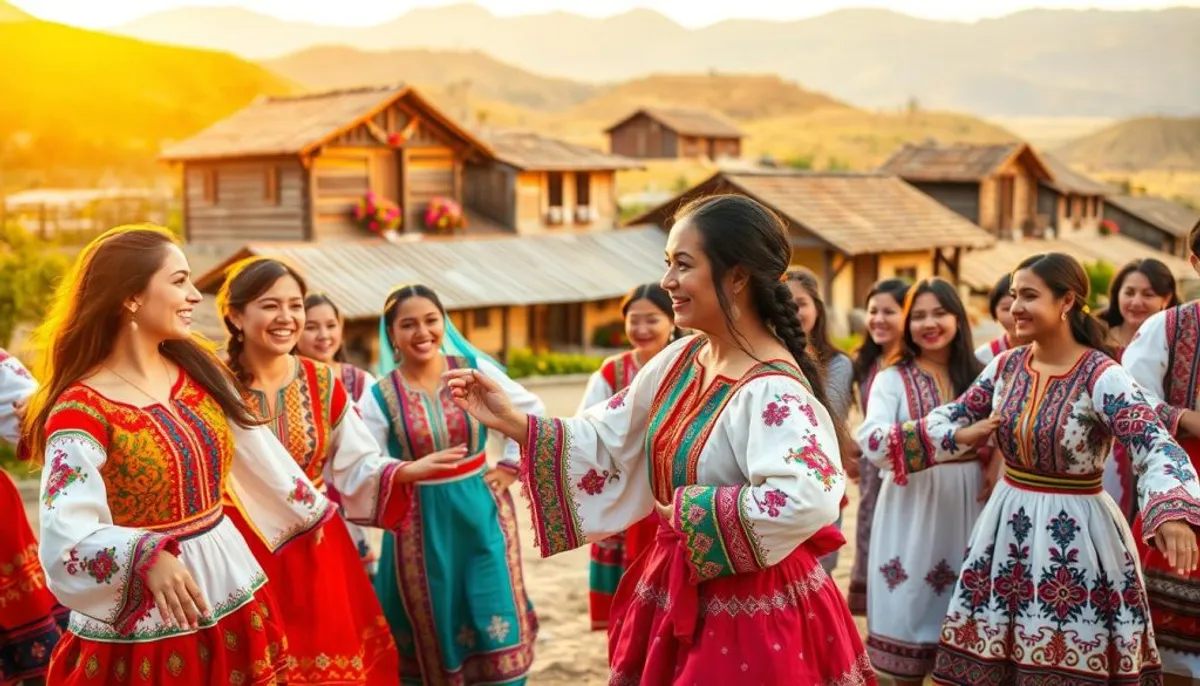
We will explore together the identity of a resilient people. Despite the absence of a unified state, they have managed to preserve their ancestral traditions and unique heritage. The Kurds number between 42 and 48 million people according to the Kurdish Foundation of Paris.
You will discover how this community, primarily spread across four countries, has forged a remarkable bridge between the civilizations of the Middle East. This journey will take us from ancient origins to contemporary challenges.
Prepare to dive into a universe where centuries-old traditions meet modern aspirations. Our exploration will be guided by historical facts and precise demographic data.
Key Points to Remember
- The Kurds are an Iranian people of Indo-European language.
- The population is estimated to be between 42 and 48 million individuals.
- They mainly live in Turkey, Iran, Iraq, and Syria.
- A significant diaspora exists in Europe, particularly in France.
- Their cultural identity has survived without a unified nation-state.
- Their heritage constitutes a bridge between Middle Eastern civilizations.
- Their history dates back to the ancient Medes.
General Introduction
Explore the unique situation of the largest ethnic group without its own state in the contemporary world. The Kurds form a remarkable community scattered across several countries yet united by deep ties.
This population primarily lives in eastern Turkey, northwestern Iran, northern Iraq, and eastern Syria. Estimates vary between 20 and 40 million individuals, with around 35 million being the generally accepted figure.
The term Kurdistan literally means "land of the Kurds." However, this territory does not exist as an internationally recognized state. It rather represents a cultural and historical region.
Despite this geographical dispersion, the Kurds maintain a strong common identity. Their unique situation as a stateless people has influenced their daily reality for over a century.
- Significant presence in four different countries
- Population estimated at several tens of millions
- Important diaspora in Europe, particularly in France
- Preserved identity despite the absence of a unified state
Origins and Etymology of Kurdish Culture
The history of the name "Kurd" takes us through the centuries, revealing an ancient presence at the heart of the Middle East. This etymological exploration sheds light on the foundations of a rich and complex identity.
Ancient Roots and Indian-Iranian Influences
The earliest mentions date back to the Assyrian period with the term "Qardu." This name already referred to a mountainous region in northern Mesopotamia. Sumerian texts also mention "Kar-da" in the Bronze Age.
In the 4th century BC, Xenophon describes the "Carduchians." These tribes fiercely defended their mountainous territories. Their description strangely corresponds to the current Kurdish people.
The Origin of the Term "Kurd" and Its Evolution
A fascinating theory links the ethnonym to the Pahlavi word "kwrt." This term meant "nomads" or "tent dwellers." It reflects the traditional pastoral lifestyle of the Kurds.
In the 16th century, Sharaf Khan Bidlisi documented four main divisions. This classification laid the groundwork for modern understanding. Indian-Iranian influences are undeniable in their culture.
The Kurds belong to the Iranian branch of the Indo-European peoples. Their language shares roots with Persian. This affiliation explains the cultural ties with other Iranian peoples.
The identity of this people has been built by amalgamating various influences. Yet, it has retained a remarkable specificity through the ages.
Ancient History and Heritage of the Medes
In the 7th century BC, a power emerged that would shape the regional destiny for years to come. The Medes founded a remarkable empire, considered the direct ancestor of the current populations.
In 612 BC, this empire achieved a major feat by conquering the powerful Assyria. Its influence then extended over a vast territory covering modern Iran and central Anatolia.
The date of 612 BC holds crucial symbolic importance in the history of the Kurds. For many, it marks the true beginning of their political era on the regional stage.
Long before the Medes, the Halaf culture in the 6th millennium BC bears witness to an organized presence. The Hurrian civilization, between the 23rd century and the 13th century BC, confirms this antiquity.
The history reveals a fascinating continuity with the ancient Lullubis and the kingdom of Corduene, which are part of the broader narrative of ancient civilization. This heritage forms the identity foundation of contemporary Kurds, legitimizing their current claims.
The Impact of the Ottoman Empire and World Wars
The 16th century marked a decisive turning point in the fate of the populations of Kurdistan. The Ottoman Empire then established a unique autonomy system for local principalities.
The Partition of Kurdistan After World War I
The First World War disrupted this centuries-old balance. The Sykes-Picot agreements and the Treaty of Sèvres initially promised an autonomous territory for the Kurds.
These hopes were dashed by the Treaty of Lausanne in 1923. This document ratified the partition of Kurdistan among several countries, creating the current geopolitical situation.
The Influence of Empires on Kurdish Territory
The legacy of this period continues to shape the region today. The borders drawn a century ago remain a source of tensions.
The end of autonomy under the Ottoman Empire marked the beginning of an era of identity denial. This situation pushed the Kurds to develop movements to defend their rights with clarity and conciseness.
The First World War and its consequences completely redefined the political map. This world war had a lasting impact on the organization of the territory and aspirations for a state of their own.
Kurdish Traditions and Customs
Dive into the heart of the living customs that rhythm the daily life of this community. These ancestral practices form a precious heritage passed down through generations.
Rituals and Ancestral Practices
Kurdish culture draws its roots from several ancient civilizations. It harmoniously blends elements of Medes, Hurrians, and Indo-Iranians.
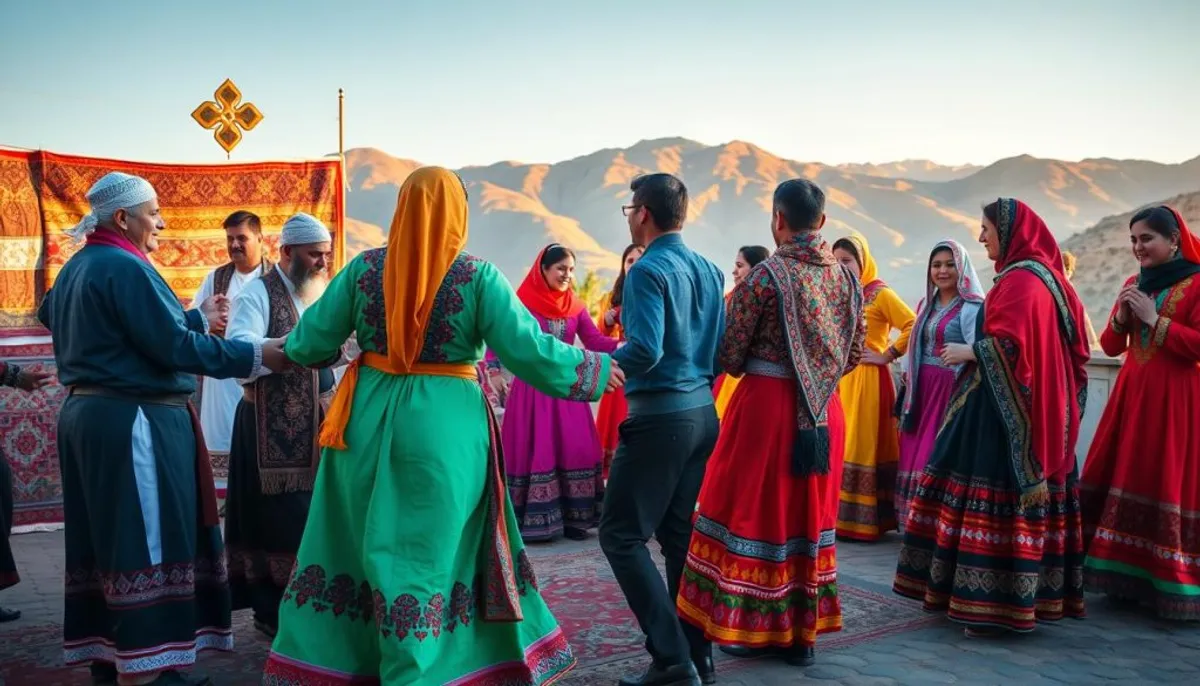
The Kurds have developed rituals adapted to their mountainous environment. Each tradition has both a practical and symbolic function.
Norouz, celebrated on March 21, marks the Persian New Year. This festival symbolizes the renewal of nature and is among the most important events.
| Tradition | Meaning | Historical Origin |
|---|---|---|
| Celebration of Norouz | Spring renewal | Pre-Islamic Zoroastrianism |
| Oral transmission | Identity preservation | Hurrian civilization |
| Agricultural rituals | Climate adaptation | Ancient Medes |
The storytellers and bards known as dengbêj play a central role. They ensure the oral transmission of cultural heritage.
This culture is constantly evolving while retaining its essence. It demonstrates the remarkable resilience of this people.
Rituals, Festivals, and Celebrations
The festive life of the Kurds unfolds like a colorful mosaic of ancestral traditions and shared joy. These moments punctuate the year and strengthen community ties, often inspired by the best advertisements that promote cultural pride and unity.
Norouz, celebrated on March 21, marks the peak of the festive calendar. For several days, families unite around symbolic fires and traditional meals.
This spring festival goes beyond mere seasonal celebration. It embodies hope and identity resistance, particularly in difficult contexts.
Weddings are spectacular events that can last several days. Major Soane, a British officer, noted during World War I the uniqueness of mixed dances.
Each region adds its distinctive touch to the celebrations. This diversity enriches the festive heritage while maintaining a fundamental unity.
| Celebration | Typical Duration | Distinctive Feature |
|---|---|---|
| Norouz | 3-7 days | Ritual fires and spring renewal |
| Traditional wedding | 2-5 days | Mixed collective dances |
| Aïd al-Fitr | 1-3 days | Specific local adaptations |
These festive moments preserve a living tradition that transcends borders, including traditional festivals in togo. They constitute the social cement of this resilient culture.
The transmission of songs and dances during gatherings ensures the sustainability of a precious heritage. Each generation draws strength and inspiration from it.
The Role of Women in Kurdish Culture
Unlike many neighboring societies, Kurdish women play a central role in collective life. This particularity dates back to the harsh living conditions of the mountains of Kurdistan.
Gender Equality in Agricultural and Festive Work
In rural communities, survival required everyone's participation. Agricultural work in a harsh climate necessitated a full workforce. Men and women therefore worked side by side in the fields.
This practical reality has shaped more egalitarian relationships. British observer Major Soane noted this uniqueness in the early 20th century. He observed the participation of Kurds in mixed dances during festivals.
Celebrations could last several days with an unusual mix in the region. This openness contrasted with the practices of other surrounding Muslim peoples.
In recent years, this tradition of relative equality has manifested politically. The creation of Women's Protection Units in 2004 is a striking example. These units now gather thousands of female fighters.
This active participation of Kurds in military and political spheres symbolizes remarkable modernity. It demonstrates the persistence of a unique social heritage despite local variations.
The Kurdish Language and Its Dialects
The linguistic diversity of the Kurdish people offers a fascinating mosaic of sounds and writings. This language is the fundamental cement that unites millions of people across borders.
Belonging to the Iranian branch of Indo-European languages, Kurdish is divided into several main dialects. The two most important are Kurmanji and Sorani, each spoken by millions of speakers.
Comparison Between Kurmanji and Sorani
Kurmanji is the most widely spoken dialect. It is used by the majority of Kurds in the north of Kurdistan, particularly in Turkey and Syria.
This linguistic variant also extends into the northern areas of Iraq and Iran. Its writing primarily uses the Latin alphabet, reflecting the political history of the region.
Sorani dominates in the southern and eastern parts of Kurdistan. Particularly prevalent in Iraqi Kurdistan, it is written in the Arabic alphabet.
| Dialect | Main Region | Alphabet Used |
|---|---|---|
| Kurmanji | North (Turkey, Syria) | Latin |
| Sorani | South (Iraq, Iran) | Arabic |
| Zazaki | North Kurdistan | Latin |
Despite these variations, speakers of different dialects can generally understand each other. This mutual understanding facilitates communication among Kurds from different regions.
The preservation of this rich language remains a major challenge for communities. It represents a living heritage to pass on to future generations.
Kurdish Music and Folklore
The enchanting melody of Kurdistan has resonated for centuries across mountains and plains. This unique musical tradition represents the vibrant soul of a rich heritage.
Popular music is characterized by its monodic style. Instruments and voices sing in unison, creating a distinctive harmony.
Traditional Instruments and Their Role
The dengbêj, these itinerant bards, travel from village to village. They spread the musical heritage with their accompanying instruments.
Geography influences the choice of instruments. Mountain dwellers prefer the dûdûk, a reed flute. Plains inhabitants favor the tenbûr, a six-string lute.
Tales, Legends, and Oral Rituals
Oral folklore constitutes a true encyclopedia of wisdom. Passed down for centuries, it preserves fundamental values.
The cunning fox frequently appears in the tales. It symbolizes the intelligence necessary to survive in a challenging environment.
Storytellers performed before whole audiences. They were particularly appreciated during the long mountain winters.
This living tradition continues today, enriched by modern media. It ensures sustainability for future generations.
Kurdish Artistic and Literary Expression
The Kurdish princely courts were the cradle of an exceptional artistic flowering. The Ottoman period truly represents the golden age of this creation.
In 1596, Prince Chéref Khan completed his monumental "Chérefnameh." This work documents the history of côte d'ivoire and the history of the dynasties over several centuries.
In the 17th century, Ehmedê Khani wrote "Mem-o-Zin." This poet called for unification long before European nationalisms.
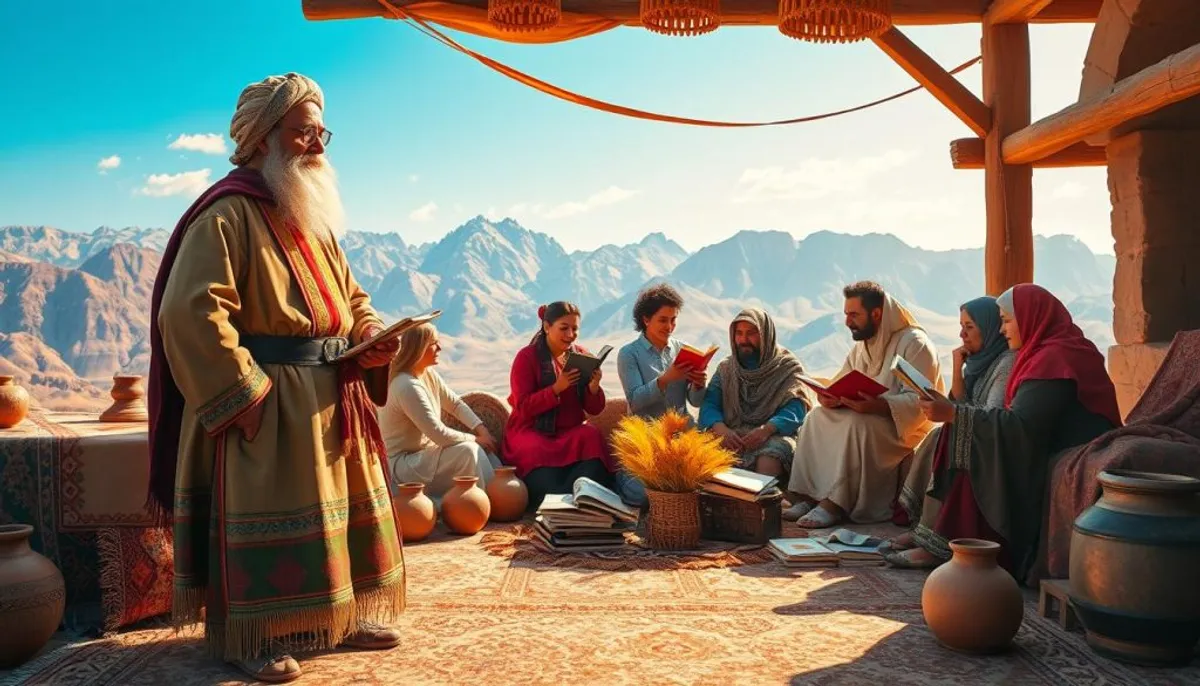
Melayé Djaziri, in the 16th century, celebrated beauty in his poetry. His name remains associated with literary elegance.
| Author | Major Work | Century | Contribution |
|---|---|---|---|
| Chéref Khan | Chérefnameh | 16th | Dynastic history |
| Ehmedê Khani | Mem-o-Zin | 17th | Political manifesto |
| Melayé Djaziri | Mystical poetry | 16th | Lyrical expression |
These classics continue to nourish contemporary creation. The richness of this language inspires new generations.
The literary heritage testifies to remarkable vitality. This tradition continues through the ages.
Religions and Beliefs Among the Kurds
The spiritual landscape of the Kurds reveals an exceptional religious diversity at the heart of the Middle East. This plurality is one of the most fascinating characteristics of their society.
Religious Diversity: Sunni Islam, Yezidism, and Other Confessions
About 80% of the Kurdish population follows Sunni Islam. This majority coexists with several remarkable religious minorities.
Yezidism has nearly 750,000 followers spread across the region. This syncretic religion perpetuates ancient pre-Islamic traditions.
Christian communities represent about 150,000 people in Iraqi Kurdistan. They are divided among Catholics, Assyrians, and Syriacs.
The Jewish community, once numbering 25,000, emigrated to Israel in the years 1949-1950. This diaspora maintains a unique Judeo-Kurdish tradition.
In Iran, two-thirds of the Kurds are Sunni in a predominantly Shiite country. This double ethnic and religious minority explains some persistent tensions.
Alevi and Yarsani beliefs further enrich this complex spiritual landscape. This diversity demonstrates remarkable tolerance in a region often fraught with conflict.
Kurdish Political Organization and Armed Forces
The military structuring of the Kurds reveals a remarkable adaptation to their fragmented geopolitical reality. Each region has developed its own forces according to specific national contexts.
This organizational diversity reflects the resilience of a people faced with complex territorial realities. The different forces mirror the adaptive strategies put in place.
From Peshmergas to Women's Protection Units
In Iraqi Kurdistan, the regional government has the Peshmergas. This professional army, equipped with advanced tools including professional scanners, counts over 350,000 fighters.
In 2015, about 145,000 of them fought against the Islamic State. They received significant international support.
In the north of Syria, the YPG represents the main military force. Their numbers reach 50,000 fighters.
The Women's Protection Units (YPJ) have gained international fame. Their courage in the face of jihadists has become legendary.
| Organization | Region of Action | Estimated Strength | Main Status |
|---|---|---|---|
| Peshmergas | Iraqi Kurdistan | 350,000+ | Regional army |
| YPG | Syria | 50,000 | Self-defense militia |
| PKK | Turkey | 5,000 | Underground organization |
| YPJ | Iraq Syria | 7,000-24,000 | Women's units |
The PKK operates mainly in Turkey with about 5,000 fighters. This organization has been fighting since the 1980s.
In Iran, the PJAK represents the local branch of the resistance. It defends the rights of the Sunni minority against the regime.
This multiplicity of organizations illustrates the complexity of the Kurdish question. Each force responds to specific challenges according to its national context.
National Movement and Quest for Autonomy
The 20th century saw the emergence of a powerful national movement among the Kurds, marked by a persistent quest for autonomy. This aspiration for self-determination has manifested through several historical attempts, including the history of senegal, which provides a broader context of national movements.
Revolts and Aspirations for Independence
From the early 1920s, unfulfilled promises after World War I triggered uprisings. The Republic of Ararat in 1927 and that of Mahabad in 1946 represent key moments.
These ephemeral republics were violently suppressed but demonstrated determination. The Iraqi part of Kurdistan experienced near-independence between 1991 and 2003 under UN protection.
After 2003, Iraqi Kurds obtained federal status in the Constitution. This official recognition marked an important step towards autonomy.
| Event | Date | Outcome | Significance |
|---|---|---|---|
| Republic of Ararat | 1927-1931 | Crushed by Turkey | First attempt at a Kurdish state |
| Republic of Mahabad | 1946 | Dissolved by Iran | Ephemeral governmental experience |
| Iraqi Autonomous Zone | 1991-2003 | Near-independence | Prefiguration of regional government |
| Independence Referendum | 2014 | Cancelled under pressure | Democratic aspiration |
In July 2014, Massoud Barzani announced a referendum for independence. This initiative reflects the persistence of national aspirations despite obstacles.
The quest for autonomy continues to face opposition from neighboring states. Strategies today vary between regional autonomy and complete independence.
Evolution of Kurdish Culture in the Modern World
Digital transformation and recent migrations have profoundly reshaped traditional cultural expressions, including the process of cultural voucher redemption. This evolution marks a major turning point in the preservation of heritage.
In recent years, a significant transition has occurred. Communities have shifted from primarily oral transmission to modern media.
Modernization and Influence of Diasporas
Mass emigration to Western Europe has created active hubs. Germany is home to over one million people from this population, while France has about 300,000.
These communities have established institutions like the Kurdish Institute of Paris. They disseminate heritage through specialized media and associations.
Technology has revolutionized cross-border exchanges. The internet now allows for constant dialogue between different host countries.
New generations navigate between tradition and innovation. This adaptation ensures the vitality of heritage in a globalized world.
Historical displacements, such as those under the Safavid Empire, had already scattered communities. The conflicts of the 1970s intensified this global diaspora.
Today, Kurdish culture thrives both in Kurdistan and in host countries. This duality significantly enriches its contemporary expression.
Territorial Challenges and Aspirations for Independence
The international treaties of the early 20th century sealed the territorial fate of a stateless people. These diplomatic agreements shaped the current geopolitical reality.
The Issues of International Treaties and Borders
The Treaty of Sèvres in 1920 represented a historic opportunity. It provided for an autonomous territory for the Kurds in southeastern Anatolia.
Three years later, the Treaty of Lausanne nullified these promises. It confirmed the partition of Kurdistan among four different countries.
The province of Mosul perfectly illustrates these issues. Rich in oil and predominantly Kurdish, it was assigned to Iraq in 1925.
In light of this situation, the states concerned firmly oppose any independence project. They fear losing a part of their national territory.
This unanimous opposition pushes political movements to adapt their strategies. Cultural autonomy and federalism become priority objectives.
The project of a large unified Kurdistan now seems difficult to achieve. Aspirations must contend with current geopolitical realities.
The Kurdish Diaspora and Its International Dynamism
The Kurdish diaspora today constitutes a dynamic global network that transcends borders. This dispersed population represents a considerable cultural and political force.
According to data from the Kurdish Institute of Paris, Germany hosts the largest community with about one million people. France has 300,000 Kurds, mainly concentrated in the Paris region.
Scandinavian countries have also welcomed significant communities. Sweden has 83,600 people, benefiting from generous asylum policies.
The Kurdish Institute of Paris, founded in 1983, plays a central role in this diaspora. This organization organizes conferences and cultural events.
The main communities of the diaspora:
- Germany: 1 million
- France: 300,000
- Israel: 200,000
- Sweden: 83,600
- United States: 20,591
This diaspora maintains close ties with its region of origin. It sends funds and supports educational projects.
The international network formed by these communities amplifies the Kurdish voice on the global stage. Each host country contributes to this unique dynamic.
Conclusion
The conclusion of this exploration highlights the exceptional resilience of a people united by their heritage. Despite territorial and political challenges, the entirety of traditions and values has been preserved through the centuries.
The current geopolitical framework, marked by division among several countries, has not undermined this fundamental unity. The diaspora plays a crucial role in this preservation, as evidenced by the Kurdish Institute of Paris.
The experience of Iraqi Kurdistan since July 2014 demonstrates that pragmatic solutions exist. The recognition of cultural and political rights remains essential for the future of this region and its people.
This millennial history continues to be written, carried by an identity that transcends borders. The entire community holds hope for a future where its aspirations can be fully expressed.
FAQ
What are the main dialects of the Kurdish language?
The two main dialects are Kurmanji, spoken in the north (notably in Turkey and Syria), and Sorani, used in the south (mainly in Iraq and Iran). Although closely related, they exhibit differences in grammar and vocabulary.
What major event redrew the borders of Kurdistan in the 20th century?
The Treaty of Sèvres in 1920, followed by the Treaty of Lausanne in 1923, divided the region after the collapse of the Ottoman Empire. These agreements split the territory among Turkey, Iraq, Syria, and Iran, without creating an independent state.
Who are the Peshmergas and what is their role?
The Peshmergas are the regional security forces of Iraqi Kurdistan. Their name means "those who face death." They play a crucial role in defending the region and have been key allies in recent conflicts, such as the fight against ISIS.
What is the current political situation of the Kurds?
The situation varies by country. The Kurdistan Region in Iraq enjoys significant autonomy. In Syria, the Kurds administer areas in the northeast. In Turkey and Iran, the quest for cultural and political rights continues against often restrictive central governments.
Where can one learn more about Kurdish history and culture?
The Kurdish Institute of Paris is an excellent resource. It offers a library, organizes cultural events, and publishes research to promote the rich heritage of this people around the world, including azerbaijani art.