
Welcome to this immersion into the fascinating traditions of Costa Rica. This beautiful country in Central America has many surprises beyond its breathtaking landscapes.
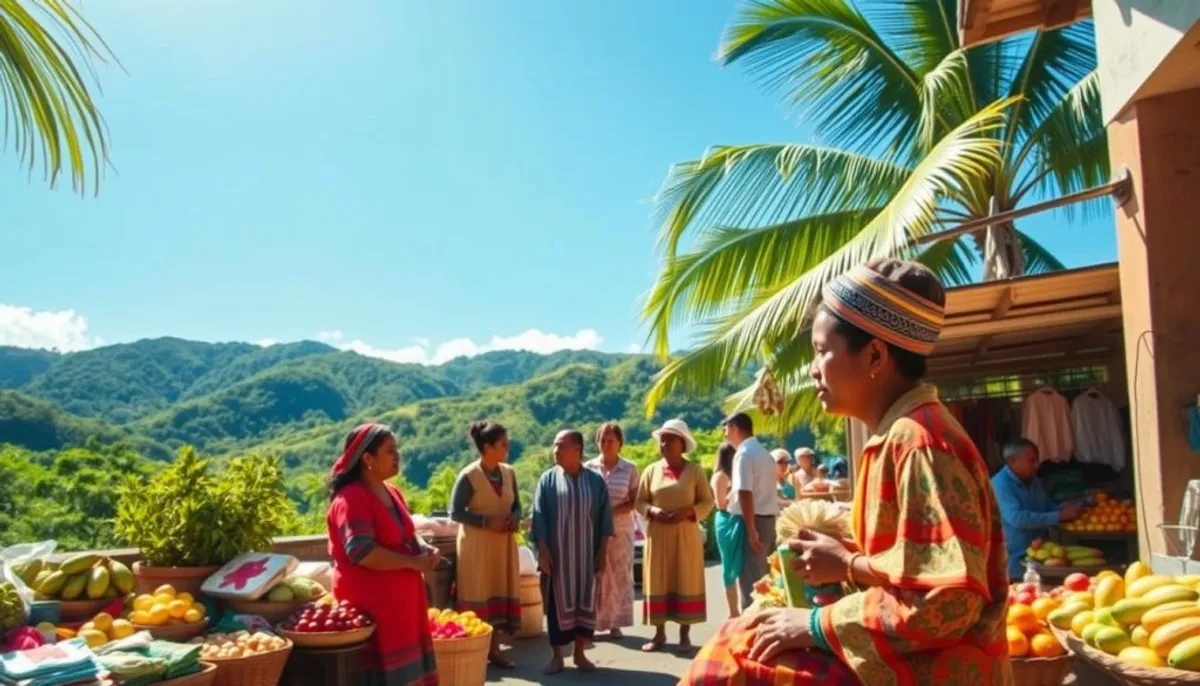
Costa Rica is famous for its incredible biodiversity and preserved ecosystems. But its true wealth also lies in its unique cultural heritage, shaped by centuries of history.
This national identity has been built through a harmonious blend of Spanish, African, and indigenous influences. Each region adds its distinctive touch to this vibrant mosaic.
Discover how ancestral traditions and modernity coexist in this peaceful nation. The philosophy Pura Vida perfectly embodies the optimism and joy of life of its people.
Prepare to explore the delicious gastronomy, lively musical rhythms, and traditional craftsmanship. The province of Limón will especially reveal its unique Afro-Caribbean dimension.
Key Points to Remember
- Costa Rica has a rich and diverse cultural identity
- Its heritage combines Spanish, African, and indigenous influences
- The philosophy “Pura Vida” reflects the optimism of the inhabitants
- Each region offers unique traditions and specialties
- The province of Limón has a strong Afro-Caribbean influence
- Celebrations and craftsmanship are important cultural aspects
- The country maintains a balance between traditions and modernity
Introduction to the Cultural Wealth of Costa Rica
Discover how this small Central American country has developed a harmonious society. Its unique heritage consists of multiple ethnic influences that create a fascinating national identity, including the emerging scene of contemporary art in croatia.
Context and General Overview
With approximately 4.2 million inhabitants, Costa Rica presents remarkable diversity. Its population is divided among several main ethnic groups.
| Ethnic Group | Percentage | Main Origins | Cultural Contributions |
|---|---|---|---|
| Mestizos | 72% | Spanish and indigenous mix | Foundation of national identity |
| Whites | 14% | Spanish settlers | Language and European traditions |
| African descendants | 10% | Jamaica and the Caribbean | Caribbean music and cuisine |
| Indigenous populations | 2% | Indigenous groups | Craftsmanship and ancestral knowledge |
The Importance of Traditions and Modern Influences
This nation maintains a delicate balance between respect for the past and openness to the present. Ancestral customs coexist with contemporary innovations.
The expression Pura Vida perfectly embodies this philosophy. It represents a positive approach to existence and warm hospitality.
Religious celebrations and traditional craftsmanship remain vibrant. They are passed down from generation to generation with passion.
Costa Rica thus offers an exceptional model of social harmony. Different communities share common values of tolerance and education.
The Historical Evolution and Colonial Influences
The colonial heritage is a crucial chapter in the formation of the country. This period has lasting impacts on its social and economic development.
From Colonization to Independence
In 1502, Christopher Columbus landed on Uvita Island. He named this land “Costa Rica,” hoping to find gold.
The Spanish established an agricultural colony in 1522. They created a relatively independent farming society.
Independence came in 1821 with other Central American nations. Costa Rica became fully autonomous in 1838.
The Traces of Slavery and Immigration
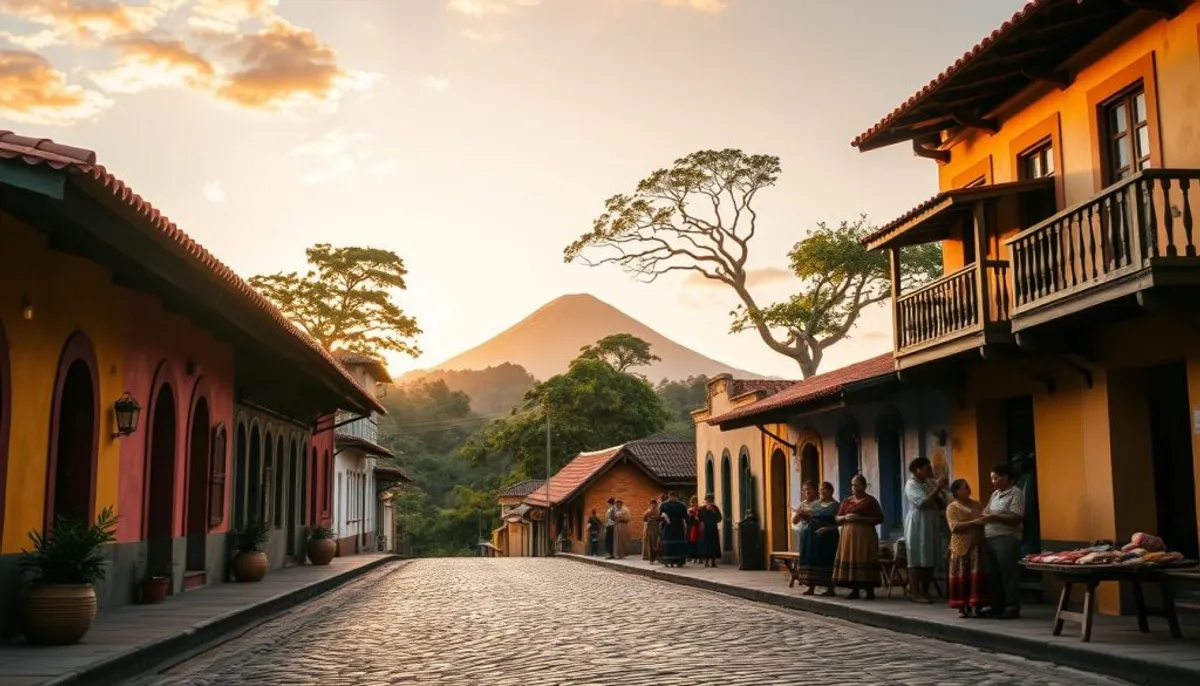
In 1710, about 650 African slaves were abandoned on the coast of Cahuita. This tragic event marked the beginning of the African presence.
Slavery was abolished in 1824. Former slaves then had to find paid work, often in agriculture.
By the end of the 19th century, Jamaican workers arrived to build the Atlantic railway. Their work contributed to economic development.
| Event | Date | Historical Impact |
|---|---|---|
| Arrival of Christopher Columbus | 1502 | First European contact |
| Colonial establishment | 1522 | Beginning of agricultural society |
| Arrival of African slaves | 1710 | Ethnic diversification |
| Independence | 1821 | National sovereignty |
| Abolition of slavery | 1824 | Freedom for Africans |
These events of the 19th century shaped the multicultural identity of Costa Rica. They laid the foundations for its current harmonious society.
The Key Elements of Costa Rican Culture
Ancestral customs and local craftsmanship, including various forms of slovak art, represent fundamental pillars of Costa Rican society. These elements are faithfully passed down through generations.
Traditions, Craftsmanship, and Daily Practices
The typical craftsmanship of Costa Rica includes several remarkable specialties. The colorful carreta perfectly symbolizes this heritage.
Once used to transport coffee, it has now become a prized decorative object. Artisans also create wood and ceramic sculptures.
The daily practices of the inhabitants reflect their attachment to authenticity. The warm welcome and the use of affectionate diminutives are an integral part of their way of life.
| Type of Craftsmanship | Materials Used | Main Use | Symbolism |
|---|---|---|---|
| Decorated Carreta | Painted wood | Decoration | Coffee heritage |
| Sculptures | Wood, clay, ceramic | Artistic | Ancestral know-how |
| Textiles | Natural fibers | Clothing and decoration | Local colors |
| Leatherwork | Natural leather | Utility accessories | Durability |
The hammock embodies the philosophy Pura Vida by inviting relaxation. Local markets offer an authentic immersion into these traditions.
Here, you can find quality coffee and the famous Lizano salsa. These elements are an essential part of the identity of Costa Ricans.
Gastronomy and Authentic Flavors
The Costa Rican table invites you on a unique sensory journey. Each dish tells a story rich in influences and natural generosity.
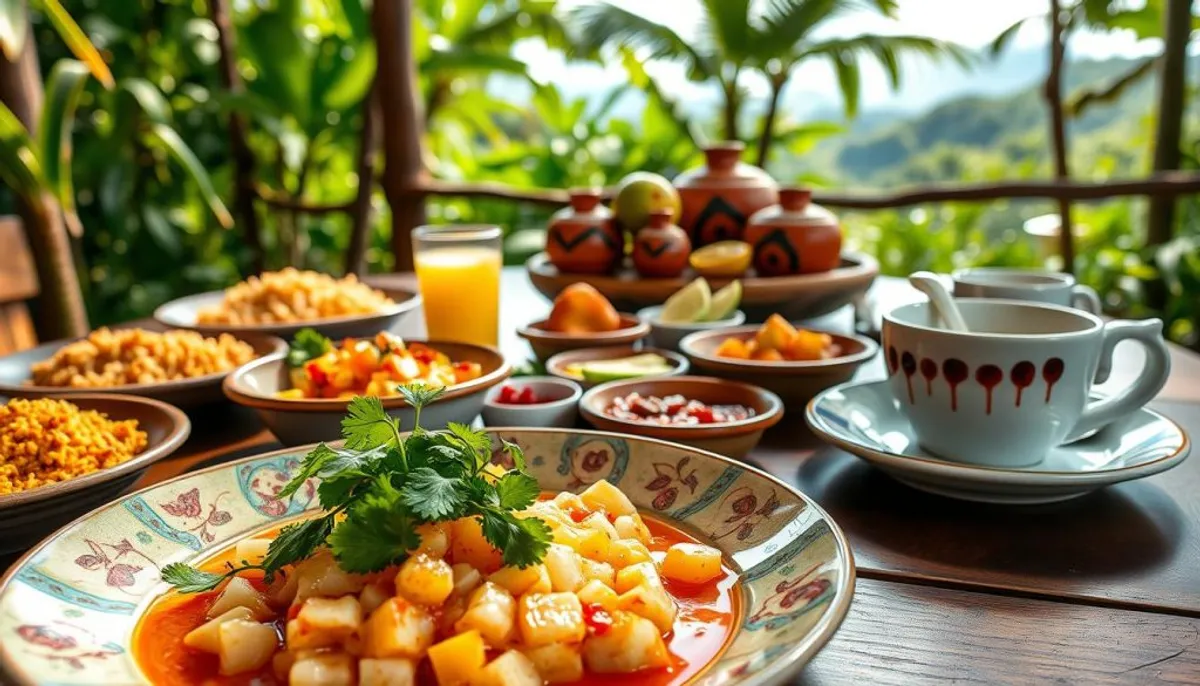
This cuisine perfectly reflects the diversity of fertile lands and the multicultural heritage of the country.
Iconic Dishes: Gallo Pinto, Casado, and More
The Gallo Pinto reigns supreme as the essential national dish. This mix of rice and black beans is enjoyed at any time of day.
The Casado offers a complete meal on one plate. Meat, rice, vegetables, and plantains make up this balanced dish.
Near the sea, ceviche and rondón make use of fresh seafood. These coastal specialties are a delight for the taste buds.
Typical Drinks: Coffee, Fruit Juices, and Guaro
Costa Rican coffee is an absolute national pride. Grown in ideal conditions, it offers exceptional aromas.
Fresh fruit juices abound in Costa Rica. Mango, papaya, and tamarind refresh delightfully.
Guaro, a local cane alcohol, is traditionally mixed with Fresca. This drink often accompanies festive moments.
Each meal thus becomes a celebration of the authentic flavors of Costa Rica.
Social and Cultural Diversity
Beyond the beautiful landscapes, the country reveals remarkable human richness through its demographic composition and irish craftsmanship. This diversity is a fundamental pillar of its national identity.
Population, Languages, and Religious Practices
The population of Costa Rica is about 4.2 million inhabitants. This demographic reflects a complex history of mixing and immigration.
Spanish dominates as the official language, spoken by 90% of the inhabitants. It unites the different communities through administration and education.
| Spoken Language | Origin | Percentage of Speakers | Main Region |
|---|---|---|---|
| Spanish | Official language | 90% | All territory |
| English Creole | Jamaican influence | Minority | Province of Limón |
| Indigenous Languages | Indigenous populations | Very low | Remote areas |
| Cantonese/Plautdietsch | Immigrant communities | Minority | Specific communities |
Coexistence of Different Communities
The linguistic diversity is accompanied by a rich variety of religions. Catholicism remains the majority but coexists with other faiths.
This harmony among different communities is the strength of Costa Rica. Religious tolerance ensures freedom of worship for all.
Protestants, evangelicals, and Jehovah's Witnesses practice their faith freely. This peaceful coexistence reinforces the national identity based on mutual respect.
Music, Dance, and Afro-Costa Rican Celebrations
On the Caribbean coast of Costa Rica, enchanting rhythms tell a unique cultural story. The province of Limón is home to a vibrant Afro-descendant community representing about 8% of the national population, where māori culture also plays a significant role in the rich tapestry of traditions.
Afro-Caribbean Influences and Traditional Rhythms
This coastal region resonates with authentic Caribbean sounds. Calypso remains deeply rooted in the local heritage, with Walter Ferguson as an iconic figure.
Jamaican reggae and Trinidadian soca continuously enrich the musical landscape. These influences create modern fusions while honoring ancestral traditions.
Music accompanies the daily lives of the inhabitants of this region. It expresses both the joy of living and the historical resilience of the community.
Festivities and Cultural Parades
Every year, Puerto Viejo hosts the spectacular Wolaba Parade. The streets transform into vast public dancing venues where the community celebrates its identity.
August 31 marks a special day: the Day of the Black Person and Afro-Costa Rican Culture. Colorful parades, traditional dances, and concerts animate the Caribbean coast.
These festivities attract visitors from all regions of the country. They symbolize the growing recognition of this long-marginalized heritage.
The election of Epsy Campbell as the first vice president of African descent shows the progress made. Music and dance remain at the heart of this cultural renaissance.
Conclusion
This exploration has led us to the heart of a remarkable national identity. Costa Rica reveals much more than its breathtaking landscapes.
Its unique heritage, the result of several centuries of history, harmoniously combines ancestral traditions and modernity. The philosophy Pura Vida perfectly embodies this positive approach to life.
Each region contributes to this vibrant mosaic. From the Caribbean rhythms of Limón to traditional craftsmanship, each element tells a story of resilience.
The exceptional nature of the country beautifully dialogues with its human richness. This encounter creates an authentic experience for every visitor.
Exploring this culture is discovering how a small country has built a peaceful and respectful society. Costa Rica offers an inspiring model for the region.
Whether you are passionate about gastronomy, music, or simply curious, this destination promises a memorable immersion. The true essence of the country lies in this unique harmony.
FAQ
What is the official language spoken in Costa Rica?
The official language is Spanish. On the Caribbean coast, you can also hear an English Creole called mekatelyu. This country values its linguistic diversity.
What typical dishes should not be missed during a trip?
Gallo Pinto (rice and beans) is a must-have for breakfast. The Casado, a complete dish with meat, rice, vegetables, and plantain, represents a well-rounded lunch. These specialties reflect the simplicity and richness of local flavors.
How does nature influence the lifestyle of Costa Ricans?
Nature is at the heart of daily life. Costa Ricans, or “Ticos,” have a deep respect for the environment. Many practices and celebrations are linked to the seasons and the country's exceptional biodiversity.
Are there important cultural festivals throughout the year?
Yes! The patron saint festivals in each community are vibrant. On September 15, Independence is celebrated with parades. In August, the celebrations of the Virgin of Angels gather thousands of pilgrims. These events blend music, dance, and traditions.
What is the role of craftsmanship in preserving heritage?
Craftsmanship, such as hand-painted oxcarts or pottery, tells the story of the regions. These objects are much more than souvenirs; they perpetuate skills passed down from generation to generation and help keep traditions alive.