
Welcome to the exploration of a fascinating concept that permeates our daily lives. This universe, rich and complex, shapes our perception and our place in the world around us.
It is much more than a simple collection of knowledge. It is the very foundation of our identity as human beings living in society. A shared heritage that connects us to one another.
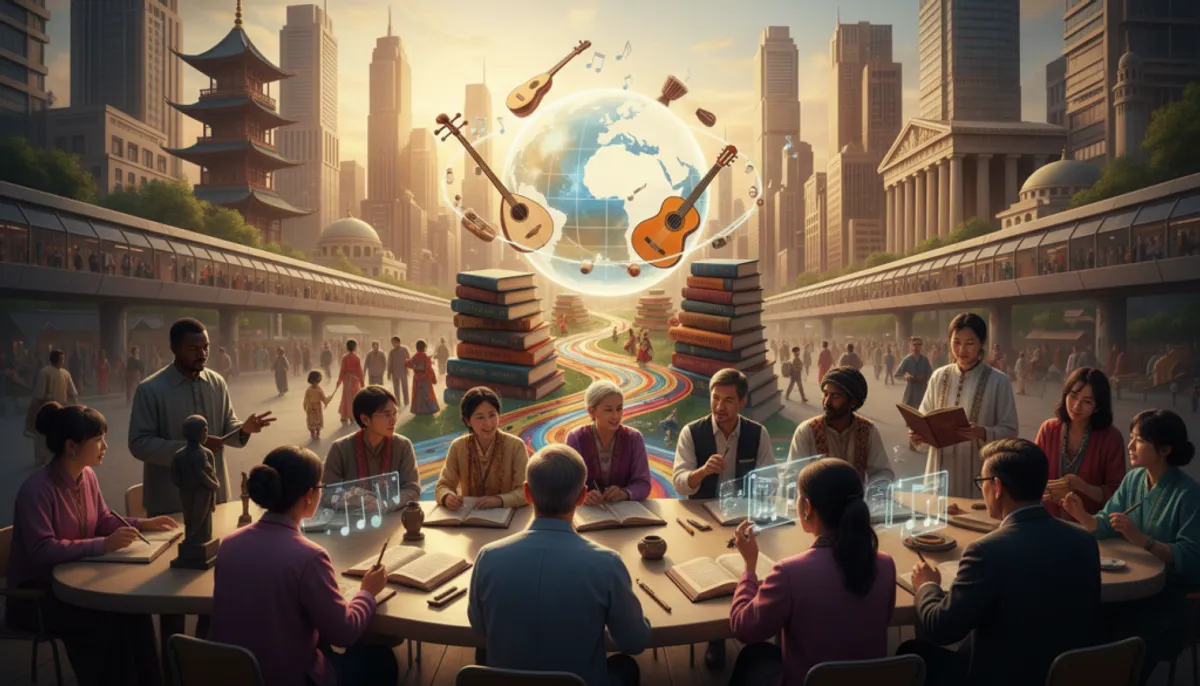
Its influence extends to every aspect of our lives. From the arts we appreciate to the traditions we cherish, and the values that guide our choices. These practices form a coherent whole that gives meaning to our existence.
Understanding its multiple dimensions is essential. It sheds light on the central role it plays in the development of humans and the progress of civilizations.
In an increasingly interconnected context, grasping this concept becomes crucial. Exchanges between peoples mutually enrich this heritage and forge our common future.
Our goal is to provide you with a clear and accessible vision. An entry point to appreciate the wealth of what unites and defines us.
Introduction to the Definition of Culture
Did you know that the word culture has its origins in Latin agricultural vocabulary? Its ancestor, cultura, referred to both the work of the land and the development of the mind.
As early as 1549, the poet Du Bellay spoke of the culture of their language. The meaning was already evolving towards intellectual enrichment.
For centuries, this idea remained individual. A dictionary from 1862 saw it only as a personal effort.
It was only after 1950 that the collective dimension became established. Our modern understanding is the result of this long maturation.
| Period | Main Meaning | Example or Reference |
|---|---|---|
| Latin Antiquity | Agriculture & care of the soul | Latin word cultura |
| Renaissance (16th century) | Intellectual & linguistic culture | Du Bellay, “culture of their language” (1549) |
| 19th century | Individual approach to enrichment | Bescherelle Dictionary (1862) |
| Since the mid-20th century | Collective and social concept | Modern sociological definitions |
This evolution explains why this term today encompasses such a vast whole. From agriculture to art, its journey is rich.
The Multiple Definitions of Culture
Anthropologists Alfred Kroeber and Clyde Kluckhohn highlighted the incredible plurality of definitions in 1952. Their inventory lists more than one hundred and fifty.
This profusion of words and meanings is no coincidence. It arises from different perspectives depending on the fields of study or action.
To clarify, let’s compare how this term is understood in different contexts.
| Field | Main Meaning | Concrete Example |
|---|---|---|
| Institutional (State) | Heritage to preserve and promote | Mission of a Ministry of Culture |
| Academic (Human Sciences) | Shared system of beliefs and practices | Studies in anthropology or sociology |
| Personal & Daily | Common knowledge and references (“general culture”) | Intellectual baggage of an individual |
| Economic & Organizational | Set of values and ways of functioning | Concept of corporate culture |
This diversity reflects the richness of the phenomenon. Each field illuminates a valuable facet.
Political or economic stakes also influence this vision. Understanding the term thus requires a contextual and nuanced approach.
How Culture is Defined
UNESCO and sociologist Guy Rocher offer two complementary visions that illuminate the nature of what unites a group.
For UNESCO, it is a complete set of distinctive traits. These traits are spiritual, material, intellectual, and emotional.
They characterize an entire society or social group. This perspective goes far beyond the arts and letters.
It includes lifestyles, laws, and systems of values. Traditions and beliefs are also integral parts.
Guy Rocher, for his part, offers a dynamic perspective. He describes a linked system of ways of thinking, feeling, and acting.
These ways are learned and shared by a plurality of individuals. They form a common reservoir of knowledge and practices.
This shared heritage evolves over time. It constitutes the cement of a strong and recognizable collective identity, reflecting a legitimate culture that binds individuals together.
Thus, these definitions show that it is both a heritage and a living bond. It unites the members of a community and distinguishes them from others.
Culture in the Field of Arts and Letters
In everyday language, the term culture is frequently associated with arts and letters. This restrictive usage, while widespread, captures only a part of its richness.
This particular meaning has been imposed under the influence of public policies and dedicated institutions. Ministries and museums have shaped this vision centered on artistic heritage.
It then encompasses a vast creative field. Literary, theatrical, musical, and cinematic works are its jewels.
A powerful economic activity has developed around this conception. The cultural goods industry manages the production and dissemination of these contents.
Practices in this sector range from new creation to heritage conservation. They ensure the vitality and transmission of this heritage.
This sector has undeniable social and economic importance. However, it represents only one facet of the immense picture that is culture in the broad sense.
Culture in Sociology and Ethology
Sociology and ethology offer enlightening perspectives on what unites a group. They define this phenomenon as a social cement, a learned and transmitted whole.
Sociological Approach and the Notion of Habitus
For the sociologist, it is a system of practices and shared representations. This system creates a powerful link between the individuals of the same society.
Pierre Bourdieu developed the concept of habitus. He describes internalized mental lenses. Each person thus perceives the world through this invisible filter.
This study also reveals subcultures. They vary according to social position, gender, or local traditions.

Transmission of Behaviors in Ethology
Ethology extends this notion to the animal kingdom. It designates any behavior or knowledge acquired through social learning.
This knowledge is transmitted between individuals, not through genes. This shows that this phenomenon is not exclusive to humans.
| Discipline | Main Object | Key Mechanism | Example |
|---|---|---|---|
| Sociology | The social link and collective representations | Unconscious internalization (habitus) | The dress codes of a professional group |
| Ethology | The learned behavior in animals | Social transmission through imitation | The use of tools by certain primates |
Norbert Elias invites us to see this phenomenon as a dynamic process. It evolves with the transformations of society, never freezing.
Culture in History and Heritage
From millennia-old petroglyphs to historical monuments, cultural heritage is the guardian of our collective past. It forms a living memory of civilizations.
This heritage encompasses both material traces and immaterial traditions. It directly connects us to human history.
UNESCO Sites and Universal Value
UNESCO identifies and protects sites of exceptional universal value. These places testify to crucial human exchanges.
The 12,000-year-old petroglyphs of Gobustan are a striking example. They reveal an ancient and flourishing culture.
Ethno-archaeology studies these societies through their material culture. It analyzes pottery, tools, architecture, and characteristic funerary rites.
| Type of Heritage | Concrete Examples | Mode of Transmission |
|---|---|---|
| Material | Monuments, archaeological sites, art objects | Physical conservation, restoration |
| Immaterial | Know-how, performing arts, oral traditions | Learning, practice, intergenerational transmission |
| Natural | Cultural landscapes, mixed sites | Protection of the environment and associated traditions |
Recognizing the universal value of this heritage transcends borders. This heritage belongs to all humanity.
Preserving this testimony is vital. It documents the diversity of cultural expressions and our common evolution.
Culture and the Evolution of Modern Society
Modern societies navigate a rapidly changing cultural landscape. Globalization and digital technologies transform our world and accelerate exchanges.
This technological development creates a constant flow of influences between different societies. It offers opportunities for mutual enrichment but also poses a risk of homogenization.
A permanent tension exists today. It opposes the preservation of local identities and the openness to external contributions from the world at large.
Communities must reconcile their traditional heritage with the demands of contemporary economic development. The latter often favors globalized models of civilization.
This evolution transforms artistic and social practices. It gives rise to new forms of expression while sometimes threatening minority cultures.
The major challenge for current societies is to maintain their cultural diversity. They must also actively participate in the global dialogue of cultures.
The Role of Culture in Individual Development
Personal enrichment occurs through a continuous process of learning and discovery. This journey shapes our identity and broadens our understanding of the world.
From General Culture to Personal Culture
General culture forms a foundation of fundamental knowledge. It enriches the mind and sharpens our critical judgment on various subjects.
This foundation evolves into a more personal construction. The German term Bildung, often translated as education, emphasizes this evolving and individual dimension.
| Aspect | General Culture | Personal Culture |
|---|---|---|
| Nature | Set of shared knowledge | Unique and evolving construction |
| Main Objective | Understanding of the common world | Self-fulfillment and realization |
| Process | Acquisition through formal education | Active and voluntary engagement |
| Example | Knowing major artistic movements | Developing a passion for a specific art |
Ferdinand Foch stated: “There is no cultured man, there are only men who cultivate themselves.” André Malraux added: “Culture is not inherited, it is conquered.” These quotes highlight the active effort required.
Institutional education plays a central role. However, personal culture is also built through autonomous activities of reading and reflection.
Thus, each individual can rise. The knowledge acquired allows for a complete intellectual and human development, far beyond the initial condition.
The Impact of Media on Mass Culture
The advent of mass media has profoundly reshaped our daily cultural landscape and its cultural impact. Television, radio, and the internet disseminate content that unites millions of people.
Under the name of “mass culture”, a set of rather rudimentary patterns is described. Myths, notions, and images are spread by these powerful means of dissemination.
This phenomenon develops outside traditional school circuits. It plays a dual role, often contradictory.
On one hand, it democratizes access to works once reserved for an elite. On the other, it is accused of fostering conformism and serving a consumer society of standardized goods.
Large-scale industrial production has transformed our relationship with heritage. It creates new modes of participation but threatens authentic diversity.
Collective representations are thus shaped on an unprecedented scale. The challenge remains to reconcile this massification with the richness of local expressions.
Philosophical Perspectives on Culture
A fundamental question runs through philosophical thought: where does nature end and where does the acquired begin? This inquiry is at the heart of reflection on our humanity.
Distinction Between Nature and Culture
For philosophers, the term designates everything that opposes the innate. It marks the boundary between biological instinct and social learning.
The human being is defined by its unique ability to transcend its initial condition. It builds civilizations by transforming the world around it.
This transformation is a dual process. The human being shapes its environment and, in doing so, shapes itself.
Different schools of thought have approached this duality. Some see it as progress, others as a source of alienation.
| Concept | Origin | Main Characteristics | Example |
|---|---|---|---|
| Nature | Innate, biological | Instinctive, universal, hereditary | The survival reflex, breathing |
| Culture | Acquired, social | Learned, variable, transmitted | Language, rites, laws |
Thus, everything considered as a “human species acquisition” falls within this domain. This includes belief systems and experimental knowledge.
This distinction raises a profound question about the meaning of our existence. It interrogates our relationship to the civilization we build.
The Notion of Corporate and Technical Culture
In modern organizations, the notion of culture has found an unexpected application. It now structures professional and technical activities.
Corporate culture refers to a complete system of shared values and traditions. It includes implicit codes of behavior and internal processes.
This system ensures group cohesion and forges its collective identity. It goes beyond the simple logic of production.
Similarly, technical culture forms a distinct domain. It encompasses the know-how, methods, and representations specific to a profession.
This extension of the term reflects a desire to create meaning and belonging. Organized collective action draws part of its strength from it.
However, this appropriation of cultural vocabulary raises questions. It can dilute the original meaning of the concept and instrumentalize it.
These notions illustrate the growing importance of symbolic dimensions. Economic activities thus seek to anchor their raison d'être.
Essential Components of Culture
Every society rests on an invisible foundation composed of four essential pillars. These elements are transmitted from generation to generation through learning.
They form a coherent whole that structures our collective life. Let’s analyze these foundations.
Values, Norms, Institutions, and Artifacts
Values are the guiding principles. They define what is important or desirable for a group.
The norms derive from them. These are the rules that regulate acceptable modes of behavior.
Institutions, such as family or school, organize social life. They put these values and norms into action.
Finally, artifacts are the material objects produced. They are the tangible goods that result from our activity.
Archaeologists study this material culture. They focus on artifacts.
Cultural anthropology examines rather the symbolic culture. It analyzes beliefs and modes of thought.
Julian Huxley offers another classification. He distinguishes mentifacts (ideas), socifacts (social structures), and artifacts (techniques).
These three sub-systems constantly interact. They illustrate the complexity of the phenomenon.
Values, norms, institutions, and artifacts mutually influence one another. This dynamic whole is the heart of any collective identity.
The Diversity of Cultural Expressions in France
Between republican universalism and regional identities, the French heritage is a subtle balance. It forms a living kaleidoscope where each territory brings its unique color.
This richness has been built through a singular history. Secularism, a legacy of a long tradition dating back to the Gallicanism of Philip the Fair, has shaped a national model. The secular state has taken over a principle of arbitration that was once royal and divine.
The French language constitutes a central element of this identity. It is the privileged vector of republican values and a prestigious literary heritage.
Within the hexagon coexist multiple regional cultures. Each has its own traditions, linguistic practices, and specific artistic expressions, while also reflecting the broader national traditions that shape the collective identity.
Cultural policies seek to preserve this diverse heritage. They also promote contemporary creation and access for all to French goods.
This approach recognizes diversity while affirming a common foundation. It is this productive tension that characterizes the French cultural exception.
Culture in an International Context
Each major cultural area has its own central concerns. On a global scale, value systems vary radically from one civilization to another.
In the West, the conversation often focuses on rule and law. Measurement, whether physical or social, is a fundamental question there.
In the Far East, the most important matter concerns identity and harmony in the world. The values of village societies, as in Africa, focus on the balance between man and nature.
The language reflects these differences. Each linguistic system carries a particular vision of the human experience.
| Cultural Area | Central Concern | Key Values | Example of Priority |
|---|---|---|---|
| West | The rule and law | Order, measurement, justice | Establish clear social norms |
| Far East | Identity and harmony | Balance, relationship, unity | Finding one’s place in the universe |
| Village Societies | Balance with nature | Community, cycle, respect | Maintaining a lasting connection with the environment |
Intercultural dialogue is a challenge in a globalized world. Organizations like UNESCO work to protect this diverse heritage against homogenization.
Recognizing this plurality is essential. Each civilization brings a unique and valuable response to the questions of existence.
Historical and Social Influences on Culture
Great creators, like Mozart, are also products of their environment and time. Their talent flourishes in a place and a conducive social context.
Norbert Elias sees culture as a dynamic process. It is linked to the transformations of human life.
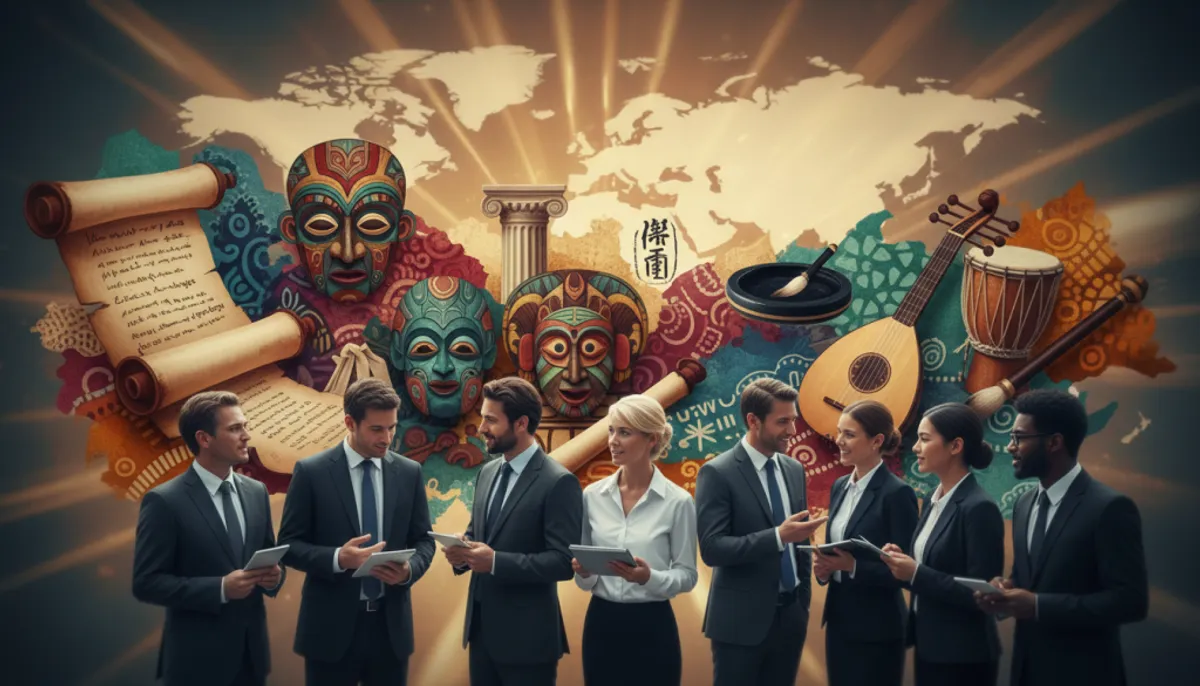
Political systems profoundly influence artistic expressions. Some regimes favor forms of art according to their ideological origin.
| Social Transformation | Cultural Impact | Historical Example |
|---|---|---|
| Centralization of the State | Standardization of official arts | Royal academies in Europe |
| Social Differentiation | Emergence of distinct subcultures | Artistic avant-gardes of the 19th century |
| Pacification of Morals | Development of less violent arts | Transition to opera and chamber music |
Religious beliefs structure practices. Their usage varies with historical contexts and power relations.
A historical approach is therefore necessary. It explains how humans create and transmit their heritage through the ages.
Conclusion
In summary, the fabric that unites societies is both complex and essential to our humanity. It forms a dynamic whole of shared knowledge, values, and practices.
The use of the name “culture” and the words that describe it varies. This fact reflects the richness of perspectives, but one principle remains constant: social transmission.
This phenomenon can be seen from many angles. Whether individual or collective, material or symbolic, each vision illuminates a valuable facet.
In a world undergoing rapid change, preserving and enriching this heritage takes a crucial place. Our daily choices are its guardians.
Let us recognize that we are all carriers of it. We have the responsibility to transmit it to future generations.
FAQ
What are the elements that make up a culture?
A culture is built around several essential pillars, including authors and culture. It includes the values shared by a group, the norms that guide behaviors, and institutions such as family or education. Artifacts, such as art, language, and traditions, are its visible expressions. This whole forms a coherent system that gives meaning to life in society.
Why is general culture important for personal development?
General culture enriches the mind and opens perspectives. It allows for a better understanding of the world, its history, and its challenges. This knowledge fosters critical thinking, improves adaptability, and nurtures personal creation. It is a valuable tool for evolving in professional and social life.
How do media influence mass culture today?
Media, such as television and social networks, play a central role. They rapidly disseminate trends, values, and information on a large scale. This constant production shapes opinions, homogenizes certain practices, and creates new forms of sharing. Media influence is a key player in contemporary cultural processes.
What does the notion of "cultural heritage" mean according to UNESCO?
For UNESCO, cultural heritage encompasses goods of exceptional universal value. This includes historical sites, monuments, but also living practices such as music or know-how. Their protection is crucial to preserving collective memory and the diversity of human societies for future generations.
What is the difference between nature and culture in philosophy?
Philosophy clearly distinguishes these two terms. Nature refers to what is innate, biological, and universal in humans. Culture, on the other hand, represents everything that is acquired, constructed through learning, and variable among groups. It is the product of human action, such as language, beliefs, or arts.
What are the typical cultural expressions of France?
France shines with the diversity of its expressions. We think of its language, its renowned gastronomy, its literature, and its cinema. Events like the Fête de la Musique or practices like the French art of living are part of its living heritage. Each region also brings its unique traditions and history.
How is a corporate culture transmitted?
A corporate culture is transmitted through rites, displayed values, and behavioral norms. It is embodied in the way of communicating, making decisions, and celebrating successes. The role of leaders and founding narratives is key. It is a shared whole that gives identity and guides daily action.