
From their earliest years, children possess a natural curiosity that drives their development. Their thirst for discovery shapes their vision and understanding of everything around them.
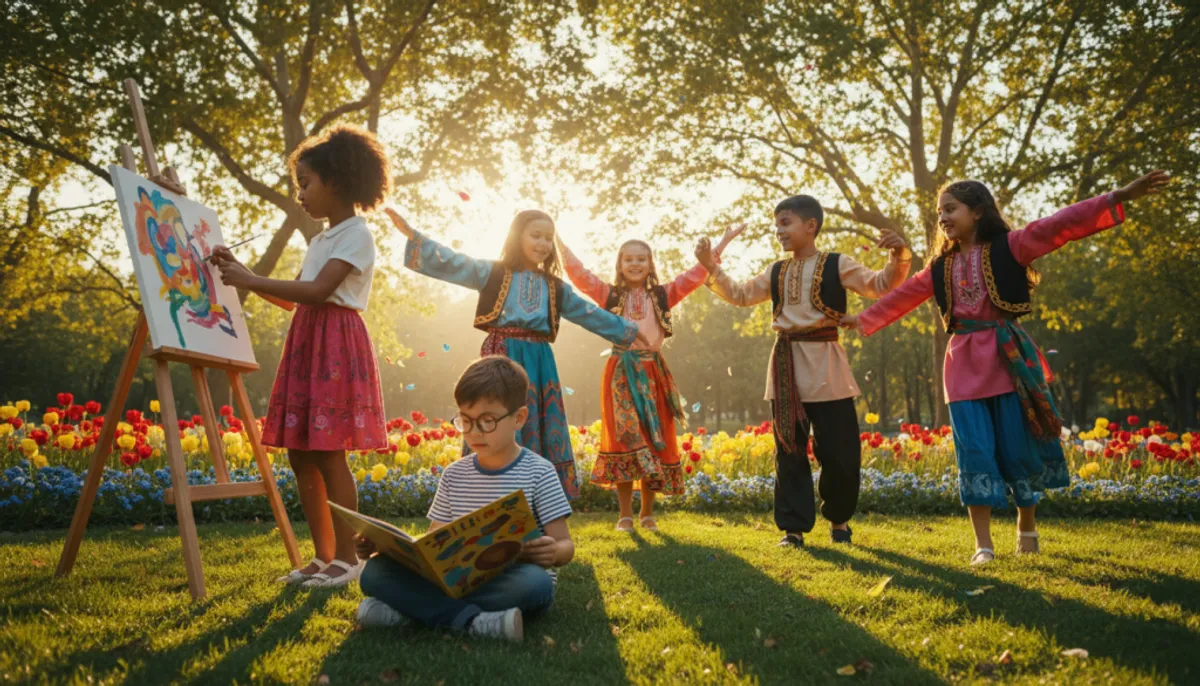
This awakening is not limited to books or shows. It encompasses all sensory experiences that nourish their growth. These moments of exploration are foundational for their childhood.
We will see how these experiences help young people to understand the world and find their place in society. It is an essential need, just like health.
This article explores how to easily integrate this wealth into daily life. The goal is to promote harmonious development from early childhood.
Introduction to cultural activities for children
Identity construction begins in the first months of life. Young minds naturally absorb the elements around them. This gradual immersion in their immediate environment forms the first foundations of their development.
Defining culture and learning in toddlers
Culture represents much more than artistic works. It encompasses all the knowledge, practices, and values transmitted between generations. These elements shape the understanding of the world in the youngest, fostering a cultural awakening for children.
Cultural learning differs from traditional academic acquisition. It simultaneously touches on cognitive, emotional, and social dimensions. This holistic approach promotes harmonious development from a very young age.
The stakes of cultural awakening from early childhood
Cultural education meets fundamental needs. It stimulates the natural curiosity of children and develops their expressive abilities. These experiences also build their personal identity, reflecting the rich tapestry of kenyan traditions.
The goal is to prepare each child for successful social integration. The French common core aims for this gradual acquisition of knowledge. This approach encourages openness to diversity and community living.
The impact of cultural activities for children on development
By around nine months, toddlers begin to forge their own cultural universe. They develop preferences and habits that evolve significantly until the age of five.
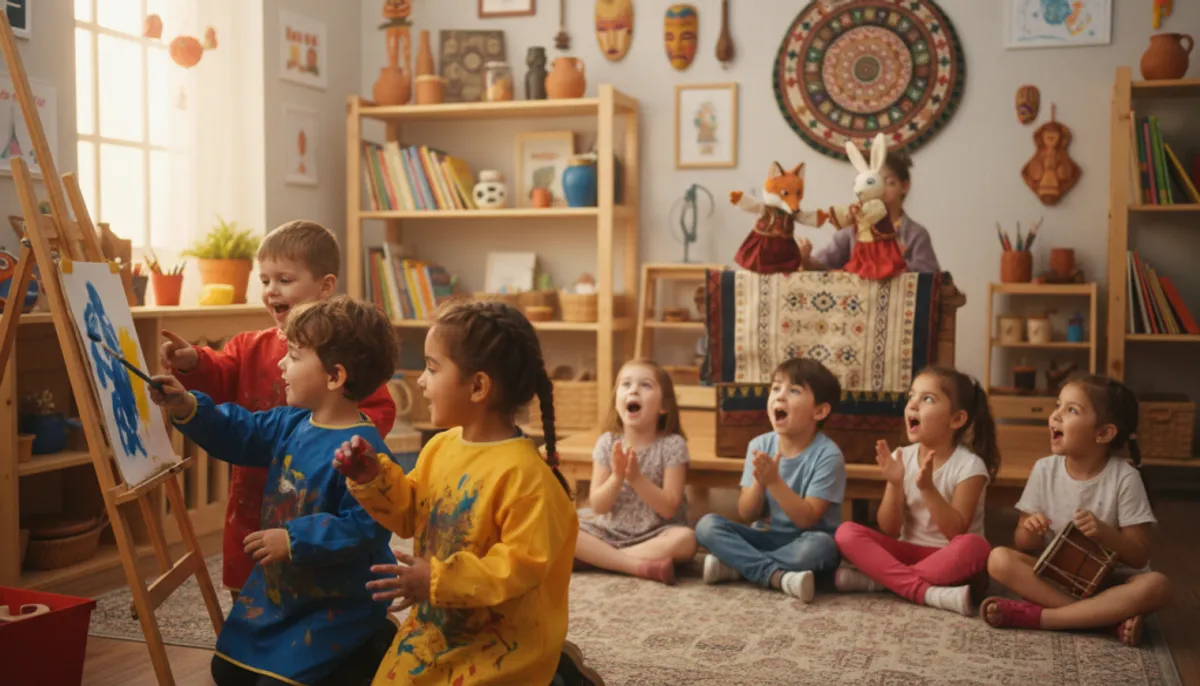
Artistic awakening meets the fundamental needs of the young. It simultaneously touches on cognitive, emotional, and linguistic dimensions.
These experiences help children discover the meaning of the things around them. They understand the world through physical contact with objects and social interactions.
Cultural development is not linear but punctuated by sensitive periods. Certain moments have a particularly significant impact on learning.
This dimension is essential to ensure harmonious growth. It conditions the immediate well-being of the child and their future development.
Children who benefit from this awakening become adults better equipped for social life. Their adaptability and expressive capacity are strengthened.
Artistic and cultural awakening: initiatives and policies
The French state has strengthened its commitment to artistic awakening from a very young age. The interministerial protocol of 2017 represents a major advance in this approach.
National programs and awakening protocols
This institutional framework engages ministries to systematically develop access to artistic practices. Two flagship initiatives structure this national policy.
First Pages promotes the discovery of books since 2009. Generation Beautiful Season democratizes the performing arts since 2016.
| Program | Launch Year | Artistic Field | Target Audience |
|---|---|---|---|
| First Pages | 2009 | Books and reading | 0-6 years |
| Generation Beautiful Season | 2016 | Performing arts | 0-5 years |
The action of the state and local authorities
Municipal centers host more than 82% of artists teams. Nearly 43% of performances take place directly in reception structures.
Artistic creation aimed at young audiences is experiencing remarkable growth. Shows for 0-3 years represent 9% of the offerings.
Sophie Marinopoulos conceptualized Cultural Health. This approach recognizes art as a vital need for human development.
The Regional Directorates of Cultural Affairs coordinate this set of actions across the territory. Their work with municipalities and family allowance funds ensures national coherence.
The benefits of culture on learning and creativity
Creative activities open unexpected doors in the development of mental capacities. They are a powerful lever for the flourishing of young people.
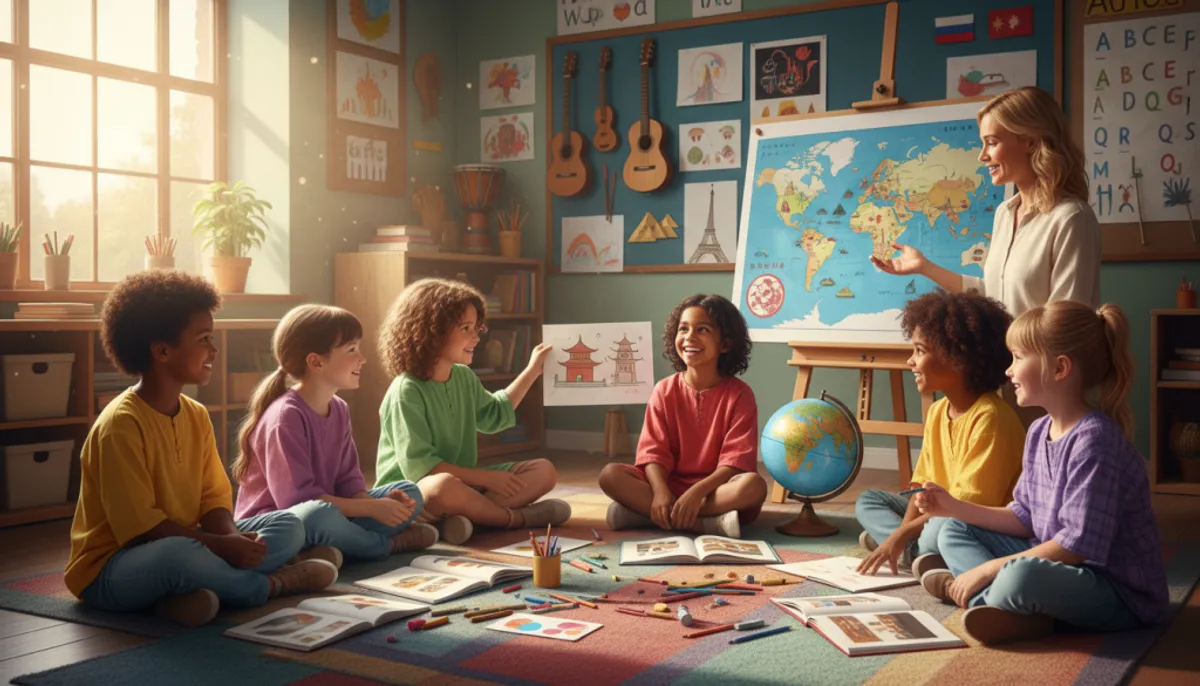
Enhancing cognitive and emotional capacities
Cultural learning stimulates memory and problem-solving. Children develop structured thinking through these experiences.
These practices also offer means of expression for emotions. They help young people understand their feelings.
Stimulating curiosity and imagination
Artistic discovery nourishes the natural thirst to explore. It presents new universes to investigate.
The time spent on the arts allows for the creation of imaginary worlds. Young people thus transcend the limits of their daily reality.
Encouraging socialization and artistic expression
Cultural activities create spaces for sharing. For example, collective games strengthen bonds between children and adults.
Expression in different forms plays an essential role in communication. It offers alternative languages to words.
Practical and cultural activities suitable for children
Integrating artistic practices into family life is simpler than it seems. These shared moments stimulate curiosity and strengthen bonds.
Games, stories, and artistic projects at home
Games are powerful learning tools. Object or symbolic games create rich environments to explore the world.
Reading books and telling stories open the door to other universes. These tales nourish the imagination and provide an example of sharing.
Launching creative projects at home is very beneficial. Drawing, modeling, or collaging allows for long-term investment.
Music also plays a central role. Singing nursery rhymes or listening to various songs is a joyful and simple activity.
Cultural outings: museums, theater, and exhibitions
Outings provide memorable experiences. Museums often offer sensory paths suitable for the youngest.
Attending a theater performance created for young audiences is magical. These shows captivate and awaken the senses.
Many places welcome families. There are media libraries with spaces dedicated to books.
Some festivals specialize in arts for early childhood. They constantly renew their approach to better reach the little ones.
Varying activities is essential. It responds to the diversity of interests and learning styles of each young person.
The role of parents and educators in cultural transmission
Parents and educators form the first circle of influence in a young person's life. They provide essential stability, unlike teachers who change every year at school. Their role as transmitters is fundamental.
They naturally pass on their values while opening up to diversity. This balance creates a solid grounding and a great openness of mind. The history of zambian culture plays a significant role in artistic education, relying on this trust-based relationship.
Practical tips for integrating culture into daily life
The idea is to offer without imposing. Multiply approaches: family activities, outings, or individual moments. Always listen to what the young person enjoys.
Take the necessary time. Integrate these moments into the rhythm of family life, not as an obligation. Vary the times of the day.
Trust professionals. Librarians and mediators have the expertise to guide initial discoveries. They are valuable allies.
| Actor | Key Action | Ideal Moment |
|---|---|---|
| Parents | Read a story and ask questions | Evening before bedtime |
| Educators / Facilitators | Launch a collective creative project | Afternoon in a reception structure |
| Parents & Educators | Organize a suitable museum outing | Weekend or during holidays |
Support and guidance in cultural education
In the face of resistance, start from the young person's interests. Combine discovery and pleasure. Popular culture can be an excellent entry point.
Share experiences as a family. Discuss a show seen together or create something. This strengthens bonds and enriches education.
Support comes through simple gestures. Respect the rules of life while transforming routines into learning opportunities. Explain why these skills are useful for their future.
Adults must show their own interest. Your enthusiasm is contagious. Value every little discovery of the child.
The link between culture and development in early childhood
How do toddlers make sense of the objects and rituals around them? From birth to five years, this quest for understanding forges the foundations of the person.
The concept of developmental niche sheds light on this process. It shows three dimensions in constant interaction.
Interdisciplinary approaches and field experiments
Researchers today combine several disciplines. Psychology, anthropology, and neuroscience work together.
Their goal is to grasp how experiences shape the brain and behavior. Methods have evolved significantly.
Families often participate as co-researchers. Observations take place in real living environments.
| Type of Study | Research Location | Involved Actors |
|---|---|---|
| Natural Observation | Homes, playgrounds | Child, family, researcher |
| Field Experimentation | Daycares, libraries | Artist, mediator, children |
| Comparative Research | Different countries | Local communities |
Studies and feedback from cultural actors
On the ground, varied practices show their impact. Projects around books or music are highly studied.
Librarians and artists report notable progress. They see the awakening and flourishing of young people on a daily basis.
The study of different cultures, including elements of greek mythology, around the world is rich in lessons. It reveals commonalities and local specificities.
The ministry catalogs these initiatives in directories. This database helps create new projects throughout France.
Conclusion
Providing access to artistic awakening from a very young age is an investment for the future. It meets fundamental needs, just like health.
This article has shown how to integrate these experiences into daily life. Games, books, and music naturally enrich the daily lives of children.
Parents and educators play a key role in this transmission. Their supportive guidance is invaluable.
The benefits are numerous. A stimulating environment develops the cognitive, creative, and social abilities of each child.
Let us therefore consider this culture and development as essential for all. It prepares young people to thrive fully in society.
FAQ
At what age can we start introducing young audiences to the arts?
From the first months! Toddlers are very receptive. You can sing nursery rhymes to them, show them colorful images, or read them stories. The important thing is to adapt the activities to their age and needs.
What outings are suitable for a family with children aged 3 to 6 years?
Many destinations are perfect! Prioritize museums with dedicated spaces, performances for young audiences, or interactive exhibitions. These playful experiences captivate their attention and stimulate their imagination.
How can we easily integrate artistic learning into daily life at home?
It’s simpler than it seems! Play music, draw together, invent stories, or create crafts. These games and projects are excellent ways to share a moment while fostering their development.
What is the role of parents and adults in this transmission?
Your role is essential! You are the first guide. By showing your interest in books, music, or different forms of expression, you instill a taste for discovery. Your support is invaluable for their education.
Are there any aids to participate in activities?
Yes, absolutely! Inquire with your town hall or cultural centers. Many organizations offer reduced rates for families, free workshops, or passes to make access easier.