
The history of the Cold War is filled with unknown episodes. Among them, an influence operation carried out by the American secret services.
In 1950, in Berlin, the Congress for Cultural Freedom was born. Its official purpose? To bring together non-communist European intellectuals and artists.
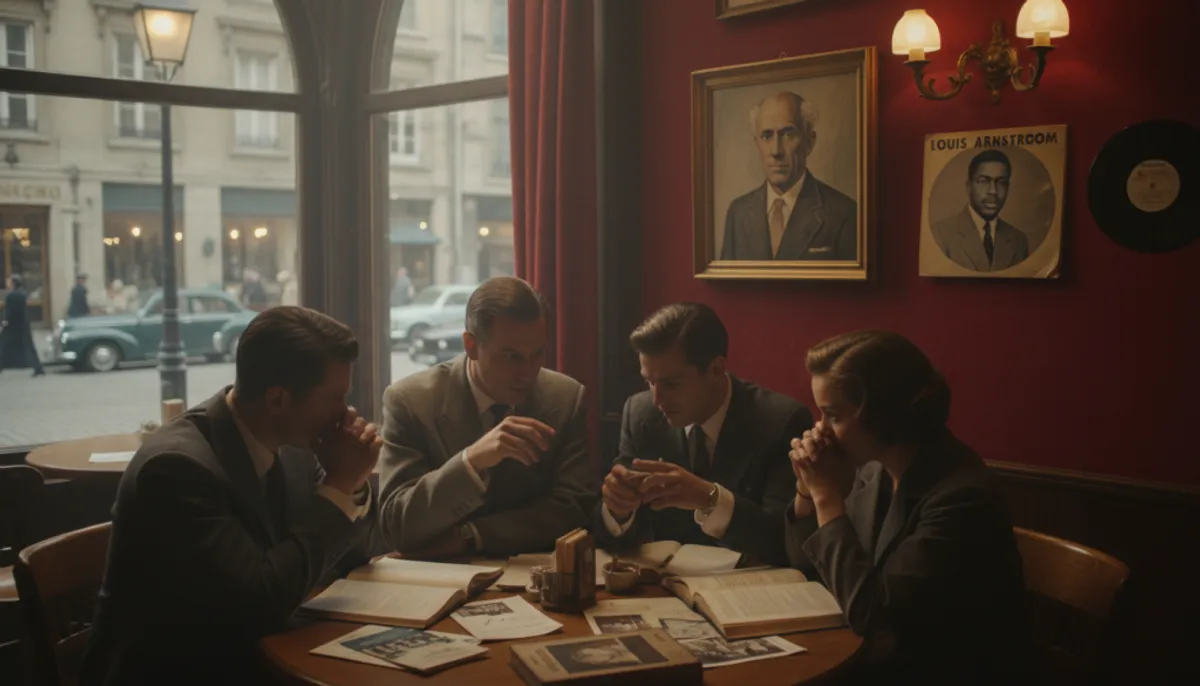
For years, this organization operated seemingly independently. It wasn't until 1966 that the scandal came to light.
This article explores this fascinating and troubling page of history. We will see how a vast propaganda operation sought to shape minds.
Historical Context: The Cold War and Cultural Diplomacy
The end of hostilities in 1945 opened a period of reconstruction and intense ideological rivalries. Europe, devastated by the Second World War, became a crucial battleground. Two emerging superpowers, the United States and the Soviet Union, sought to expand their influence on the continent.
The Stakes of the Cold War
This conflict is not limited to military arsenals. It is a battle for hearts and minds. The Cold War is fought on the cultural and intellectual front.
The communist parties, very powerful in France and Italy, actively mobilized artists and thinkers. Washington perceived this as a direct threat to its sphere of influence in Western Europe.
The Evolution of American Influence
The United States emerged from the global conflict in a position of strength. As early as 1947, their policy changed. They adopted an interventionist approach to curb communist expansion.
They relied on their secret services, particularly the CIA. The objective was clear: to develop a sophisticated cultural counter-strategy. This response marked the first years of a true psychological war on a global scale.
Origins and Objectives of the Congress for Cultural Freedom
It was in the heart of Berlin, in the American zone, that the founding meeting of the Congress for Cultural Freedom took place. This organization was meant to embody an intellectual response to Soviet propaganda.
Birth in Berlin
The Congress was officially born in June 1950. Its Secretary-General, Melvin Lasky, was a New York journalist. He had been living in Germany since the end of the global conflict.
This first assembly laid the foundations for an international network. The goal was to promote the values of freedom in the face of totalitarianism. The Congress for Freedom aimed to be a cultural bulwark.
Leading Figures in France
The Paris headquarters, on Avenue de l'Opéra, became its nerve center. In France, Raymond Aron emerged as a central figure. He firmly opposed Jean-Paul Sartre and pro-communist circles.
He was supported by collaborators from the journal Preuves. A prestigious support committee lent legitimacy to the effort. Among them were Karl Jaspers, Léon Blum, André Gide, and François Mauriac.
The objective of the Congress for Cultural Freedom was clear. It aimed to gather liberal intellectuals and non-communist artists. This "international" was meant to provide a credible alternative.
The CIA's Involvement in International Culture
A vast cultural patronage enterprise, orchestrated in the shadows, sought to reshape the global intellectual landscape. Historian Hugh Wilford describes the Congress for Cultural Freedom as one of the largest patrons of the arts in history.
Founded in 1950, this network had offices in thirty-five countries. It employed about 280 people and supported around fifty prestigious journals worldwide.
This covert operation was conducted with other state agencies and private foundations. Its official purpose was to contain communist expansion through cultural means.
The American secret services understood that the ideological battle was also won in minds. This organization thus played a central role in the international relations of the time.
| Element | Key Figure | Scope |
|---|---|---|
| International Offices | 35 countries | Global Network |
| Staff Employed | ~280 employees | Cultural Army |
| Supported Journals | ~50 publications | Media Influence |
| Active Period | 1950s-1960s | Cultural Cold War |
Despite its resources, this cultural war proved difficult to win. Imposing a political order hostile to the majority of the world's population was an immense challenge.
Propaganda and Cultural Interference Strategies
The CIA's cultural weapon relied on a clever mix of intellectual legitimation and massive media dissemination. This sophisticated propaganda aimed to deeply influence international relations.
Manipulation Techniques
Frank Wisner, from the Agency, nicknamed this device the "mighty Wurlitzer". This metaphor described a giant jukebox producing a constant flow of content.
The Congress organized an impressive number of 135 conferences. It also published over 170 books. These actions created a credible intellectual network, far from the clichés of the Cold War.
Media Utilization
The "Forum Service" was an ultra-efficient press service. It distributed articles for free in twelve languages.
These reports reached six hundred newspapers and nearly five million readers. This formed a global echo chamber for the Congress's ideas.
| Field of Action | Activity Volume | Strategic Objective |
|---|---|---|
| Conferences & Seminars | 135 events | Intellectual Legitimization |
| Institutional Partnerships | 38 institutions | Influence Network |
| Editorial Publications | 170 books | Ideological Depth |
| Supported Journals | ~50 titles | Media Penetration |
Together, these formed a complex ideological control system. It appeared spontaneous and independent to the public eye.
When the CIA Infiltrated Culture
In 2006, a German documentary lifted the veil on the hidden mechanisms of the cultural Cold War. Directed by Hans-Rüdiger Minow, this work methodically dismantles the infiltration system established by the American secret services.
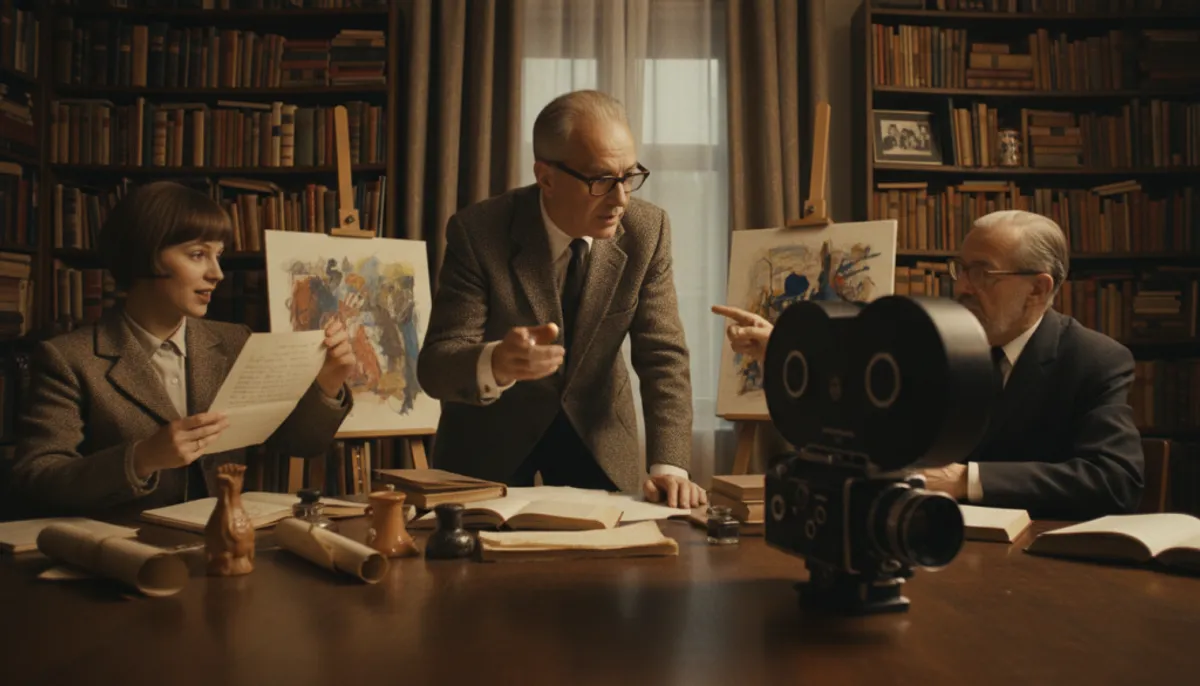
The documentary shows how the propaganda operation extended to all fields. From literature to visual art, no sector was spared.
A crucial ethical dimension is highlighted. Many celebrities associated with the Congress were unaware of the ties woven by the agency. They were manipulated without their knowledge.
The work of Hans-Rüdiger Minow relies on declassified archives and direct testimonies. His historical approach is rigorous.
This film contributes to a better understanding of the cultural Cold War and the cultural impact on consumption habits. It reveals power mechanisms that still influence our time.
The Role of Intellectuals and Artists in the Operation
The collaboration between the intellectual world and intelligence agencies took multiple and sometimes unsuspected forms.
Collaboration Between Intellectuals and Agencies
The report of their activities reveals a wide spectrum. It ranges from fully conscious ideological adherence to manipulation without the individuals' knowledge.
In France, Raymond Aron played a central role. He imported the theses of the New York Intellectuals and published in 1955 The Opium of the Intellectuals.
This work denounced the neutralism of non-communist leftist intellectuals. It served the strategy of ideological division.
In Germany, writer Heinrich Böll, a future Nobel Prize winner, was a standout figure. His case shows how talented artists were associated with the operation.
| Political Current | Iconic Figure | Strategic Objective |
|---|---|---|
| Former RDR Militants | Former members of the Revolutionary Democratic Rally | Mobilize non-aligned leftists |
| Gaullist Intellectuals | André Malraux (journal Liberty of Spirit) | Legitimize French anti-communism |
| European Federalists | Supporters of a united Europe | Promote a Western project |
These intellectuals were targeted because they represented a credible alternative to Marxism, much like the steppe peoples who often challenged established norms. Their sincere engagement was often instrumentalized.
This tension raises important ethical questions about the responsibility of artists and thinkers. The account can sometimes be heavy between personal conviction and co-optation.
The Networks and Foundations Supporting the Operations
An opaque network of philanthropic foundations allowed the agency to discreetly finance its cultural operations. This sophisticated system masked the governmental origin of the funds.
The Financial Support of Foundations
The Ford Foundation played a central role. It co-founded the Congress and maintained close ties with the secret services.
In 1966, the budget reached $2,070,500. This is equivalent to $19.5 million today.
That same year, this foundation funded a conference at Johns Hopkins University. The sum of $36,000 represented extraordinary support.
| Funding Element | Historical Amount (1966) | Current Value (2023) |
|---|---|---|
| Annual Budget of the Congress | $2,070,500 | $19.5 million |
| Johns Hopkins Conference | $36,000 | $339,000 |
| Main Source | Ford Foundation (after 1966) | |
This transnational network created an appearance of independent private patronage. After the scandal, the Ford Foundation publicly assumed all funding. These complex relations illustrate a gray area between state action and private initiative.
Impact on Media and International Press
An investigation by the New York Times uncovered a clandestine network of media influence. The infiltration of the press was a crucial aspect of the cultural Cold War.
It compromised journalistic independence on a global scale.
Interference in Major Newspapers
Journalist Carl Bernstein gathered damning evidence. At least one hundred American journalists worked for the secret services between 1952 and 1977.
Arthur Hays Sulzberger, director of the New York Times for decades, signed a confidentiality agreement with the Agency. His close collaboration illustrates the deep penetration.
The Revelations of the New York Times
The famous newspaper conducted a three-month investigation in 1966. Its conclusions are staggering.
The CIA had "integrated more than 800 individuals and organizations from the world of information." Lawyer William Schaap estimated its control over 2,500 media entities in the world.
These revelations erupted that year, creating a major scandal. The report of these facts permanently damaged the credibility of the media.
It is essential to account for this to understand how public opinion was manipulated.
| Source of Revelation | Key Figure | Scope of Infiltration |
|---|---|---|
| Carl Bernstein's Research | 100 journalists | American clandestine network (1952-1977) |
| New York Times Investigation (1966) | 800 individuals & organizations | World of information |
| William Schaap's Estimate | 2,500 media entities | Presumed global control |
Testimonies and Revelations from Former CIA Agents
In 1967, a former agency official broke the silence dramatically. This moment exposed secret practices to the public.
The direct confessions of the actors provide raw insight. They reveal a total absence of regrets.
Statement by Tom Braden
Thomas Braden joined the services in 1950. He organized the International Division of Opposition to Communism.
When questioned later, he confirmed the operation's intentions. He bluntly stated: "It may be immoral, but I am glad I did it."
That same year, he wrote an article in Ramparts magazine. Its title was provocative: "I Am Proud That the CIA Is Amoral".
There, he confirmed the covert funding of the Congress. This ended years of absolute secrecy.
Repercussions on Privacy
These revelations had a profound impact on intellectuals, particularly in the field of moroccan archaeology. Many discovered their instrumentalization with shock.Their privacy was disrupted. They felt betrayed because they had believed in an independent cause.
This was a moment of crisis for cultural circles. Trust was permanently shaken.
| Revelation Element | Date or Period | Main Impact | Notable Quote |
|---|---|---|---|
| Tom Braden's Article | 1967 | Public confirmation of funding | "I am proud that the CIA is amoral" |
| Press Statement | 1960s | Revelation of absence of regrets | "It may be immoral, but I'm glad..." |
| Reactions from Intellectuals | After 1967 | Crisis of trust and feeling of betrayal | Discovery of instrumentalization |
| Media Investigations | 1966-1967 | Public scandal and expanded ethical debate | Revelations on cultural manipulation |
It is essential to account for this period in yemeni history. The agents justified their actions through ideological struggle.
Once the facts were exposed, the shock was immense. These testimonies illustrate a cynical view of diplomacy.
Analysis of Impacts on Art and Music
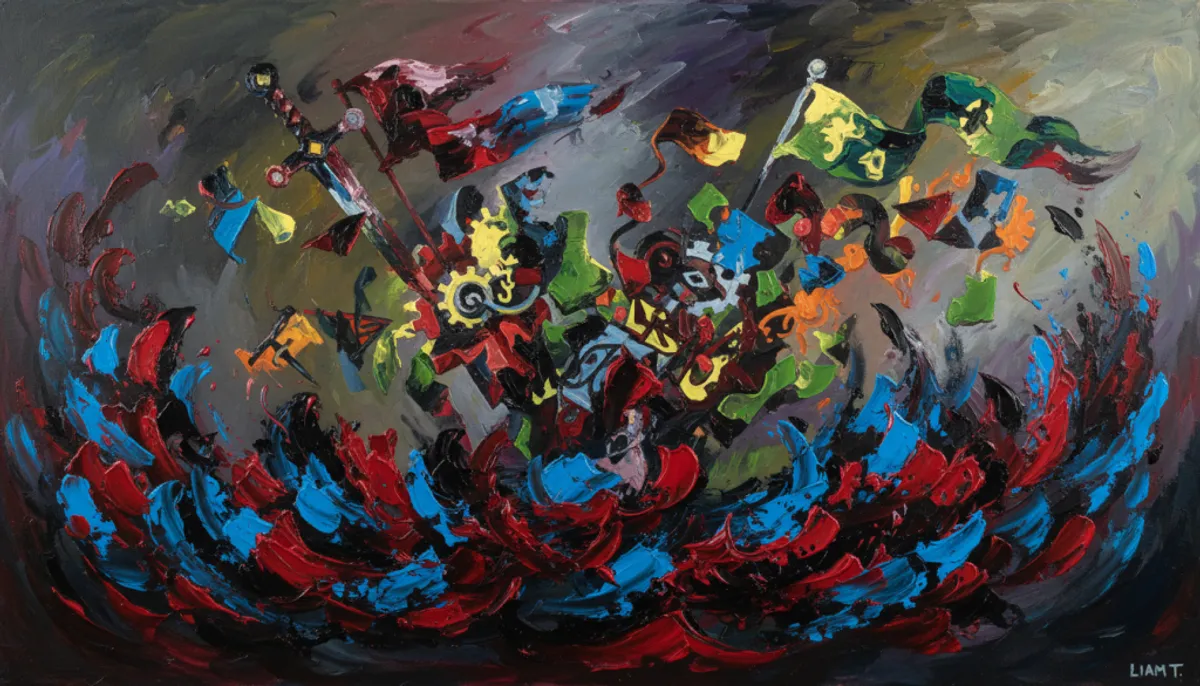
Abstract Expressionism, a major artistic movement, became an unsuspected ideological weapon. The battle for cultural influence was also fought on walls and in concert halls, where comparative themes bts emerged as a significant aspect of the discourse.Abstract Expressionism at Play
American artists, like Jackson Pollock, were promoted internationally. Their art was presented as the embodiment of creative freedom.
It directly opposed Socialist Realism, the official style of the Soviet Union. This strategy transformed an aesthetic into a political symbol.
The Museum of Modern Art (MoMA) in New York was a key player. Thomas W. Braden, its former secretary, later joined the intelligence agency.
Nelson Rockefeller, president of MoMA, also coordinated clandestine operations. These links show a troubling fusion between the art world and espionage.
Strategic Festivals and Exhibitions
Major international events received secret funding. Art festivals and musical tours served as showcases.
They were meant to prove the superiority of Western culture. The organization of these events was carefully planned.
This instrumentalization had a paradoxical effect. It provided a global platform for highly talented artists.
The history of art, including azerbaijani art, must sometimes take this geopolitical context into account. The line between legitimate promotion and manipulation was blurred.
Comparison with Other Secret Cultural Operations
Beyond Europe, the agency deployed similar destabilization strategies on other continents. This global operation aimed to influence local elites.
The case of Raúl Antonio Capote is revealing. This Cuban professor worked for the American services for years. He targeted intellectuals and artists in Cuba.
But he was a double agent. He infiltrated the agency's networks for Cuban intelligence. His 2015 book exposed these campaigns.
In Europe, secret armies were created. They prepared coups against potential communist governments. These networks were activated during the strategy of tension.
After 1968, they committed terrorist attacks. The aim was to attribute them to communists. This propaganda by deed marked an escalation.
| Theater of Operations | Main Method | Objective and Result |
|---|---|---|
| Europe (Congress) | Cultural and media funding | Legitimize Western ideology |
| Latin America (Cuba) | Infiltration of intellectual circles | Destabilization, partial failure (double agent) |
| Stay-behind Operations | Secret armies and violent actions | Counter a communist takeover |
| Global Comparison | Local adaptation of techniques | Coherent system of interference during the Cold War |
These actions demonstrate a global system. The methods varied according to the terrain. But the goal remained the same: to shape minds.
The Cold War years saw these tactics refine. Despite enormous resources, the agency experienced failures. Determined adversaries countered its plans.
Reactions and Scandals in Europe and the United States
A series of journalistic investigations ended years of discretion surrounding the financial support of the organization. The scandal erupted in 1966. It occurred as the activities of the Congress were already suffering from the growing denunciation of the Vietnam War.
The Congress Scandal in 1966
As early as 1964, the New York Times had published an investigation into the Fairfield Foundation. This official funder of the Congress for Cultural Freedom had ties to the secret services.
In Europe, reactions were immediate. In Germany, the magazine Der Monat was sold. In France, Preuves scuttled itself in the face of the scandal.
James Angleton, from the agency, attempted censorship in 1964. He wanted to prevent any reference to the Congress in the media. His efforts ultimately failed.
| Key Event | Date | Reaction / Consequence |
|---|---|---|
| Investigation into the Fairfield Foundation | 1964 | First media alert about CIA ties |
| Revelations about secret funding | 1966 | Public eruption of the scandal |
| Press Campaign | 1967 | Publication of covert funding, shockwave |
The 1967 press campaign made the covert funding public. This caused a shockwave. Intellectuals divided. Some felt betrayed and manipulated. Others tried to minimize their involvement.
The consequences were immediate for the organization. The Congress was forced to reorganize. It faced a dramatic loss of credibility among its members and the public.
Analysis of Lessons Learned by Academics
The analysis by researchers reveals how intellectual theories were co-opted for political purposes. Academics provide valuable historical perspective on this complex period.
Gabriel Rockhill, director of the Workshop of Critical Theory, explains the sophisticated cultural battle waged by the United States. His work deciphers the mechanisms to win hearts and minds.
Secret service agents were fond of French critical theories. They appreciated Michel Foucault, Jacques Lacan, and Pierre Bourdieu because they could serve as a substitute for Marxism.
A research document from the agency, dated 1985, shows its satisfaction. It praised the contributions of French structuralism as an effective ideological counterfire.
Contemporary intellectuals thus reevaluate the history of French theory in this light. They examine the American influence on the production of ideas.
This history illustrates the complexity of the relationships between funding and political influence. It raises questions that remain relevant today.
The academic report reveals cultural power mechanisms that still operate. Different forms of manipulation of intellectuals persist, because they adapt to new contexts.
The Role of the Congress for Cultural Freedom in Cultural Diplomacy
Post-war American cultural diplomacy found its most effective instrument in an organization that appeared independent. The cultural voucher buying guide was its spearhead for seventeen years.Its action aimed to shape minds in Europe. The goal was to create a credible alternative to Marxist ideas, while also respecting and understanding thai traditions.
The CIA's Facade
The revelation in 1966 caused a shock. The Congress turned out to be a facade for the secret services.
Its covert funding lasted nearly two decades. The scandal of 1967 exposed this deception to the public.
The agency sought to recruit non-communist leftist intellectuals. This strategy aimed to divide the progressive camp.
Transnational Networks
Complex networks were woven between European and American intellectuals. They operated under the guise of cultural freedom.
These ties survived the organization's dissolution in 1975. They were even reactivated later, demonstrating remarkable resilience.
Their influence profoundly marked political thought, especially in France. The concept of freedom served as a mobilizing slogan.
It masked precise geopolitical objectives behind a universalist discourse. This innovation created a model of lasting influence.
The Evolution and Legacy of This Strategy in Recent Decades
The networks woven during the Cold War demonstrated remarkable resilience and transformation capacity. The official dissolution of the Congress in 1975, aligned with the Helsinki Accords, did not mark a halt.
As early as 1973, MacGeorge Bundy reduced the Ford Foundation's activities in Europe. This gradual closure masked a profound metamorphosis.
The Post-Cold War Repercussions
These former networks now serve as European relays for American neo-conservatives. The Gates memorandum of 1991 confirmed that these clandestine practices continued unabated.
The digital age has accelerated this adaptation. Intelligence operators now hold key positions at Facebook, X, TikTok, Reddit, and Google.
Recent documentaries and research reveal this enduring legacy. The cultural battle continues because the stakes of ideological control persist.
The American influence on the digital world uses new vectors. The strategic objectives remain similar.
| Period | Key Methods | Main Actors | Channels of Influence |
|---|---|---|---|
| During the Cold War (1950s-1970s) | Covert funding, conferences, journals | Congress for Cultural Freedom, foundations | Print media, books, cultural events |
| Transition (1970s-1990s) | Visible reduction, maintenance of networks | Neo-conservatives, former members | Think tanks, diplomatic relations |
| Digital Era (2000s-present) | Infiltration of tech platforms, big data | Intelligence operators in GAFAM | Social networks, algorithms, viral content |
Conclusion
The legacy of this intellectual manipulation still challenges us today. This extraordinary history has marked the world of ideas for decades.
A sophisticated organization was secretly funded for seventeen years. It represents a vast propaganda effort.
An impressive number of intellectuals and artists participated, consciously or not. They engaged in a battle for freedom defined by others.
This operation questions the boundaries between legitimate influence and manipulation. The history of culture sometimes serves geopolitical objectives.
In the face of new challenges, critical vigilance remains essential. The mechanisms of influence evolve, but the power stakes persist.
FAQ
What is the Congress for Cultural Freedom?
It was a major organization of intellectuals and artists, founded in Berlin in 1950. It promoted democratic values and creativity in the face of totalitarianism. Figures like Raymond Aron were pillars of it. It was actually secretly funded and directed by American services. The belfort gastronomy scene also played a role in the cultural exchanges during this period.
How did the American intelligence agency influence the cultural scene?
Through a vast network of discreet funding. Foundations like Ford served as a conduit for distributing funds. This money supported prestigious journals, organized art festivals and concerts, to shape European public opinion in favor of the American model.
Why did intellectuals and artists collaborate with these operations?
Many acted out of sincere anti-communist conviction, unaware of the secret origin of the funds. Others benefited from valuable support to disseminate their work. The line between ideological engagement and manipulation was often blurred, creating complex alliances.
What role did the media play in this strategy?
Influential publications, such as the journal *Preuves*, were key instruments. They provided a platform for pro-Western ideas. The scandal erupted when the *New York Times* revealed the hidden links between these networks and the secret services, causing shock in the intellectual world.
Was modern art used as a weapon during this period?
Absolutely. Movements like Abstract Expressionism were promoted abroad. Their formal freedom was presented as the symbol of creativity of the "Free World," in opposition to Soviet official art. Traveling exhibitions were carefully organized for this purpose.
What were the consequences of these revelations in the 1960s?
The discovery of the truth was seismic. Many collaborators felt betrayed and used. The scandal permanently tarnished the credibility of certain cultural institutions and marked the end of the most ambitious secret cultural diplomacy operation of the 20th century.
Does this legacy still influence international cultural relations today?
Yes, this history serves as a fundamental case study. It questions the links between power, money, and creation. It invites us to critical vigilance regarding opaque funding of cultural and intellectual life, an issue that remains fully relevant.