
Have you ever thought about the customs that shape your daily life, like family meals or local festivals? These practices, passed down through generations, are the beating heart of a living heritage.
A traditional culture represents much more than just a simple catalog of old customs. It is a dynamic set of knowledge, values, and arts that are transmitted, primarily orally, from parents to children.
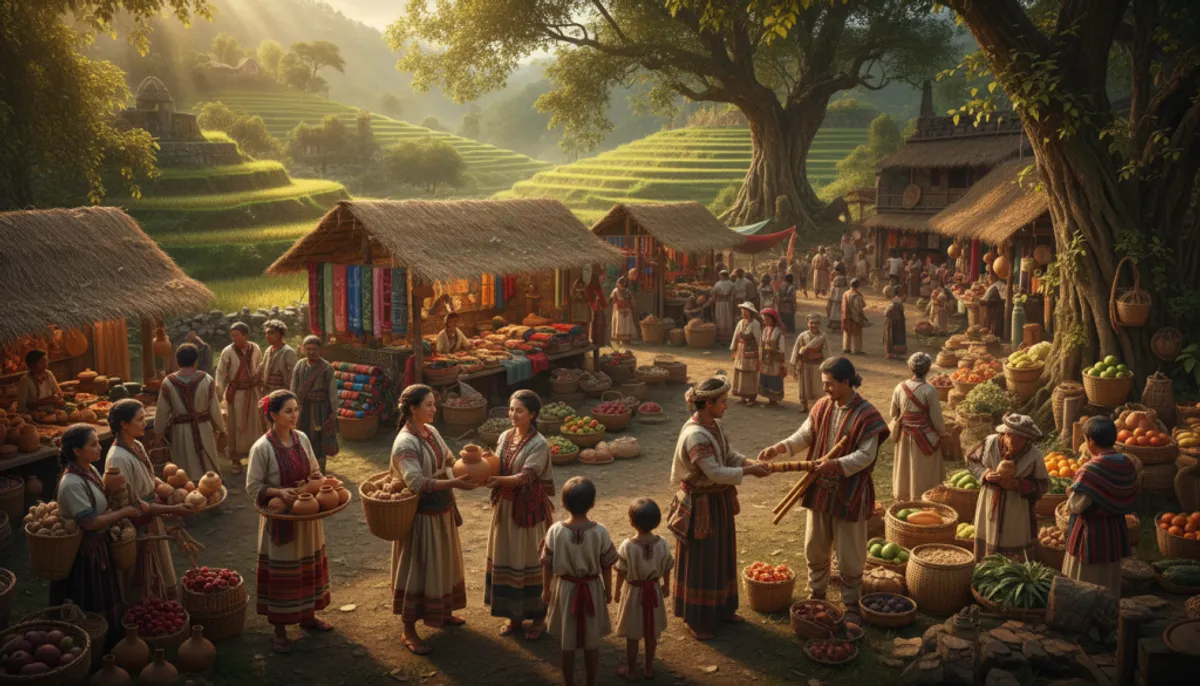
The word “tradition” comes from the Latin traditio, which means “to hand over” or “to pass on.” This etymology reveals the very essence of the concept: an intangible heritage that travels through time.
This heritage profoundly shapes the identity of a group. It creates a strong sense of belonging and a link of continuity with the past for each community.
In our rapidly changing modern world, understanding these roots makes perfect sense. Preserving this heritage is not a step backward, but a way to nourish our present.
This first article invites you to explore the foundations of these cultures. We will see how they evolve while maintaining their soul, and why their preservation is a crucial contemporary challenge.
Introduction to Traditional Culture
Let’s imagine for a moment the invisible thread that connects generations, carrying songs, recipes, and shared rites. This thread constitutes the soul of a living heritage, much more than just a simple collection of ancient customs.
Definition and Importance of the Topic
It is a dynamic set of knowledge and transmitted practices. This heritage constantly evolves while retaining its core.
Its understanding has become a crucial subject today. It touches on identity, cultural diversity, and the preservation of a fragile global heritage.
In the face of globalization, preserving these roots allows for nurturing dialogue and resisting homogenization.
Objectives of the Article
Our goal is to provide you with a panoramic view of the foundations of these heritages. We will explore their characteristics and transformations across the globe.
To approach this topic, we will rely on concrete examples and varied research. The approach aims to be educational and accessible to all.
You will thus discover the fundamental importance of these collective memories for the community feeling and shared values.
Historical Origins and Foundations of Tradition
The history of malian art is rarely a simple narrative. It is a tapestry woven from migrations, adaptations, and encounters. To grasp its foundations, one must explore its most distant origins.
Ancestral Roots and Evolution
These origins delve into ancient times. The first communities of humanity developed distinctive practices shaped by their geographical and social environment.
The evolution is not a linear process. It is a constant adaptation to changes. The folklore of Newfoundland, for example, blends Irish, English, and Indigenous influences. This mix reflects the history of the settlers who arrived over the last centuries.
This capacity for adaptation ensures a remarkable continuity. The essence of a tradition persists through time, even if its form evolves with new contexts.
The Role of Folklore in Cultural Transmission
Folklore acts as a living bridge between the past and present of each community. It is the preferred vehicle that carries the collective knowledge from one generation to the next. This heritage is never static; it transforms each time it is shared.
Oral and Written Transmissions
For millennia, speech was the main tool of teaching. To facilitate memorization, techniques like rhyme and alliteration were used. These processes made stories easier to remember and repeat.
The advent of writing changed the way this heritage is preserved. It allowed for the fixing of narratives but also opened the door to new interpretations. Each generation draws from this heritage and adds its own sensitivity.
| Transmission Method | Key Characteristics | Impact on Folklore |
|---|---|---|
| Oral Transmission | Use of rhymes, repetitions, direct performance. | Fluid evolution, constant adaptation to the audience. |
| Written Transmission | Fixing of text, possibility of broad dissemination. | More stable preservation, but varied interpretations. |
| Digital Transmission | Videos, social media, audio recordings. | Instant global circulation, new creative formats. |
Stories, songs, and proverbs circulate within groups. Today, digital media further transform the modalities of this cultural sharing. The challenge is to keep the soul of the tradition while using new tools.
Essential Characteristics of a Traditional Culture
Experts identify several major genres to classify the expressions of a collective heritage. This set forms a coherent system where each element has its place.
Eight main genres are distinguished:
- Customs (festivals, rites)
- Material culture (buildings, objects)
- Beliefs and traditional medicine
- Stories and legends
- Songs, music, and dance
- Minor genres (proverbs, riddles)
These categories often overlap. A song may tell a legend during a festival. The essential point is that this heritage only exists through a community that recognizes it as its own.
This community ensures transmission from generation to generation. It is the heart of tradition. This living practice evolves slowly, keeping its soul while adapting.
What is a Traditional Culture: Analyses and Perspectives
Academic classifications, as practical as they may be, do not always do justice to the shifting reality of local practices. To understand this heritage, one must adopt a holistic view that transcends established categories.
Examination of Constitutive Elements
A traditional culture forms a system where everything is interconnected. It includes material components, such as crafts, and immaterial aspects, such as stories.
These key elements articulate with each other:
- Objects and places (tangible support)
- Skills and knowledge
- Shared values and symbols
- Social and ritual practices
This interaction creates a coherent and dynamic whole. Culture only lives through these constant connections.
Interpretations and Local Variations
The same foundation can manifest in surprising ways. Each community adapts it to its history and environment.
Let’s take a concrete case: the harvest festival. Its rites vary from one country to another, and even from one village to another. This example illustrates the richness of local interpretations.
An anthropological or historical analysis offers complementary insights. It reveals how a unique tradition is locally colored.
Adopting a holistic perspective is essential. It allows for appreciating the complexity of these heritages across the world.
The Influence of Traditional Practices on Community Identity
Participating in an ancient ritual affirms one’s belonging to a circle that transcends the individual. These shared habits construct and maintain the identity of a group. They create a deep and unique sense of belonging.
Customs function as markers. They distinguish one community from another and strengthen solidarity within it. Language, festivals, and ways of life form a coherent identity fabric.
Engaging in these activities strengthens social ties. It transmits common values that structure collective life. It is a powerful mechanism for cohesion.
This continuous practice can even contribute to ethnogenesis. It helps form a distinct ethnic identity over time. Sharing a collective memory is its essential foundation.
In summary, a living tradition is the invisible cement of a community. It gives it a grounding in the past and a compass for the future. It is the beating heart of its heritage.
Intergenerational Transmission and Cultural Heritage
To transmit is not simply to repeat, but to reinterpret and adapt so that the essence persists. This living process ensures the continuity of a precious collective heritage.
Transmission Mechanisms
The passing of knowledge between ages takes several paths. The oral manner, with stories and songs, is a form of direct teaching. Gestural transmission, such as for dance or crafts, is learned through observation and practice.
This passing on is never a perfect copy-paste. Each generation makes choices. It selects what resonates with its time and interprets the received codes. This adaptation is the key to the survival of a traditional culture, ensuring that the essence of traditional cultures persists through time.
Essential figures carry this heritage. Elders, artisans, and storytellers are its active guardians. Institutions, such as family or associations, create a framework for this sharing.
Today, this flow encounters obstacles. Urbanization and mobility can break the chains of transmission. Rapid social rhythms leave less room for this long process.
Innovative solutions are emerging. They combine ancestral methods with digital tools and emphasize sustainable heritage management. The goal remains the same: to ensure the sustainability of an intangible heritage for future generations.The Diversity of Traditions Around the World
From Africa to Asia, through the Americas, every corner of the world vibrates to the rhythm of its own customs. This mosaic forms a heritage of extraordinary richness.
Regional and Cultural Examples
This diversity is embodied in unique practices. Here are some striking examples:
- Coming-of-age ceremonies in Africa.
- Lantern festivals in Asia.
- Colorful carnivals in Europe and Latin America.
Some places are true melting pots of krou craftsmanship. In Newfoundland and Labrador, folklore blends Irish, English, and Indigenous influences. The Franco-Newfoundlanders add a distinct linguistic flavor.
Each community adapts its practices to its environment. Climates, histories, and local resources shape these expressions.
Despite this variety, universal themes emerge. Rites of passage and seasonal festivals are found in all countries. This diversity is a precious wealth for humanity, to be preserved in the face of homogenization.
The Interaction Between Traditional Culture and Modernity
Contrary to a common belief, the legacies of the past and the innovations of the present can engage in fruitful dialogue. Their relationship is complex, but not necessarily conflictual.
Communities demonstrate a great capacity for adaptation. They integrate technological tools or new social contexts without abandoning their essence.
Adaptations to Social Changes
The effect of modernization is twofold. It can threaten certain practices, but it also offers opportunities.
Social media, for example, has become a transmission channel. They allow for a resurgence of interest in declining customs.
Tensions sometimes emerge between old values and contemporary norms. Groups negotiate these contradictions, creating hybrid forms.
In the end, many current traditions are recent creations. They prove that this heritage is still alive and creative.
The Evolution of Traditional Practices Over Time
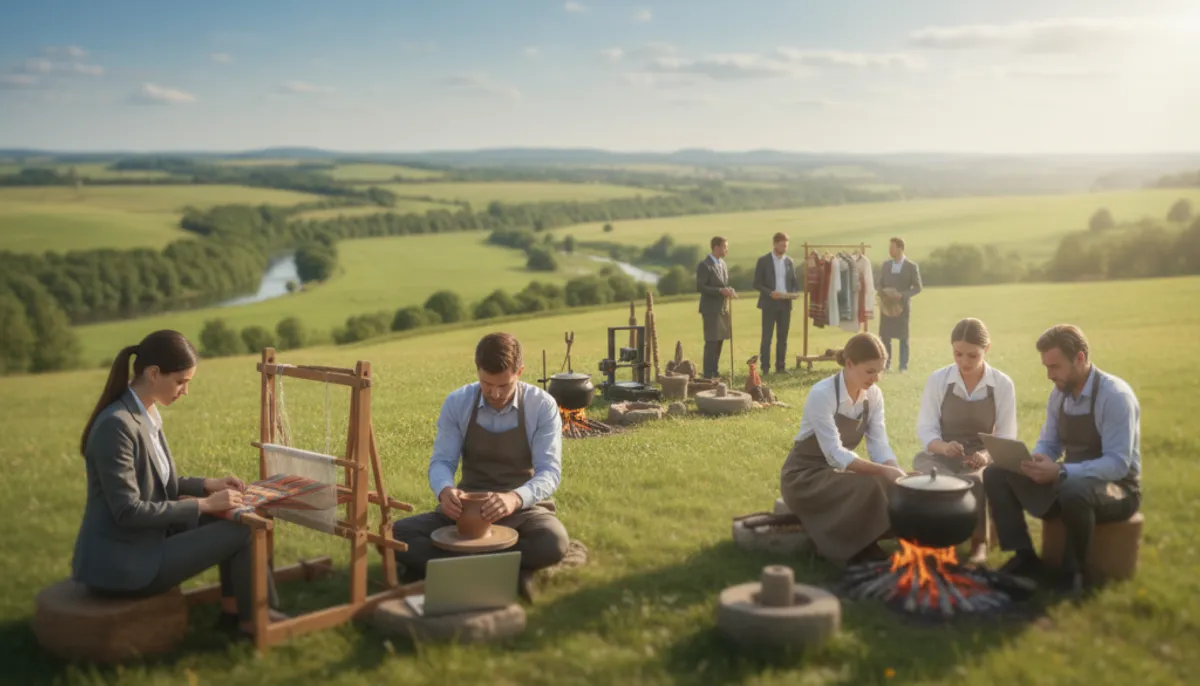
The landscape of inherited customs is not a static museum, but a garden in perpetual growth. Nothing is ever fixed there. Each tradition carries within it a capacity for evolution that ensures its survival through the centuries.
Historical Transformations
Major upheavals in history have always reshaped usages. The history of the kurdish people, migrations, conquests, or industrial revolutions have forced communities to adapt their rites. These events mark pivotal epochs.
Some habits disappear when they no longer meet needs. Others emerge, reflecting new values. This dynamic traverses all of human history.
Contemporary Examples
In the 21st century, this adaptation continues. Local festivals now incorporate digital elements to reach a wider audience. The symbolic content remains, but the form changes.
This flexibility is the key to relevance. It allows a heritage to remain alive and meaningful, even after years of transformations. It is through traversing time that tradition proves its resilience.
Studies and Research on Traditional Cultures
Behind every custom lies a world of meticulous scientific analyses. This academic field is essential for understanding and preserving our living heritage.
Studies provide a rigorous framework. They transform oral narratives into lasting knowledge.
Scholarly Works and Academic Contributions
Several books are reference works in this field. Christmas Mumming in Newfoundland (1968) opened new methodological perspectives.
The Dictionary of Newfoundland English (1982) is another major work. It gathered thousands of words by combining oral and written sources.
The book Folktales of Newfoundland (1996) is recognized internationally. It shows how scientific research can capture the richness of tales.
A bibliography from 1989 already listed 950 entries on folklore and language. This reflects the extent of academic work.
Institutions like the Department of Folklore at Memorial University of Newfoundland are crucial. Their archive documents this heritage for the future.
These studies do not just describe. They help communities value and transmit their precious cultural references.
Differences Between Tradition and Traditionalism
A frequent confusion blurs the line between tradition, a living heritage, and traditionalism, an ideological stance. Clarifying this distinction is crucial for understanding current debates about our heritage.
Etymological and Sociological Aspects
Etymologically, tradition means “to transmit.” It is an active process of passing on that adapts. Traditionalism, on the other hand, expresses a desire to return to old values, often idealized.
From a sociological perspective, the difference is clear. A tradition is a dynamic flow. Traditionalism is a conservative ideology that resists change.
This refusal of movement can paradoxically impoverish the heritage. It freezes practices that, by nature, must evolve to retain their meaning.
Respecting customs does not mean rejecting progress. It is maintaining a living link with the past while adapting it. This nuance is essential for a resilient culture.
| Aspect | Tradition | Traditionalism |
|---|---|---|
| Nature | Dynamic process of transmission. | Conservative and static ideology. |
| Relation to Time | Continuous adaptation to the present. | Nostalgia for an idealized past. |
| Evolution | Accepts and integrates change. | Resists change. |
| Core Values | Transmission, adaptation, belonging. | Preservation, purity, regression. |
The Impact of Intangible Heritage on Society
How do ancient songs or forgotten skills still influence our modern society? This heritage is an active memory and a project for the future. It profoundly shapes our collective life.
Intangible heritage strengthens social cohesion. It creates common references within a community. This shared sense of belonging is an invaluable value.
It also transmits ethical norms and behavior models. These values guide interactions among people. They structure life in society.
Its economic role is growing. Cultural tourism and the creative economy enhance skills. This generates income for local communities and promotes initiatives like kadéos culture vouchers.
Psychologically, it offers stable reference points in a rapidly changing world. It nourishes individual and collective identity. It is a precious anchor.
Educationally, art education and traditions transmit practical knowledge. These accumulated wisdoms benefit all of humanity. Recognition by UNESCO confirms this universal value.
| Area of Impact | Manifestation | Benefit for Society |
|---|---|---|
| Social Cohesion | Creation of common references and rituals. | Strengthens the sense of belonging and solidarity. |
| Economy | Cultural tourism and crafts sales. | Generates jobs and values local skills. |
| Education | Oral transmission of practical knowledge. | Preserves a reservoir of knowledge for future generations. |
| Identity | Provides cultural and historical reference points. | Helps individuals locate themselves in a complex world. |
Transmission of Knowledge and the Role of Communities
At the heart of any cultural transmission lies the collective action of communities. They are not mere receptacles but dynamic actors.
Practices of Collective Memory
Rituals and celebrations create a shared historical consciousness within a group. This active memory is the cement of identity.
According to Maurice Halbwachs, traditionalization is a key process. Communities transform practices into valued heritages.
The passing on of knowledge is organized from family to institutions. Each social unit chooses and adapts what it transmits.
In the face of threats, groups protect and claim their heritage. This resistance ensures the continuity of a vital process.
New communities, whether diasporic or virtual, invent innovative modes of transmission. They preserve memory through modern channels.
| Type of Community | Preferred Transmission Mechanism | Impact on Collective Memory |
|---|---|---|
| Local Community (Village) | Direct oral transmission, seasonal rituals. | Creates a strong territorial anchorage and a very localized shared history. |
| Diasporic Community | Transnational family networks, online media. | Maintains a symbolic link with the country of origin and adapts practices. |
| Virtual Interest Community | Forums, video tutorials, collaborative digital archives. | Enables dematerialized preservation and global sharing. |
| Institutional Community (Museum, Association) | Formal educational programs, academic documentation. | Legitimizes and standardizes knowledge, making it accessible to the general public. |
In summary, it is through the engagement of each community that knowledge transcends time. This collective work within a human unit is the key to transmission.
Emblematic Examples and Case Studies
The Canadian province of Newfoundland and Labrador offers a fascinating example of cultural blending. This case illustrates how multiple heritages intertwine to create a unique folklore.
From Newfoundland to French Traditions
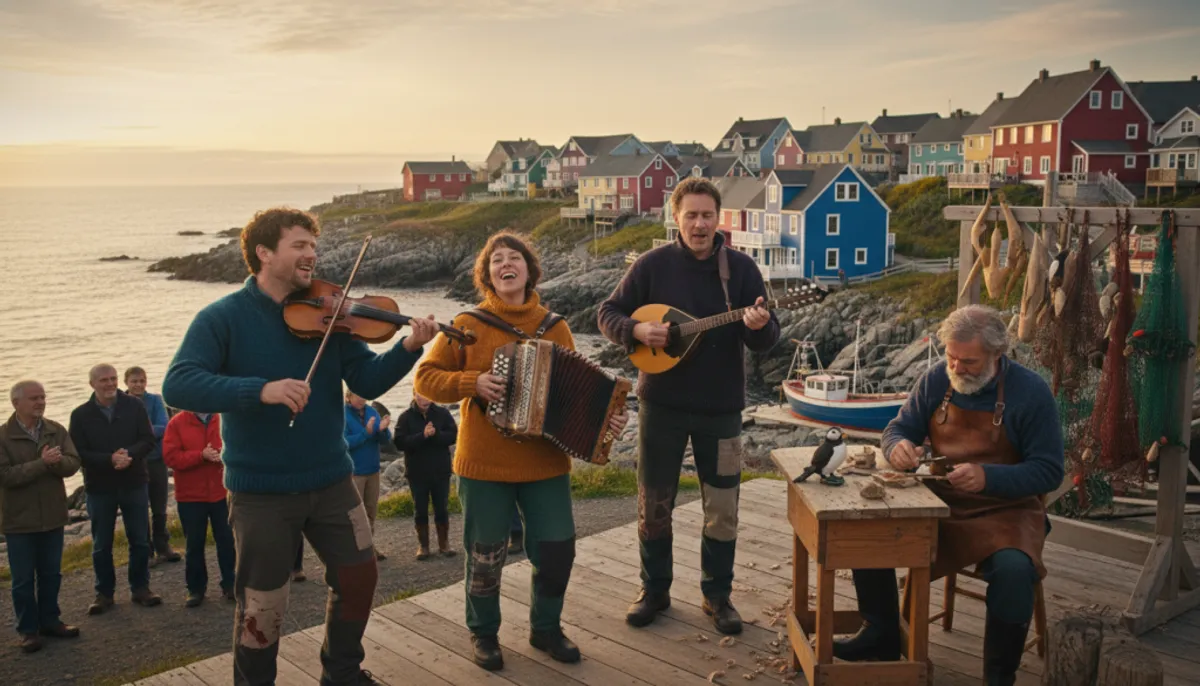
This cultural landscape combines Irish, English, and Indigenous influences. Purely local practices have emerged, such as Tipp’s Eve, celebrated on December 23, or the dance Running the Goat.
The Indigenous peoples have also enriched this heritage. Their craftsmanship is evident in the making of leather and fur boots. The word pipsy, referring to a dried fish, comes directly from Inuktitut.
The Franco-Newfoundlanders group adds another dimension. Its specific linguistic heritage maintains a distinct identity within the province.
Interesting parallels can be found with certain traditions from France. Village festivals or artisanal skills from a region also create a strong sense of belonging. These examples serve as a reference for understanding how traditions adapt and merge, including popular activities such as team building paris.
This case study shows that collective heritage is still alive and in motion. It thrives on encounters to remain relevant.
Conclusion
At the end of this exploration, one conviction stands out: traditions are resilient and creative systems. This article has shown that a traditional culture is not a frozen relic. It is a living heritage that profoundly structures the identity of groups, including various cultural getaways that highlight the diversity of these traditions.
Intergenerational transmission and the actions of communities are essential. They ensure the continuity of this precious intangible heritage. Each generation adds its contribution, in a constant dialogue with its time.
In the face of globalization, challenges exist but opportunities do too. New technologies and international recognition assist in revitalization. Respecting ancestral values is a creative process of adaptation, not a step backward.
This capacity for evolution ensures their prosperity within many countries. This cultural diversity is a fundamental wealth for all of humanity. It deserves our commitment to its preservation across the world.
FAQ
How does a tradition take root and develop?
A practice finds its origin in the needs and beliefs of a human group at a given time. It then evolves through a process of transmission, often oral, and adapts to social changes while retaining its deep meaning for the community.
How does folklore contribute to preserving our heritage?
Folklore, such as tales, songs, and legends, is an essential vehicle. It carries the values and collective memory of a people. This transmission, from generation to generation, ensures the continuity of intangible heritage within society.
What elements define an ancestral cultural practice?
It is characterized by its collective dimension, its link to a territory or shared history, and its social function. These elements often include rituals, artisanal know-how, a language or dialect, and foundational narratives that forge identity.
Why do customs vary so much from one region to another in the world?
This diversity is explained by adaptation to local environments, unique histories, and encounters between peoples. For example, rural festivals in France and Indigenous celebrations in Newfoundland reflect unique relationships with nature and community.
How do ancient practices coexist with modern life?
They are not fixed. Many adapt to contemporary contexts. This evolution shows their vitality. Research and anthropological studies help understand these adaptations, where the teachings of the elders meet today’s tools.
What role do older generations play in safeguarding this heritage?
Elders are the guardians of precious knowledge. Through storytelling, demonstration, and direct teaching, they ensure the transmission of a living heritage. This process creates a strong bond between ages and reinforces group cohesion.
How does intangible heritage influence our current society?
It offers an anchor and a sense of belonging, especially in a globalized world. It inspires artistic creation, tourism, and intercultural dialogue. Its value lies in its ability to enrich the present while honoring the past.