
Beyond the old stones and ancient objects lies a much deeper wealth. Our shared heritage represents much more than a simple collection. It is the beating heart of our collective memory.
This heritage shapes our identity, often without us being aware of it. It tells the story of our societies and forges a powerful sense of belonging. It is a living narrative that unites us.
The notion of national treasure encompasses both material and immaterial dimensions. From monuments to traditions, each element possesses invaluable worth. They help us understand who we are today.
Exploring the multiple facets of this legacy is essential. It allows us to measure the impact of these treasures passed down by our ancestors on our current culture. Preserving and transmitting this heritage is a precious duty.
The Historical Evolution of Heritage in France
The notion of safeguarding testimonies of the past has profoundly changed in the Hexagon. Our relationship with historical remains has undergone major transformations over time.
This evolution reflects changes in mentality within French society. Conservation approaches have followed the concerns of each era.
From ancient roots to modernity
The 20th century marks a decisive turning point in the protection of heritage. The Malraux law of August 4, 1962, is a fundamental milestone.
André Malraux, then Minister of Culture, created the “protected sectors.” These historical urban ensembles preserve their architectural unity.
Sarlat, in Dordogne, becomes the first protected sector. This initiative responds to the urban upheavals of the 1960s.
The influence on contemporary society
The demographic growth of the time necessitates an adaptation of city centers. It was essential to reconcile modernization with the preservation of ancient real estate heritage.
This pioneering legislation still influences our urban life today. It has durably shaped the layout of our public spaces.
From the Lascaux cave to the factories of the 20th century, each era enriches our heritage. This history continues to shape our present.
The protection of historical testimonies remains essential for our society. It ensures the transmission of our collective memory across time.
The Role of Heritage in National Identity
The link between citizens and their history is embodied in the buildings that populate our urban landscapes. These structures become much more than mere constructions. They symbolize our shared history and our belonging to the same community.
In a constantly evolving world, these landmarks offer valuable stability. They help us understand where we come from and who we are collectively.
The construction of identity through monuments
Iconic monuments play a fundamental role in shaping our identity. The Eiffel Tower or Mont-Saint-Michel are not just tourist attractions. They represent powerful symbols that unite the French.
These buildings create a sense of belonging that transcends generations. They serve as bridges between the past and the present, allowing each citizen to feel an integral part of a grand story.
The following table illustrates how different types of monuments contribute to forging our collective identity:
| Type of monument | Identity function | Impact on cohesion |
|---|---|---|
| Religious buildings | Historical and spiritual symbols | Reinforcement of common values |
| Public buildings | Representation of the State | Creation of a sense of national belonging |
| Industrial sites | Witnesses of economic development | Enhancement of local know-how |
This monumental diversity enriches our culture and strengthens the bonds within our societies. Each generation finds its own landmarks within it.
Exploring why cultural heritage is a pillar of our identity
Our familiar monuments and shared traditions weave an invisible web that unites us. These elements become the silent pillars of our collective identity.
Each cathedral, each famous work of art, each traditional recipe tells a common story. These narratives resonate in our everyday lives.
The historical and symbolic testimony
The value of this heritage goes beyond its mere beauty. It offers a precious testimony to the evolution of our societies.
Take the example of the stained glass windows of cathedrals. They are not just works of art. They illustrate significant episodes of our history.
These testimonies serve as bridges between generations. They help us understand where we come from. This historical continuity forges our sense of belonging.
The transmission of traditional know-how shows this social value. Artisans perpetuate ancestral techniques, including the traditional customs of zambia. They keep alive the memory of ancient societies.
Each heritage element constitutes an open page on our past. It allows us to read the history of those who came before us. This collective reading shapes our present.
Enhancement and Protection of Heritage Assets
The safeguarding of our architectural heritage requires innovative and concerted strategies. These heritage assets represent a collective wealth that deserves appropriate protection. Additionally, understanding the pass culture response time is crucial in ensuring that these strategies are effective and timely.
The enhancement of these architectural treasures involves a methodical approach. It combines ancestral techniques with modern innovations.
Effective preservation methods
The Heritage Foundation plays a crucial role in this protection. This recognized private organization intervenes on endangered buildings.
Its action extends to modest and lesser-known assets. It ensures their safeguarding through proven techniques.
The methods include:
- Restoration respectful of original materials
- Use of non-invasive diagnostic technologies
- Training artisans in traditional techniques
Local and national initiatives
The Action cœur de ville program illustrates this synergy. It concerns more than 200 French municipalities.
This governmental program includes a specific component for heritage. It combines dedicated engineering and financing.
Coordination between public and private actors is essential. It allows for sustainable enhancement of heritage assets.
This comprehensive approach goes beyond classified monuments. It includes all local architectural riches.
Tangible and Intangible Heritage
Our cultural heritage manifests in two distinct but complementary forms. This duality offers a complete vision of our collective memory.
Definitions and concrete examples
Tangible heritage encompasses the physical assets created by humanity. This includes archaeological sites and historical monuments.
A famous work of art or an ancient artifact is also part of it. These tangible elements tell our story through their materiality.
Intangible heritage represents social practices transmitted over time. It includes customs, rituals, and regional languages.
Culinary traditions are an excellent example of this form of heritage. Traditional music and dances are also an integral part.
The link between traditions and modernity
These two aspects of cultural heritage maintain a symbiotic relationship. They nourish each other to enrich our identity.
Tangible assets often inspire contemporary creations. Ancestral know-how finds modern applications.
Another striking example lies in the adaptation of oral traditions. Ancient tales today inspire digital works.
This ongoing interaction ensures the vitality of our heritage. It demonstrates how tradition and innovation can coexist harmoniously.
The Economic Stakes of Heritage
Heritage serves as a true economic engine for French territories. Its influence extends far beyond the cultural sphere to directly impact the national economy.
Impact on tourism and local economy
Cultural tourism accounts for about 40% of international tourism according to the World Tourism Organization. In 2022, France welcomed 75 million foreign visitors.
This fact demonstrates the exceptional attractiveness of our architectural heritage. Historical monuments become magnets for travelers from around the world.
Financial returns and employment
A study by the Heritage Foundation reveals a remarkable fact. For every €1 invested in restoration, €21 in economic returns are generated.
The sector creates 500,000 direct, indirect, and induced jobs. This economic value transforms each city and each territory.
| Type of impact | Key figures | Benefits for communities |
|---|---|---|
| Job creation | 1.7 million jobs generated by tourism (2019) | Dynamization of local employment pools |
| Economic returns | Ratio 1:21 for heritage investments | Revitalization of historic city centers |
| Territorial attractiveness | 75 million international tourists (2022) | Development of businesses and services |
The Influence of Heritage on Social Cohesion
Local festivals and artisanal know-how weave invisible bonds between residents, reflecting the vibrant local culture. These events create a sense of belonging that transcends individual differences.
They allow everyone to recognize themselves in a common story. This dynamic strengthens the social fabric of communities.
Bridges between cultures and generations
UNESCO emphasizes that this heritage can bring people closer together. It fosters peace by creating bridges of mutual understanding.
The protection of intangible traditions is crucial. It allows the identity of human groups to remain alive.
The following table shows how different types of heritage contribute to cohesion:
| Type of heritage | Impact on generations | Strengthening social ties |
|---|---|---|
| Traditional festivals | Transmission to the youth | Creation of shared memories |
| Regional dialects | Connection with the elders | Affirmation of a shared identity |
| Collective rituals | Participation of all ages | Strengthening solidarity |
These practices form a set of references that unite the public. They help multicultural societies find balance, including the contributions of ivorian artists who enrich the cultural tapestry.
The role of this heritage in building living together is fundamental. It creates a precious link between past and present.
The Action of UNESCO and Protection Missions
The United Nations Educational, Scientific and Cultural Organization (UNESCO) plays a fundamental role in safeguarding our global heritage. Its action transcends borders to protect the treasures of humanity.
This institution identifies and classifies exceptional sites across different countries. It ensures their preservation for future generations.
Classification and preservation criteria
UNESCO establishes rigorous standards to recognize the universal value of cultural properties. These criteria include authenticity, integrity, and historical significance.
More than a thousand sites benefit from this prestigious classification. This international recognition mobilizes resources for their protection.
Examples of endangered projects
The organization maintains a list of endangered sites. This alert allows for the unlocking of emergency funds.
More than a hundred locations are on this red list. The Angkor temple is a positive example.
This Cambodian jewel has recently regained its stability. It demonstrates the effectiveness of safeguarding mechanisms.
UNESCO also acts as a safeguard against certain governmental decisions. It thus strengthens protection on an international scale.
Its action unites countries around a common goal: to preserve our world heritage for the first time in history.
Innovation and Restoration in the Enhancement of Monuments
New technologies are currently transforming the approach to conserving our historical buildings. This evolution allows for the preservation of their authenticity while adapting to the challenges of the 21st century.
A so-called responsible restoration now integrates strict environmental criteria. It prioritizes the reuse of materials and the use of natural products.
Modern restoration techniques
This method significantly improves the energy performance of monuments. It fully respects their original technical and historical qualities.
For the first time, an important partnership supports this approach. The Bank of Territories and the association Sites & Cités remarquables join forces.
This concrete fact translates into support for twenty energy renovation projects. These remarkable architectural assets thus benefit from a sustainable second life.
Innovation does not replace traditional know-how. It enriches it to offer more effective and respectful restoration solutions.
| Aspect of restoration | Traditional approach | Modern innovation |
|---|---|---|
| Materials used | Original materials | Natural materials and reuse |
| Energy performance | Conservation of the existing | Improvement with compatible insulation |
| Environmental impact | Not a priority | Central criterion of the approach |
This innovative method of conceiving restoration ensures the preservation of assets for future generations. It also addresses the urgent challenges of sustainable development.
The Challenges of Underinvestment in Heritage
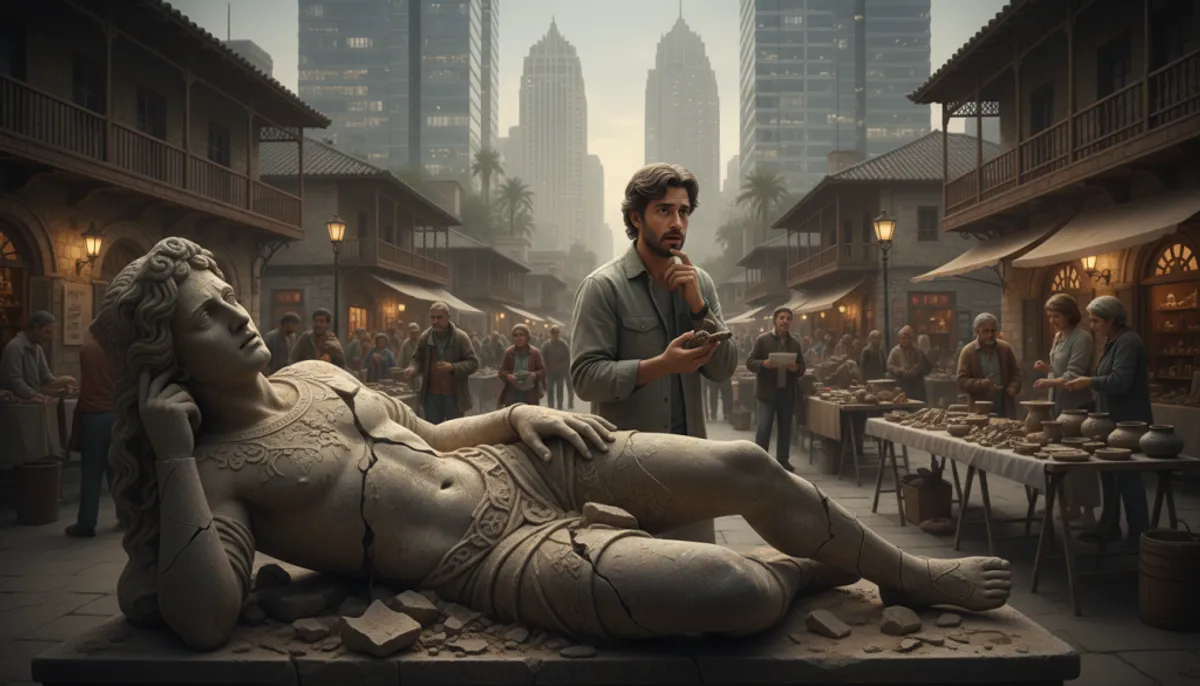
The preservation of our architectural heritage currently faces a major obstacle: the lack of adequate funding. According to a Senate report, the State and municipalities allocate €633 million annually to protected sites.
This amount, although substantial, remains insufficient in the face of the real conservation needs. The problem is worsening over time, creating a concerning situation.
Financial impacts and maintenance
Underinvestment particularly affects local heritage. Many important regional sites are completely neglected.
This fact is often coupled with a lack of regular maintenance. A vicious circle then sets in: less maintenance leads to more degradation.
The consequences are alarming:
- Progressive deterioration of structures
- Increased costs of future restoration
- Real risk of disappearance of certain monuments
The conservation state of part of our heritage becomes concerning. The historical value of these buildings is threatened.
It is urgent to find new funding solutions. Innovative ideas for restoration and maintenance are needed before it is too late.
The Notion of Heritage in Cultural Policies
The European Heritage Days provide a unique framework for rethinking our relationship with history and Greek history. This annual event invites each society to engage in collective reflection on what constitutes its heritage.
The notion of heritage goes far beyond the monuments classified by UNESCO. It encompasses all elements that form the identity of a city or region.
Cultural policies encourage this action of group reflection. They allow communities to determine what they wish to pass on to future generations, including the procedures for the cultural card.
The following table illustrates how different approaches integrate this expanded notion:
| Type of approach | Main focus | Impact on local culture |
|---|---|---|
| National policies | Iconic monuments | Enhancement of national history |
| Local initiatives | Traditions and know-how | Strengthening regional identity |
| Educational programs | Transmission to the youth | Perpetuation of collective memory |
This inclusive vision significantly enriches our understanding of culture. It recognizes the value of great works as well as modest traditions.
The role of the European Heritage Days is essential in this process. They reveal all the components that make the richness of a place.
Inspirations and Examples of Enhancement Around the World
Successful models abroad show promising paths for enhancing our heritage. These innovative approaches perfectly combine historical preservation and sustainable economic development.
They offer a valuable source of inspiration for many countries.
International models of enhancement
The example of Spanish paradores and Portuguese pousadas is striking. These networks of hotels integrated into castles or monasteries represent a brilliant model of heritage enhancement.
They transform monuments into places of life and hospitality. This strategy generates essential revenue for their maintenance.
In France, the Caisse des Dépôts directly draws inspiration from these successes. It invests in the development of hotel complexes in the heart of historical monuments.
This intelligent enhancement ensures a second life for exceptional sites.
The following table compares these inspiring models:
| Model | Country of origin | Key principle |
|---|---|---|
| Paradores | Spain | Luxury hospitality in national monuments |
| Pousadas | Portugal | Restoration of religious and historical heritage |
| French initiatives | France | Adaptation of the concept with local partners |
Another example of successful collaboration involves SCET and France Muséums. Their joint expertise modernizes cultural sites to create hybrid spaces.
These projects demonstrate that successful enhancement of cultural heritage is possible everywhere in the world. It creates dynamic spaces, appreciated by all, including during the vibrant nepalese festival.
Actions and Local Initiatives for Preservation
Concrete initiatives are emerging in our cities to preserve everyday treasures. These local actions mobilize various passionate groups of actors.
Successful regional cases
The European Heritage Days stimulate the creativity of associations. Owners of wooden sailboats open their places to the public.
They thus share their passion for these traditional vessels. This approach makes maritime heritage accessible to all.
Municipal facilitators innovate with fun geocaching trails. These digital treasure hunts reveal urban heritage. They particularly attract younger generations.
Public-private partnerships
The noxi association in Grenoble benefits from the sponsorship of the Caisse des Dépôts. It works on the memory of the Abbey district. This historical territory thus regains its place in the city.
The municipality of Carpentras restored the Hôtel Dieu thanks to the Bank of Territories. This exemplary partnership demonstrates the effectiveness of collaborations.
These projects often involve specialized local artisans. They create a virtuous ecosystem around heritage enhancement.
Futuristic Perspectives for Sustainable Heritage
The future of our architectural heritage is now being written with digital tools. This profound transformation touches on how we preserve and transmit these treasures to future generations.
Towards a revolution in maintenance and restoration
The Bank of Territories is launching calls for projects for the digital transition of cultural enterprises. These initiatives create new spaces for interaction with the public.
The documentary “Archi VR” on the Villa Savoye illustrates this evolution. This virtual reality experience allows for discovering the history of construction for the first time in an immersive way.
The following table shows how these innovations transform the enhancement of heritage:
| Technology | Concrete application | Benefit for visitors |
|---|---|---|
| Virtual reality | Historical reconstruction | Unique immersive experience |
| Geolocation | Interactive trails | Fun discovery of sites |
| 3D scanning | Precise documentation | Digital preservation |
These tools allow a diverse group of actors to collaborate effectively. They ensure the transmission of all heritage values to the next generations.
Augmented reality opens up innovative mediation spaces. It makes otherwise difficult-to-visit places accessible.
This approach guarantees sustainable preservation while modernizing the cultural experience. Heritage thus becomes a laboratory of innovation for future generations.
Conclusion
All the perspectives addressed lead us to consider our role in this chain of transmission. Our cultural heritage represents much more than a simple legacy of the past.
It constitutes a fragile treasure that enriches our daily life. Its preservation requires the commitment of the entire society.
Each of us can contribute to this collective mission. By celebrating and sharing these riches, we ensure their access for future generations.
Enhancing this heritage adds beauty to our world. This creative endeavor nourishes our shared identity and our living culture, including the delightful realm of cute art.
FAQ
What exactly does the notion of heritage encompass?
Heritage includes a set of tangible assets, such as monuments and sites, and intangible elements, such as traditions or artisan know-how. It constitutes a legacy passed down through generations and contributes to our identity, including our culinary tradition.
Why is the protection of these assets so important for our society?
Protection is essential as it allows us to preserve our history and identity. It ensures that this treasure retains its value and is accessible to future generations while playing a role in social cohesion and tourism.
How does heritage enhancement work in a territory?
Enhancement is an action that brings these places to life. It involves restoration, public access, and local initiatives. This creates a strong bond with visitors and energizes the economy, particularly through tourism.
What is the role of monuments in constructing our identity?
Monuments are witnesses of history. They tell part of our past and symbolize our culture. They serve as a link between citizens and strengthen the sense of belonging to a group or country.
What are the main challenges for the preservation of these sites today?
The major challenges include the lack of funds for maintenance, the need for quality restoration, and adaptation to modern needs. It is necessary to find a balance between protection and enhancement to ensure their sustainability.
Why is intangible heritage as crucial as monuments?
Intangible heritage, such as traditional know-how, is equally vital. It represents the living soul of a culture. Without it, part of our history and identity could disappear, even if the buildings remain standing.