
Dive into the history of a fascinating people who marked the Bronze Age. The Yamna culture shaped the face of Europe in a distant past. We will discover its mysterious and powerful legacy.
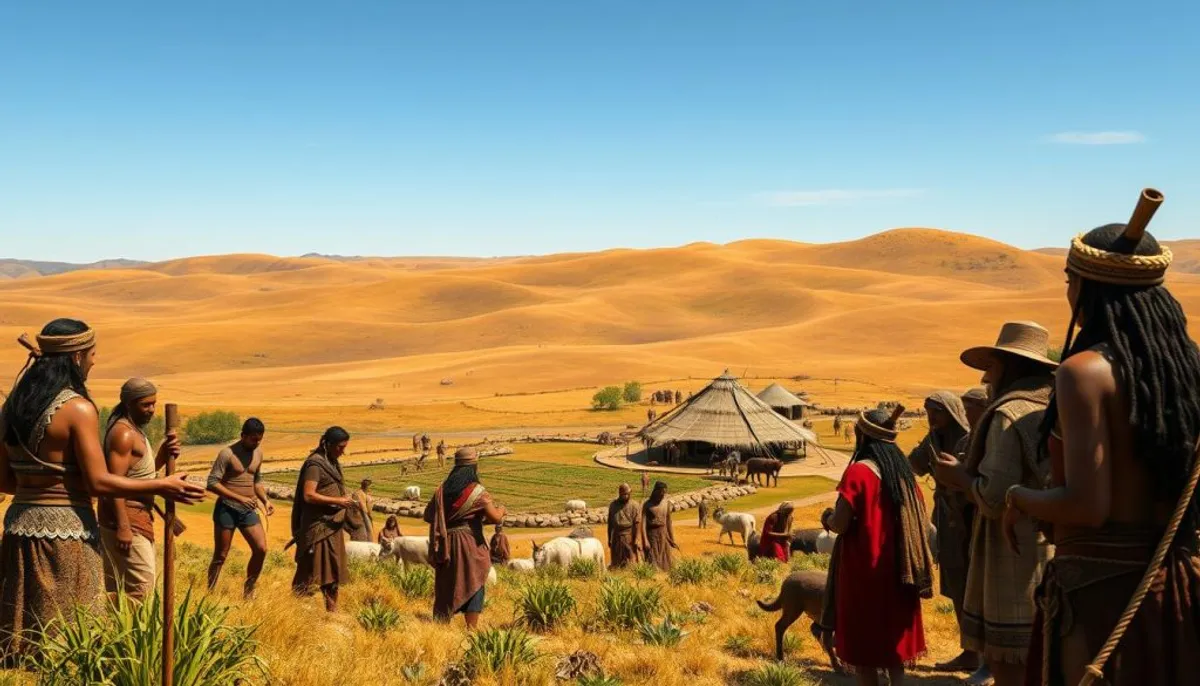
This society flourished several millennia ago in the vast Pontic steppes. This territory, north of the Black Sea, was both hostile and strategic. The populations developed a unique way of life there.
Their existence was marked by pastoralism. These groups, often nomadic, adapted ingeniously to extreme conditions. This period represents a major turning point in human history.
Thanks to archaeological excavations, such as those initiated in the 20th century, we are gradually lifting the veil. This article explores their origins, migrations, and genetic impact. Understanding this civilization is to grasp the foundations of our world.
Key Points to Remember
- The Yamnaya culture was a major civilization of the Bronze Age.
- It developed in the Pontic steppes, a strategic region.
- Its economy was centered on nomadic or semi-nomadic pastoralism.
- This period was crucial for technological development and migrations.
- Modern archaeological discoveries continue to reveal its importance.
- Its genetic and cultural legacy still influences European and Asian populations.
Origins and Historical Context of the Yamna Culture
The deep roots of this civilization sink into the vast expanses of the Pontic steppes several millennia ago. This society emerged from a unique blend of human groups.
Marija Gimbutas' Hypothesis and the Proto-Indo-Europeans
In 1956, Marija Gimbutas proposed a revolutionary theory. She identified this community as the likely homeland of the Proto-Indo-Europeans. This Kurgan hypothesis has fueled scientific debates for decades.
The Beginnings in the Pontic Steppe
The territory extended from the south of the Urals to the Dniester. Extreme climatic conditions shaped the way of life. Temperatures ranged from -35°C in winter to 45°C in summer.
The gradual transition from hunting-gathering to pastoralism characterizes this period. Recent genetic studies confirm the mixing of populations.
| Source of Ancestry | Percentage | Region of Origin |
|---|---|---|
| Middle Don Hunter-Gatherers | 65% | Pontic Steppes |
| Caucasian Hunter-Gatherers | 35% | Southern Caucasus |
| Total Genetic Composition | 100% | Eurasian Mixture |
Archaeological Features and Cultural Remains
The archaeological remains offer us a unique window into the daily life of this ancient society. Their practices reveal a complex social organization, and an assessment of cultural security is essential to understand their way of life. For those wishing to learn more about the craftsmanship and materials used, a pearl buying guide may also prove useful.
Typical Objects and Funerary Infrastructures
The burials constitute the most eloquent testimonies. The deceased rested in pits under mounds called kurgans.
The bodies were placed on their backs, knees bent. A layer of red ochre often covered the dead. This substance had strong symbolic significance.
Social inequalities are clearly evident in the graves. Some individuals were buried with thousands of beads. Others possessed very few objects.
| Type of Burial | Typical Funerary Objects | Social Indication |
|---|---|---|
| Elite Tomb | Bone jewelry, stone maces, sophisticated adornments | High status, significant wealth |
| Common Tomb | Some tools, simple pottery | Ordinary population |
| Tomb with Chariot | Wheeled vehicle, copper weapons | Warrior elite |
Innovations in Metallurgy and Use of Copper
Metallurgy saw remarkable advances during this period. Artisans mastered the working of arsenic copper.
They used two-sided molds to create complex objects. Daggers with teeth and axes with casting holes testify to their craftsmanship.
The discovery of the oldest wheeled chariot in Ukraine shows their technological innovation. These advances paved the way for the advent of the Bronze Age.
Migrations and Expansion in Eurasia
An unprecedented wave of migration reshaped the human landscape of the European continent. This massive expansion represents one of the largest migrations in human history.
Migratory Trajectories Across Europe
Movements to the west connected the Pontic steppes to Scandinavia and even Spain. These westward movements occurred with astonishing speed.
Simultaneously, other groups extended their influence eastward into Mongolia. The Yamnaya culture thus created links over thousands of kilometers.
Impact on Local Populations
The arrival of these peoples profoundly transformed the local European populations. Their genetic makeup was reshaped by this encounter.
Neolithic farmers established for millennia saw their territories gradually occupied. This demographic restructuring created a new cultural landscape in Europe. Additionally, the financial support for culture played a crucial role in the development of these societies.
The presence of kurgans well beyond the steppes attests to the extent of this expansion. This migration redefined the balances of populations across the continent.
Innovations in Transport and Pastoral Economy
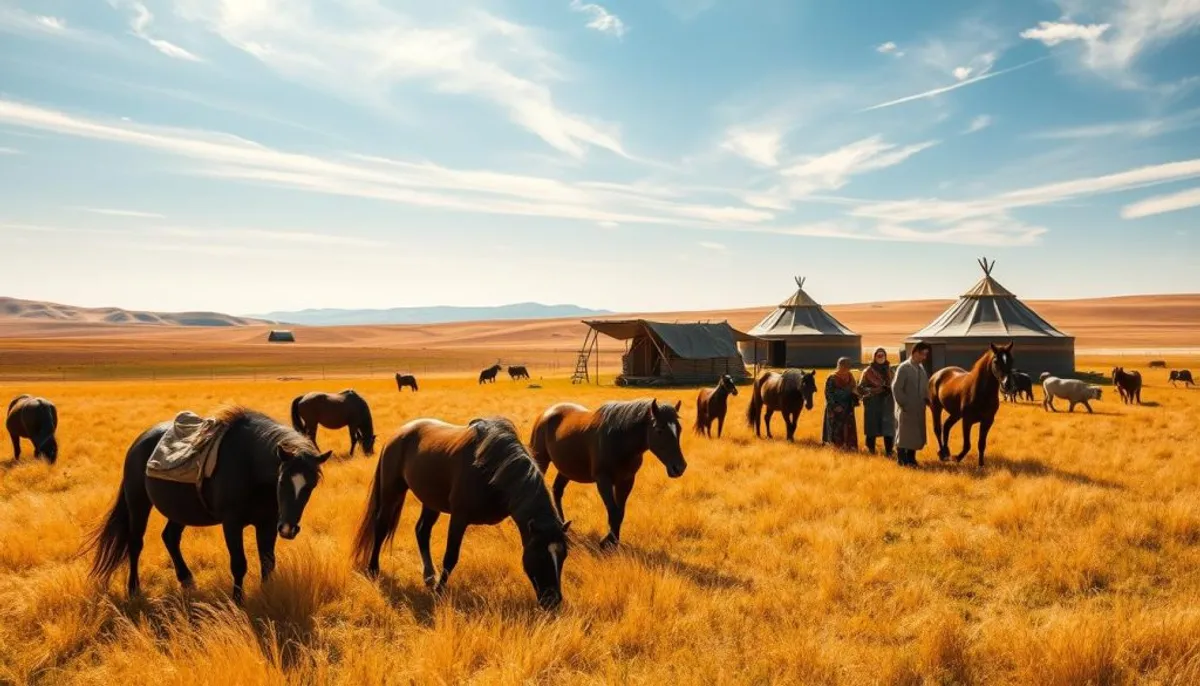
The arrival of wheeled vehicles radically transformed the economy of the Pontic steppes. Around 3300 BC, this revolutionary technology likely arrived through contacts with the Maikop culture. It enabled complete pastoral nomadism.
The Introduction of Wheeled Vehicles and the Use of Horses
The horse became the emblematic animal of this new economy. Its domestication allowed unprecedented mobility across vast expanses. The horses provided major strategic advantages for controlling territories.
A 2021 study based on proteomic analysis of dental tartar reveals the consumption of mare's milk. This discovery confirms advanced domestication of horses as early as the beginning of the Bronze Age.
The current scientific debate questions the regular practice of horseback riding. A 2023 study in Science suggests characteristic skeletal marks. However, these traces could also result from the use of carts.
The pastoral economy diversified with the raising of sheep, cattle, and pigs. This transition from the lifestyles of sedentary farmers allowed the exploitation of previously uninhabited areas. Hunting and fishing complemented this mobile subsistence.
Domestic animals became the basis of survival in the steppes. Sheep provided wool and meat, while horses ensured transport and milk. This intelligent adaptation characterizes the people of the Yamna culture.
Interactions and Exchanges with Other Bronze Age Cultures
The relationships between the peoples of the steppes and their neighbors shaped the history of this era. These exchanges created a complex network of mutual influences.
The Maikop culture, which emerged around 3600 BC in the southern Caucasus, profoundly influenced this period. It transmitted crucial technological innovations to the steppe populations, notably plant cultivation techniques.
Exchanges involved metallurgy and wheeled vehicles. Prestigious objects circulated between these cultures. This transmission accelerated development during the Bronze Age.
| Region | Successor Culture | Period of Emergence |
|---|---|---|
| West | Catacomb Culture | Around 2800 BC |
| East | Poltavka Culture | Around 2700 BC |
| Extended East | Sroubna Culture | Around 1900 BC |
Bidirectional genetic flows created a “Caucasus-Lower Volga cline.” Populations from the north and south mixed during this period.
Trade networks extended from Scandinavia to Mongolia. Cultivated species such as hemp were transmitted. These interactions often led to the abandonment of agricultural towns.
The Bronze Age was thus a period of intense mixing between cultures. These cultural influences and exchanges defined the cultural landscape of Eurasia for millennia.
Advances in Genetics and DNA Analysis
The modern genetic revolution now allows us to travel back in time through ancient DNA analysis. New sequencing technologies can read genetic heritage in millennia-old bones.
Significant Genetic Studies on the Yamna People
In 2015, the study by Haak et al. marked a turning point. They analyzed the complete genome of 94 ancient skeletons from Europe and Russia.
This research revealed that 73% of the DNA of the corded ware populations in Germany came directly from the Yamna. Modern European ancestors owe much to this genetic contribution.
For Northern and Central Europe, the genetic contribution is estimated between 40% and 54%. In the South, it varies from 20% to 32%, with lower percentages in Sardinia and Sicily.
Haplogroups R1a and R1b: Transmission and Dispersals
The Y-DNA haplogroups R1b and R1a are the most common in Europe. Their introduction is attributed to the populations of the steppes.
Daniel Zadik confirmed in 2015 that two-thirds of modern Europeans belong to three genetic branches. Haplogroups R1a and R1b are directly linked to this civilization of the steppes.
The physical evolution of men shows remarkable changes. Hunter-gatherers with brown eyes saw a mutation giving rise to blue eyes around -10,000 years.
Five thousand years ago, a people with pale skin and predominantly brown eyes established themselves in Europe. The concept of a “ghost people” in genetics allows tracing these disappeared ancestors.
Migrations and the Expansion of the Indo-Europeans
About 5,000 years ago, a migratory phenomenon of exceptional scale redrew the genetic map of Europe and Asia. Genetic studies from the 2000s confirmed this massive migration from the Pontic steppes.
This expansion began in the 3rd millennium BC. The populations moved westward into Central Europe, then eastward into Central Asia. The territory covered stretched over thousands of kilometers.
A major 2018 study established a direct link between the ancestry of the Yamna culture and speakers of Indo-European languages. Late Proto-Indo-European was likely spoken by these peoples.
Archaeological, genetic, and linguistic evidence converges today. They clearly identify the Yamna as the Proto-Indo-Europeans. This expansion had a major demographic impact on established Neolithic populations.
In just a few centuries, Indo-European languages spread from Ireland to northern India. The peoples of the steppes thus left a lasting mark on the Eurasian territory five thousand years ago.
The Impact of the Yamna Culture on the History of Eastern and Western Europe
The lasting impact of the Yamnaya is measured today in the genetic heritage of modern Europeans. This civilization left a profound imprint that spans millennia.
Genetic Transmission and Modern Legacy
The Norwegians possess about 50% of Yamnaya DNA, the highest rate in Europe. The Scots, Irish, and Icelanders follow with significant percentages.
In France, about a third of genes come from these steppe ancestors. This genetic contribution partly explains certain physical traits such as red and blonde hair. Moreover, these genes are often associated with sports events in France that highlight the country’s cultural diversity.
Migrations show a striking gender imbalance. For every woman, between 4 and 15 men left the steppes. In Spain, 90% of men carrying Yamnaya genes had a Y chromosome of steppe origin.
Linguistic and Cultural Influences
The Indo-European languages spread throughout Europe five thousand years ago. This linguistic expansion created a lasting legacy.
Hierarchical social structures and the valorization of warrior prestige are part of this heritage. The arrival of the Yamnaya profoundly transformed Neolithic European societies.
This transformation marks the end of “Old Europe,” according to Marija Gimbutas. The influence of the Yamnaya continues to shape European identity several millennia later.
Funerary Rituals and the Symbolism of Kurgans
The Yamna burial ceremonies transformed death into a theatrical spectacle rich in symbolism. The kurgans, these imposing mounds of earth and stone, still dominate the landscape of the steppes today.
The deceased rested in pits beneath these mounds. The body was placed on the back with knees bent. A generous layer of red ochre often covered the dead, perhaps symbolizing blood or eternal life.
Double and multiple burials reveal moving scenes. Individuals were arranged in hugging or kissing positions. These arrangements testify to deeply expressed personal affections.
The hierarchical dimension is clearly evident in these tombs. About 80% of central kurgans contain skeletons of men. These individuals often show signs of violence and are buried with their weapons.
Animal sacrifices accompanied the rites. Cattle, sheep, and horses were offered during commemorative feasts. Precious objects like metal daggers adorned the burials of the elites.
These funerary practices formed an essential part of social cohesion. They affirmed power while honoring the deceased of this nomadic society, which also advocated a balanced diet to ensure the health and well-being of its members.
The Role of Horses: From Draft Animal to Prestige Animal
The horse represents a revolution for the steppe societies. Its domestication profoundly transformed the way of life thousands of years ago. This animal offered unprecedented mobility across these vast territories.
Researchers still debate the exact use of these horses. Were they regularly ridden or primarily used for draught? Archaeological evidence suggests certain domestication.
Horse bones appear in rituals alongside other domestic animals. A 2021 study identified mare's milk proteins in dental tartar. This proves the dairy exploitation of horses as early as the beginning of the Bronze Age.
The horse also became a symbol of prestige and power. The elite of this people valued these animals as markers of wealth. They allowed control over vast territories and facilitated raids.
The use of horses to pull carts transformed the pastoral economy. This innovation spread from the steppes to Europe and Asia. It changed societies for millennia.
Trade Exchanges and the Transfer of Technologies
Long-distance trade networks revolutionized societies of this period. The Bronze Age saw the emergence of an economy based on mobility and the accumulation of wealth.
Control of rare metals like copper and tin was crucial. These materials were essential for making bronze, the object of all desires.
The Pontic steppes served as a trade corridor between Europe and Asia. This strategic position allowed control over the flow of goods across this vast territory.
Technological transfers from the south profoundly marked this era. The Maikop culture transmitted sophisticated metallurgical techniques to local populations.
| Technological Innovation | Origin | Economic Impact |
|---|---|---|
| Two-Sided Molds | Maikop Culture | Production of Complex Objects |
| Arsenic Copper | Caucasus Region | Stronger Metal |
| Toothed Daggers | Metallurgical Centers | More Effective Weapons |
| River Navigation | Local Experience | Accelerated Exchanges |
A class of warrior-merchants emerged to protect these networks. They accumulated wealth by controlling exchanges across hostile territories.
Increased mobility, thanks to carts and horses, transformed commercial possibilities. These innovations spread well beyond just metals, calling for an assessment of cultural security to ensure the protection of exchanges. In this context, the Leclerc cultural check policy is an important aspect to consider.
The culture of this era thus benefited from diversified technological exchanges. Weaving, pottery, and bone working also progressed.
Artistic Representations and Anthropomorphic Steles
The art of the steppes provides us with a unique testimony about the beliefs of these ancient populations. The anthropomorphic steles constitute one of the most fascinating expressions of this period.
These stone monuments spread over a vast territory for three thousand years. Their tradition began in the 4th millennium BC.

Iconography of Steles and Menhir Statues
In Ukraine, about three hundred steles show a great variety of styles. The majority feature crude slabs with rough traits.
A score of menhir statues stand out for their complexity. They display detailed ornaments and figurative representations.
The differentiation between genders is clearly visible in these sculptures. Men often wear mustaches and warrior gear.
Women are depicted with specific attributes like elaborate headdresses. Their adornments suggest a particular social status.
| Type of Stele | Main Characteristics | Geographical Distribution |
|---|---|---|
| Simple Steles | Schematic head, rough traits | Pontic Steppes |
| Menhir Statues | Detailed weapons, complex ornaments | Ukraine, Crimea |
| Female Steles | Nude breasts, necklaces, belts | Region of the north of the Black Sea |
| Male Steles | Breastplates, swords, mustaches | Steppes of Central Asia |
The origin of this tradition is debated among researchers. Some see it as an innovation of the Yamna culture, others as a borrowing.
These steles likely formed an important part of the community cultural spaces of the ritualized landscape. They served as territorial markers or memorials.
Societal Innovations and Hierarchical Structure in Yamna Culture
The analysis of burials reveals an unprecedented concentration of power in the hands of a restricted male elite. This social organization marked a striking contrast with previous societies.
Studies of the Y chromosome demonstrate massive reproductive inequalities. Only a few men sired a disproportionate number of descendants.
Marija Gimbutas argues that this people was extremely stratified and sexist. Her thesis describes the arrival of the Yamna as a revolution in gender relations.
She contrasts this culture with the Neolithic “Old Europe.” According to her, the previous farming societies were more egalitarian and peaceful.
| Type of Society | Social Structure | Role of Women |
|---|---|---|
| Hunter-Gatherers | Egalitarian | Balanced Participation |
| Neolithic Farmers | Relatively Egalitarian | Central Role According to Gimbutas |
| Yamna Culture | Hierarchical and Patriarchal | Subordinate Position |
This view remains controversial among archaeologists. Peter Ucko and Andrew Fleming contest this reconstruction.
The institutionalization of power appears in the tombs of lavishly buried children. The hierarchical transmission of status became hereditary.
The warrior dimension is expressed through stone maces and signs of violent injuries. These dominant individuals controlled the territory and resources.
Over time, this structure experienced its gradual end. Other Bronze Age cultures developed different social organizations.
Conclusion
Five millennia later, the legacy of the peoples of the steppes continues to surprise us. Their massive expansion transformed the genetic and cultural face of Eurasia.
These nomadic pastoralists spread their genes and their Indo-European languages over vast territories. Their DNA still represents 40 to 50% in the populations of northern Europe.
Their technology – chariots, bronze metallurgy – marked this decisive age. They replaced the communities of farmers and hunter-gatherers with new social structures.
This migration to the west and central Europe shows how a people can influence history. The end of this era opens fascinating perspectives on our common origins.
The time has not erased the imprint left by these steppe societies. Their legacy remains alive in our present.
FAQ
Where does the Yamna people come from and when did they live?
These human groups appeared in the Pontic steppes, north of the Black Sea, about 5,000 years ago. They were primarily nomadic hunter-gatherers who later developed a pastoral economy. To enrich their knowledge, they also resort to general culture exercises.
What is the link between this population and Indo-European languages?
Many researchers believe that the men and women of this society were Proto-Indo-European speakers. Their expansion westward and central into Europe likely played a key role in the spread of these languages.
What does genetic analysis tell us about their origins?
Ancient DNA studies reveal that they were genetically distinct from European farmers. Their genes, notably the R1b haplogroups in men, spread widely across Europe during their migrations.
How did they move and what was their economy?
They were a people of nomadic pastoralists. Their great innovation was the mastery of the horse and the invention of wheeled vehicles, which facilitated their movements and the transport of animals like sheep.
What are the famous kurgans and what do they tell us about their rites?
Kurgans are mounds under which the dead were buried. These impressive tombs, often reserved for important individuals, testify to a hierarchical social structure and elaborate spiritual beliefs.
What was their impact on other Bronze Age populations?
Their arrival in new regions had a significant impact. They brought new technologies, such as copper working, and mixed with local populations, permanently altering the genetic and cultural landscape of Eurasia.