
Welcome to the fascinating universe of this unique culture, a true crossroads where ancestral traditions and contemporary innovations meet. This introduction provides a comprehensive overview of what makes this destination so special.
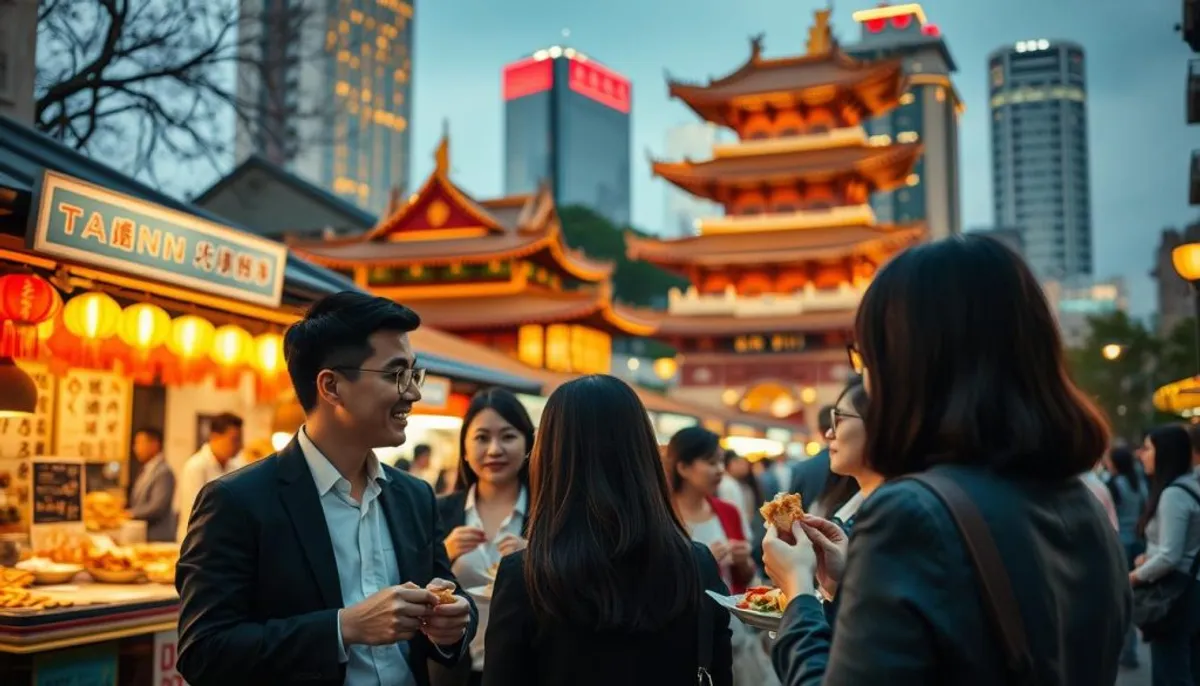
The island is home to a vibrant society of over 23 million inhabitants. Their heritage is a rich blend of Confucian, Han Chinese, Japanese, and Western influences. This diversity creates a truly distinct identity.
Visitors discover a world where ancient temples coexist with modern skyscrapers. Traditional rituals persist at the heart of a technologically advanced society. This harmony between past and present is remarkable.
The country has developed its unique character through constant exchanges and a complex history. This shared experience has forged a particular cultural consciousness, debated yet deeply rooted.
Key Points
- A unique hybrid mix of Confucian, Chinese, Japanese, and Western influences
- A distinct cultural identity shaped by a complex socio-political history
- Over 23 million inhabitants contributing to this cultural richness
- Remarkable harmony between millennia-old traditions and technological modernity
- An exceptional destination where ancestral heritage dialogues with innovation
- A cultural experience that goes beyond mere Chinese heritage
- Inclusive multiculturalism integrating diverse communities
Introduction to Taiwanese Culture
Discover how this small island has become a true cultural melting pot in East Asia. Its unique journey deserves exploration to understand its current richness.
Historical and Geographical Context
The history of this land dates back to around 6000 BC, with the arrival of the first indigenous peoples. In the 7th century, China sent its first expedition to the island.
The 16th and 17th centuries saw the Portuguese, Spanish, and Dutch compete for this strategic territory. By the end of the 17th century, the island was incorporated into the Chinese empire.
In 1895, Japan defeated China, and Taiwan became a Japanese colony until 1945. After 1949, over two million Chinese fled to the island following the communist victory.
Why Explore This Culture Today
There is a good reason to study this unique identity today. It preserves Chinese traditions that have disappeared on the continent while developing its own character.
The various influences from indigenous, Chinese, Japanese, and Western cultures coexist harmoniously. This mosaic creates a fascinating cultural laboratory.
The current population results from successive waves of migration. This historical departure explains why the island has become a major cultural crossroads over time.
Historical Origins and Cultural Influences
The settlement of this island territory began long ago with indigenous populations. These first inhabitants laid the foundations of a rich history that continues to fascinate.
The First Populations and Migrations
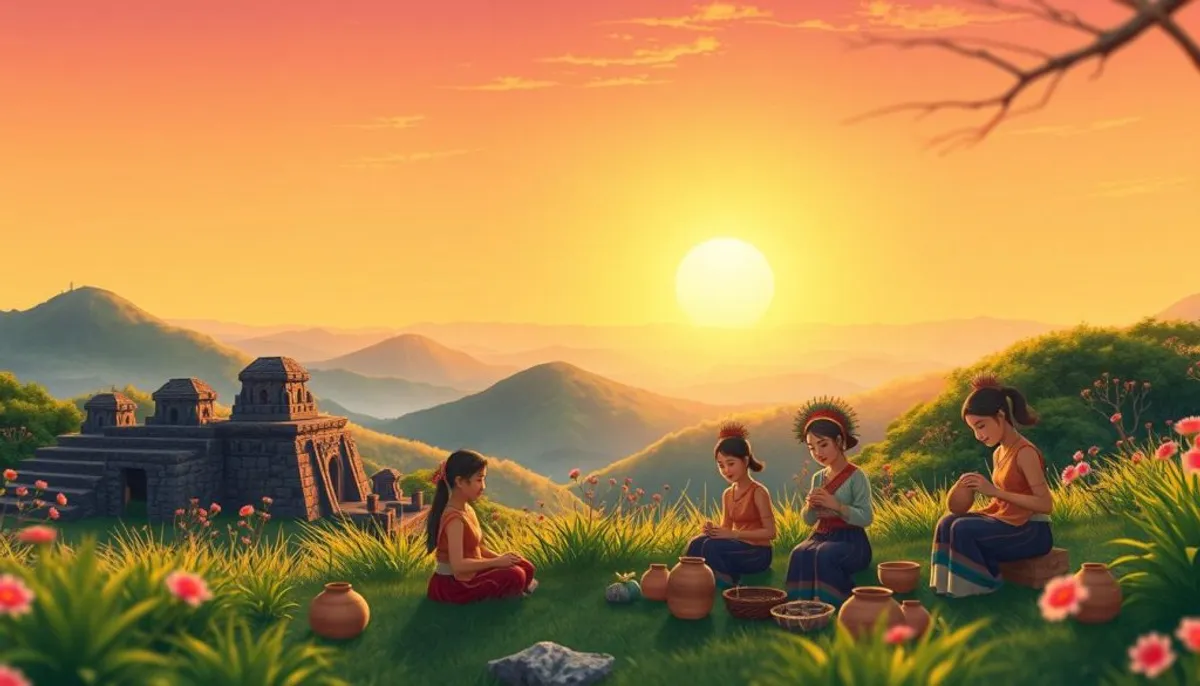
The Austronesian indigenous peoples were the first to settle on this site thousands of years ago. Their presence dates back to the Dapenkeng culture in the Neolithic period.
Over the years, waves of migration from south-east China transformed the demographics. The Han Hoklo from Fujian constituted a significant part of the newcomers.
The Chinese, Japanese, and Indigenous Heritage
The Chinese influence manifested through the assignment of surnames to local populations. This imperial practice left a lasting mark on identity.
The Japanese occupation lasted fifty years, imposing its official language. The inhabitants had to adapt to this foreign administration.
Despite pressures, indigenous peoples preserved their traditions. They now represent a small fraction of the population, but their heritage remains significant.
These three influences merged to create the unique character of this island. The modern island bears traces of this rich multicultural past.
Emblematic Traditions and Festivals
Throughout the seasons, a rich tapestry of festivals enlivens the island landscape. These events punctuate the year and reveal the deep values of the inhabitants.
Traditional Celebrations and Ancestral Rituals
The Chinese New Year marks the beginning of celebrations. This grand festival lasts fifteen days with red envelopes and firecrackers.
In April, Qing Ming honors the ancestors. Families clean graves and make offerings of food. They also burn paper money.
The Month of Ghosts occupies the entire seventh lunar month. Wandering spirits receive special attention during this period.
Modern Celebrations and Popular Festivals
National Day on October 10 commemorates an important historical departure. It is a highly followed modern patriotic celebration.
In September, Confucius' birthday becomes Teacher's Day. Indigenous festivals also preserve millennia-old traditions.
| Festival | Date | Main Traditions | Meaning |
|---|---|---|---|
| Chinese New Year | 1st-15th day of the 1st lunar month | Red envelopes, firecrackers, family meals | Renewal and prosperity |
| Qing Ming | April 5 | Grave cleaning, offerings to ancestors | Family respect and memory |
| Dragon Boat Festival | 5th day of the 5th lunar month | Boat races, zòngzi | Commemoration of the poet Qu Yuan |
| Month of Ghosts | 7th lunar month | Offerings to spirits, ritual pŭdù | Appeasement of wandering souls |
Taiwanese Culture in Daily Life
At the heart of daily habits lies a remarkable balance between devotion and culinary pleasures. This daily life reflects a unique harmony where spirituality and gastronomy coexist naturally.
Religious Rituals and Offerings
Life often begins with spiritual practices. Buddhism (35%) and Taoism (33%) structure the rhythm of the days. Neighborhood temples welcome faithful for morning offerings.
The worship of ancestors remains deeply rooted. Domestic altars testify to this religious fervor. These traditions endure in all cities.
Traditional Cuisine and Way of Life
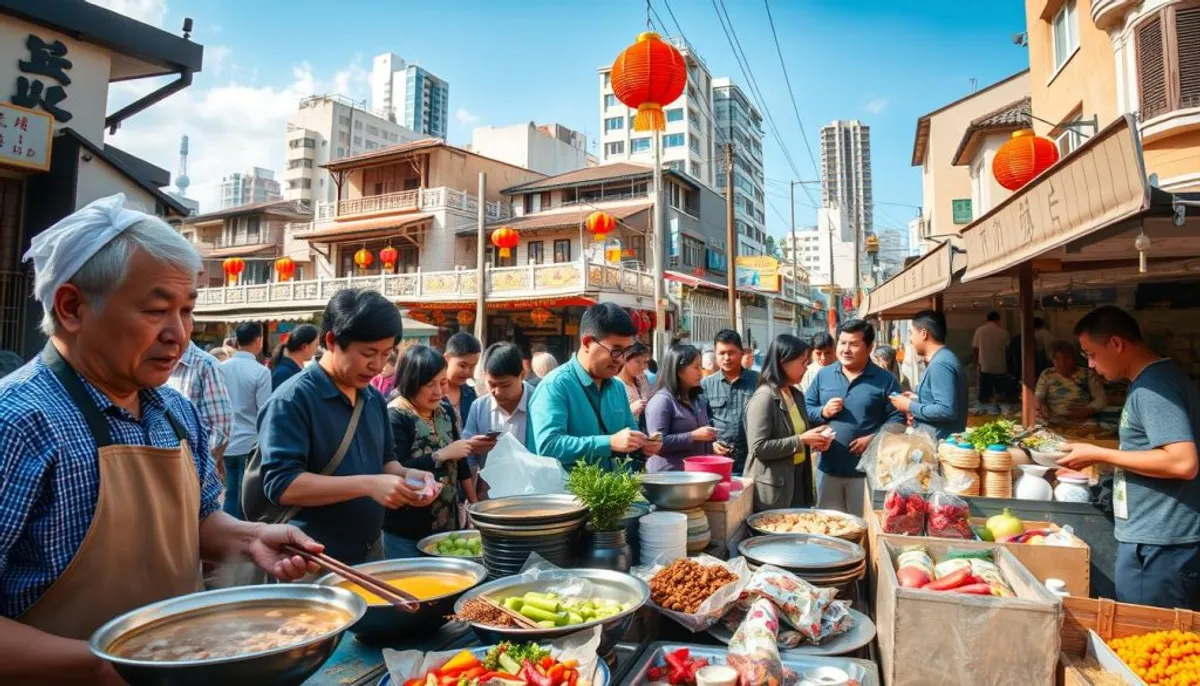
Rice is the staple of the local diet. It accompanies every meal, from breakfast to dinner. Many dishes feature it prominently.
Beef noodle soup and braised pork on rice are very popular. These specialties blend Fujian influences with Japanese touches. Culinary creativity produces a unique gastronomy.
Tea occupies a central place in the way of life. From traditional ceremonies to the globally renowned bubble tea. This beverage symbolizes culinary innovation.
Night markets overflow with delicious dishes. They offer an unparalleled culinary experience. This daily life harmoniously combines modernity and ancestral traditions.
The Arts and Taiwanese Cinema
A rich palette of artistic expressions, from the seventh art to traditional martial arts, characterizes the current cultural landscape. These creative fields showcase exceptional vitality.
Notable Figures and International Cinema
Ang Lee is the most famous figure in local cinema. This Oscar-winning director has captivated the world with his films.
The New Wave of the 1980s-1990s revolutionized film art. Filmmakers like Hou Hsiao-hsien brought international recognition.
The Golden Horse Film Festival celebrates the excellence of Chinese-language cinema each year. This event confirms the island's central place in the Asian industry.
Martial Arts, Opera, and Visual Arts
Traditional martial arts include meditative Tai Chi Chuan and spectacular Wushu. Masters like Hung I-Hsiang have perpetuated this centuries-old heritage.
The local opera combines singing, dancing, acrobatics, and martial arts. These theatrical forms remain vibrant in contemporary performances.
The Cloud Gate Dance Theatre, founded by Lin Hwai-min, fuses contemporary dancing with Asian traditions. This prestigious institution received the Ramon Magsaysay Award in 1999.
The visual arts include calligraphy, painting, and sculpture. The National Center for Traditional Arts plays a key part in cultural transmission.
| Artistic Field | Notable Representative | Key Institution | Main Characteristic |
|---|---|---|---|
| Cinema | Ang Lee | Golden Horse Awards | International recognition |
| Martial Arts | Hung I-Hsiang | Traditional schools | Centuries-old heritage |
| Opera | Local troupes | Traditional theaters | Multidisciplinary combination |
| Modern Dance | Lin Hwai-min | Cloud Gate Theatre | Tradition-innovation fusion |
| Visual Arts | Master Calligraphers | NCFTA | Heritage preservation |
Language Diversities and Ethnic Mosaic
The linguistic landscape of this island destination reveals exceptional diversity. This verbal richness perfectly reflects the unique mix of populations that make up contemporary society.
Richness of Languages and Writing Systems
Mandarin serves as the official language, while Taiwanese is spoken by 70% of the population. This Hoklo dialect originates from Fujian, in southern China.
The Hakka represents another important part of the linguistic heritage. The pe̍h-ōe-jī system, created by the Presbyterian Church, has played a crucial role in preserving the language.
Mosaic of Populations and Indigenous Cultures
The inhabitants of this island number 23.5 million people. The majority belong to the Han group, with 16 million Hoklo/Hokkien.
The indigenous peoples constitute about 2% of the population. They preserve their Formosan languages and traditions despite assimilative pressures.
The Digital Museum of Taiwan Indigenous Peoples is an essential site for understanding these tribal cultures. It documents practices threatened by modernization.
The Impact of Modernity and Globalization on Taiwanese Culture
The political upheavals at the end of the 20th century opened a new era for this nation. The lifting of martial law in 1987 marked a decisive turning point.
Evolution of Traditions in the Face of Contemporary Challenges
Young generations navigate between ancestral heritage and modern technologies. The country boasts a mobile penetration rate of 100%.
Internet cafes attract teenagers, questioning the transmission of traditions. Yet, religious organizations like Tzu Chi extend their humanitarian influences worldwide.
Economic relations with mainland China create identity tensions. The concept of multiculturalism emerges as a non-political response to these challenges.
In just a few years, this society has become a democratic model in Asia. Guaranteed press freedom largely explains this cultural vitality.
Conclusion
Taiwan represents a unique model of cultural synthesis where past and present engage in harmonious dialogue. This fascinating island preserves ancestral traditions while constantly innovating.
Institutions like the National Palace Museum and the Digital Museum of Taiwan Indigenous Peoples preserve this exceptional heritage. The Cultural Heritage Bureau identifies around eighteen potential sites for UNESCO.
Planning a trip to this destination allows for the discovery of treasures like the Bunun polyphonic songs. The Taiwan Cultural Center in Paris facilitates this cultural exploration.
This unique experience shows how a small country can inspire the entire world through its balanced approach to cultural development.
FAQ
What are the main influences that have shaped the island's history?
The local heritage is a rich blend. It draws its roots from the traditions of indigenous peoples, Chinese heritage, and a period of Japanese administration. This unique fusion is evident in architecture, language, and daily life.
What is the most important festival not to miss during a visit?
Undoubtedly, the Ghost Festival is a spectacular event. It takes place on the 15th day of the 7th lunar month, usually in August or September. You can witness operas, parades, and see offerings to honor the ancestors.
Is the cuisine very different from that of mainland China?
Yes, it has its own identity! Dishes like braised pork on rice (lu rou fan) or beef noodle soups are iconic. Seafood is also very present, thanks to the island's location. Bubble tea is a world-renowned invention that originated here.
Are there any martial arts typical of this region?
Traditional martial arts, such as kung fu, are practiced and preserved. They can sometimes be found in theater or dance performances, showcasing the deep connection between physical discipline and artistic expression.
Who is the most famous internationally recognized director?
Ang Lee is a prominent figure in cinema. This acclaimed filmmaker has directed award-winning films like *Crouching Tiger, Hidden Dragon* and *Life of Pi*, bringing the creativity and stories of this land to the global stage.
How many languages are commonly spoken by the population?
The main language is Mandarin, but Taiwanese (a Minnan dialect) is widely spoken. Hakka is also heard, and several Formosan languages are spoken by indigenous communities, representing a true linguistic mosaic.