
Imagine a country where ancestral traditions engage in dialogue with modern influences. The South African culture is a vibrant mosaic, recognized as one of the richest in the world.
This unique identity is often summarized by the beautiful concept of Rainbow Nation. It illustrates the cohesion of multiple communities within a single territory.
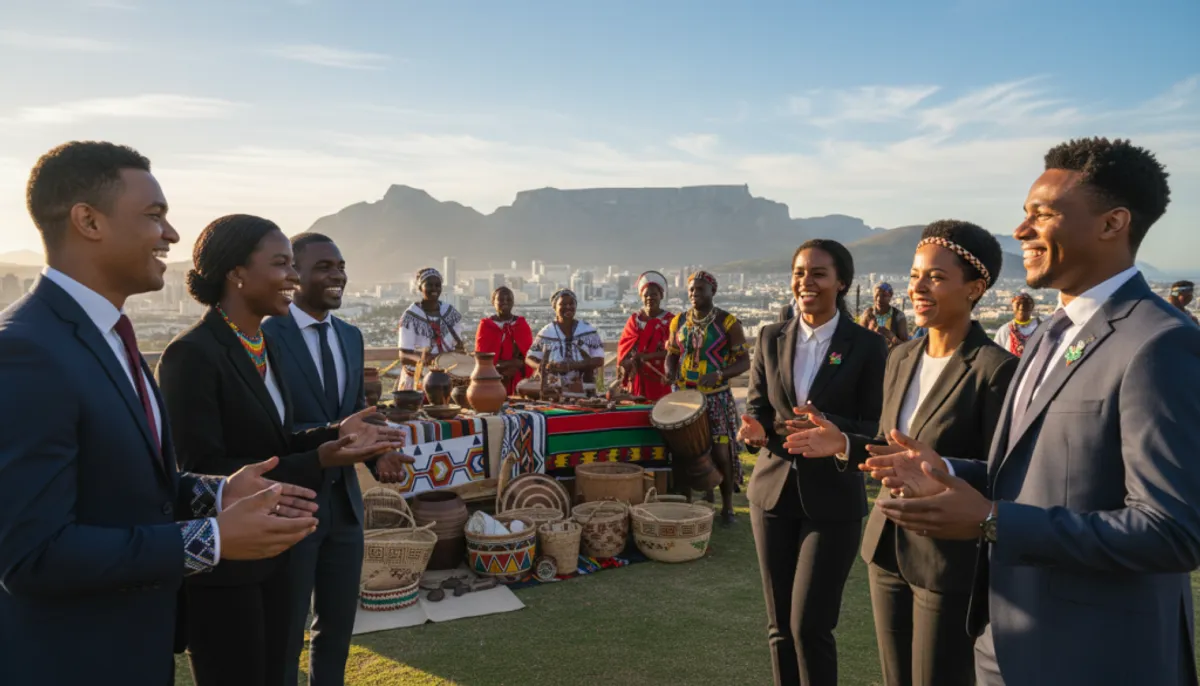
The country has nearly 59 million inhabitants. Its Constitution recognizes no less than eleven official languages, a world record that reflects a deep commitment to inclusion.
This extraordinary variety is expressed daily. Music, gastronomy, and visual arts offer an immersive experience to visitors.
This article invites you to explore this fascinating heritage. From historical roots to contemporary creations, discover what shapes the soul of South Africa today.
Key Points
- South Africa is famous for its extraordinary cultural and linguistic diversity, showcasing the richness of african cultural diversity.
- The country is nicknamed the “Rainbow Nation,” a concept symbolizing unity in diversity.
- Eleven different languages hold official status, which is unique in the world.
- The population, around 59 million inhabitants, forms a dynamic multicultural society.
- This richness is experienced in all aspects of daily life: arts, cuisine, and traditions.
- Recent history has shaped a complex and resilient national identity.
Discovering South African Culture
Exploring this country is accepting an invitation to understand a complex history through its vibrant expressions. This transformative journey reveals the struggles for freedom and a unique ability to build an inclusive society.
Authentic immersion goes beyond classic tours. Venture into local markets and community centers to experience daily life.
Each region offers a distinct experience. Cape Town presents a Dutch heritage, KwaZulu-Natal a strong Zulu identity, and Johannesburg is a cosmopolitan melting pot.
| Type of Experience | Location/Activity | What You Discover |
|---|---|---|
| Historical & Educational | Museums, apartheid sites | The complex past and figures of resistance |
| Traditional & Ceremonial | Dance performances, local ceremonies | Ancestral rituals and passed-down skills |
| Social & Culinary | Exchanges in townships, tastings | Community life and blended flavors |
The best approach combines guided tours, spontaneous encounters, and festivals. Adopt a respectful attitude towards traditions with deep meanings. Your exploration of South Africa will be all the richer.
People, Languages, and Cultural Diversity
The South African Constitution recognizes eleven official languages, a world record that illustrates its diversity. This linguistic wealth reflects the mosaic of peoples inhabiting this territory.
Ethnic Groups and Their Traditions
The Zulus represent about 24% of the population. This warrior people, originating from KwaZulu-Natal, has a history marked by King Shaka.
The Xhosas form the second group with 18% of the inhabitants. They have given the country figures like Nelson Mandela.
Other Bantu communities enrich the landscape. The Swazi, Ndebele, and Basotho number around 7 million people.
Non-African communities include the Afrikaners and the mixed-race people known as “Cape Coloured.”
| Ethnic Group | Population Share | Main Language | Distinctive Tradition |
|---|---|---|---|
| Zulus | ~24% | Zulu | Umembeso ceremony (marriage) |
| Xhosas | ~18% | Xhosa | Importance of resistance figures |
| Afrikaners | ~5% | Afrikaans | Heritage of Dutch settlers |
| Ndebele | ~2% | Southern Ndebele | Colorful geometric mural art |
Official and Regional Languages
The system of eleven official languages dates back to the 1996 Constitution. It shows a strong commitment to preserving diversity.
The Zulu is the most spoken language. Next are Xhosa, Afrikaans, and English. This variety shapes daily life in South Africa.
History and Heritage of South Africa
The South African soil holds the memory of centuries, from the first inhabitants to the struggles for freedom. This complex history and heritage has shaped the unique identity of the country.
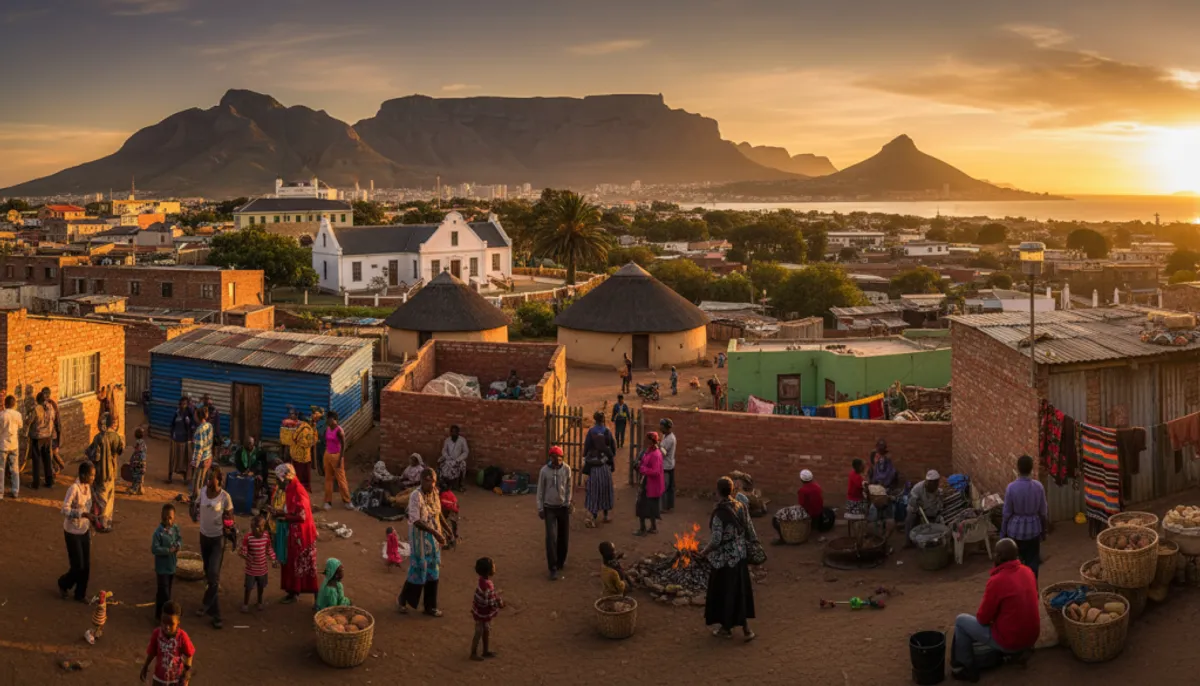
Major Historical Milestones
San and Khoikhoi peoples lived there for millennia. Bantu migrations later brought the Zulus and Xhosas, establishing organized kingdoms.
The colonial period began in 1652 with a Dutch outpost at the Cape. The British arrived in 1795, triggering conflicts and the Great Trek of the Boers.
The 20th century saw the official establishment of apartheid in 1948. This oppressive regime of racial segregation lasted until 1992.
Iconic Figures and Struggles Against Apartheid
Nelson Mandela embodies resistance. Imprisoned for 27 years, he became the first black president in 1994 after decades of struggle.
Desmond Tutu, Steve Biko, and many others led the fight against apartheid. Their legacy lives on in the Rainbow Nation.
Before them, heroes like Chaka Zulu resisted European invasion in the 19th century. Their pride still resonates.
The democratic transition of the 1990s, marked by Freedom Day on April 27, opened a new chapter for South Africa.
Traditions and Ancestral Ceremonies
The calendar of this country harmoniously blends national commemorations and regional ancestral festivities. These practices enliven the social and spiritual life of many communities.
Rituals and Cultural Practices
Rites of passage mark significant stages of existence. Birth, initiation, marriage, and funerals follow precise protocols.
The umembeso is a Zulu marriage ritual. Families exchange gifts to strengthen bonds between clans.
Communication with ancestors remains central. The imphepho plant is burned as incense during ceremonies.
The art of beading has a rich history. Beads were used as currency in the 19th century.
Regional Festivals and Celebrations
South Africa established national holidays after 1994. They commemorate history and democratic values.
The month of June is particularly important. Youth Day on June 16 honors the students of Soweto.
Celebrations vary by region. Zulu dances like Indlamu and Swazi ceremonies can be found.
Heritage Day on September 24 encourages everyone to celebrate their heritage. Community braais bring people together.
| Date | Name of the Holiday | Significance | Typical Activities |
|---|---|---|---|
| March 21 | Human Rights Day | Commemorates the Sharpeville massacre | Ceremonies, speeches |
| April 27 | Freedom Day | First democratic elections | Festivals, concerts |
| June 16 | Youth Day | Soweto uprising of 1976 | Gatherings, debates |
| September 24 | Heritage Day | Celebration of cultural diversity | Braais, wearing traditional attire |
Arts and Crafts: Expression of Identity
The artisanal heritage reveals the depth and complexity of a people. These creations are much more than decorative objects.
They tell stories, preserve memories, and assert a unique identity. This form of expression is vital for understanding the country.
Visual Arts, Sculpture, and Traditional Craft
The rock art of the San, thousands of years old, adorns the caves of the Drakensberg. These paintings depict hunting scenes and rituals with remarkable finesse.
The art of the Ndebele is globally renowned for its colorful geometric patterns, showcasing the beauty of angolan art. Artist Esther Mahlangu, born in 1935, has brought this heritage to the international stage.
Beading is an ancestral communication system. Each color and pattern indicates social status or clan affiliation.
| Type of Craft | Materials/Methods | Traditional Use | Associated Region |
|---|---|---|---|
| Wood Sculpture | Local wood (ebony, mahogany) | Representations of ancestors, ritual masks | Various regions |
| Pottery & Ceramics | Clay, ancestral firing techniques | Domestic containers, ceremonial objects | Sub-Saharan Africa |
| Leatherwork & Weaving | Animal leather, plant fibers | Clothing, baskets, mats | Rural communities |
| Blacksmithing | Forged metal | Tools, decorative weapons, jewelry | Mining regions |
Innovations and Transmission of Know-How
Contemporary sculpture explores new narratives. Mary Sibande questions identity and colonial heritage in her work.
Hennie Potgieter created the “Tamed Freedom Statue”. These modern arts engage in dialogue with the past.
The transmission of techniques is crucial. Centers like the Wildebeest Kuil Rock Art Centre teach ancestral methods.
Craftsmanship is part of a living heritage that must adapt to survive, including expressions of indigenous art, Serbian art, and craft.
Collaborations between artisans and designers ensure this viability. They guarantee that skills are passed down through generations in South Africa.
South African Cuisine: A Culinary Journey
The South African table tells a story of encounters, exchanges, and culinary fusions. This african cuisine blends Khoisan traditions, Dutch, British influences, and Asian spices.Traditional Dishes and Historical Influences
The braai is a national institution. More than a barbecue, it is a social gathering where various meats are grilled over wood fire.
Biltong (spiced dried meat) and bobotie (flavored casserole) are classics. Cape Malay cuisine, born in Cape Town, has introduced curries and marinades.
The potjiekos is a stew cooked in a pot. The sosatie refers to marinated kebabs. These dishes illustrate the blend of heritages in South Africa.
Modern Recipes and Regional Discoveries
Each region offers its specialties. In KwaZulu-Natal, one can taste oryx or ostrich. In Durban, bunny chow is a bread stuffed with curry.
Winemaking, inherited from the Huguenots, produces excellent wines in the south. Traditional beverages like sorghum beer or Amarula complete the experience.
Modern cuisine fuses these traditions with innovative techniques, including elements of african gastronomy. It values local products and places this country on the global culinary stage.Literature and Theatre: Voices of Resistance and Creativity
Writing and the stage provide a striking mirror of the struggles and dreams of a nation. This rich literature, developed over two centuries in English, Afrikaans, Xhosa, and Zulu, explores adaptation and rebellion.
Committed Authors and Playwrights
Giants like Nadine Gordimer, Nobel Prize winner, challenged the regime. André Brink also defied censorship from the Afrikaner community. Their work, along with that of J.M. Coetzee, was crucial against apartheid.
It documented injustices and drew the world's attention to South Africa. The theatre scene is equally dynamic.
It includes institutions like the Magnet Theatre and major events. The National Arts Festival and Poetry Africa celebrate this ever-renewed creativity.
Music and Dance: Rhythms of Freedom
From township music to contemporary ballets, the art of movement tells a story of resistance. These expressions have played a central role against oppression.
They preserve identities and celebrate diversity. The rich tapestry of togolese culture and traditions blends African traditions, European, and American influences.Musical Genres and Iconic Artists
Isicathamiya is an a cappella vocal style. Made famous by Ladysmith Black Mambazo, it evokes Zulu spirituality.
The jazz developed in townships like Sophiatown was a music of resistance. Icons have brought it to the global stage.
Miriam Makeba, “Mama Africa”, and Johnny Clegg, the “White Zulu”, are legends. New generations, like Nakhane Touré, explore contemporary sounds.
Traditional and Contemporary Dances
The Gumboot was invented by miners. Deprived of speech, they communicated by tapping their boots, creating a rhythmic language.
Pantsula is an explosive urban dance that emerged in the 1980s. It expresses rebellion and creativity among youth.
Contemporary South African dance shines internationally. Choreographers like Dada Masilo and Gregory Maqoma blend Western techniques with African traditions.
| Name of the Dance | Origin | Characteristics | Meaning |
|---|---|---|---|
| Gumboot | South African Mines | Rhythms created with boots and hands | Transformation of oppression into expression |
| Pantsula | Urban Townships | Fast foot movements, frenetic energy | Escape and spirit of rebellion |
| Indlamu | Zulu Tradition | Heavy steps and powerful choreography | Warrior and cultural celebration |
| Contemporary | International Stage | Fusion of techniques, reinterpretation of narratives | Dialogue between past and present |
Music and dance are living archives. They carry the memory of struggles and the hopes of peoples.
Institutions like Joburg Ballet and the South African Music Awards celebrate this excellence. The artistic scene in the south remains vibrant and innovative.
Heritage, Tourism, and Cultural Sites
The heritage of South Africa is also experienced through its memorial sites and protected landscapes. These sites offer a journey through time, from prehistory to struggles for freedom.
Museums, Monuments, and UNESCO Sites
The country has several sites listed as World Heritage. The Cradle of Humankind, near Johannesburg, houses the fossils of our oldest ancestors.
Robben Island, off the coast of Cape Town, is a powerful symbol. Nelson Mandela was imprisoned there for eighteen long years.
| Name of the Site | Type | Region | Outstanding Value |
|---|---|---|---|
| Cradle of Humankind | Paleontological Site | Gauteng | Cradle of humanity |
| Robben Island | Historical Site | Western Cape | Symbol of the struggle against apartheid |
| Drakensberg Park | Cultural & Natural Landscape | KwaZulu-Natal | Rock art of the San and biodiversity |
| Robben Island | Historical Prison | Cape Town | Memory of resistance |
Among the must-visit museums, the Apartheid Museum in Johannesburg offers an immersive and moving experience. The Voortrekker Monument in Pretoria presents an Afrikaner perspective on history.
UNESCO also preserves crucial documents. The Bleek Collection on the Bushmen and the archives of the liberation struggle are part of this.
Cultural tourism takes various forms. Guided tours of Soweto, ecotourism in national parks, and heritage circuits in the Cape region are popular.
It is crucial to choose tours operated by local communities. This ensures respectful exchanges and direct benefits for residents.
Major events also attract visitors. The National Arts Festival in Grahamstown, held in June, is one of the largest arts festivals on the continent.
This tourism significantly contributes to the local economy. It helps to valorize a complex and living heritage.
Contemporary Impact and Cultural Challenges
The lifting of the cultural boycott in 1992 unleashed a long-contained creative surge. The removal of censorship allowed artists in this country to explore new forms and connect with the world.
Modernization and Preservation of Traditions
This renaissance has seen the emergence of a dynamic artistic scene. The first Johannesburg Biennale in 1995 and the National Arts Council, founded in 1997, supported this effervescence.
Artists like William Kentridge have gained international recognition. Their works explore memory and reconciliation.
South Africa has become the primary marketplace for modern and contemporary African art. Yet, deep inequalities persist.
Despite a predominantly black population, black artists achieving institutional recognition remain a minority. Their economic situation is often precarious.
Rapid modernization, such as intense urbanization in Gauteng, erodes traditional social structures. Most artisanal techniques have regressed or disappeared.
In response, preservation initiatives are emerging. Programs safeguard intangible heritage and endangered languages.
Festivals celebrate diversity, and cultural centers in townships attempt to reconcile modernity and roots. The challenge for this land of contrasts remains immense.
Conclusion
The journey of this people, from apartheid to democracy, inspires the whole world with its capacity for reconciliation. This transition, led by figures like Nelson Mandela, shows how diversity can become a unifying force.
Ancestral traditions continue to animate daily life. Contemporary arts vibrantly explore modern identities. Each region of this country reveals unique expressions.
Your journey in South Africa will be all the richer if you go beyond clichés. Meet the communities, taste the blended flavors, participate in the festivals.
This land of many faces offers valuable lessons on resilience. It celebrates how different groups can build a common future together.
FAQ
What makes the culture of this country so unique?
Its identity comes from an extraordinary blend of influences. Eleven official languages coexist, peoples like the Zulus, Xhosas, and Afrikaners bring their traditions, and a complex history has forged resilient creativity. It is this diversity that creates a unique richness in the world.
How many languages are spoken in South Africa?
The nation recognizes eleven official languages, including Zulu, Xhosa, and Afrikaans. English is often used in business and politics. In everyday life, many people are multilingual, reflecting the cultural reality of the country.
Who are the important literary figures of the country?
South African literature is globally recognized, particularly thanks to authors committed against apartheid. Nadine Gordimer, a Nobel laureate, and André Brink used writing as a weapon. Their works explore the conflicts and hopes of the nation.
What is the national dish that must be tasted?
The braai (barbecue) is much more than a dish; it is a social institution. Various meats like *boerewors* (sausage) are grilled. Another classic is bobotie, a spiced minced meat topped with an egg crust, a legacy of Cape Malay cuisine.
Where can one discover the heritage of the struggle for freedom?
Many sites and museums testify to this past. Robben Island, where Nelson Mandela was imprisoned, is a pilgrimage site. Townships like Soweto offer guided tours to understand the life and resistance of communities.
Is South African music limited to gospel?
Not at all! While gospel is very popular, the rhythms are numerous. *Kwaito*, born in the townships, *mbaqanga* with Zulu influences, and iconic artists like Miriam Makeba have made the world dance. Music is a true auditory journey.
Is there typical traditional craft?
Yes, craftsmanship is very much alive. The colorful beads of Ndebele women, the Zulu natural fiber baskets (*izimbenge*), or wooden and stone sculptures are recognized arts. These objects tell stories and transmit ancestral know-how.