
Welcome to the fascinating world of the Pacific archipelagos. This culture brings together communities with varied origins that have developed distinct identities. Each group has managed to create its own heritage while sharing common roots.
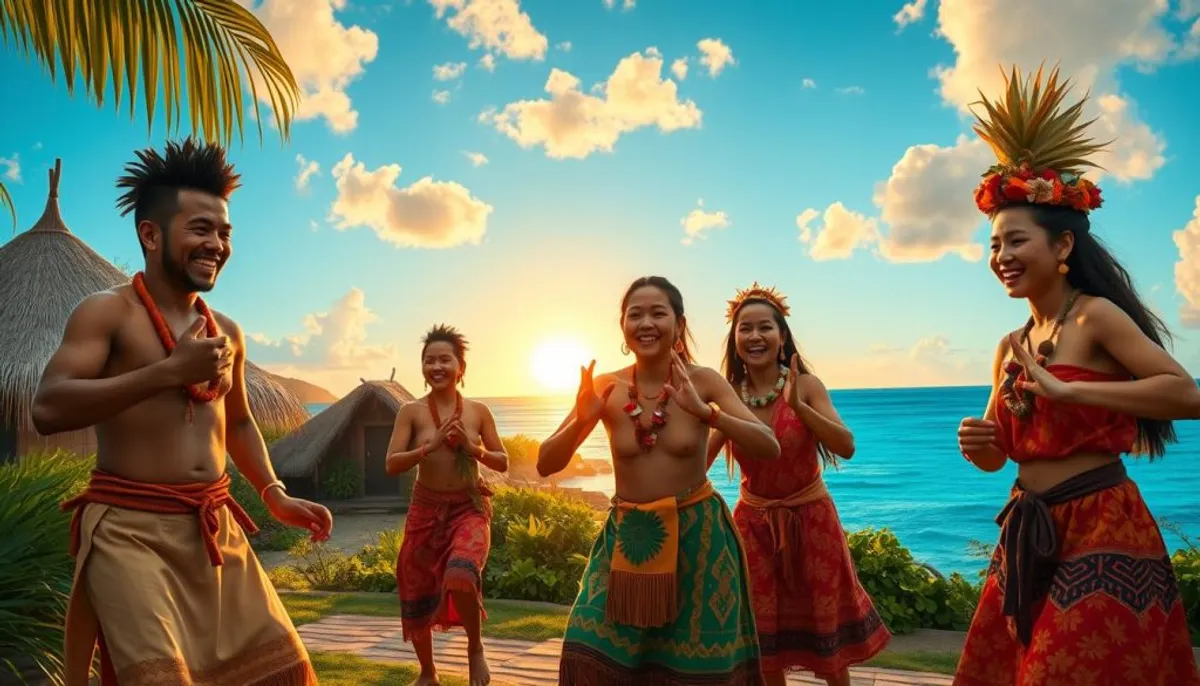
The Micronesian islands are home to a people with exceptional naval skills. Their Austronesian ancestors invented advanced navigation technologies over 4000 years ago. These innovations allowed for rapid dispersion across the Pacific Ocean.
Despite external influences and modernization, ancestral traditions remain vibrant. Island communities jealously preserve their cultural heritage. This resilience reflects a deep attachment to their customs.
This article invites you to discover a little-known but extraordinarily rich world. You will explore how the different islands have developed unique cultural expressions. The Micronesian people maintain a harmonious balance between modernity and traditional heritage.
Key Points to Remember
- Micronesia encompasses remarkable cultural diversity across its archipelagos
- The communities share common Austronesian origins
- Ancestral naval traditions have shaped their history
- Cultural heritage is preserved despite modern influences
- Each island has its own customs and artistic expressions
- The relationship with the ocean is at the heart of their identity
- A balance exists between contemporary life and ancestral traditions
Introduction to Micronesian Culture
Dive into the heart of a mosaic of living traditions scattered across the vast ocean. The different peoples share social practices that unite them more than with their Polynesian or Melanesian neighbors, including those from Melanesia.
This cultural unity finds its roots in a common foundation. Dependence on ancestral land and the Pacific Ocean has shaped their social organization.
The family represents the cornerstone of this society. It consists of four equally important elements: the household, the nuclear family, the extended family, and a lineage.
The inhabitants of the various islands have developed a unique relationship with their maritime environment. This adaptation has created resilient societies perfectly integrated into island life.
Despite ethnic and linguistic diversity, common values unite these communities. Respect for elders and collective cooperation remain essential pillars.
This unique culture continues to evolve while preserving its traditional foundations. It offers a remarkable example of balance between modernity and ancestral heritage.
The Origins and Ancient History
The settlement of these archipelagos results from bold maritime explorations several millennia ago. This fascinating history begins around 3000 years before our era.
The First Migrations and Settlement
The first inhabitants arrived in the Caroline Islands about 3000 years ago. Two major waves of migration shaped the region.
Western migrants came from the Philippines and Indonesia. They colonized the Mariana Islands around 3500 years before our era.
Eastern migrants belonged to the Lapita culture. They settled in Eastern Micronesia between 500 and 100 BC.
The Colonial Influence and Great Explorations
Magellan was the first European to reach Guam in 1521. This contact marked a turning point in the history of the region.
The Spaniards controlled the archipelago until 1899. The Germans then took over, developing copra cultivation.
Despite successive upheavals, the people have preserved their unique identity through the centuries.
| Period | Event | Region Concerned |
|---|---|---|
| 3500 BC | First Western Migration | Mariana Islands |
| 3000 BC | Colonization of Palau | Caroline Archipelago |
| 500-100 BC | Lapita Culture Migration | Eastern Micronesia |
| 1521 | Arrival of Magellan | Guam |
These explorations profoundly transformed island societies. The relationship with the land and the sea evolved with these external contacts.
The Unique Aspects of Micronesian Culture
Micronesian social organization is based on a remarkably preserved clan structure. This configuration influences all aspects of community life.
Traditional Rituals and the Importance of Clans
Each traditional village is organized around ten clans led by their chiefs. They form a collective governance council.
The extended family remains the fundamental pillar of this society. It defines social relationships and heritage transmissions.
Ritual traditions such as the kemeldiil burial ceremony in Palau demonstrate this resilience. Ancestral beliefs coexist with modern religious practices.
Dances, Songs, and Local Crafts
Artistic expressions serve as a means of oral transmission. Dance and song tell stories and impart moral lessons.
Traditional craftsmanship includes the construction of canoes, the first form of historical transportation. Basket weaving and shell jewelry complement these traditions.
Wood carvings preserved myths before writing. This local culture maintains a harmonious distribution of roles between men and women.
Diversity of Peoples and Languages
The islands of Micronesia present a vibrant tableau of diversity, home to more than fifteen distinct ethnic groups. This human richness results from a millennia-long mixing of different waves of migration.
The Different Ethnic Groups in Micronesia
The inhabitants of this region are generally referred to as Micronesians, although some from Pohnpei are of Polynesian origin, and others trace their roots back to the broader region of polynesia. Among the main peoples are the Chamorros of Guam, the Chuukese, the Marshallese, and the Palauans.
Each group has developed its own traditions while sharing common values. The Pohnpeians, Yapese, and Gilbertese from Kiribati complete this exceptional ethnic mosaic.
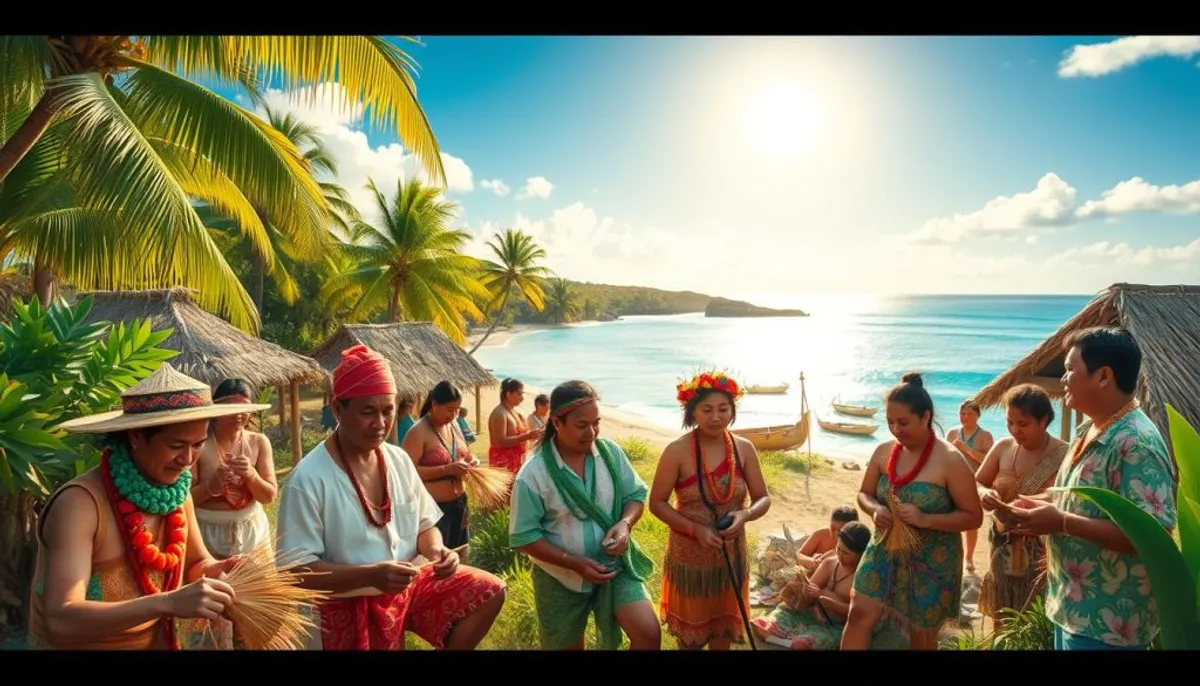
The Linguistic and Cultural Richness
Although English is the official language, at least eight main languages are still actively spoken. A total of fifteen distinct languages testify to this remarkable linguistic diversity.
Most belong to the Oceanic language family, part of the Austronesian group. There are two interesting linguistic exceptions: Chamorro and Palauan, distinct Malayo-Polynesian languages.
| Language Group | Main Languages | Region |
|---|---|---|
| Oceanic Languages | Chuukese, Pohnpeian, Yapese | Central Micronesia |
| Micronesian Languages | Marshallese, Gilbertese | Eastern Micronesia |
| Malayo-Polynesian | Chamorro, Palauan | Mariana Islands, Palau |
This diversity constitutes an exceptional wealth but also a challenge for preservation in the face of globalization. Communities maintain their particularities despite external influences, and the adage pass culture account highlights the importance of cultural preservation in this context.
The Rituals and Traditional Craftsmanship
Ancestral beliefs continue to profoundly influence contemporary practices. Spiritual traditions maintain a living connection between the visible and invisible worlds.
The Role of Ceremonies and Myths
The inhabitants maintain a special relationship with their ancestors. They believe that the spirits of the deceased can guide or disturb the living.
In Chuuk, a unique custom persists: burying the dead in family yards. This practice strengthens the bonds between generations.
Shamans and mediums serve as intermediaries with the spiritual world. Their ancestral knowledge helps heal illnesses attributed to spirits.
The construction of canoes represents much more than mere craftsmanship. Each vessel embodies a sacred form linked to the sea.
Creation myths and cultural heroes are expressed through craftsmanship. Sculptures tell stories passed down orally for centuries.
This rich culture traditions demonstrates how the spiritual and material intertwine harmoniously.
The protection of marine environments reflects a deep respect for the environment. Each created object carries this sacred connection.
The Legacy of World War II and Its Impact
A pivotal period in modern history disrupted the traditional balance of these island territories. The twentieth century radically transformed the fate of the Micronesian islands.
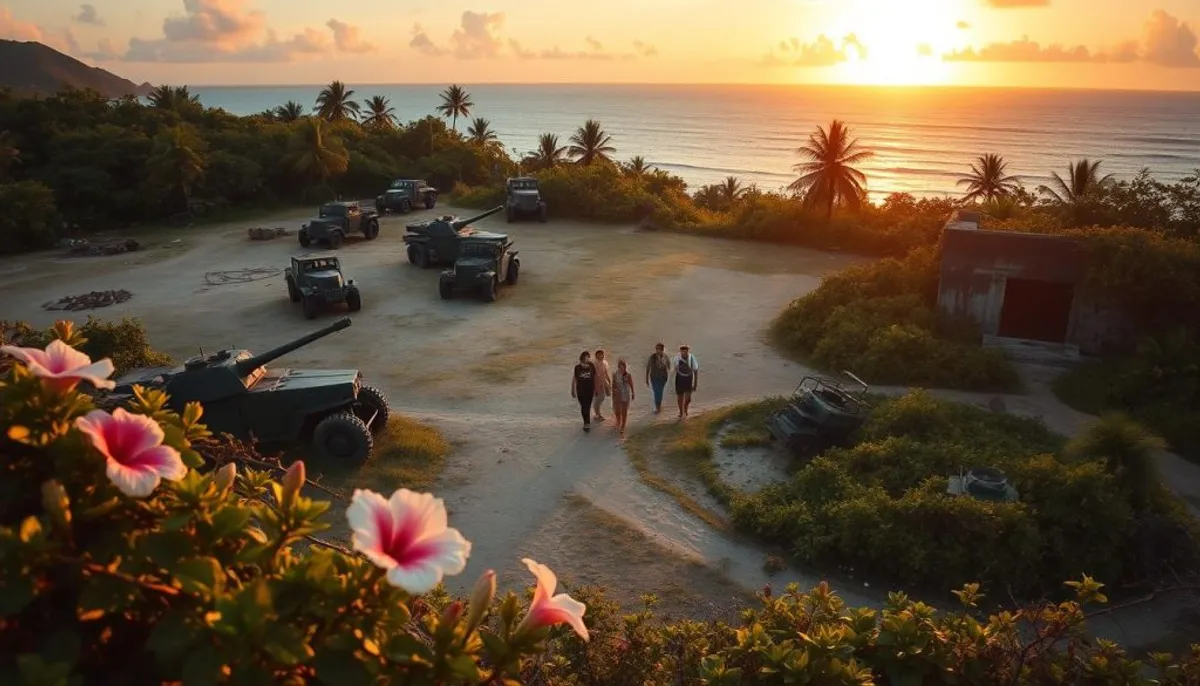
The Second World War was particularly devastating. The Japanese used the archipelagos as strategic air bases in the Pacific.
Many intense battles took place across all the archipelagos. These conflicts left deep scars on the landscape and the communities.
After 1945, the United Nations entrusted the administration of these territories to the United States. This decision marked the beginning of a new era of American influence.
The process of independence was gradual. The four Federated States gained their sovereignty in 1986, followed by Palau in 1994.
Today, each nation is fully sovereign but maintains close relations with the United States. Free association agreements govern these partnerships.
The legacy of this world war remains visible. Underwater wrecks attract divers, while terrestrial remnants remind of this tumultuous past.
Travel Guide and Discoveries in Micronesia
Organizing your Micronesia trip requires careful preparation to discover these Pacific gems. Tourism is slowly developing, with Palau as the main destination.
In Guam and the Mariana Islands, mass tourism attracts American and Japanese clients. But the other islands offer more authentic experiences.
Must-See Destinations and Accommodations
The Manta Ray Bay Resort in Yap is ideal for divers. Located by the sea in Colonia, this specialized hotel costs around €220.
The Palau Pacific Resort represents the ultimate luxury in Koror. This exceptional Pacific resort offers rooms starting at €450.
The Blue Lagoon Resort in the Chuuk lagoon is perfect for non-divers. With its coconut palm gardens, this peaceful hotel costs around €143.
Water Activities and Scuba Diving
Scuba diving in Micronesia is exceptional. You will discover historical wrecks and extraordinary marine biodiversity.
The Chuuk lagoon is home to legendary wrecks from World War II. The passes of Palau allow you to observe manta rays.
Meeting the Micronesian inhabitants and discovering their local culture, including the unique flavors of paluan cuisine, perfectly completes this experience. Combine underwater exploration with terrestrial discoveries.
Your travel guide would be incomplete without these practical tips. Choose your resort hotel wisely according to your interests for a successful trip.
Conclusion
The cultural treasures of Micronesia offer an authentic and memorable experience for every traveler. This unique culture represents a living heritage where each community proudly preserves its ancestral traditions, including the traditional costume of the solomon islands.
Despite the challenges of modernization, the inhabitants maintain a remarkable balance between progress and heritage. Their subsistence economy, based on local agriculture and traditional fishing, reflects this deep connection to the land and the sea.
Your trip to these islands of the Pacific becomes much more than just a tourist visit. It is an opportunity to discover an authentic way of life and support resilient communities.
Each island shares common values while retaining its particularities. These culture traditions constitute a precious heritage that is important to respect and value.
FAQ
What are the best times to travel to Micronesia?
The dry season, from December to April, is ideal. You will thus avoid most of the rains. It’s perfect for scuba diving and exploring the islands.
Are there diving sites related to World War II?
Absolutely! The Chuuk lagoon is world-renowned. It’s a true underwater museum with many wrecks of planes and ships from the war.
What accommodations are recommended for an authentic stay?
Hotels like the Palau Pacific Resort or the Blue Lagoon Resort offer excellent comfort. For a unique experience, the Manta Ray Bay Resort Hotel is a popular choice.
How to get around between the different islands?
Internal flights are the most convenient way. Local boats and ferries also connect some islands for the more adventurous.
Is the local culture easy to discover for visitors?
Yes, the inhabitants are very welcoming. Visiting a traditional village allows you to see canoes, crafts, and learn more about history and traditions.
What water activities are offered besides diving?
You can go snorkeling in the Blue Lagoon, observe manta rays, or simply enjoy the crystal-clear waters of the Pacific Ocean. It’s a true paradise for sea lovers.