
Welcome to this exploration of a millennial heritage that has crossed continents. We embark on a journey to discover a rich identity, far beyond a simple religion.
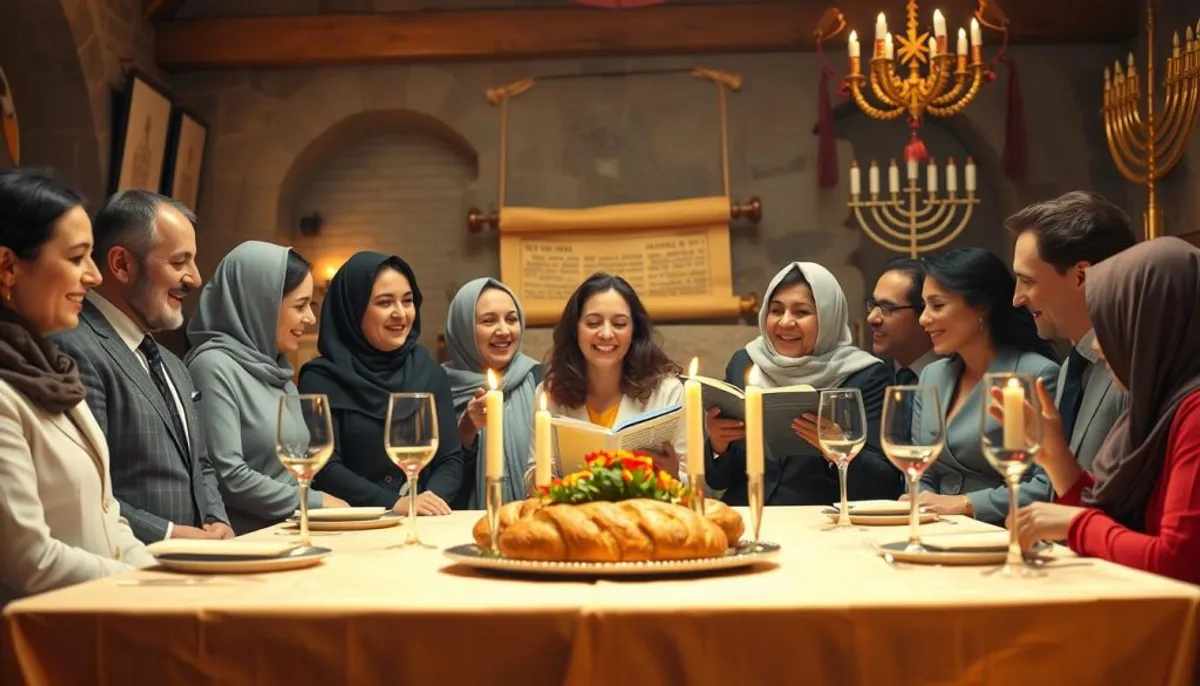
The term Judaism appears as early as the 2nd century BCE. It originally designates the set of traits that characterize the Jewish people. This definition reflects a complex history and constant evolution.
This guide will show you how this Jewish culture combines spirituality, ancestral traditions, and adaptation to the modern world. It has managed to preserve its essence while enriching itself through encounters.
Prepare to understand how Judaism has shaped communities and profoundly influenced our civilization. An exciting journey through the texts, rituals, and values that guide millions of people.
Key Points to Remember
- Judaism is a rich identity that transcends strictly religious boundaries.
- Its history dates back to antiquity and has evolved over the centuries.
- It combines ancestral traditions with constant adaptation.
- This culture has had a significant influence on Western civilization.
- It represents a living heritage, passed down from generation to generation.
- The sacred texts and rituals hold a central place.
Introduction to Jewish Culture
Dive into the heart of a living heritage that unites spirituality, history, and daily practices. For many thinkers, Judaism represents much more than a religion. It is seen as a complete set of rituals, values, and loyalties towards the people of Israel. If you're interested in how to obtain the culture pass, this guide will provide you with the necessary steps.
This unique identity is expressed in ways of living, thinking, and passing on a millennial knowledge. It is nourished by celebrations, a rich literature, and a particular philosophy of life.
Unlike other belief systems, a central place is given to questioning and debate. The interpretation of texts is an essential means of deepening faith. This approach makes this tradition a constantly evolving system.
The following table illustrates some facets of this rich identity:
| Aspect | Manifestation | Importance |
|---|---|---|
| Spirituality | Daily rituals, prayer, study | Personal connection with the divine |
| Community | Festive celebrations, mutual aid | Strengthening social bonds |
| History and Memory | Tales, commemorative festivals | Intergenerational transmission |
| Law and Ethics | Respect for precepts, debate | Guide for a just life |
This ability to adapt while preserving its essence allows this culture to remain deeply relevant for millions of Jews around the world.
Origins and Emergence of Judaism
Let us return to the fundamental sources that gave birth to a unique spiritual tradition. The history of Judaism has its roots in patriarchal narratives that have shaped a millennial identity.
The Patriarchs and the Divine Covenant
The Bible presents Abraham as the pioneer of monotheism. He establishes a sacred covenant with God, sealed by circumcision.
This divine promise guarantees blessing and numerous descendants. Abraham, Isaac, and Jacob become the founding pillars of this tradition.
The Formation of the Twelve Tribes
Jacob, renamed Israel, passes the heritage to his twelve sons. They will form the twelve tribes of Israel, creating a lasting social structure.
These children of Israel share a common mission: to preserve the divine covenant. Their story constitutes the narrative foundation of Judaism.
| Patriarchal Figure | Essential Contribution | Spiritual Legacy |
|---|---|---|
| Abraham | Establishment of monotheism | First divine covenant |
| Isaac | Continuation of the covenant | Transmission of the promise |
| Jacob/Israel | Formation of the 12 tribes | Community structure |
These founding narratives, recorded in the Bible, establish the foundations of the law and identity that characterize Judaism to this day.
From the Exodus to the Diaspora
Now let us discover a crucial chapter that has defined the destiny of a people through the ages. The Exodus from Egypt represents the founding event, marking the transition from slavery to freedom.
Under the leadership of Moses, the Hebrews cross the desert for forty years. This period allows for the reception of the Torah and the learning of divine commandments.
The revelation at Sinai constitutes the moment when the people accept the divine covenant. They commit to respecting the law that will now govern their lives.
Several centuries later, the Babylonian conquest marks a turning point. The 6th century BCE sees the beginning of exile and dispersion.
This period in Babylon forces the Jews to rethink their religious identity. They develop a tradition independent of the Temple and territory, marking the beginning of a true cultural renaissance.
The destruction of the Second Temple by the Romans accentuates this dispersion. The Jews spread across various Mediterranean countries.
These events profoundly transform Judaism over two millennia. They create distinct communities but united by a common memory, while highlighting the impact of social networks on the dissemination of their ideas and traditions.
This tumultuous history shapes a resilient identity. It shows how adversity can lead to rich cultural adaptation.
The Sacred Texts and Their Interpretation
Let us now explore the written foundations that support the spiritual edifice of Judaism. These ancient writings form a central pillar, guiding faith and practice for millennia.
They are not just books, but companions on the journey. Their study is a permanent conversation between the past and the present.
The Torah and the Tanakh
The heart of the Hebrew Bible is the Torah. This fundamental text includes the five books of Moses.
It recounts the creation of the world, the history of the patriarchs, and the giving of the divine law. The Torah establishes the covenant between God and His people.
The Tanakh extends this sacred corpus. It includes the Prophets (Nevi'im) and the Writings (Ketouvim).
Together, they form the complete Bible. This literature nourishes spiritual and communal life.
The Talmud and the Mishna
A unique characteristic of Judaism is its oral tradition. It is essential for understanding the written text.
In the 2nd century, Judah Hanassi compiled this oral law. His work, the Mishna, organizes the law into six sections.
The Talmud is much more than a simple commentary. It is a vast compilation of rabbinic debates.
It captures centuries of discussions on ethics and jurisprudence. This approach values multiple interpretations.
Each generation is invited to rediscover the meaning of the Bible for its time. This makes this literature a living and evolving corpus, while opening perspectives on jobs in culture that arise from it.
Symbols and Objects of Worship in Judaism
Let us enter the visual universe that embodies Jewish beliefs and practices. These tangible representations form a rich language of meaning.
Each symbol tells a millennial story. They accompany the faithful in their spiritual lives.
The Menorah, the Star of David, and Other Icons
The menorah is among the oldest emblems of Judaism. This seven-branched candelabrum recalls that of the Temple in Jerusalem.
The Star of David symbolizes modern Jewish identity. It adorns the flag of Israel and many synagogues.
Other ritual objects hold deep significance. The Torah scroll occupies a central place.
The mezuzah affixed to doors reminds of the divine commandments. The prayer shawl and phylacteries accompany devotion.
The shofar sounds during important festivals. Each day of celebration has its specific symbols.
These objects are not mere decorations. They support meditation and strengthen spiritual connection.
The Jewish tradition has thus created a distinctive material culture, enriched by Italian culture. Each generation passes on this visual heritage.
These symbols unite communities around the world. They testify to the vitality of contemporary Judaism.
Rituals, Festivals, and Daily Practices
Let us journey through the calendar and habits that give a sacred rhythm to existence. These practices are not mere obligations. They elevate the everyday and create a deep connection with history.
The Major Religious Festivals
The year is marked by memorable festivals. Passover, Shavuot, and Sukkot recall founding events. They were once celebrated by pilgrimages to the Temple.
Rosh Hashanah and Yom Kippur form a period of intense reflection. Each day is dedicated to self-examination and repentance.
Hanukkah and Purim celebrate deliverance in the face of oppression. These joyful moments strengthen community and resilience.
| Festival | Meaning | Period |
|---|---|---|
| Passover | Commemoration of the Exodus from Egypt | Spring |
| Shavuot (Pentecost) | Giving of the Torah at Sinai | Beginning of summer |
| Sukkot (Tabernacles) | Peregrinations in the desert | Autumn |
| Yom Kippur (Day of Atonement) | Day of fasting and atonement | Autumn |
Food Traditions and Rituals
The divine law influences every aspect of life. Kashrut governs diet, defining what is permitted. This discipline recalls the commitment to Judaism.
The Sabbath offers a sacred weekly rest. This day suspends work for prayer and family.
Rites of passage, such as the bar mitzvah, integrate the individual. These practices follow a millennial Jewish tradition. The Pharisees already transmitted valuable oral rules.
These customs structure a life full of meaning. They unite the past with the present in a tangible way.
Contemporary Perspectives on Jewish Culture
Let us examine the current vitality of this tradition in the modern French context. The ancestral heritage continues to evolve while preserving the teachings passed down for centuries.
Impact on French Society
French Jewish communities are among the largest in Europe. Their presence dates back to the Middle Ages and has profoundly marked national history.
The Museum of Art and History of Judaism (mahJ) regularly presents exhibitions tracing this journey. Events like Limoud gather Jews each year for learning and sharing.
Thus, France benefits from an intercultural dialogue enriched by this multigenerational contribution.
Intergenerational Transmission of Traditions
Transmission is a major challenge for the contemporary Jewish community. Younger generations rediscover their heritage through new forms of expression.
In recent years, there has been a renewed interest manifested by the multiplication of cultural institutions. The Kazerne Dossin Museum commemorates the 25,843 deported individuals.
This culture demonstrates a remarkable capacity for adaptation. It preserves its specificity while fully participating in national life.
Institutions play a crucial role in organizing activities that strengthen identity. The Jews of France continue to write their story in the 21st century.
The Diaspora and Global Influence
Let us discover how a millennial dispersion has shaped a unique global influence. The diaspora represents an extraordinary historical phenomenon that has allowed Judaism to survive despite the loss of its traditional supports. In this context, trock culture emerges as an essential element of this dynamic.
Since the destruction of the Second Temple, communities have established themselves in nearly every country in the world. This dispersion has created an unparalleled global network.
Each century has seen these communities develop distinct local traditions. From Sephardim to Ashkenazim, a remarkable cultural mosaic has formed.
The Jews have significantly contributed to the development of the societies that welcomed them. Their presence has facilitated trade and intellectual exchanges between different regions.
This unique diasporic experience testifies to exceptional resilience. History shows how Jews have maintained a coherent identity without a territorial center for nearly two millennia.
Judaism Facing the Challenges of Modernity
How can a millennial tradition respond to the questions of the contemporary world? Judaism has always shown a remarkable capacity for adaptation in the face of historical upheavals.
Since the Age of Enlightenment, Jews have had to navigate between social integration and identity preservation. The emancipation of the 18th and 19th centuries opened new possibilities while posing fundamental questions.
In the face of these challenges of modern times, Judaism has diversified into several movements. Orthodox, Conservative, and Reform each offer their vision of the balance between tradition and evolution.
Scientific discoveries and historical critiques have forced thinkers to reformulate their understanding of faith. The Holocaust has profoundly questioned theology and the divine relationship.
In recent years, new forms of identity expression combine traditional engagement with contemporary sensitivity. Current Judaism proves its vitality by responding to the questions of our time.
This ancient tradition continues to accompany the lives of Jews in a constantly transforming world. It demonstrates exceptional resilience in the face of contemporary challenges.
Artistic and Literary Influence
Let us discover how art and letters have interacted with history to create an exceptional heritage. This influence far exceeds community boundaries.

Arts, Music, and Visual Expressions
The era of the Second Temple produced an extremely varied literature. From the Books of the Maccabees to the writings of Qumran, creativity was flourishing.
The works of Philo of Alexandria represent this richness in the Greek language. Ancient synagogues reveal a sophisticated artistic tradition.
The synagogue of Dura Europos, dating from the 3rd century, features multicolored biblical frescoes. These discoveries contradict the idea of an absolute prohibition of images.
Literary Heritage and Sacred Writings
The Jews have disproportionately contributed to global arts. Their exceptional creativity is rooted in a rich tradition.
Jewish literature has shaped Western thought for centuries. From biblical texts to contemporary works, the influence remains profound.
| Artistic Domain | Major Contribution | Period of Influence |
|---|---|---|
| Sacred Literature | Biblical texts and commentaries | Antiquity to today |
| Visual Arts | Ancient synagogue frescoes | 3rd century and beyond |
| Traditional Music | Liturgical melodies and klezmer | Millennial transmission |
| Modern Literature | Nobel Prizes and narrative innovations | 20th-21st centuries |
This heritage demonstrates a constant dialogue with the environment. The Jews have preserved their specificity while enriching the global heritage.
Historical and Political Contributions
Let us delve into the era of monarchies that marked the political history of the Jews. This crucial period sees the emergence of royal figures decisive for the fate of the people.
King David achieves the unification of territories in the 10th century BCE. He establishes Jerusalem as the capital and prepares the construction of the Temple.
Influential Kingdoms and Kings
His son Solomon builds the First Temple, an architectural masterpiece that becomes the spiritual center. The kingdom then reaches its peak under this king renowned for his wisdom.
After Solomon, the kingdom divides into two rival entities. Israel in the north and Judah in the south follow distinct political trajectories for centuries.
| Monarch | Reign | Major Contribution |
|---|---|---|
| David | 10th century BCE | Territorial unification and foundation of Jerusalem |
| Solomon | 10th century BCE | Construction of the First Temple and economic development |
| Kings of Judah | Until the 6th century BCE | Maintenance of the Davidic lineage and Temple worship |
| Kings of Israel | Until the 8th century BCE | Development of competing religious centers |
The Assyrian Empire destroys the kingdom of Israel in the 8th century. Judah survives until the 6th century, preserving the heritage of the Jews despite political challenges.
The Legacy of Jewish Communities in France
France is among the European countries with the oldest continuous Jewish presence. This history spans over two thousand years, making the Jews one of the oldest minorities in the country.
As early as Roman times, Jewish communities settled in the territory. The Middle Ages saw their flourishing development in the north and south of France.
Reconstruction and Cultural Resilience
The French Revolution of 1791 marks a major turning point. It grants full citizenship to Jews, a first in Europe.
The Holocaust represents the darkest period of Jewish history in France. Over 75,000 people were deported, with only 2,500 survivors.
The post-war reconstruction testifies to extraordinary resilience. The arrival of Jews from North Africa in the 1950s-1960s enriches the Jewish community.
Institutions like the Museum of Art and History of Judaism preserve this memory. The Kazerne Dossin Museum commemorates the 25,843 deported individuals since October 2023.
Today, the French Jewish community is the third largest in the world. It actively contributes to the cultural, intellectual, and economic life of the country.
Intercultural Exchanges and External Influences
Judaism has been built in a permanent dialogue with surrounding civilizations. These encounters have brought enriching influences while testing the ability to preserve a distinctive identity.
Interactions with Hellenism
In the 2nd century BCE, Hellenism represents the first major intercultural challenge. The term Ioudaismos appears precisely to oppose assimilation into Greek culture.
This tension between openness and preservation runs throughout history. Some wish to integrate external contributions while others resist fiercely.
However, thinkers like Philo of Alexandria demonstrate that one can be fully Jewish while participating in Hellenistic culture. His works in Greek testify to this successful synthesis.
Encounters with Other Religious Traditions
In the Middle Ages, exchanges with the Islamic world give rise to a golden age. Jewish philosophy, poetry, and sciences experience remarkable growth.
Encounters with Christianity, although often conflictual, produce important theological dialogues. Reciprocal influences develop in the mystical and philosophical domains. For those seeking to deepen their understanding, a practical guide to kadéos culture can be very useful.
In modern times, Judaism must negotiate its relationship with the Enlightenment and other intellectual movements. This religion thus proves its capacity for adaptation through the ages.
These constant interactions show that Judaism is not a frozen tradition. It evolves through dialogue while maintaining its fundamental essence.
The Jewish Tradition and the Evolution of Laws
How has the divine law shaped everyday life over the centuries? The revelation on Mount Sinai provided a comprehensive framework for the Israelites. This system, called halakha, guides all aspects of existence.
The law includes cultic, ethical, civil, and matrimonial dimensions. The 613 commandments of the Bible cover an extraordinarily wide spectrum.
As early as antiquity, debates arose over interpretation. The Pharisees defended an oral tradition passed down from father to son. The Sadducees adhered strictly to the written text of Moses.
This tension stimulated the evolution of Judaism. In the 2nd century, Judah Hanassi compiled these oral traditions. His work, the Mishna, organizes the law into six orders and 63 tractates.
The following table presents the foundational texts of the legal Jewish tradition:
| Text | Nature | Contribution |
|---|---|---|
| Written Torah | Divine revelation | Basis of the 613 commandments |
| Oral Torah | Transmitted interpretation | Explanation of written laws |
| Mishna | Written compilation | First systematic codification |
| Talmud | In-depth commentary | Debates and practical applications |
This dynamic process allows the laws to remain relevant. Rabbis of each era apply ancient principles to new situations, while taking into account contemporary phenomena such as hooliganism. Halakha is thus a living and evolving system.
Significant Historical Narratives and Testimonies
The historical narratives offer us a unique window into the millennial journey of the Jewish people. The Bible constitutes the fundamental narrative source, describing the wanderings of the Hebrews through the Fertile Crescent.
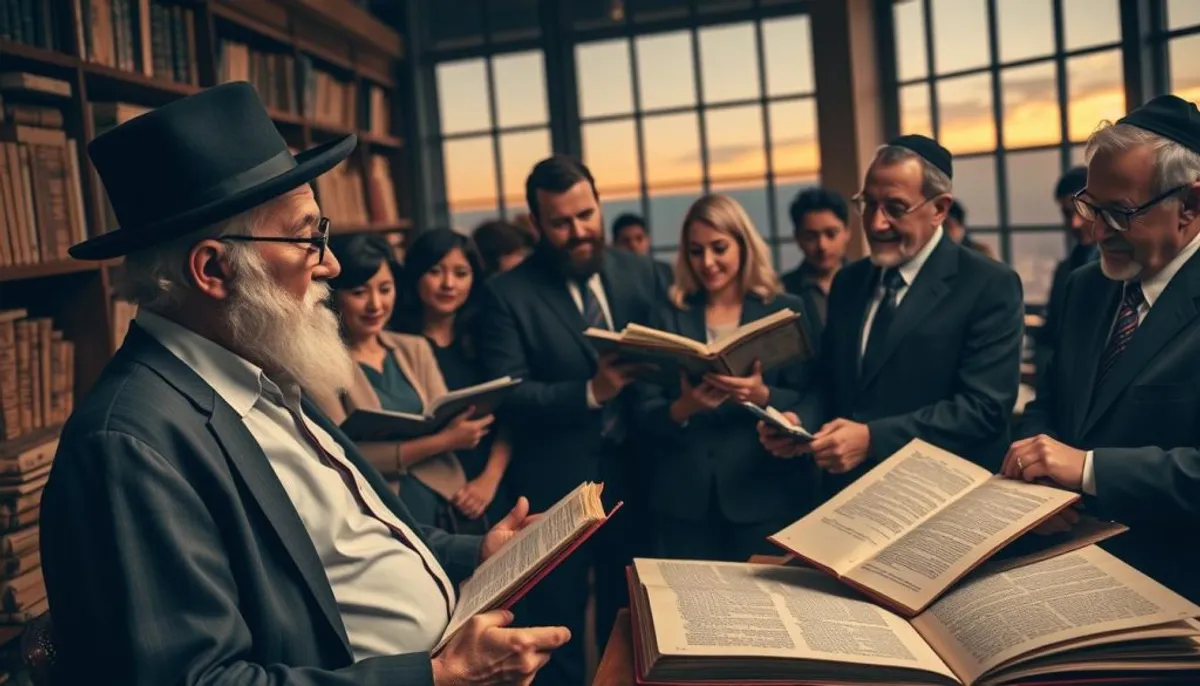
These sacred texts recount the epic from mythical origins to establishment in the Promised Land. Historians study these writings to distinguish historical facts from theological elements.
The stele of Merenptah, discovered in the 19th century, provides the first extra-biblical archaeological evidence. It mentions Israel in the 13th century BCE, confirming Hebrew presence in Canaan.
External testimonies enrich our understanding of history. The Roman historian Dio Cassius describes the Jews of Judea in his Roman History.
Flavius Josephus offers a valuable internal perspective on the 1st century. This direct witness of the Jewish revolt against Rome left invaluable detailed accounts.
Over the centuries, chronicles and documents have preserved the memory of Jewish experiences. The literature of testimony about the Holocaust forms a unique corpus ensuring that this memory persists.
These multiple testimonies, whether sacred or personal, weave a complex narrative tapestry. They allow us to grasp the extraordinary trajectory through the ages.
Conclusion
In conclusion of this study, it is clear that Judaism represents much more than a simple religion. It is a complete civilization that has traversed the centuries with remarkable resilience.
This millennial heritage continues to inspire contemporary Jews in their quest for meaning. The Jewish tradition shows an exceptional ability to adapt while preserving its essence.
The history of Judaism teaches us universal lessons about perseverance and the importance of transmission. This Jewish culture remains deeply relevant for future generations.
Looking to the future, Judaism continues its path, carried by communities committed to preserving this unique heritage while responding to the challenges of the modern world.
FAQ
What primarily defines Jewish identity?
Jewish identity is a rich blend of religion, history, tradition, and belonging to a people. It is based on a common heritage, a religious law (Halakha), and often a sense of shared destiny, passed down from generation to generation.
What are the most important texts in Judaism?
The foundational texts are the Torah, which comprises the first five books of the Hebrew Bible (the Tanakh), and the Talmud. The latter is a vast compilation of rabbinic discussions on law, ethics, and customs, serving as a guide for daily life.
What are the most significant festivals in Jewish tradition?
Among the major celebrations are Rosh Hashanah (the New Year), Yom Kippur (the Day of Atonement), Passover (the Jewish holiday commemorating the Exodus), and Hanukkah (the Festival of Lights). Each has its own rituals and symbols that strengthen community ties.
How have Jewish communities preserved their traditions throughout history?
Despite dispersions and challenges, resilience has been remarkable. Oral and written transmission, study of sacred texts, community life centered around the synagogue, and observance of family practices have been essential pillars for maintaining this heritage alive through the centuries.
What is the impact of Jewish culture in France today?
The influence is significant and visible in many areas such as philosophy, literature, sciences, music, and gastronomy. Communities actively contribute to the dynamism of French society while preserving their uniqueness and participating in intercultural dialogue.