
In a world in perpetual transformation, the challenges are numerous. Social, economic, and environmental issues require innovative and sustainable solutions.
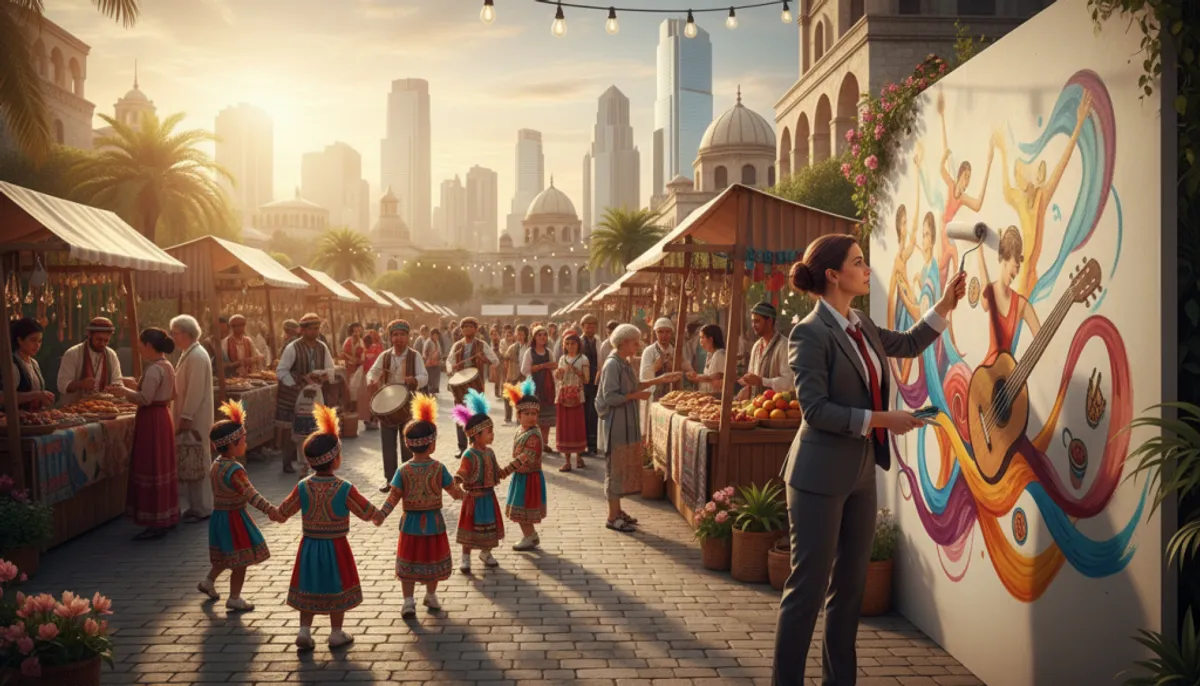
In the face of this complexity, the role of artistic and heritage expressions is becoming increasingly crucial. Once seen as a separate domain, it now asserts itself as a powerful cross-cutting lever.
It directly impacts all aspects of our collective life. International organizations and local communities have become aware of this. They are launching concrete actions to fully integrate it into sustainable strategies.
Recognized as a factor of social cohesion and job creation, it preserves identities and fosters dialogue. This article will explore its various dimensions, from international cooperation to urban reconstruction.
Let’s discover why it is today an essential pillar for a harmonious future.
The issue of culture in international development
The Agenda 21 for culture marked a turning point in the recognition of cultural factors. It highlights that international cooperation constitutes an essential contribution to dialogue between peoples.
This approach allows for overcoming historical imbalances. Organizations such as UNESCO and the European Commission regularly organize conferences on this theme.
North-South cultural cooperation projects
The association Culture and Development, based in Grenoble, designs innovative pilot projects. It raises awareness among northern and southern communities to integrate the cultural dimension into their cooperation.
The UNESCO Convention on Cultural Diversity has given new impetus to these initiatives. However, reciprocity remains a significant challenge.
| Type of project | Involved actors | Sustainable impact | Concrete example |
|---|---|---|---|
| Decentralized cooperation | Local communities, associations | Structuring cultural sectors | Reemdoogo in Ouagadougou |
| Institutional partnerships | UNESCO, OIF, European Commission | Integration into policies | Agenda 21 for culture |
| Artistic projects | Artists, vocational training | Creation of local jobs | Garden of Music |
The cross-cutting nature of cultural initiatives
The success of projects requires a cross-cutting approach. The music sector perfectly illustrates this necessity.
It involves not only the Ministry of Culture but also training organizations and Chambers of Commerce. This multi-actor collaboration ensures the sustainability of actions.
The cultural wealth of southern countries represents an underutilized resource. An adapted professional environment can transform it into a sustainable economic lever.
How can culture contribute to development
Structuring artistic activities allows for the creation of stable jobs and enhances local identities. This approach transforms the sector into a true economic lever.
Integration of cultural and economic dimensions
For sustainable contribution, several elements are essential. Adequate creation spaces and a quality professional environment are needed.
A clear legal framework and production infrastructures complete this ecosystem. These conditions allow cultural sectors to generate sustainable revenues.
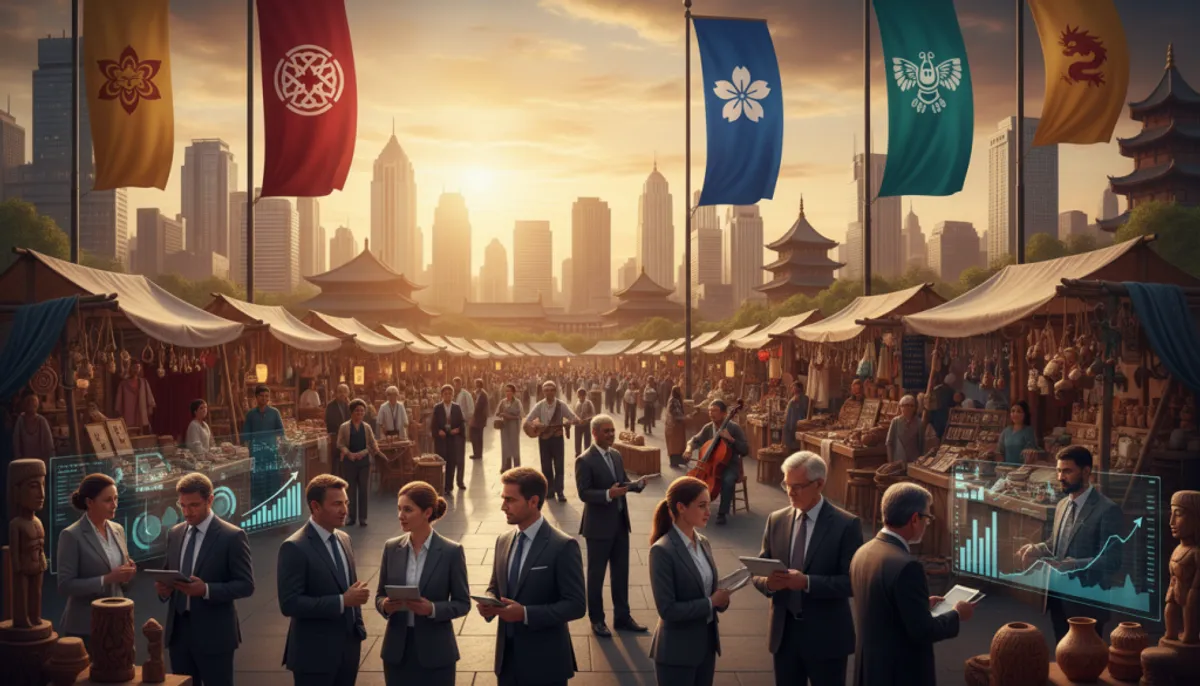
The role of public policies and local communities
Local policies play a crucial role in this process. Unfortunately, they often remain embryonic in southern regions.
The lack of trained personnel and financial resources limits their action. Only concrete achievements convince elected officials to invest.
The training of actors and territorial agents ensures the sustainability of projects. It also strengthens the preservation of cultural identity.
The CURE framework: Culture and urban reconstruction
The CURE framework represents a major advance in the design of urban recovery projects. This joint initiative of the World Bank and UNESCO places cultural values at the heart of reconstruction processes.
Guiding principles and urban development strategies
The CURE report combines environmental strategies and human-centered approaches. It proposes operational guidelines for planning and financing.
This methodology ensures sustainable construction that respects heritage. It transforms cultural preservation into a lever for urban resilience.
Inspiring international examples
Medellín has developed a civic culture to overcome urban violence. Banda Aceh promoted community transparency after the tsunami.
The city of Lijiang preserved its heritage after an earthquake. Mosul is now benefiting from significant cultural rehabilitation.
These examples demonstrate that integrating the cultural dimension creates more resilient cities. Tokyo and Beirut illustrate the necessary adjustments when this approach is neglected.
Access to culture: Health, justice, and artistic practices
Beyond economic development, artistic practices permeate the sectors of public health and the judicial system. These concrete actions directly impact the lives of the most vulnerable populations.
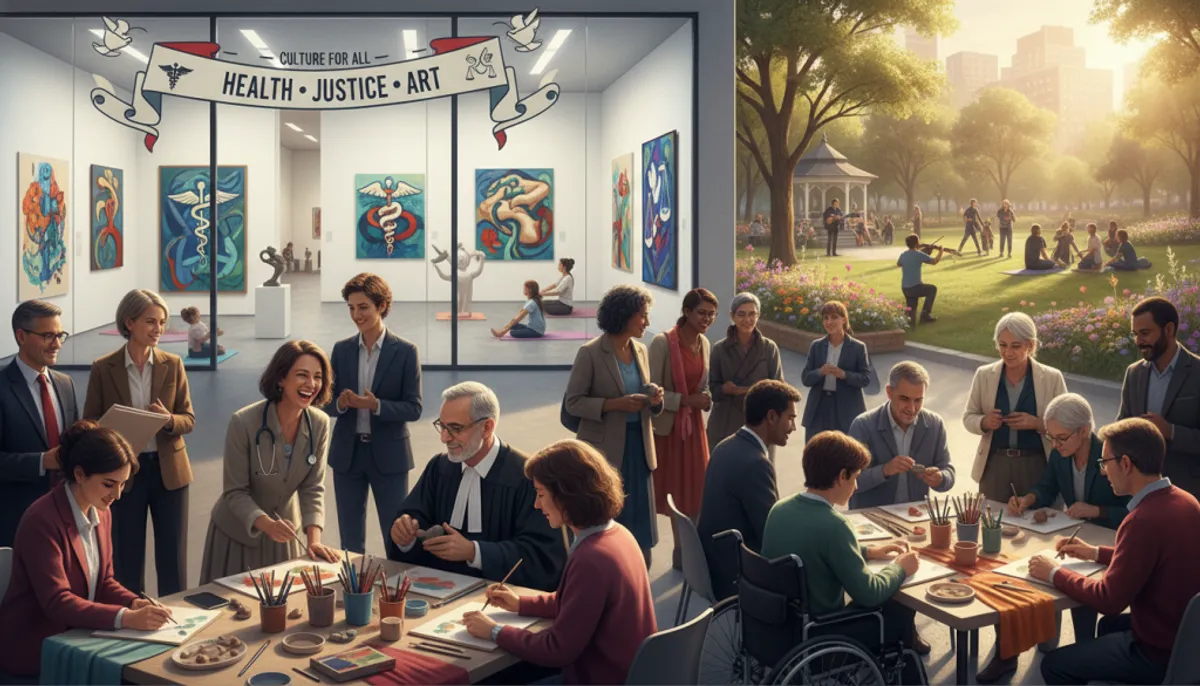
Culture and health: Initiatives in hospitals
The "Culture Health" program has been operational for over twenty years. With a budget of 5 million euros, it finances around 600 annual projects. These programs improve the daily lives of patients and healthcare staff.
Culture and justice: Reintegration and social inclusion
Access to cultural goods represents a fundamental right for incarcerated individuals. This approach promotes reintegration and reduces recidivism. It connects prisons to the community.
Artistic practices and solidarity actions
Associations develop tailored services for mediation. The "Living Together" mission brings together thirty cultural institutions. They work with local partners to reach marginalized audiences.
| Program | Target audience | Main objectives | Annual budget |
|---|---|---|---|
| Culture Health | Patients and healthcare staff | Improvement of well-being | 5 million € |
| Culture and Justice | Incarcerated individuals | Social reintegration | 2 million € |
| Living Together | Vulnerable audiences | Cultural democratization | 3 million € |
These initiatives demonstrate how artistic education strengthens social cohesion. They convey essential values to the entire population.
Challenges and perspectives for communities and cooperation
The implementation of international cultural projects faces major obstacles on the ground. These challenges require a methodical approach to ensure their success.
Obstacles and levers for project implementation
In southern countries, local cultural policies often remain embryonic. There is a lack of trained personnel at the level of communities and a shortage of financial resources.
Cultural decentralization is not truly operational in many cases. Only concrete achievements can convince elected officials to invest in this area.
In the north, culture is not yet perceived as a legitimate sector of development policies. Decision-makers question the relevance of investing in light of priority health needs.
Training and support in decentralized cooperation
The Culture and Development association has developed a rigorous methodology. It begins with an initial diagnostic of needs on the ground.
The co-design of projects involves northern and southern communities. This collaboration ensures better local ownership.
The training of actors and political support are essential. They guarantee the sustainability of initiatives and prevent failures.
This cross-cutting approach involves several services of the communities. It takes into account economic, legal, and social dimensions for sustainable results.
Conclusion
Recent initiatives strongly demonstrate how cultural dimensions sustainably shape our shared future, including the rich history of the anglo-saxon civilization. The recognition of this essential role now goes beyond the simple artistic framework to encompass values, identity, and social cohesion.In recent years, concrete projects have revealed the transformative impact of culture in international cooperation and urban reconstruction. Access to artistic practices significantly improves the quality of life for communities, contributing to their cultural well-being, as shown by programs in hospital and judicial settings.
To maximize this contribution to development, culture must be considered as a complete ecosystem. This requires appropriate infrastructures, training for actors, and a favorable legal environment.
Collective action must continue to fully integrate these dimensions into all strategies. Culture remains an essential vector for dialogue and resilience to build more inclusive cities.
FAQ
What are the benefits of international cultural cooperation?
International cultural cooperation strengthens exchanges and understanding between peoples. It allows for sharing know-how, supporting local creation, and building lasting bridges between territories. These projects often promote economic and social development, and cultural outreach plays a pivotal role in fostering these connections.
How can public policies support culture?
Public policies play a key role in integrating culture into development strategies. They can fund projects, facilitate access to cultural facilities, and encourage partnerships among local actors. Their action is essential for effective implementation.
Can culture really help rebuild a city?
Absolutely! Approaches like the CURE framework show that culture is a powerful lever for urban reconstruction. By valuing heritage and supporting artistic creation, neighborhoods are revitalized, jobs are created, and the quality of life for residents is improved.
Are there concrete examples where culture has helped communities?
Yes, many examples exist around the world. We can cite projects where art has facilitated social reintegration in the judicial system, or initiatives in hospital settings that use creation to improve patient well-being. These actions demonstrate the positive concrete impact of culture.
What are the main challenges in implementing cultural projects?
Challenges are often related to funding, coordination among different actors, and the need for appropriate training. However, good planning and solid support are effective levers to overcome these obstacles and ensure the success of actions.