
Dive into the fascinating universe of French heritage, a living mosaic that stretches from medieval castles to contemporary creations. Our country shines through a millennial history that continues to inspire the entire world.
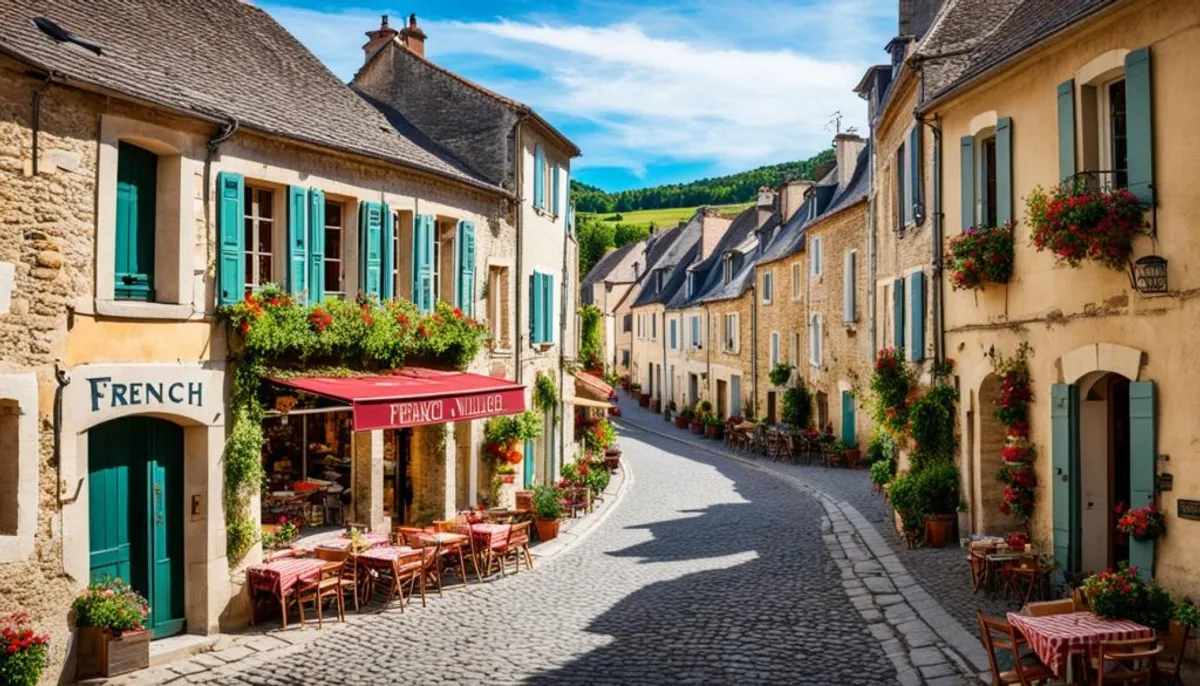
French artistic expressions have traversed the centuries with remarkable boldness. From literature to visual arts, each era has left its indelible mark. This diversity is manifested in our prestigious institutions and renowned festivals.
The transmission of this national treasure evolves with our times. France Culture, through its broadcasts and podcasts, plays an essential role in this enhancement. New technologies today allow for unprecedented accessibility.
This unique heritage is perpetuated in daily life, blending age-old traditions with modernity. Each region contributes to this collective wealth, creating a dynamic national identity that is open to the world. Agricultural news also plays a crucial role in this dynamic, reflecting the sector's evolutions and challenges.
Key Points to Remember
- French heritage spans an exceptionally long historical period
- Cultural diversity is expressed through multiple artistic dimensions
- Culinary traditions are an integral part of national identity
- France Culture actively participates in the transmission of this heritage
- Modern technologies facilitate access to cultural treasures
- Daily life perpetuates traditions while embracing innovation
- Each French region contributes to the overall cultural richness
The Historical Legacy of French Culture
The construction of historical heritage dates back to several successive and decisive periods. Our current society bears the marks of these profound transformations.
Key Moments and Evolutions
The French history includes many major turning points. The Revolution of 1789 represents a fundamental change in the approach to heritage.
This period established the foundations of a sustainable conservation policy. It created the first institutions dedicated to the protection of works.
From the Revolution to Modern Institutions
Over time, the institutional network has significantly expanded. The creation of the dedicated ministry in 1959 marks official recognition.
The evolution of public radio perfectly illustrates this progression. Born in 1944, it has changed names several times over the years.
| Period | Major Event | Cultural Impact |
|---|---|---|
| 1789 | French Revolution | Creation of the first heritage institutions |
| 1944-1963 | Radio Evolution | Modernization of cultural broadcasting |
| 1959 | Ministry of Culture | Official political recognition |
Today’s history courses allow exploration of these fascinating subjects. They constitute an essential part of educational programming.
This transmission is part of a long-term vision. Each generation thus enriches the collective heritage for future societies.
The Artistic and Literary Facets
The fields of artistic creation and literary production form a rich and diverse landscape, including Italian art. This creative expression traverses the centuries with remarkable vitality.
Literary and Poetic Movements
French literature has spawned revolutionary movements. From romanticism to surrealism, each writer has contributed to this evolution.
Figures like Victor Hugo and Albert Camus have marked history. Their monumental works continue to inspire contemporary creations.
Innovators in Visual Arts
French visual arts have experienced successive revolutions. Impressionism and cubism have redefined aesthetic canons.
Innovative artists constantly push the boundaries. Their artistic creation influences the entire world.
| Artistic Domain | Major Movement | Iconic Figure |
|---|---|---|
| Literature | Surrealism | André Breton |
| Painting | Impressionism | Claude Monet |
| Music | Modern Classical | Francis Bebey |
France Culture offers in-depth courses on these movements. The program “Les Chemins de la philosophie” explores these fascinating subjects.
Maryse Condé and Eric Ruf exemplify this excellence. Their journey demonstrates the vitality of contemporary creation.
Culinary and Festive Traditions
Feasts and celebrations punctuate the social calendar with exceptional culinary richness. UNESCO has recognized this importance by listing the gastronomic meal of the French as part of its intangible heritage.

Daily life is organized around food rituals that honor the seasons and local products. Each region cultivates unique specialties from its nourishing land.
France Culture explores these practices through programs like “Les Bonnes Choses.” This programming examines the evolution of traditions fifteen years after their international recognition.
Major occasions and simple family meals share the same attention to quality. A festive evening thus becomes a moment of transmission between generations.
This culinary culture, particularly Lyonnaise cuisine, goes beyond mere food to become an art of living. It strengthens bonds within society while valuing artisanal know-how.
Respect for natural cycles and connection to the land characterize this approach. This rich gastronomic culture permeates every aspect of French life.
The Influence of Cinema and Theater
The seventh art and the theatrical scene form a dynamic duo in the artistic landscape. Their ongoing dialogue has enriched our heritage for over a century.
Portraits and Significant Works
French cinema shines with its constant innovation. Pioneers like Joë Hamman boldly created the French western, enriching Western literature and the cultural landscape.
France Culture has celebrated this excellence since 1999 with its Cinema Prize. This award honors the entire body of work of an artist.
The Interaction Between Art and Society
Every summer, the radio sets up at the Avignon Festival. This unique occasion allows for encounters with creators.
Films and plays reflect social concerns. In return, they influence public debates.
The film music constitutes an art in its own right. The series “Les Hollywoodiens” explores these fascinating collaborations.
| Type of Recognition | Year of Creation | Cultural Impact |
|---|---|---|
| France Culture Cinema Prize | 1999 | Promotion of auteur filmmakers |
| Student version of the prize | 2015 | Involves younger generations |
| Coverage of the Avignon Festival | Every summer | Expanded theatrical broadcasting |
These initiatives transform a simple evening into a memorable creation moment. Theater and cinema thus remain alive and accessible.
The Role of Media and Cultural Podcasts
Modern cultural media have transformed our way of accessing knowledge. Public radio plays an essential role in this digital evolution.
The Evolution of Audio Formats
Podcasts have revolutionized cultural listening. France Culture recorded 24.2 million monthly downloads in 2019.
This station broadcasts its programs on 507 FM frequencies across the country. Live remains complementary to on-demand content.
Since 2017, the channel has launched native digital programs. Series like Superfail and Les Idées claires have emerged.
Saturday has become a privileged day for thematic magazines. The cultural journal delves into recent artistic creations.
Listeners discover innovative audio fictions. The Incredible Expedition of Corentin Tréguier illustrates this creativity.
This adaptation to new listening practices demonstrates remarkable vitality. Cultural radio remains more relevant than ever.
Innovations in Heritage Transmission
Digital innovation is redefining the methods of heritage transmission today. France Culture positions itself as a pioneer in this digital transformation.
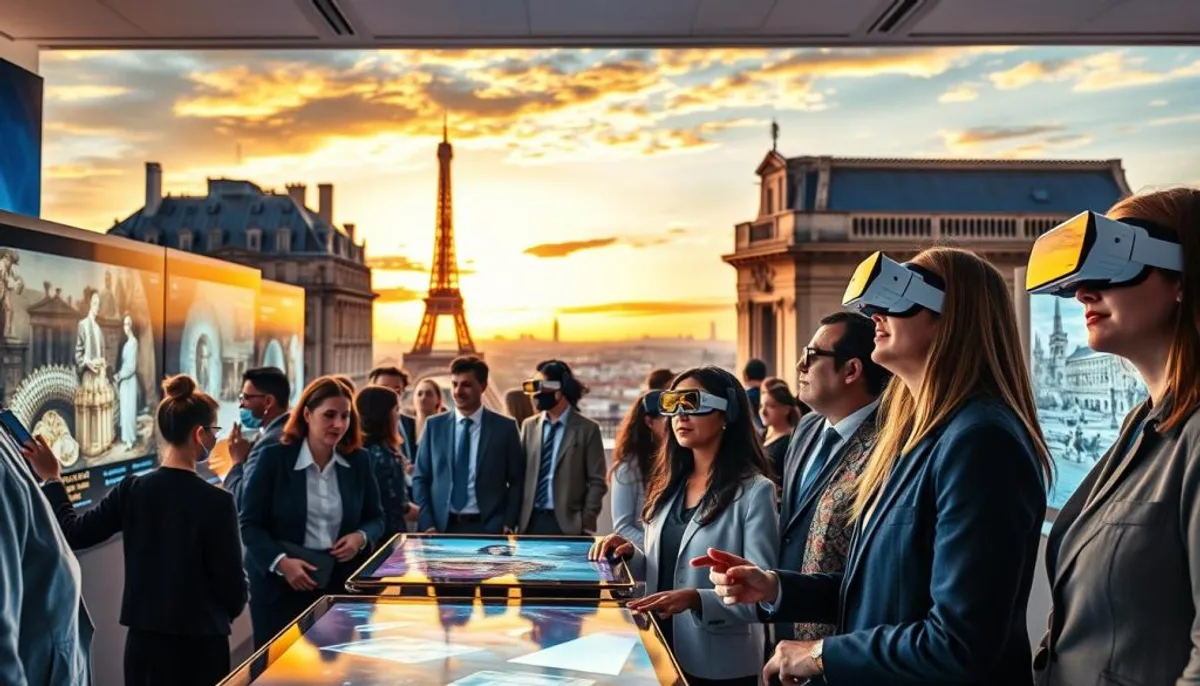
Since 2012, the station has launched France Culture Plus, an internet platform dedicated to students. This initiative, developed with Emmanuel Ethis from the University of Avignon, demonstrates a commitment to the young audience.
University content is gradually being integrated into the cultural offering. Video conferences on YouTube and Canal-U allow free access to academic knowledge.
| Innovation | Date | Impact |
|---|---|---|
| Launch of France Culture Plus | 2012 | Digital student platform |
| Migration to Radio France | May 9, 2022 | Unified digital ecosystem |
| Show “La Zizanie” from Asterix | November 23, 2019 | Public radio experience |
The program is enriched by regular partnerships. Events like the forum “The Year Seen by the Sciences” with Sorbonne illustrate this dynamic.
The selection of content becomes more personalized. On-demand programs respond to new listening habits.
This multimedia approach combines audio, video, and interaction. It transforms radio creation into an immersive collective experience.
The Multiple Facets of French Culture
Radio programming reveals the extraordinary diversity of French expressions. This variety touches all aspects of our daily life, from local traditions to contemporary creations.
The Diversity of Cultural Expressions
France Culture offers a comprehensive exploration of our society. Topics covered range from politics to music, creating an exceptional panorama of cultural immediacy.
Documentary series like “Hearing Rural France” explore our reality in depth. They avoid clichés to showcase current complexity.
The Impact on Daily Life
This programming directly influences our choices and practices. The French dedicate a significant part of their time to artistic activities.
The analysis of international phenomena enriches our understanding. Programs like CulturesMonde connect our history to the entire world.
- Exploration of contemporary social realities
- Coverage of political and economic issues
- Constant dialogue with international creations
- Measurable impact on individual cultural practices
This multidimensional approach shows how different forms of expression intertwine. They shape a dynamic and open national identity.
The Contribution of Cultural Institutions
At the heart of the audiovisual landscape, Radio France embodies an essential public service mission. This national broadcasting company was established on January 1, 1975.
France Culture represents one of the four original channels of this group. It produces demanding programs accessible for free to all.
The Role of France Culture and Radio France
The headquarters is located in the house of Radio at 116 Avenue du President Kennedy. This iconic building hosts daily productions.
Under the leadership of Emelie De Jong since April 2023, the institution maintains its excellence. It adapts to technological evolutions while preserving its quality.
Heritage Enhancement Initiatives
Several prestigious awards recognize artistic creation. The France Culture Cinema Prize has honored filmmakers since 1999.
The young public is involved through the Student BD Prize launched in 2020. The magazine Papiers offers the opportunity to revisit debates in print format.
These initiatives demonstrate a commitment to cultural transmission. The house of Radio remains a living symbol of this mission.
Cultural News and the Evolution of Audiences
Cultural consumption habits are undergoing a profound digital revolution. This transformation affects all aspects of our daily artistic life, including the meaning of culture.
Cultural news becomes accessible to millions via smartphones and tablets. Content is available day and night, radically altering participation.
New Trends and Digitalization
France Culture illustrates this evolution with impressive results. The 2021-2022 season recorded the best audience in twenty years.
The station reached 1,681,000 daily listeners, increasing by 98,000 people. This performance was crowned by the award for the best radio station in 2019.
| Indicator | Figure | Evolution |
|---|---|---|
| Daily Audience | 1,681,000 | +98,000 |
| Record Period | 2021-2022 | Best score in 20 years |
| Recognition | CB News Award 2019 | Station of the Year |
The Engagement of Young Generations
Those under 35 adopt different behaviors. They favor podcasts during their commutes and short videos on social media.
The cultural journal on Saturday adapts with varied formats. The personalized selections meet new expectations.
Radio marathons create unifying events. The one in 2013 broadcast 50 hours of programs for the station's 50th anniversary.
Conclusion
For over six decades, a voice has accompanied the transmission of our collective heritage. France Culture embodies this mission with its slogan “the spirit of openness” adopted in 2017. The station broadcasts on 507 FM transmitters, reaching every region of the country.
Time has confirmed the relevance of this radio model. While many media face crises, public cultural radio is experiencing its best audience in twenty years. Nearly 1.7 million daily listeners seek depth and quality.
At the heart of the changes in our society, this radio remains an essential space for reflection. It values complexity in the face of the immediacy of news. To explore this richness, contact auditeurfranceculture@radiofrance.com or 01 56 40 22 22.
FAQ
What are the main literary movements that have marked French heritage?
The literary heritage is crossed by numerous movements such as classicism, the Enlightenment, romanticism, and surrealism. Authors like Victor Hugo or Marguerite Duras have contributed to shaping these currents, which continue to inspire contemporary creators.
How do institutions like Radio France participate in cultural life?
These institutions play a key role by broadcasting programs, podcasts, and original creations. They make art and knowledge accessible to the greatest number, also supporting emerging artists and local initiatives.
What are the emblematic festive traditions of France?
We think particularly of village festivals, Christmas markets, or July 14th with its popular balls and fireworks. Each region has its own celebrations, such as the Nice Carnival or the Music Festival.
How has the seventh art influenced French society?
Cinema, with directors like Agnès Varda or François Truffaut, has often reflected and questioned social realities. It remains a powerful means to tell stories and provoke debate on current issues.
How is heritage transmission evolving today?
Thanks to digital technology, new formats like podcasts, virtual tours, or interactive applications are developing. These tools allow reaching a broader audience, particularly younger generations, and make history more vibrant.