
Welcome to this discovery of a unique heritage, nestled in the heart of the Himalayas. This journey invites you to meet a society where millennia-old traditions and ethnic diversity create a fascinating tableau.
This nation has about 30 million inhabitants, spread across more than sixty ethnic groups. Its territory, covering an area of 147,179 km², is home to an incredible linguistic mosaic with over a hundred languages and dialects.
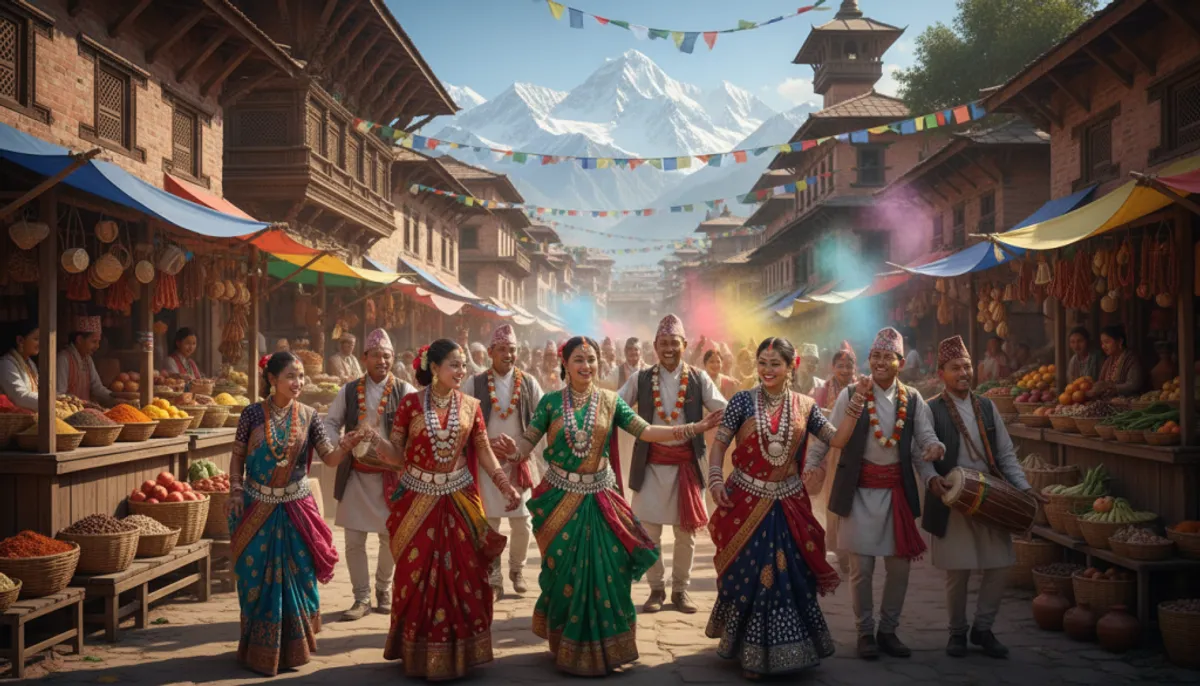
One of the most striking features is the harmony between spiritualities. About 80% of the population practices Hinduism and 10% Buddhism, with these two religions coexisting and naturally complementing each other in daily life.
From the dizzying heights of Everest to the plains of Terai, geography has shaped distinct regional identities. The legendary hospitality of the locals, guided by the principle “Atithi Devo Bhava” (the guest is a god), makes every visit warm and memorable.
Key Points to Remember
- Nepal is a land of great diversity, with over 60 ethnicities and 100 languages.
- Hinduism and Buddhism coexist peacefully, deeply influencing society.
- Its territory, although smaller than France, offers extremely varied landscapes.
- The warm welcome of the Nepalese is rooted in an ancient philosophical tradition.
- Each region has its own customs, festivals, and artisanal know-how.
- This immersion is an authentic experience, far from the beaten paths of mass tourism.
Introduction to Nepal
Spanning an area of 147,179 km², Nepal offers landscapes ranging from tropical plains to the highest peaks on the globe.
This country presents a striking geographical contrast. To the south, Terai is a fertile plain. To the north, the majestic mountains of the Himalayas dominate the horizon.
Geography, Climate, and Landscape Diversity
The climate changes radically with altitude. The lowlands have hot summers. High-altitude regions experience very cold winters.
The monsoon brings heavy rains from June to September. This variation shapes unique ecosystems across the territory.
History and Cultural Mosaic of the Country
Unified in the 18th century, the country became a federal democratic republic in 2008. Its recent history is marked by this political transition.
The population is about 30 million inhabitants. It forms a rich mix of over sixty distinct ethnicities.
This diversity is reflected in the use of over a hundred languages. Ethnic groups like the Tharu or the Tamang preserve their own language and traditions. This creates a vibrant and fascinating social mosaic.
Understanding Nepalese Culture
Beyond the spectacular landscapes, the true treasure of this nation lies in the rituals of daily life and its artistic abundance, deeply rooted in indonesian culture. Every gesture and creation tells a unique story.Daily Traditions and Rituals
Society is structured by precise social codes. Respect for elders is a fundamental pillar.
The younger generations often bow and use honorific terms. This mark of deference shapes family and community interactions.
Celebrations also illustrate this harmony. The festivals of the two main religions are often shared, creating a calendar rhythm filled with joy.
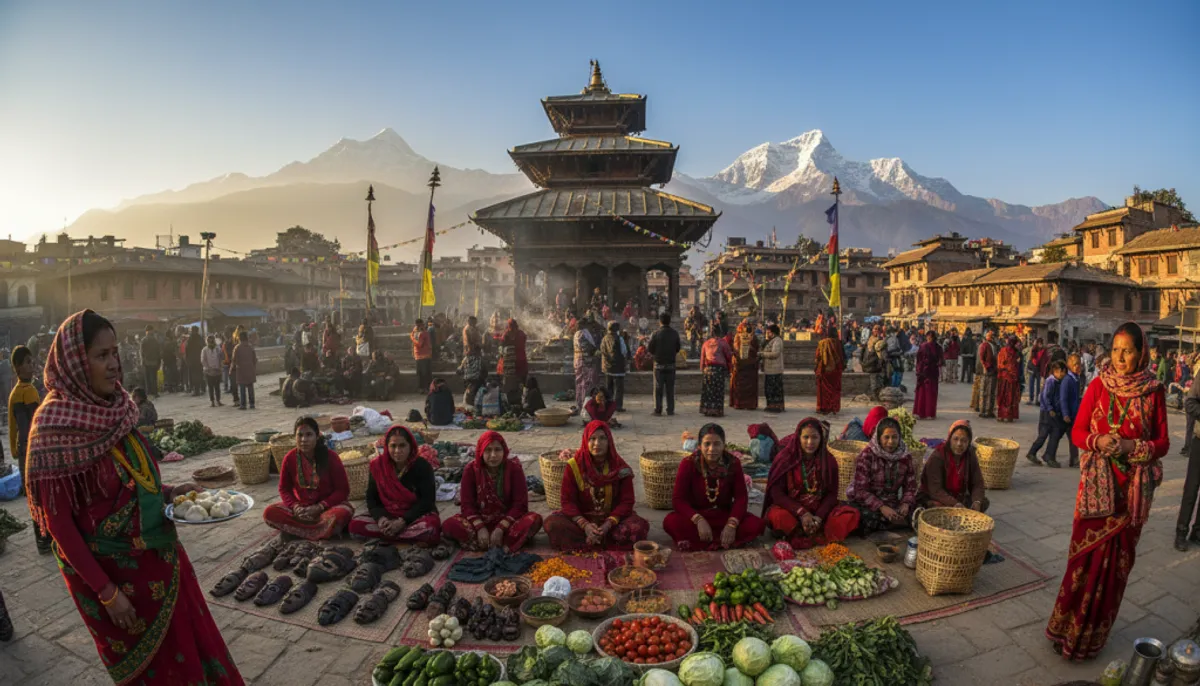
Multilingualism and Artistic Expression
The country boasts over a hundred languages. In some regions, local dialects are preferred, reflecting a deep sense of identity pride.
Visual art is omnipresent. The vibrant colors of Buddhist thangka painting and meticulous wood carving are striking examples.
Music and dance enliven all celebrations. The characteristic sound of the madal, this traditional drum, and the melodies of the flute rhythm the ceremonies. This creative expression harmoniously blends spiritual influences to create a unique style.
Local Customs and Practices
Every encounter begins with a symbolic gesture, the Namaste, much more than a greeting. Understanding these customs enriches your journey and shows respect.
The Namaste and Politeness Codes
The Namaste is a graceful ritual. Hands joined and a slight bow show deep mutual respect.
Other rules permeate daily life. One always circumambulates stupas to the left. Shoes are removed before entering someone's home.
Once seated, avoid pointing your feet at other people. Modest clothing is appreciated, especially in temples.
Sacred cows roam freely. Public displays of affection are rare. However, two friends often walk hand in hand.
Hospitality and the Art of Receiving
The Nepalese are renowned for their warm hospitality. The saying “Atithi Devo Bhava” means that the guest is a god.
It is common to offer tea or a meal. This spontaneous generosity touches all visitors.
At the table, it is traditional to eat with the right hand. Hosts provide a spoon if you wish. This sharing creates authentic moments.
| Custom | Meaning | Practical Advice |
|---|---|---|
| Namaste Greeting | Respect and acknowledgment of the other | Always respond with the same gesture and a smile |
| Shoe Removal | Purification of the indoor space | Observe if shoes are lined up at the entrance |
| Dress Code | Mark of respect for sacred places | Bring a shawl to cover shoulders and knees |
| Offering Food | Hospitality and community sharing | Accept politely, do not refuse outright |
| Use of the Right Hand | The left hand is considered impure | Use your right hand to eat and give objects |
Spirituality and Religions
The soul of Nepal resides in its devotion, where temples and stupas create a unique sacred map of the world. About 80% of the inhabitants practice Hinduism. Buddhism also holds an essential place, especially in Lumbini, the birthplace of Buddha.
Hindu Temples and Buddhist Stupas
These two religions coexist peacefully. Hindu temples are often seen near stupas. In the Kathmandu valley, Hinduism predominates.
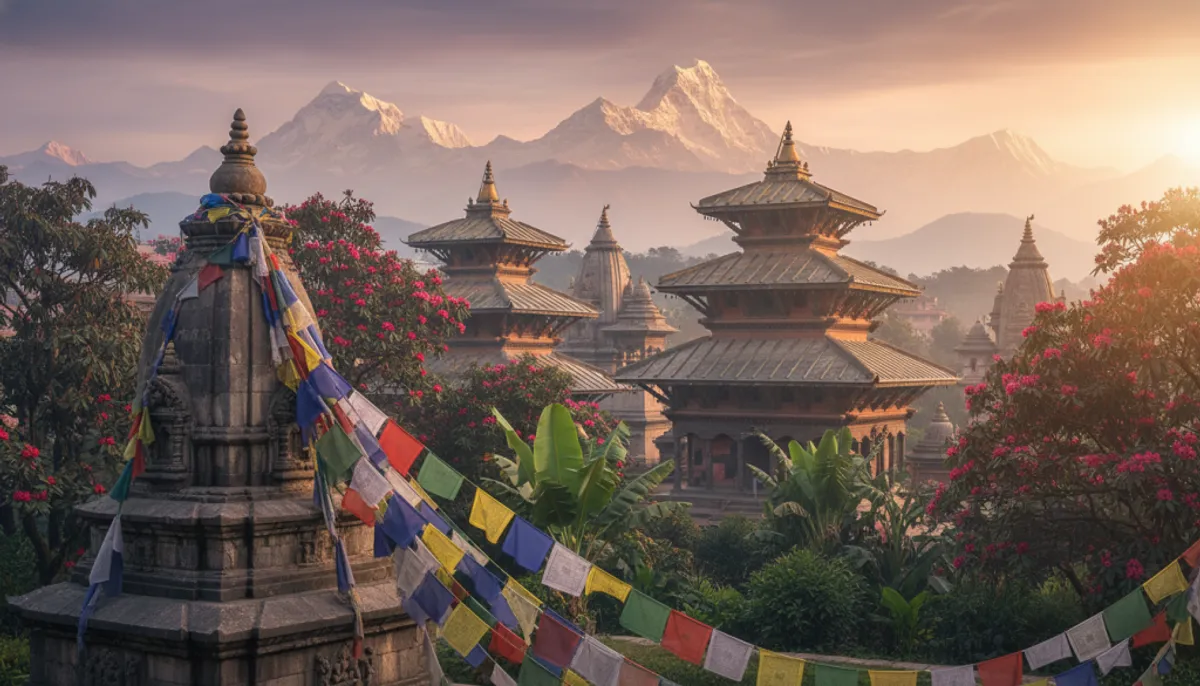
The mountainous regions are more often Buddhist. The temple of Pashupatinath attracts pilgrims from around the world. The stupas of Swayambhunath and Boudhanath are major centers of Tibetan Buddhism.
Religious Festivals and Offerings
The country is full of colorful festivals. Dashain celebrates the victory of good over evil. Tihar, the festival of lights, illuminates homes.
Losar marks the Tibetan New Year. Offerings of flowers and food are central. Prayers and rituals sanctify every stage of life.
| Festival | Religion | Meaning | Period |
|---|---|---|---|
| Dashain | Hinduism | Victory of good over evil | September/October |
| Tihar | Hinduism | Festival of lights and tribute to animals | October/November |
| Losar | Buddhism | Tibetan New Year | February/March |
| Gai Jatra | Mixed | Tribute to the deceased | August |
Cuisine and Culinary Traditions
Tasting the local gastronomy is diving into a generous culinary tradition shaped by the mountains and plains. This asian cuisine offers a direct and warm sensory experience.Dal Bhat and Iconic Dishes
The dal bhat is much more than just a dish. This combination of basmati rice and lentils constitutes the national meal.
Locals often consume it twice a day. It is accompanied by flavorful vegetable curry. The momos, these delicious stuffed dumplings, are another great favorite.
The Influence of Spices and Local Recipes
Spices transform every preparation. Chili, ginger, and turmeric generously flavor the dishes.
This cuisine, particularly the flavors of lebanese cuisine, can be quite spicy, especially on the street. Chiya, a spiced milk tea, accompanies all meals.Regional diversity is also expressed. You can find gundruk (fermented vegetables) or chatamari (rice pancake). Each meal thus reveals the richness of spices and local products.
Craftsmanship, Souvenirs, and Cultural Tourism
Your journey would be incomplete without exploring its artisanal treasures and legendary trekking routes. These two pillars define an authentic tourism experience.
Traditional Craftsmanship and Art Objects
Local craft is a national pride. Painted wooden masks and handwoven Tibetan carpets are striking examples.
You can also find beautiful pashminas and silver jewelry. These objects tell a unique spiritual story.
Local Markets and Craft Festivals
The historic cities of the Kathmandu valley host lively markets. Their medieval architecture forms a sublime backdrop.
For trekking enthusiasts, routes like the base camp of Everest are legendary. A multi-day journey in Solu also offers beautiful views.
Prefer donations to schools rather than to children on the street. This is a responsible measure.
Plan to tip your trekking team. This is part of local customs.
Conclusion
The true treasure of this Himalayan country is measured by the warmth of its welcome and the authenticity of its living heritage. Your journey becomes an immersion in a daily life rich in meaning.
Whether you embark on a multi-day trek or explore the architecture of the Kathmandu valley, each experience touches you. Sharing a meal or discovering a thangka painting reveals this unique depth.
The Nepalese inhabitants, from smiling children to elders, embody this generosity. Their legendary hospitality transforms passing people.
Despite a modest average salary, the human wealth here is immense. This country awaits you for a journey that will mark your life. It offers the world a lesson in authenticity and openness.
FAQ
What is the main religion in Nepal?
Hinduism is the majority religion, but Buddhism is also very present and influential. The two coexist harmoniously. You will see many Hindu temples and Buddhist stupas, especially in the Kathmandu valley.
What do people typically eat during a Nepalese meal?
The national dish is dal bhat, a mix of rice and lentil soup, often accompanied by vegetables and spices. Momos, steamed dumplings, are also a very popular dish throughout the country.
How do the locals greet each other?
The traditional greeting is “Namaste,” done by joining hands in front of the chest. It is a sign of deep respect. Respect for elders and great hospitality are fundamental traditions of local life.
What are the best times to visit Nepal?
The ideal periods are autumn (October-November) and spring (March-April). The climate is mild for exploring the mountains, trekking, and participating in the many cultural holidays that punctuate the year.
What souvenirs can one bring back from Nepal?
The world of craftsmanship is very rich. You can bring back carved wooden objects, thangka paintings, woolen clothing, or lokta paper items. The local markets in the cities are perfect for these discoveries.
Is language a barrier for travelers?
Nepali is the official language, but English is widely understood in tourist areas. Learning a few basic words like “Namaste” or “Dhanyabad” (thank you) is always greatly appreciated by the locals.
What major festivals can be seen?
Dashain and Tihar are the biggest Hindu festivals, featuring family rituals and offerings. On the Buddhist side, Buddha Jayanti celebrates the birth of Buddha. These celebrations are colorful and open to visitors.