
Welcome to a journey into the heart of one of the most captivating civilizations on the continent. This major ethnic group primarily radiates in northern Nigeria and Cameroon, as well as in southern Niger.
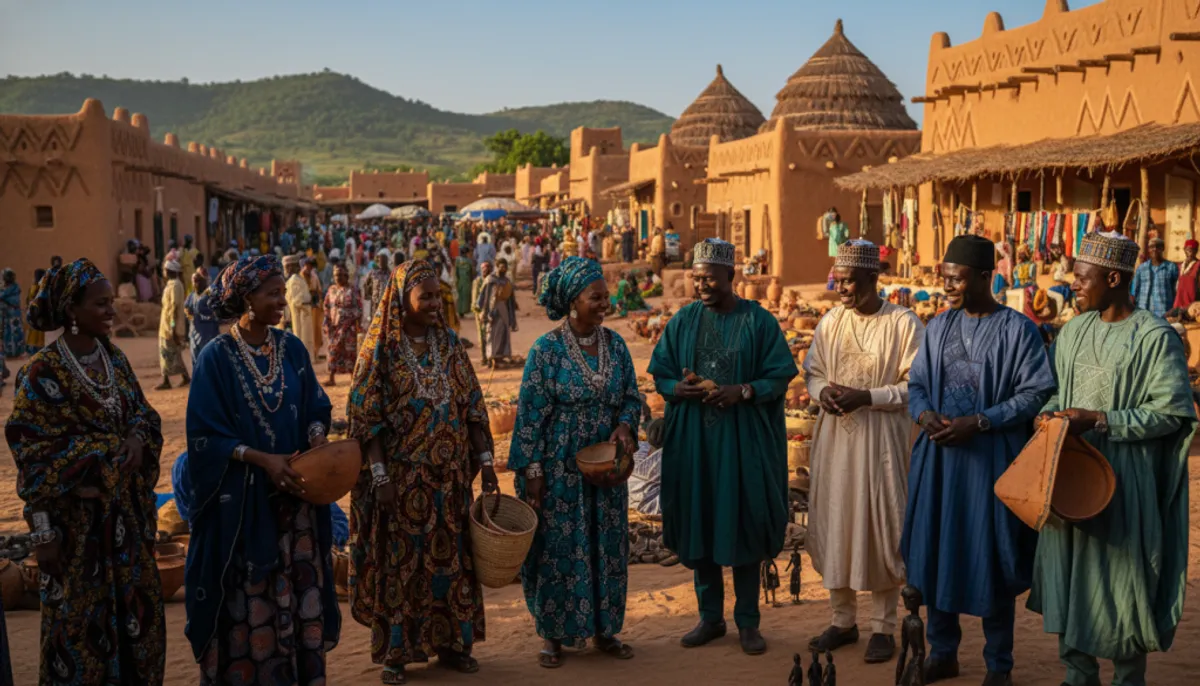
Their historical territory, called Kasar Hausa, forms a vast region. For centuries, this area has been a crucial crossroads for trade. It has fostered the development of a sophisticated urban society.
Today, this impressive population numbers nearly 80 million individuals. There are approximately 48 million in Nigeria, 13 million in Niger, and significant communities in neighboring countries.
Their heritage is based on agriculture, craftsmanship, and a dynamic trade. They have managed to create a heritage of remarkable diversity while integrating external influences.
This unique synthesis continues to attract and influence other peoples in the region. Their impact extends well beyond their homeland, throughout West Africa.
Key Points to Remember
- The Hausa people are one of the largest ethnic groups in Africa.
- Their historical territory, Kasar Hausa, is a cultural and commercial crossroads.
- The Hausa population exceeds 70 million people.
- This civilization has developed a sophisticated urban society.
- Their influence extends over a large part of West Africa.
- Agriculture and trade are pillars of their traditional economy.
- Their unique culture integrates various influences while preserving its identity.
Introduction to Hausa Civilization
Discover the astonishing demographic and geographical expansion of this major ethnic group on the continent. Their presence extends well beyond traditional borders.
General Overview and Geographical Context
This people occupies a strategic position in the heart of West Africa. They are primarily established in the northern regions of Nigeria and Niger.
There is also a significant presence in the south of Niger and in the north of Cameroon. The historical territory has served as a bridge between North Africa and Sub-Saharan Africa.
Historical and Demographic Importance
Demographically, this population constitutes 22% of Nigeria's inhabitants. In Niger, it represents 55% of the total population.
These figures make them a major player in these two countries. The demographic significance places this group among the three main ethnic groups in Nigeria.
Dispersed communities exist in several other West African countries. Their historical mobility reflects a developed trading spirit.
This geographical dispersion creates a true nation transcending modern borders. Cultural influence remains strong despite the distance.
Origins and History of Hausa Culture
The narrative of this society's beginnings dates back to ancient times marked by great migrations. The origin of this people finds its roots in complex movements across the Sahara.
Ancestral Roots and Migrations
Over the centuries, populations migrated south from the Aïr massif. Desertification drove these groups to seek new territories. Their language gradually spread among local communities.
According to tradition, Daura represents the mother kingdom. Women held power in the early days. This matriarchal organization characterizes the beginnings of history.
The Evolution of City-States and Kingdoms
By the 11th century, seven main states had formed. The sarauta system politically organized each city-state. A sarki (king) ruled these autonomous entities.
“Kano became the economic and cultural heart of this civilization, symbolizing its commercial power.”
By the 12th century, this nation was among the most influential in Sub-Saharan Africa. The city-states maintained cultural unity while competing with each other.
| City-State | Foundation | Specialty |
|---|---|---|
| Daura | Mother Kingdom | Matriarchal Tradition |
| Kano | Commercial Center | Craftsmanship and Grains |
| Katsina | 11th Century | Trans-Saharan Trade |
Development accelerated in the 14th century. These kingdoms thrived at the crossroads of trade routes. Their influence extended well beyond their borders.
The Fundamentals of Hausa Culture
The ancestral governance system harmoniously combines royal authority and clan representation, illustrating a complex legal interpretation of power dynamics. This sophisticated social organization has evolved over the centuries.
Traditions, Rituals, and Cultural Symbols
The collective identity is expressed through deeply rooted rituals. The worship of Bori, traditional spirituality, was practiced by priestesses and priests in sacred forests.
Clothing is an integral part of this identity. Women wear large flowing dresses, while men don tunics under wide colorful boubous.
Embroidered patterns have profound symbolic meaning. The “eight knives” protect against the evil eye according to tradition. The spiral represents the “king's drum.”
The Influence of Matriarchy and Historical Revisions
Before Islam, matriarchy was complete in this society. The most powerful woman in the royal clan, called Madaki, oversaw the exercise of power.
She had decisions executed by her son the king, who held the title of Sarkin. Even after the adoption of the patriarchal system, the name and title of the king remained linked to the maternal lineage.
Royal power was exercised with a council of clan representatives. This system reflects collective governance despite the centralization of authority.
The Hausa Language and Its Linguistic Wealth
The Hausa language represents a linguistic treasure of exceptional richness in Africa. This language belongs to the Afro-Asiatic family and dominates the Chadic group by the number of speakers. Additionally, the study of bambara language and literature enriches the cultural tapestry of the region.
Linguistic Origin and Writing Systems
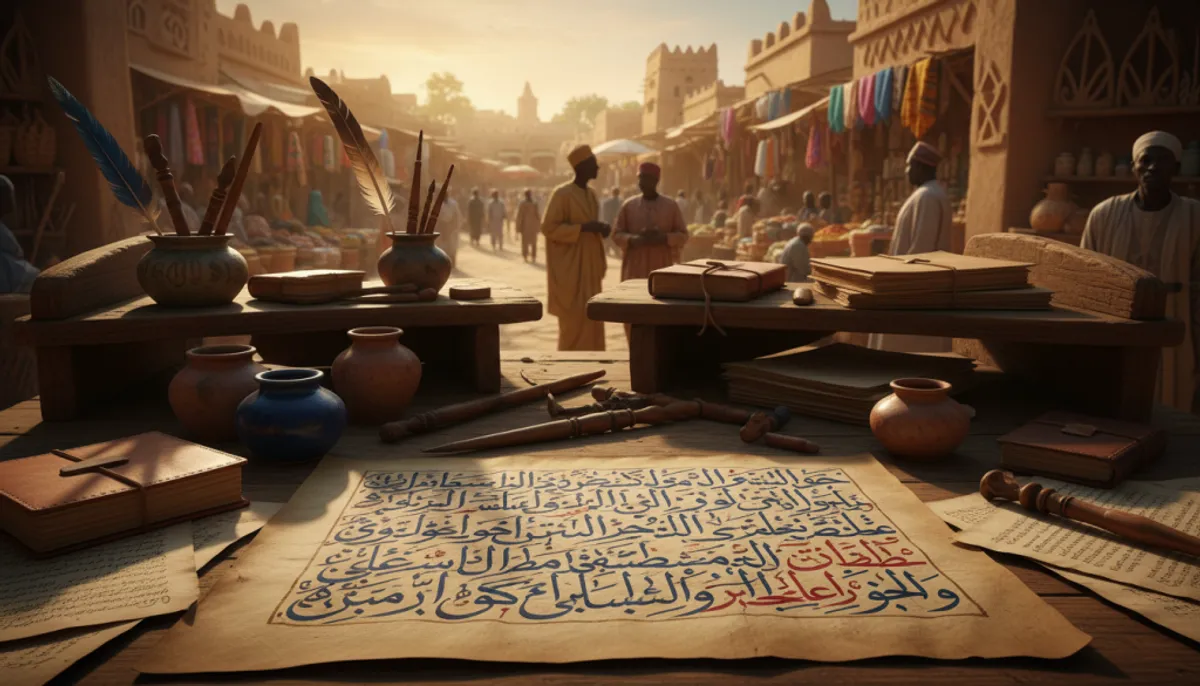
As early as the 15th century, speakers developed ajami, a modified Arabic writing. This sophisticated system is still used in Islamic schools.
In the 20th century, boko appeared with a Latin alphabet. The language thus has two distinct written systems.
Dialects and Commercial Importance
Several dialects exist, but the standard is gradually prevailing. This unification strengthens its role in exchanges.
The Hausa serves as a vehicular language for West African trade for centuries. It facilitates transactions between different peoples.
With about fifty million speakers, this language ranks second among African languages. Its influence surpasses traditional borders, and the amazigh language adds to the rich tapestry of linguistic diversity in the region.
The Role of Islam and Spirituality in Hausa Life
Islam has profoundly marked the spiritual evolution of this West African society. This religious transformation unfolded over several centuries.
The Introduction of Islam and Its Social Repercussions
From the 11th century, the aristocracy adopted this new faith. However, for a long time, Islam remained limited to urban elites.
The people continued to practice Bori, traditional spirituality. This religious duality characterizes this era.
At the beginning of the 19th century, a radical change occurred. Usman dan Fodio launched a jihad against local states.
In 1808, he founded the caliphate of Sokoto. This conquest profoundly transformed the structure of power.
Spiritual Practices and Religious Syncretism
Despite the strong Islamic influence, a syncretism took hold. The Bori cult retains its animistic elements.
The two traditions become complementary within the communities. The Qadiriyya Sufi brotherhood even incorporates some animistic spirits.
Kano becomes a major center of Islamic studies. Arabic writing is used there for centuries.
This harmonious coexistence defines the unique spiritual approach. Islam and local traditions naturally merge.
Architecture and Heritage of the Hausa States
The architecture of the Hausa states reveals a remarkable architectural heritage. These achievements testify to exceptional craftsmanship that has shaped the urban landscape of the entire region.
Iconic Fortifications and the Zankwaye Technique
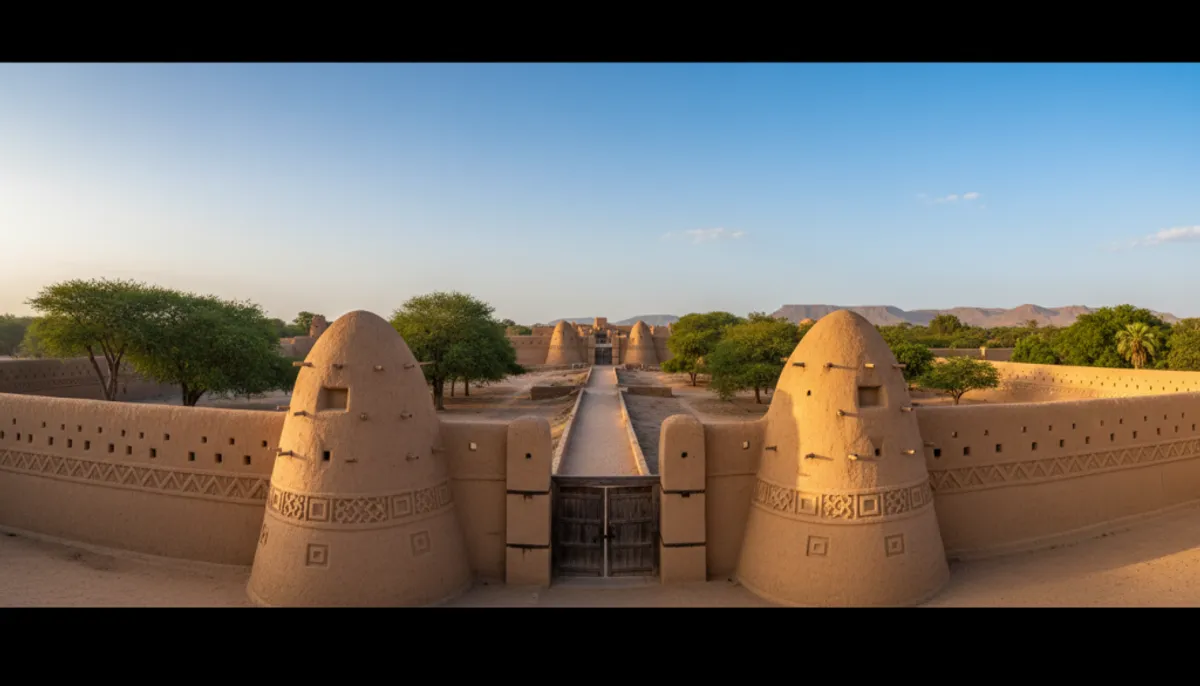
The impressive Ganuwa fortifications protected important cities. They used Tubali bricks, a mixture of earth and thatch.
This same technique was used to build ordinary houses. The Zankwaye, these decorative horns at the corners of buildings, became the signature of this unique style.
In the 12th century, the sarkin Gigamasu had the walls of Kano erected. These ramparts reached 12 meters in height over a perimeter of 18 kilometers.
Urban Development and the Legacy of Royal Palaces
The spatial organization followed a precise hierarchical logic. The Birni, the central fortified city, housed the institutions of the kingdom.
Surrounding it were the Gari, family communities. The Kauaye, peripheral villages, completed this urban structure.
The royal palaces shone with their complex decorations. Spiral patterns evoked ancestral spiritual beliefs.
This architectural heritage extended across the entire territory. It served both defense and trade, protecting markets within the walls.
Conclusion
This article has allowed us to discover the multiple facets of a people whose heritage continues to shine. The Hausas, with nearly 80 million people, represent one of the most influential ethnic groups in the region, including the songhai ethnicity.
Their fascinating history shows how they built a sophisticated urban civilization. Their language, spoken by 50 million speakers, serves as a bridge between different communities.
The Hausa identity has been forged through a unique syncretism. It harmoniously blends ancestral traditions and Islamic influences.
This subject of study remains highly relevant. The vitality of their languages and traditions ensures their longevity in the modern world.
The consulted sources confirm the lasting influence of this people beyond their country of origin. Their heritage continues to enrich the West African cultural landscape.
FAQ
What is the demographic importance of the Hausa people today?
The Hausa community is one of the most significant in West Africa, with a population exceeding 70 million speakers. This significant presence gives it considerable cultural and economic influence in the region.
What are the most famous ancient Hausa kingdoms?
The most well-known historical city-states are the cities of Kano, Katsina, Zazzau (Zaria), and Daura. These centers of power and trade thrived for centuries and marked the history of the region.
How has Islam transformed society?
The introduction of Islam had a profound impact on the legal system, writing with ajami, and architecture. It facilitated exchanges with the north and integrated the region into broader networks, such as the caliphate of Sokoto.
What makes traditional architecture unique?
The architecture is famous for its earth construction techniques, such as the Zankwaye (walls). The ancient royal palaces and city fortifications testify to remarkable craftsmanship and a rich heritage.
Is the Hausa language used outside its territory of origin?
Absolutely. The Hausa language serves as a major vehicular language in much of West Africa, well beyond its territory of origin. It is essential for trade and communication between different ethnic groups.