
Welcome to a journey into the heart of a unique heritage. Gabon, this country in Central Africa, has a vibrant identity. It was born from the meeting of ancestral traditions and modern influences.
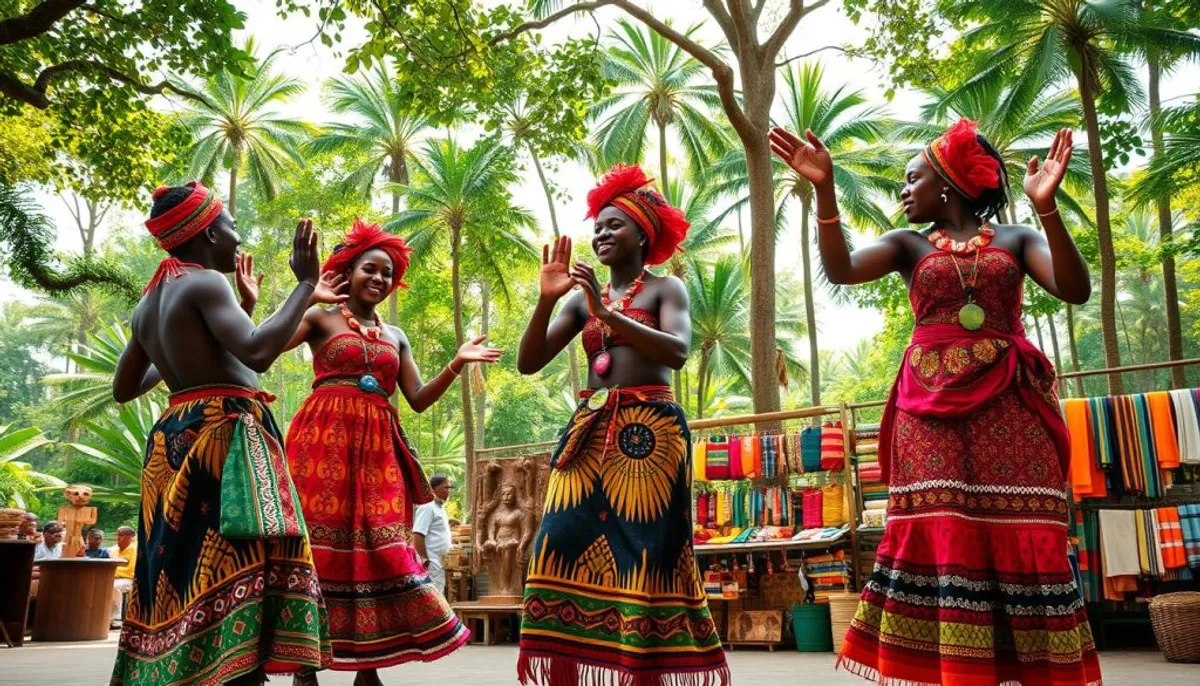
Since 1960, Gabonese people have created their own identity. It is neither a simple copy of the past nor a total adoption of the West. It is a dynamic and evolving synthesis.
With more than 2.3 million inhabitants, the nation is a mosaic of over fifty ethnic groups. This diversity forges a universe where varied beliefs and practices coexist. The result is a fascinating cultural laboratory.
We will discover together the multiple facets of this wealth. From age-old rituals to current artistic expressions, each aspect tells a story. It is the adventure of a welcoming and creative people.
Key Points to Remember
- Gabon has developed a unique identity since its independence in 1960.
- Its culture is a harmonious blend of ancestral traditions and modern influences.
- The country has a diverse population of over 2.3 million inhabitants.
- More than fifty different ethnic groups contribute to the richness of the heritage.
- Contemporary Gabonese culture is dynamic and constantly evolving.
- It is characterized by the peaceful coexistence of various beliefs and practices.
The Origins and Historical Evolutions
Let’s dive into the deep roots of Gabonese history to understand its modern transformations. This African land bears the traces of ancient civilizations that have shaped its unique heritage over the years.
Traditional and Western Influences
The Pygmies represent the oldest human presence in this territory. Although they now make up only about 1% of the population, their heritage remains fundamental. Their ancestral knowledge of the equatorial forest has influenced traditional practices.
The arrival of Western influences created a fascinating blend. The independence of 1960 marked a decisive turning point. For the first time, the French language truly spread among the population.
Key Moments in Gabon's History
The demographic evolution illustrates this historical transformation:
- 1965: 500,000 inhabitants
- 1995: 1 million inhabitants
- 2022: 2.34 million inhabitants
This remarkable growth has profoundly impacted the preservation of traditions. The country has managed to create a synthesis where ancestral and modern practices coexist. Each historical period has contributed to this rich cultural tapestry.
Peoples and Languages: Diversity and Coexistence
The demographic composition of Gabon reveals a fascinating picture of peaceful coexistence. This African country is home to about fifty different ethnic groups, including various south sudanese ethnic groups, from the Bantu people.
The Gabonese Ethnic Groups and Their Specificities
Among the most significant groups are the Fang (32%), the Mpongwè (15%), the Mbédé (14%), and the Punu (12%). The Batéké, Bakota, and Obamba complete this rich human mosaic.
The Importance of French and Local Languages
French truly established itself after independence. According to the International Organization of the Francophonie, 80% of the population speaks this language.
In Libreville, 99% of the inhabitants speak French fluently. Paradoxically, this language has become the mother tongue for over 30% of Libreville residents.
The local languages mostly belong to the Bantu family. Only Baka, spoken by the Pygmies, is an exception. This linguistic balance illustrates the Gabonese people's ability to combine tradition and modernity.
Religions and Rituals in Gabonese Culture
Religious syncretism is one of the most fascinating riches of Gabon's heritage. This harmonious coexistence defines the spiritual identity of the country.
Christianity, Islam, and Traditional Religions
Christianity dominates with 70-75% of the population. Catholics represent over 600,000 faithful. Sunni Islam accounts for 10-12% of adherents.
African traditional religions persist with 5-7% of practitioners. They maintain remarkable syncretism with other beliefs.
| Religion | Percentage | Main Characteristics |
|---|---|---|
| Christianity | 70-75% | Majority Catholic (600,000+ faithful) |
| Islam | 10-12% | Majority Sunni branch |
| Traditional Religions | 5-7% | Syncretism with ancestral practices |
Rituals, Dances, and Initiatory Societies
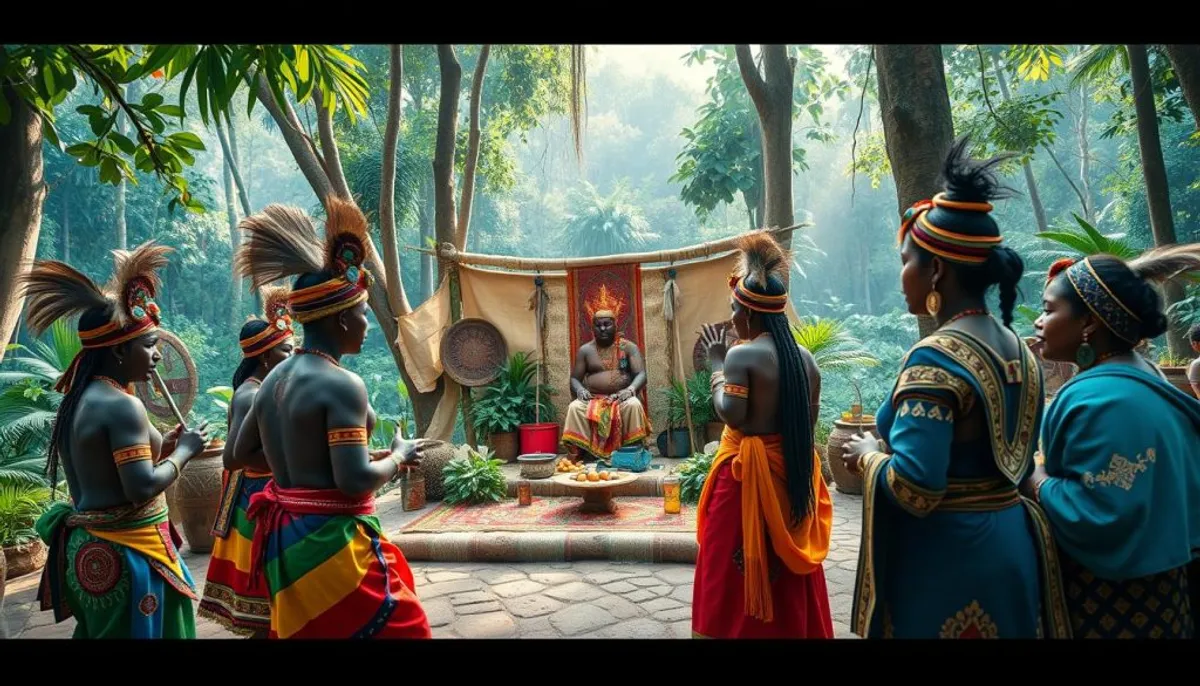
The Bwiti represents an emblematic rite of passage. It involves the ritual consumption of iboga, a sacred plant. This rite was initially practiced by the Pygmies.
The initiatory societies structure spiritual life. They are divided into male and female groups. Their role remains essential in the transmission of values.
Dances accompany these ceremonies, including the traditional central african dance. The Ingwala of the Nzebi and the Elone of the Fang illustrate this bodily expression. Each ethnic group has its own ritual choreographies.
The Traditions and Traditional Arts of Gabon
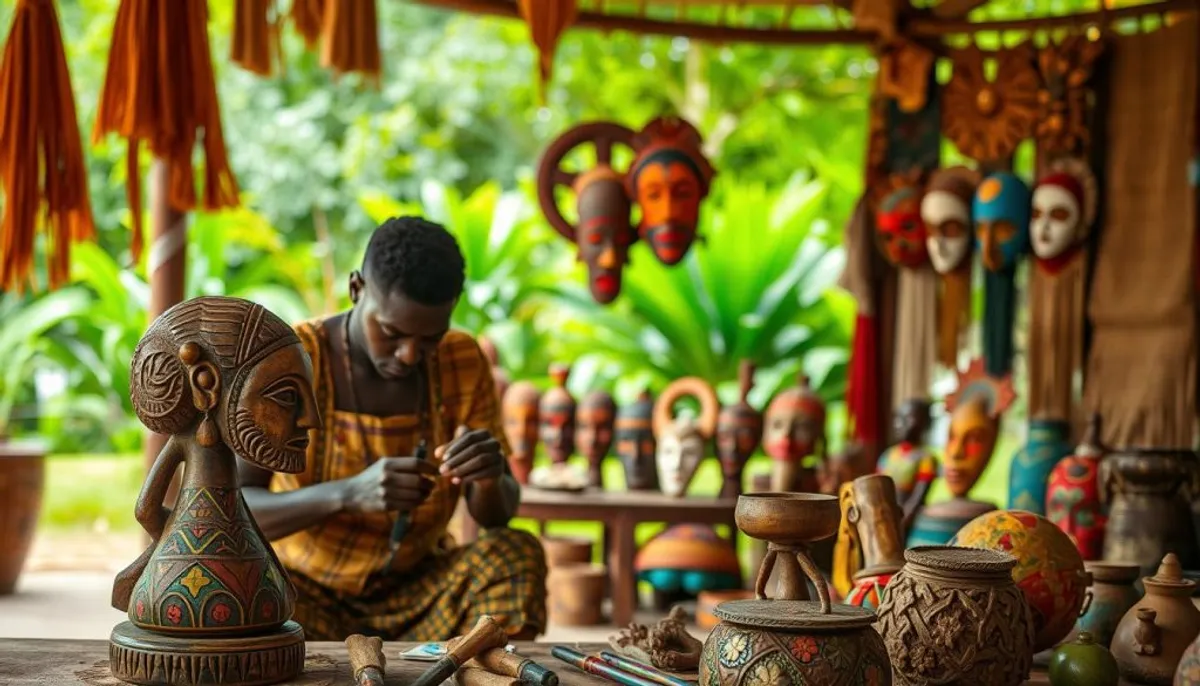
Traditional masks serve as a gateway to the Gabonese spiritual universe. Each ethnic group has its own creations, imbued with deep meanings.
Masks, Costumes, and Ancestral Crafts
These fascinating objects embody the spirits of ancestors and protective deities. They actively participate in important community ceremonies.
The following table presents the most emblematic styles:
| Mask Style | Region of Origin | Distinctive Characteristics |
|---|---|---|
| Mpongwé | Ngounié and Nyanga | Asian facial features, present among the Bapounou |
| Mboudi | Adouba area | Large size, visible in Koulamoutou |
| N'goltang (Fang) | Fang regions | Internationally renowned, stylized shapes |
| Kota | Kota territories | Metallic plans, polished surfaces |
Clothing craftsmanship shows remarkable know-how. The first garments used beaten bark, softened in water.
Customs and Festive Rituals
The Fang created spectacular helmet hairstyles. They incorporated cowries, beads, and plant shells.
These works are not mere decorations. They serve as mediators between the visible and invisible worlds.
This artistic heritage, including namibian traditional art, continues to enrich contemporary traditions. It represents a living treasure for future generations.Exploring Gabonese Culture through Cinema, Music, and Literature
Contemporary artistic expression offers a unique window into the evolution of Gabon's heritage. Cinema, music, and literature represent three essential pillars of this modern creation.
Gabonese Cinema and Its Pioneers
Philippe Mory is regarded as the pioneer of Gabonese cinema. This pioneering director filmed the first national feature film in 1971.
The national center for cinema has evolved institutionally. Led by Charles Mensah and then Imunga Ivanga, it supports local production.
The FESPACO festival has recognized several Gabonese talents. Imunga Ivanga has won international awards for his film “Dolè.”
Music: From Tradition to Modern Sounds
Traditional music draws its roots from the Pygmies. Instruments like the obala and the ngombi create unique sounds.
A new generation of artists is emerging today. They harmoniously blend ancestral and modern influences.
Pierre-Claver Akendengué and Oliver N'Goma are among the prominent figures. Their work inspires contemporary creators.
Literature and Theater: Expression of Gabonese Stories
Writing and theater are essential vehicles of expression. They convey the myths and concerns of the people.
These artistic forms complement the cultural landscape. They engage in dialogue with cinema and music to enrich the national heritage.
Visual Arts and Crafts: From Traditional to Contemporary
The Gabonese visual universe reveals a fascinating artistic metamorphosis. This evolution through the ages shows how the arts have managed to preserve their essence while adapting.
The Plastic Arts Section of the Technical College of Libreville, led by Basile Allainmat-Mahinè, became the National Center for Art and Manufacture in 1970. This institution later transformed into the National School of Art and Manufacture in 1983.
Painting, Sculpture, and Graphic Arts
Many talented artists have marked the pictorial scene. Among them are Jean Prosper Ekoré, Marcellin Minkoé Mi Nzé, and Jean Baptiste Onewin-Walker.
The new generation includes Patrick Louembet, Olga Ditengou, and Cédric Allogho Ndong. Their work represents a meeting point between local and international influences.
Modern Architecture and Traditional Design
Traditional architecture primarily used mud huts. Today, it gradually integrates elements of ancestral design.
Traditional masks serve as a major source of inspiration. Their deep symbolism influences contemporary creations.
This rich visual heritage testifies to the creative vitality of the people. It positions the country on the international artistic stage.
Current and Digital Cultural Trends
The cultural landscape is undergoing a spectacular metamorphosis thanks to digital technologies. These transformations impact every aspect of artistic creation and dissemination.
The Impact of Digital on Cultural Dissemination
Since 2012, significant investments in connectivity have revolutionized access. Fiber optics have made internet ten times cheaper than in 2010.
The number of connected citizens has increased sevenfold. The country reached sixth place in Africa for connectivity in 2017.
This revolution particularly benefits the new generation of artists. Content creators like Jess (Mister Colombo) are emerging on the digital scene.
The digital realm is becoming a strategic tool for monetizing works. Music and audiovisual sectors particularly benefit from this networking.
Recent events illustrate this vitality. The invitation of Montparnasse studios to the “Africa Makes Its Cinema” festival in December 2025 is a notable example.
The double concert on December 20, 2025, symbolizes the dialogue between old and new talents. These events enrich contemporary artistic life.
Despite these advancements, challenges remain. Institutional recognition and an appropriate regulatory framework are still needed.
These past years have profoundly transformed the cultural scene. The image of the country has been renewed internationally.
Initiatives and Events to Promote Gabonese Culture
Key institutions and events today structure the promotion of cultural heritage. They give a central place to creation in national life.
The National Museum of Arts and Traditions (MNAT) plays a fundamental role. This space allows visitors from around the world to discover traditional arts and traditional objects.
Festivals, Exhibitions, and Artistic Encounters
The Culture Vacation festival and the Tournament of the 9 provinces enliven the calendar. These events bring together artists from all regions.
A historic recognition occurred on December 10, 2025. The “Mvet Oyeng” became the first element inscribed in UNESCO's intangible heritage. It was the first time for the country.
The ministry launched a census of cultural actors at the end of 2025. This initiative is part of the implementation of the law on the status of the artist.
The Gabonese Artists Association (ASSAGA) works towards the professionalization of the sectors. The Excellence Prize in Literature also crowns talents.
Cooperation with UNESCO and the International Organization of the Francophonie strengthens these actions. These partnerships help preserve cultural diversity.
In recent years, the national center has taken an active part in this dynamism. Together, they build international visibility for the heritage.
Conclusion
Our exploration concludes with an overview of Gabon's cultural dynamism. From ancestral traditions to contemporary creations, this unique heritage continues to evolve alongside emerging cultural trends.
The arts occupy a central place in this identity. Cinema owes much to pioneers like Philippe Mory. Directors like Imunga Ivanga today carry this image onto the international stage.
The role of institutions like the national center for cinema remains fundamental. In recent years, awards and recognitions have highlighted this work.
This culture remains a living organism. It transmits its values to new generations while innovating. The Gabonese people thus write their history with creativity.
We invite you to continue this discovery. Contemporary works await you for a total immersion in this fascinating world.
FAQ
What are the main ethnic groups in Gabon and how do they coexist?
Gabon has more than fifty ethnic groups, including the Fang, Mpongwè, Punu, and Téké. They live in harmony, sharing a strong sense of national identity while preserving their unique traditions, including the lesotho tradition. This diversity significantly enriches the cultural heritage of the country.
Does Gabonese cinema exist and who are its prominent figures?
Absolutely! National cinema is very much alive. Directors like Imunga Ivanga, who won an award at Cannes, and Philippe Mory, a true pioneer, have paved the way. The National Center for Gabonese Cinema actively supports this young generation of artists.
What role do masks play in local traditions?
Masks are central to cultural and spiritual life. They are not mere art objects; they embody spirits during ceremonies, dances, and initiatory society rituals. Each mask tells a story and serves a specific function.
How has Gabonese music evolved over the years?
Music has managed to blend traditional sounds, such as those of the mvett, with modern influences. Today, styles like afropop and hip-hop are very successful, supported by a dynamic artistic scene that shines beyond the country's borders.
Are there major festivals to discover this cultural wealth?
Yes, several flagship events showcase it. Film, music, and visual arts festivals, often supported by the Ministry of Culture or associations, are organized each year. They provide a beautiful showcase for artists and help preserve this heritage.