
Welcome to this guide designed to help you discover a treasure of authenticity in the heart of Southern Africa. We invite you to a fascinating immersion within a society where the past dialogues with the present.
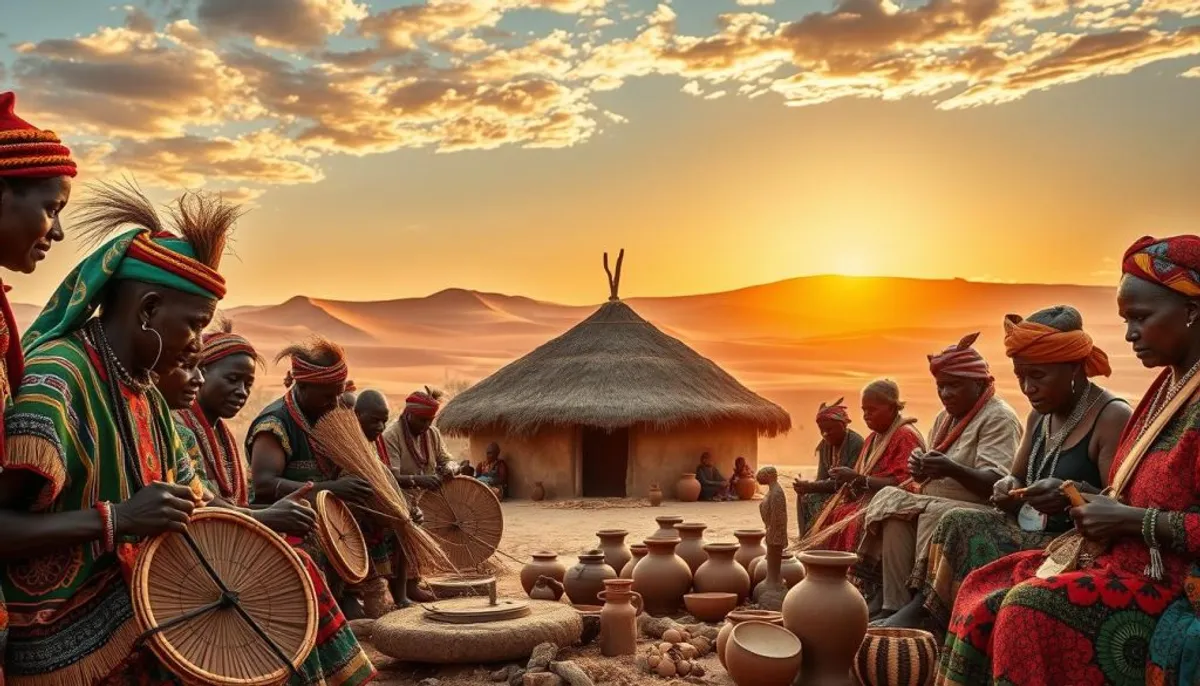
This land is a country of exceptional richness, where ancestral traditions and modern influences blend harmoniously, showcasing the traditional heritage of mauritania. This unique alchemy offers visitors an unforgettable travel experience.
Our journey will take you through the history, artistic expressions, and customs of the various peoples who live here. You will discover how their heritage remains alive and dynamic.
From the vastness of its wild nature to the warmth of its communities, every detail tells a part of its story. Prepare yourself for a captivating journey to meet a proudly preserved identity.
Key Points to Remember
- Namibia offers a unique cultural experience in Southern Africa.
- Its identity is a harmonious blend of ancient traditions and diverse influences.
- The history, art, and customs of its peoples are of great richness.
- This culture remains vibrant and is proudly preserved by its communities.
- The deep connection with the wild nature is a fundamental aspect of its identity.
- This guide offers a journey of discovery through the multiple facets of this nation.
Introduction: Diving into Namibian Culture
With only 2.1 inhabitants per square kilometer, this nation offers a unique space for the preservation of cultural identities. About 1.8 million people share this vast territory, creating a fascinating human mosaic.
The low population density allows each group to maintain its centuries-old traditions. Ancestral customs still rhythm daily life in many regions.
More than 70% of residents have dark skin and speak Bantu languages. The Ovambo and Herero represent the majority ethnic groups. Their way of life reflects a remarkable adaptation to the local environment.
| Ethnic Group | Percentage of the Population | Main Region | Dominant Language |
|---|---|---|---|
| Ovambo | 50% | North | Oshiwambo |
| Herero | 7% | Center | Otjiherero |
| Damara | 7% | Northwest | Khoekhoe |
| Nama | 5% | South | Khoekhoegowab |
This journey through the different communities reveals how each group contributes to the national wealth. Mutual respect and appreciation for diversity characterize this exceptional country.
Despite modern influences, the cultural heritage remains alive. Your journey will allow you to discover this harmony between tradition and contemporaneity.
The History of Namibian Culture and Its Origins
The evolution of the Namibian territory reflects a journey marked by resilience and ethnic diversity. This country has seen several waves of migration that have influenced its current composition.
The first inhabitants were the Khoisan peoples. They represent the largest population of this group in Africa. Their presence dates back thousands of years.
Major Historical Milestones and the Influence of Migrations
Over the centuries, different groups of people migrated to the center and south of the territory. This mobility created a mosaic of cultures with distinct traditions.
The colonial period profoundly marked the national history. It led to tragic conflicts and the dispossession of ancestral lands. This era remains etched in the collective memory.
| Historical Period | Key Events | Impact on Peoples |
|---|---|---|
| Pre-colonial | Khoisan and Bantu migrations | Ethnic diversification |
| German colonial | Arrival of European settlers | Territorial conflicts |
| South African administration | Policy of apartheid | National resistance |
| Post-independence | Government of Sam Nujoma | Nation building |
The struggle for independence mobilized the entire population. Figures like Herero chief Hosea Kutako played an important role. The international airport in Windhoek is named after him today.
The independence achieved in 1990 marked a major turning point. Sam Nujoma led the country for three terms. Each people finds its place in this united nation.
The Peoples and Tribes of Namibia
Namibia is home to remarkable ethnic diversity that enriches its heritage. Each people brings unique traditions to this African nation.
These different communities maintain their ancestral customs while participating in modern life. Their traditional villages offer an authentic glimpse into their daily activities.
The San People and Their Ancestral Traditions
The San, also known as Bushmen, represent one of the oldest peoples in Africa. Their ancestors roamed the land in small nomadic groups.
Today, these ancestral inhabitants practice their cultures in the north of the Kalahari Desert. Their distinctive language uses unique click consonants.
Their deep knowledge of the environment and their spiritual beliefs fascinate visitors. They preserve a way of life in harmony with nature.
The Hereros and the Heritage of Their Traditional Costumes
The Hereros form a community easily recognizable by their traditional attire. The women wear colorful dresses inspired by Victorian fashion.
Their horn-shaped hairstyle symbolizes the importance of cattle in their pastoral tradition. These animals represent much more than an economic resource.
This clothing tradition reflects the cultural resilience of this people. Their community life remains centered around livestock farming.
| People | Main Region | Traditional Activity | Distinctive Feature |
|---|---|---|---|
| San | Kalahari Desert | Hunting and gathering | Click consonant language |
| Herero | Center of the country | Pastoral farming | Colorful Victorian dresses |
| Ovambo | North | Communal agriculture | Largest ethnic group |
| Himba | Kunene | Semi-nomadic lifestyle | Preservation of traditions |
Namibian Culture: Traditions, Customs, and Way of Life
Ancestral know-how and daily practices form the beating heart of Namibian communities. Each ethnic group maintains unique customs that rhythm the existence of its members.
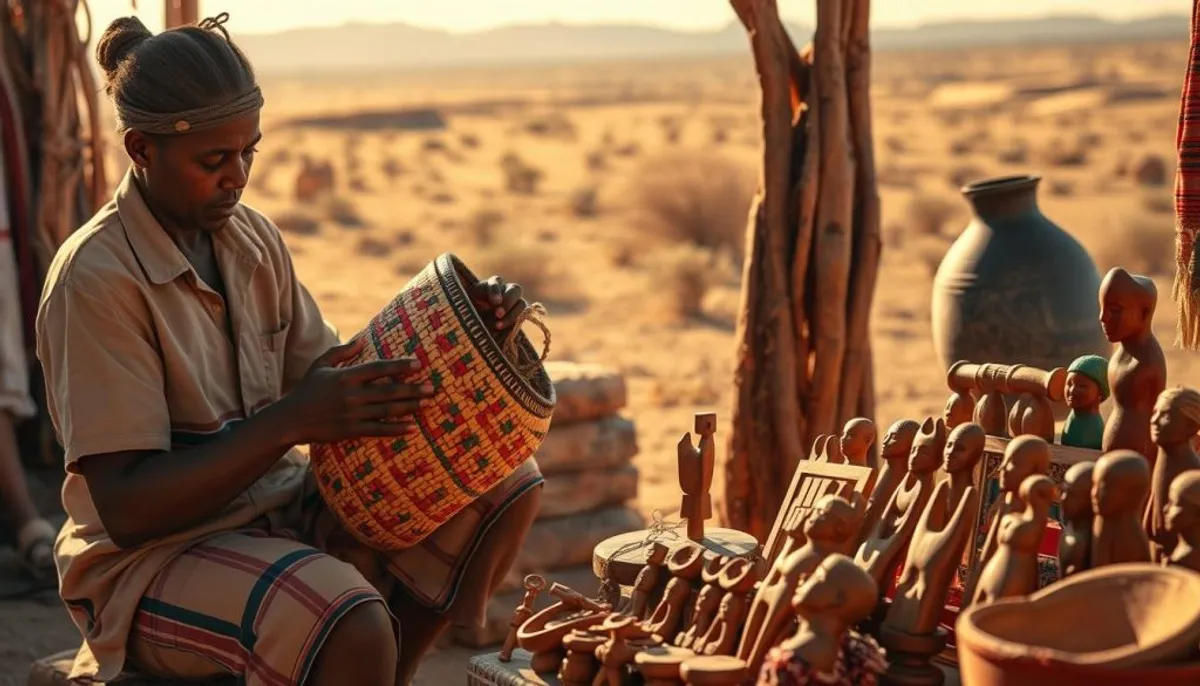
Artistic Expressions and Local Craftsmanship
Agriculture represents a fundamental activity for several peoples. The Ovambos cultivate maize and millet on shared lands.
Their community ceremonies and traditional dances strengthen social bonds. These events mark significant life stages.
The Kavangos excel in basketry and wood carving. Their creations combine beauty and practical utility. This craftsmanship is passed down from generation to generation.
The Damara preserve their history through a rich oral tradition. Their artisanal skills testify to remarkable creativity.
The Himbas maintain a deep spiritual connection with the land. Their beliefs reflect an absolute respect for the surrounding nature.
- Rites of passage and community celebrations
- Artisanal skills passed down through families
- Harmony between traditional lifestyles and the environment
These cultural expressions create a wealth that transcends material aspects. They constitute a living heritage that is carefully preserved.
External Influences and German Heritage
A stroll through the streets of Swakopmund feels like a journey back to 19th-century Europe. This architectural peculiarity creates a unique experience for visitors to this African country.
The coastal towns of Lüderitz and Swakopmund on the Atlantic coast retain this German heritage. Their buildings feature imposing domes and elegant towers.
Architecture and Colonial Influence in the Cities
The desert environment contrasts with these structures that have steep roofs. The oriels and bay windows testify to the colonial architects' attention to detail.
In the center of the country, Windhoek is home to many German restaurants. The "Windhoek" beer is brewed there according to the German purity law of 1516.
Kolmanskop, a ghost town near Lüderitz, is named after a cart driver who abandoned his cart there. It recalls the era of the diamond rush.
This colonial influence is now part of the complex identity of Namibia. From north to south, it creates a fascinating dialogue between African and European traditions.
Practical Guide for an Authentic Journey in Namibia
Your adventure in this country becomes truly memorable when you adopt a respectful approach towards the local communities. This open attitude transforms your stay into a rich human experience.
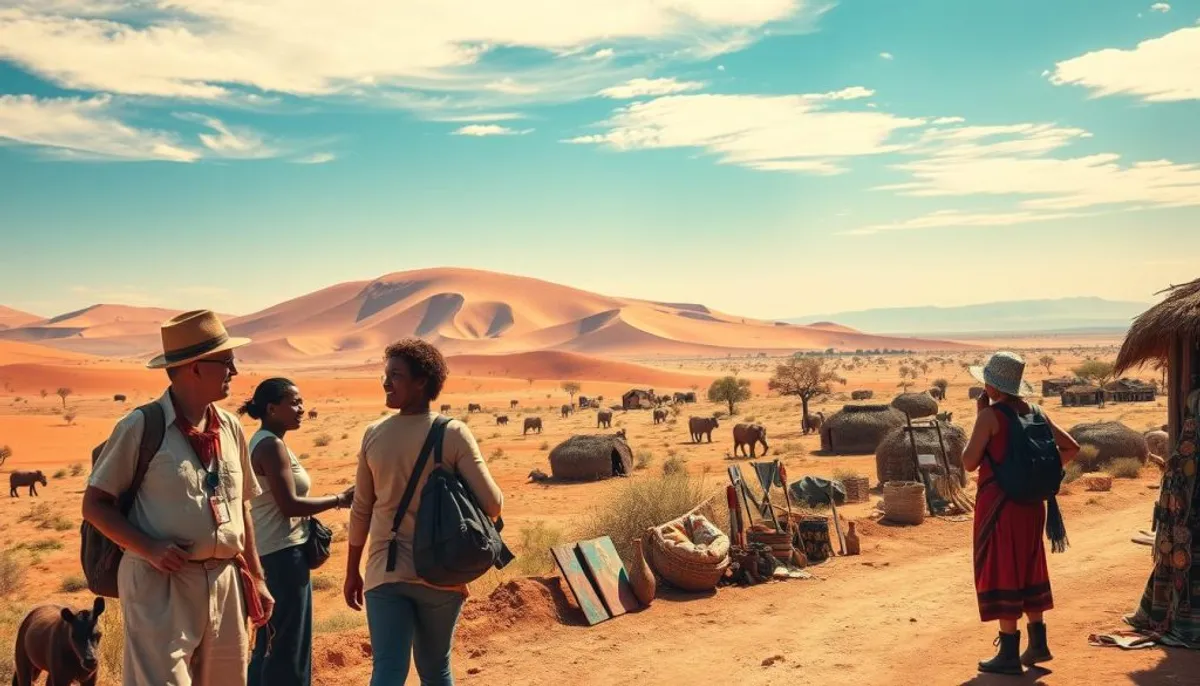
Travel Tips and Cultural Immersion
Prepare your journey with an understanding of social codes. Always ask for permission before photographing people or participating in their activities.
Learning a few words of the local language facilitates exchanges. The locals appreciate this sincere effort.
Respect and Meeting Local Communities
Respect for customs and traditions is the foundation of harmonious relationships. Adopt clothing that aligns with local values.
Purchasing crafts directly supports the economy of the peoples. This concrete measure contributes to the preservation of their traditional way of life.
Namibians are known worldwide for their warm hospitality. Your respectful attitude will be greatly appreciated.
The Natural Wealth: Wildlife, Desert, and Remarkable Landscapes
From desert expanses to lush savannas, this African territory captivates with its biodiversity. Each region offers unique ecosystems that tell a fascinating geological story.
Discovering National Parks and the Kalahari Desert
Etosha National Park is a jewel of African conservation. Its vast salt pans attract spectacular wildlife during the dry season.
In the south, the Kalahari Desert stretches its semi-arid lands over thousands of kilometers. This environment is home to surprisingly adapted animal life.
Adventure in the Heart of Namibian Biodiversity
The desert elephants of Damaraland perfectly illustrate the remarkable adaptation of the local wildlife. These giants roam vast territories in search of water points.
In traditional villages, the peoples practice environmentally respectful agriculture and raise cattle in harmony with their environment. This coexistence reflects an ancestral balance.
| Natural Site | Main Feature | Iconic Species | Unique Experience |
|---|---|---|---|
| Etosha Park | Giant salt pan | Lions, elephants, rhinos | Observations from water points |
| Namib Desert | Ancient red dunes | Oryx, desert geckos | Sunrise over Sossusvlei |
| Sandwich Harbour | Desert-ocean meeting | Flamingos, pelicans | 4×4 excursions on the dunes |
| Twyfelfontein | Millennia-old rock art | Desert elephants | Archaeological and natural discovery |
Each journey in these wild lands offers a lesson in humility in the face of the forces of nature. The raw beauty of this country remains etched in memory forever.
This immersion in the heart of Namibian landscapes constitutes a transformative experience. It reveals the fragility and resilience of the ecosystems of our world.
Conclusion
Discovering this exceptional territory leaves a lasting imprint on every curious and open traveler. Each ethnic group contributes to the richness of this living and preserved culture, including the vibrant sudanese culture that adds to the diversity of experiences.
From ancestral traditions to majestic landscapes, every aspect tells a unique story. The remarkable wildlife and vast natural expanses complete this experience.
The welcoming inhabitants proudly share their heritage with respect. Your journey in this country thus becomes much more than mere tourism.
This African land offers a rare combination of natural and human treasures. Few destinations in the world provide such an authentic immersion.
May this exploration inspire you to meet each people with openness. Your adventure promises transformative and unforgettable memories.
FAQ
What are the main ethnic groups I might encounter during my trip?
You will discover a diversity of peoples, including the San, known for their ancestral knowledge of the Kalahari Desert, the Hereros with their unique Victorian dresses, and the Ovambos, the largest group in the north. Each community has its own customs and traditions.
How can I show my respect towards the locals and their customs?
Respect is fundamental. Always ask for permission before taking photos of people. When visiting villages, be discreet and follow the advice of your local guide. Valuing local crafts by buying directly from artisans is also a nice gesture of consideration.
Is there an ideal time to visit Namibia and experience its outdoor life?
The dry season, from May to October, is excellent. The days are sunny, and wildlife concentrates near water points, making observations easier in national parks. It’s the perfect time to explore vast landscapes and enjoy outdoor activities.
Do agriculture and livestock play an important role in Namibian lifestyle?
Absolutely. Subsistence agriculture and cattle farming remain vital for many rural communities, especially in the north. Cattle, in particular, hold great social and economic value, symbolizing wealth and playing a central role in certain ceremonies.
What is the legacy of the German colonial era visible today?
The German influence is especially noticeable in the architecture of certain cities like Swakopmund and Lüderitz, with their European-style buildings. It can also be found in some culinary specialties and place names, creating a unique blend with local cultures.