
The cultural landscape of the United States is constantly evolving, shaped by vibrant traditions and new ideas.
This cultural richness is the result of centuries of melting pot, where values and artistic expressions have developed and enriched, while integrating elements from Moroccan traditions.
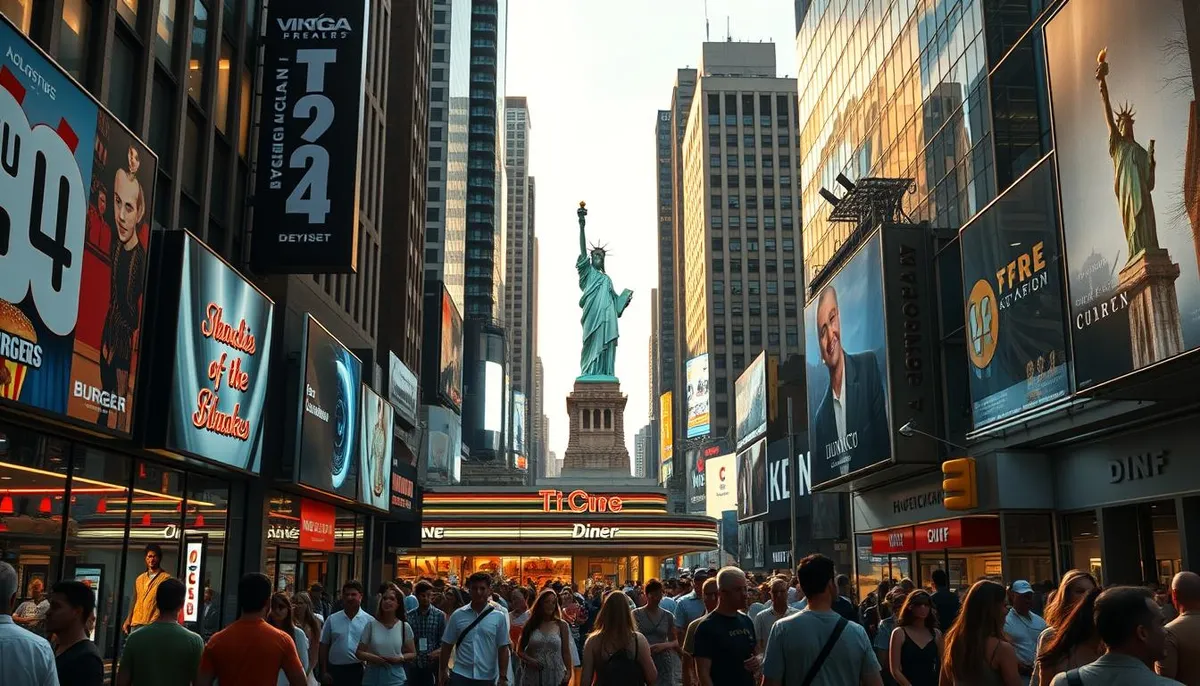
In this article, we will explore the different facets of American society, from core values to artistic expressions, including daily lifestyles.
We will discover how ethnic diversity and the tumultuous history of Americans have shaped a unique identity.
American Society: A Demographic Overview
American society is characterized by exceptional demographic diversity. With a population of 327.2 million in 2018, the United States presents a complex ethnic mosaic.
A Diverse Population
The United States is often described as a "melting pot" due to its history of immigration. Since the 16th century, about 50 million immigrants from various parts of the world have contributed to shaping American society. This diversity is reflected in the current demographic composition.
The non-Hispanic white community remains the majority, representing about 75% of the population. Other significant communities include African Americans (12%) and Hispanics (9%).
Geographic and Ethnic Distribution
The distribution of different communities varies significantly across the country. Cities like New York, Chicago, and Philadelphia are known for their ethnic diversity and contemporary influences. For example, New York has about 40% of its population identifying as Black or African American.
| State | Main Community | Percentage |
|---|---|---|
| California | Hispanic | 39% |
| Hawaii | Asian | 38% |
| Texas | Hispanic | 35% |
Native Americans, who are the original inhabitants of the territory, now represent about 1% of the total population and face various socio-economic challenges.
The American population continues to evolve, influenced by migration trends and birth rates of different communities.
The Core Values of American Culture
American culture is deeply rooted in a set of core values that shape the daily lives of its citizens. These values reflect the history, beliefs, and aspirations of the country.
Individualism and Freedom
One of the pillars of American culture is the emphasis on the individual. From a young age, Americans are encouraged to be self-reliant, to take initiative, and to forge their own destinies. This value translates into a strong belief in individual freedom, whether in expression, thought, or action. The individual is seen as responsible for their choices and success.
Equal Opportunity and the American Dream
The "American Dream" embodies the ideal of equal opportunity where anyone, regardless of their background, can succeed through hard work and determination. This notion is at the heart of American society, encouraging individuals to pursue their goals with entrepreneurial spirit and perseverance.
Optimism and Pragmatism
Optimism and positivity characterize the American spirit, with a "can-do" attitude in the face of challenges and a belief in the future. American pragmatism translates into a concrete approach to problems and a valuing of effective solutions. This combination of values has shaped over time a society oriented towards individual success while maintaining a place for community support.
In summary, the core values of American culture, such as individualism, freedom, equal opportunity, optimism, and pragmatism, play a crucial role in shaping society and individuals. These values provide direction and meaning to the lives of Americans, influencing their decisions and actions daily.
The American Melting Pot: Ethnic and Cultural Diversity
The United States is often described as a melting pot, where different cultures blend to form a unique national identity. This diversity is evident in large cities like New York, where ethnic neighborhoods such as Little Italy, Chinatown, and Harlem reflect the cultural richness of the nation.
Main Communities and Their Influence
The American population is made up of various communities, each contributing its unique input to the national culture. Today, the non-Hispanic white community remains the largest, representing about 75% of the population. Blacks form the second largest community, making up about 12% of the population.
| Community | Percentage of Population |
|---|---|
| Non-Hispanic Whites | 75% |
| Blacks | 12% |
| Hispanics and Others | 13% |
Immigration and Its Impact on Culture
Massive immigration to the United States, with over 50 million immigrants arriving since the beginning of colonization, has shaped a constantly evolving national identity. The cultural contributions of each community, whether in cuisine, music, or traditions, continuously enrich the American cultural landscape.
The diversity of communities is a major asset of American society. Different cultures coexist and blend, creating a dynamic society rich in varied traditions.
In summary, the American melting pot continues to shape the identity of the United States, making this country a land of opportunities and diversity.
The Role of Religion in American Culture
Religion plays a prominent role in the daily lives of Americans. Indeed, freedom of worship is a fundamental principle in the United States, a country where religious beliefs are deeply rooted in culture.
Religious diversity is a notable characteristic of American society. The United States is home to a multitude of religions and spiritual movements, reflecting the country's immigration history.
Protestantism and Catholicism
Protestantism dominates the American religious landscape, representing about 56% of the population. There are many Protestant churches, including Baptist and Methodist congregations. Catholicism is the second most widespread denomination, representing about 28% of the population, primarily due to waves of Irish, Italian, Polish, and Hispanic immigration.
Other Religions and Spiritual Movements
In addition to Protestantism and Catholicism, other religions have a significant presence in the United States. Judaism, Islam, Buddhism, and Hinduism are practiced by millions of Americans, reflecting the cultural diversity of the country. Specifically American religious movements, such as Mormons and Amish, also illustrate the religious freedom that characterizes the country.
Religious Influence in Daily Life
The influence of religion manifests in various aspects of daily life in the United States. Moral values, education, politics, and even the media are affected by religious beliefs. The phenomenon of "televangelists" is a notable example of this influence.
| Religion | Percentage of Population |
|---|---|
| Protestantism | 56% |
| Catholicism | 28% |
| Judaism | 2% |
| Islam | 1.5% |
In summary, religion plays a crucial role in American society, influencing various aspects of daily life. Religious diversity is a fundamental characteristic of the culture of the United States, just like the geek trends that emerge and shape the interests of many people.
American Holidays and Traditions
American traditions and holidays reflect the history and values of the country. Americans place great importance on celebrations that punctuate the year, whether they are national holidays or more popular traditions.

National Celebrations
The United States commemorates several important historical events. The 4th of July, or Independence Day, celebrates the adoption of the Declaration of Independence in 1776. It is an occasion for parades, fireworks, and barbecues with friends. Another major holiday is Thanksgiving, celebrated on the fourth Thursday of November, which brings families together around a traditional meal that includes roasted turkey and pumpkin pie.
Popular Holidays
In addition to national holidays, Americans participate in various celebrations throughout the year. Halloween, on October 31, has become a holiday where children and adults dress up and practice "trick or treat." Valentine's Day, on February 14, is an occasion to give gifts not only to loved ones but also to family and close friends, creating an atmosphere of friendliness and affection.
American holidays represent special moments of gathering and reflect the history and values of the country. Whether it is national celebrations like the 4th of July or more family-oriented holidays like Thanksgiving, each occasion is an opportunity to come together and share precious moments with family or friends on a festive day.
Musical Expression in the United States
The United States has been the birthplace of many influential music genres that have shaped the global music culture. American music is a rich tapestry of various genres, reflecting the history and diversity of the country.
From Jazz to Hip-Hop: The Evolution of American Music
Jazz, which originated in New Orleans in the early 20th century, represents the first truly American musical form. It revolutionized the approach to improvisation and paved the way for other genres such as blues, gospel, and country. The advent of rock'n'roll in the 1950s with artists like Elvis Presley transformed global popular culture. Later, hip-hop, which emerged in the 1970s in the Bronx, illustrated the capacity for American musical innovation and its global success.
The Global Influence of American Music
American music constitutes one of the most significant cultural contributions of the United States to the world. Legendary artists like Louis Armstrong, Bob Dylan, Aretha Franklin, and Beyoncé have marked the history of music and continue to inspire generations of musicians worldwide. The American music industry, with its iconic labels like Motown, Atlantic, or Columbia, has created an economic and artistic model that still influences global music production today. Americans have a rich musical history that continues to diversify and influence the world.
Hollywood and the American Film Industry
For decades, Hollywood has been synonymous with glamour and dreams, producing films that captivate audiences worldwide. The American film industry, with its iconic studios and stars, has produced films that have marked the collective imagination and influenced global culture.
The Golden Age of American Cinema
The golden age of American cinema, which spanned from the 1930s to the 1950s, saw the emergence of iconic genres such as westerns, film noir, and musicals. Major studios like MGM, Paramount, and Warner Bros developed an efficient production system and created the star system that shaped popular culture.
The Evolution and Global Influence of American Cinema
American cinema has evolved in response to technological and cultural challenges, transitioning from silent films to talkies, from black and white to color, and then to the digital age. The global influence of Hollywood is evident both artistically, with innovative storytelling techniques and special effects, and economically, with a proven international distribution model.
Here is an overview of Hollywood's evolution through the ages:
| Period | Significant Event | Impact |
|---|---|---|
| 1920s | Hollywood becomes the world's cinema capital | Creation of a revolutionary studio system |
| 1930s-1950s | The golden age of American cinema | Emergence of iconic genres and the star system |
| Digital Era | Technological advancements | Innovative special effects and storytelling |
The success of American cinema relies on its ability to combine popular entertainment with artistic ambition, creating works accessible to the greatest number while addressing universal themes. Thus, Hollywood continues to shape global culture and captivate audiences around the world.
American Literature and Visual Arts
Since the 19th century, American literature has developed into a distinct voice with authors like Herman Melville and Mark Twain. This rich and diverse literature explores themes of identity, freedom, and the American dream.
Major Authors and Literary Movements
American literature includes major authors such as Edgar Allan Poe, F. Scott Fitzgerald, Toni Morrison, and Paul Auster. American novels have explored the great themes of the national history: the frontier, slavery, immigration, and social tensions.
New York has become a major literary center, housing numerous publishing houses and attracting writers from around the world. American literary works offer a deep insight into the American soul and its society.
| Authors | Notable Works | Period |
|---|---|---|
| Herman Melville | Moby Dick | 19th century |
| F. Scott Fitzgerald | The Great Gatsby | 20th century |
| Toni Morrison | Beloved | 20th century |
American Art: From Abstract Expressionism to Street Art
In the visual arts, abstract expressionism with Jackson Pollock and Mark Rothko marked the first major artistic school uniquely American in the 20th century. Andy Warhol and Roy Lichtenstein's pop art reflected the American consumer society of the 1960s.
Contemporary American art continues to explore the contradictions and diversity of the American experience, influencing global artistic movements. From land art to street art, American artists constantly push the boundaries of creativity.
Television Culture and American Series
Since the 1950s, American television has revolutionized cultural consumption, becoming an essential vehicle of popular culture. Television series have evolved over the decades, reflecting changes in American society.
The Evolution of Television Series
The evolution of television series has been marked by several key stages. Sitcoms like "I Love Lucy" and "Friends" defined humor formats that have been adopted worldwide. The era of the "Golden Age of Television" saw the emergence of complex dramatic series like "The Sopranos," "The Wire," and "Breaking Bad."
- Sitcoms have influenced global humor.
- Dramatic series have achieved narrative quality close to cinema.
- Streaming platforms have transformed production and distribution.
The Cultural and Social Impact of American Series
American series have a considerable impact on global culture. They influence language, shared references, and even social behaviors. Series like "Friends" and "Game of Thrones" have achieved international success, becoming cultural phenomena.
American television reflects and influences society, addressing issues such as diversity, inclusion, and contemporary social problems. Series thus contribute to shaping perceptions and social discussions.
The American Lifestyle in Daily Life
Daily life in the United States is characterized by a fast pace and a pronounced consumer culture. This reality is reflected in various aspects of American life, from food to how people spend their leisure time, including initiatives like the cultural voucher program.

The Culture of Consumption and Fast Food
The United States is often associated with a culture of abundance and speed. "Fast food" is a striking symbol, born in the United States and spread worldwide. The consumption of products and services is driven by advertising, easy credit, and a culture of impulse buying. Giant shopping malls and online stores offer Americans easy access to an endless variety of products.
The Importance of Sports in Society
Sports occupy a central place in American culture. Team sports like basketball, baseball, and American football excite millions of fans and unite communities. Sports play an important social role in creating a sense of belonging and conveying values like teamwork.
| Sport | Popularity | Social Impact |
|---|---|---|
| Basketball | High | Unites communities |
| Baseball | Medium | Traditional |
| American Football | High | Major events like the Super Bowl |
Family and Social Life
American family life has evolved towards more diverse models but remains centered on the individual household. Geographic mobility distinguishes American society from European societies. The balance between work and personal life represents a constant challenge in a society that values success and productivity.
In summary, the American lifestyle is characterized by a strong consumer culture, a marked importance of sports, particularly with iconic events like the Tour de France, and a constantly evolving family life.
The Challenges of Contemporary American Society
Contemporary American society faces major challenges that question some of its founding values. Economic and social inequalities are among the most pressing issues.
Social and Economic Inequalities
The United States exhibits significant economic and social disparities. The gap between the rich and the poor has widened in recent decades, creating an increasingly unequal society.
Access to education, healthcare, and housing is unevenly distributed, and certain social groups, particularly ethnic minorities, are especially affected by poverty and discrimination.
| Category | Description | Impact |
|---|---|---|
| Economic Inequalities | Growing gap between the rich and the poor | Increasingly unequal society |
| Access to Education | Inequalities in access to educational resources | Limits opportunities for minorities |
| Healthcare | Inequal access to quality healthcare | Persistent health issues in disadvantaged communities |
Inclusion and Diversity Issues
Inclusion and diversity issues are at the heart of public debate, with movements like Black Lives Matter highlighting persistent discrimination.
Tensions between different communities and political visions create deep divisions in the country, as shown by recent presidential elections.
American society seeks to reinvent its model to preserve social cohesion while maintaining the values of individualism and freedom that characterize it.
American History: The Foundation of Its Culture
The foundations of American culture are deeply rooted in its tumultuous history. From the discovery of America by Christopher Columbus in 1492 to the emergence of the United States as a world power in the 20th century, each event has contributed to shaping the national identity.
From Colonization to Independence
European colonization began with the arrival of the Spanish, followed by the English and the Dutch. The Pilgrim Fathers landed at Cape Cod in 1620, founding Plymouth. New York, initially a Dutch colony named Nieuw Amsterdam, was annexed by the English in 1664. The Declaration of Independence on July 4, 1776, laid the ideological and political foundations of the American nation, marking a crucial part of history.
The Civil War and Its Consequences
The Civil War (1861-1865) was one of the bloodiest conflicts in American history, pitting the North against the South over issues of slavery and states' rights. This war profoundly marked national identity and led to the abolition of slavery. The aftermath of this war continues to be felt in contemporary American society, particularly in cities like New York.
The Emergence of a World Power
In the 20th century, the United States became a world power, especially after the two world wars. American cultural influence has spread worldwide, touching North America and beyond. The United States has played a prominent role in international affairs, and its culture, shaped by its history, continues to evolve and spread.
In summary, American history, from colonization to the present day, has shaped a diverse and complex nation. Historical events such as the arrival of the Pilgrim Fathers at Cape Cod and the annexation of Nieuw Amsterdam to become New York illustrate the many facets of this rich history.
Ten Unusual Aspects of American Culture
The United States is home to a multitude of unique cultural phenomena, including African dance, that surprise even the most knowledgeable. From little-known traditions to surprising superstitions, American culture is a true patchwork.
Little-Known Traditions and Superstitions
Some American cities have astonishing peculiarities. For example, Colma in California is nicknamed "the city of souls" due to its 17 cemeteries housing over a million deceased, while its living population is about 1,500 residents. In New York, the superstition of Friday the 13th is so strong that many buildings do not have a 13th floor, going straight from the 12th to the 14th.
Another surprising tradition also takes place in New York, where thousands of people participate in the "Polar Bear Plunge" on New Year's Day, bathing in the icy ocean. This practice has become a major attraction.
Surprising Cultural Particularities
American culture is also marked by surprising cultural peculiarities. In Salt Lake City, the capital of Utah, Mormons have created a unique society with its own rules and traditions, controlling a large part of the local economy.
In South Dakota, the Wounded Knee monument commemorates the last major massacre of Indians in 1890, a place steeped in little-known history. Additionally, the "Corn Palace" in Mitchell is a building entirely decorated with corn cobs, redesigned each year according to a different theme. The current American flag was designed by a 17-year-old high school student, Robert G. Heft, who initially received a poor grade for his project.
These examples show how rich American culture is in unusual and fascinating aspects, reflecting its diversity and complexity. South Dakota and other regions offer unique cultural treasures worth exploring.
The Influence of American Culture Worldwide
The cultural power of America strengthened after World War II. The United States became a superpower, influencing not only the global economy but also the cultures of other countries. This influence has been exerted through various channels, including cinema, music, and fashion.
The Americanization of Cultures
The Marshall Plan, implemented after World War II, played a crucial role in rebuilding Europe and facilitated the dissemination of American cultural products. Multinational companies such as Coca-Cola and McDonald's have become symbols of the economic and cultural power of the United States. American "soft power" is also exercised through its cultural productions, such as Hollywood films and Netflix series, which captivate audiences worldwide.
These elements have contributed to creating a global cultural model that influences aspirations and consumption behaviors in many countries. American cultural influence has allowed Americans to successfully impose their cultural presence on the global stage.
Local Resistances and Adaptations
However, this cultural influence is not without resistance. Some cultures seek to preserve their identity in the face of what they perceive as "Americanization." The phenomenon of cultural globalization is complex and involves exchanges and hybridizations between American culture and local cultures.
Ultimately, the influence of American culture in the world is a multifaceted phenomenon that continues to shape our daily lives and cultural references on a global scale.
Conclusion: A Culture in Constant Evolution
The culture of the United States is a dynamically mixed blend of traditions and innovations. It continues to evolve at the pace of the country's social, technological, and demographic transformations.
Americans constantly reinvent their cultural identity, integrating new influences while preserving some fundamental traditions. This capacity for adaptation and innovation allows the United States to maintain its global influence despite challenges.
21st-century American society faces crucial questions regarding its social model, international role, and internal cohesion. New generations of Americans are redefining traditional values in light of contemporary concerns such as environment, equality, and social justice.
Understanding American culture in all its complexity allows for transcending stereotypes and appreciating the richness of a country that, despite its contradictions, continues to fascinate the entire world. The power of this culture lies in its ability to evolve and renew itself.
Ultimately, American culture remains a global reference, influencing lifestyles, arts, and cultures around the globe. Its constant evolution is a testament to the vitality and diversity of American society.