
Welcome to a world where the East meets the West. Hong Kong is a fascinating destination that offers a unique experience. It harmoniously blends ancestral traditions with the latest innovations.
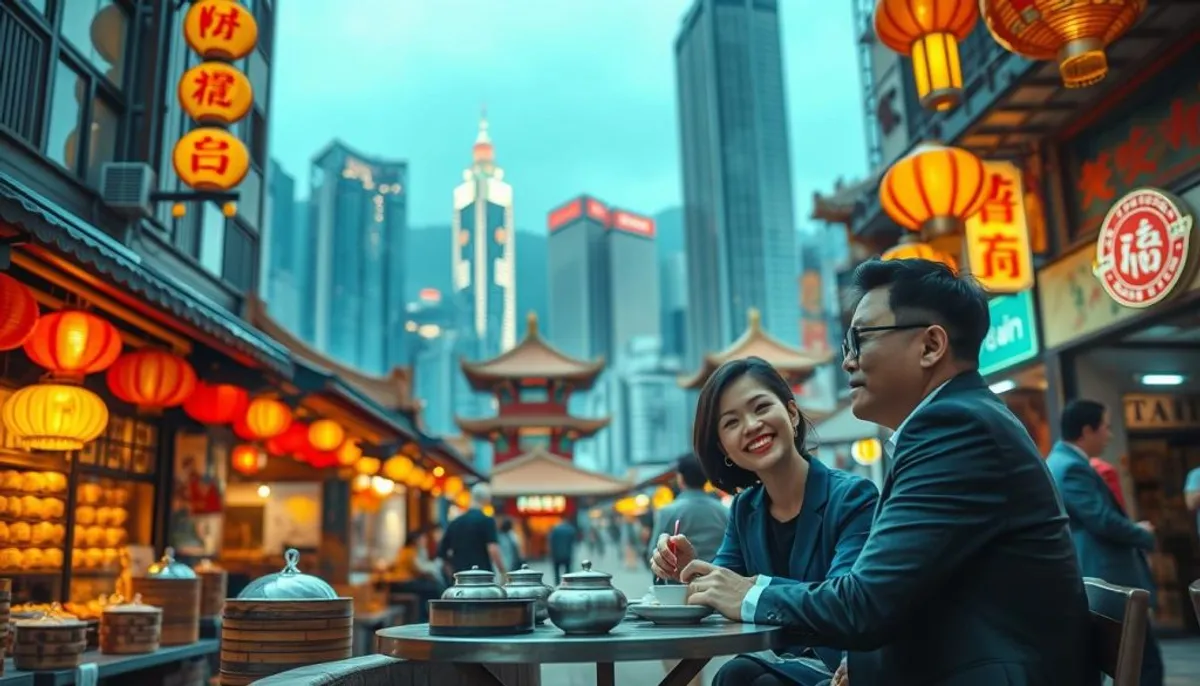
This distinct identity has developed through a rich and eventful history, including significant events in antiguan history. Different influences have shaped this country, creating a recognizable character throughout Asia. Each neighborhood tells a part of this story.
Understanding this context is essential to appreciate the richness of daily life here. This article guides you through the eras that have shaped this metropolis, from its deep roots to its current status as a cultural hub.
We will explore its evolution, its heritage, and its dynamic artistic scene, including the timorese cultural heritage. Get ready for an intellectual journey to the heart of a vibrant culture. Discover why Hong Kong attracts visitors from around the world.
Key Points to Remember
- Hong Kong represents a unique fusion of Chinese traditions and Western influence.
- Its cultural identity has been forged through a complex and diverse history.
- Understanding its past is crucial to appreciating its dynamic present.
- The city offers a modern and vibrant artistic and cultural scene.
- Each district of the metropolis has its own story and character.
- Hong Kong has become a major cultural destination on the international stage.
- This article serves as a comprehensive guide to exploring the multiple facets of the city.
Historical Roots and Cultural Influences
The lands that today form Hong Kong have a human history dating back thousands of years. This long evolution has shaped its unique character.
From Archaeological Origins to Early Human Settlements
Human occupation in this region began around 30,000 years ago. Archaeological evidence confirms a continuous presence for 6,000 years.
Documented history starts in the 2nd century BCE. The Qin dynasty then integrates the territory into the Chinese Empire. This period marks its administrative attachment to the country.
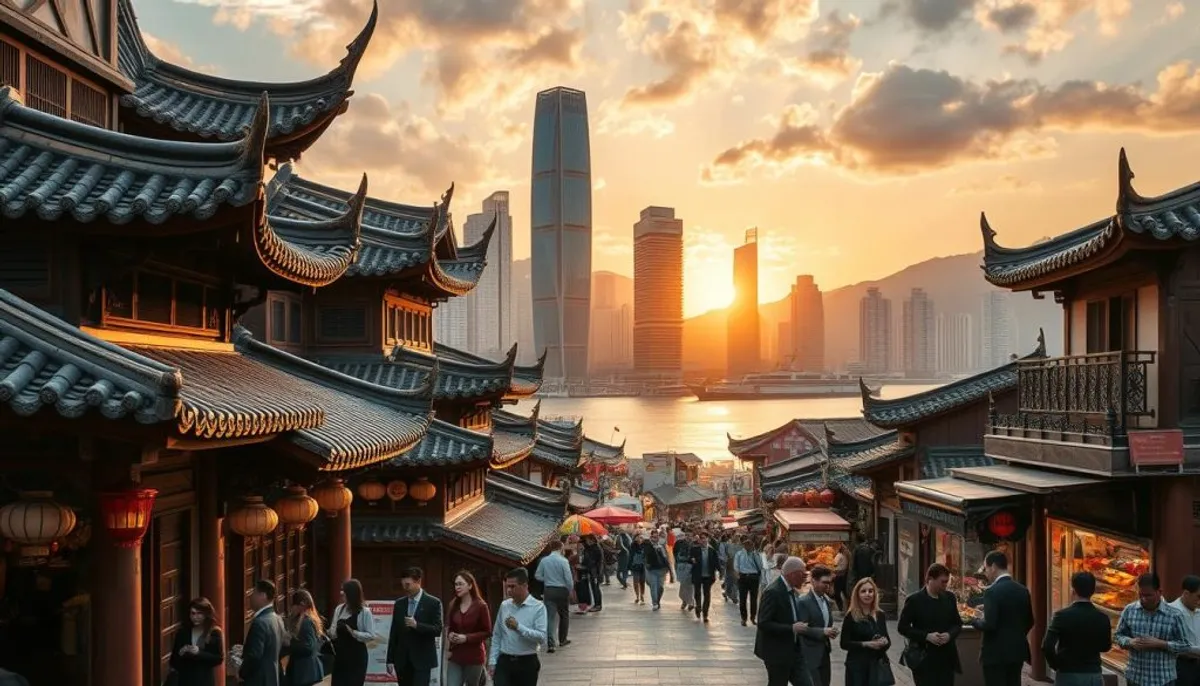
The Legacy of the Qin Dynasty and the Impact of the Opium Wars
In the 13th century, five major clans settled in the New Territories. They developed salt trading, fishing, and pearl exploitation. This significantly transformed local life.
The British arrival in 1842 was driven by commercial interests. The East India Company sought to export Indian opium to China.
The First Opium War (1839-1842) ended with the Treaty of Nanking. This treaty ceded the island of Hong Kong to the British.
The Second Opium War (1856-1860) extended British control. The Convention of Peking in 1860 ceded Kowloon. In 1898, a second convention granted a 99-year lease on the New Territories.
| Period | Event | Impact |
|---|---|---|
| Prehistory | First human traces | Millennia of occupation of the territory |
| 2nd century BCE | Integration into the Qin Empire | Beginning of documented history |
| 1842 | Treaty of Nanking | Cession of the island of Hong Kong |
| 1898 | Second Convention of Peking | 99-year lease on the New Territories |
Evolution Under British Rule and Social Transformations
The Treaty of Nanking in 1842 opened a new era for the territory. This colonial period radically transformed urban and demographic development.
The Colonial Period: From the Signing of the Treaty of Nanking to Post-War Reforms
Under British administration, Hong Kong experienced exceptional growth. The territory grew from a few thousand inhabitants in 1842 to 725,000 in 1925.
Its status as a free trade platform attracted merchants and traders from around the world. This economic expansion profoundly shaped local identity.
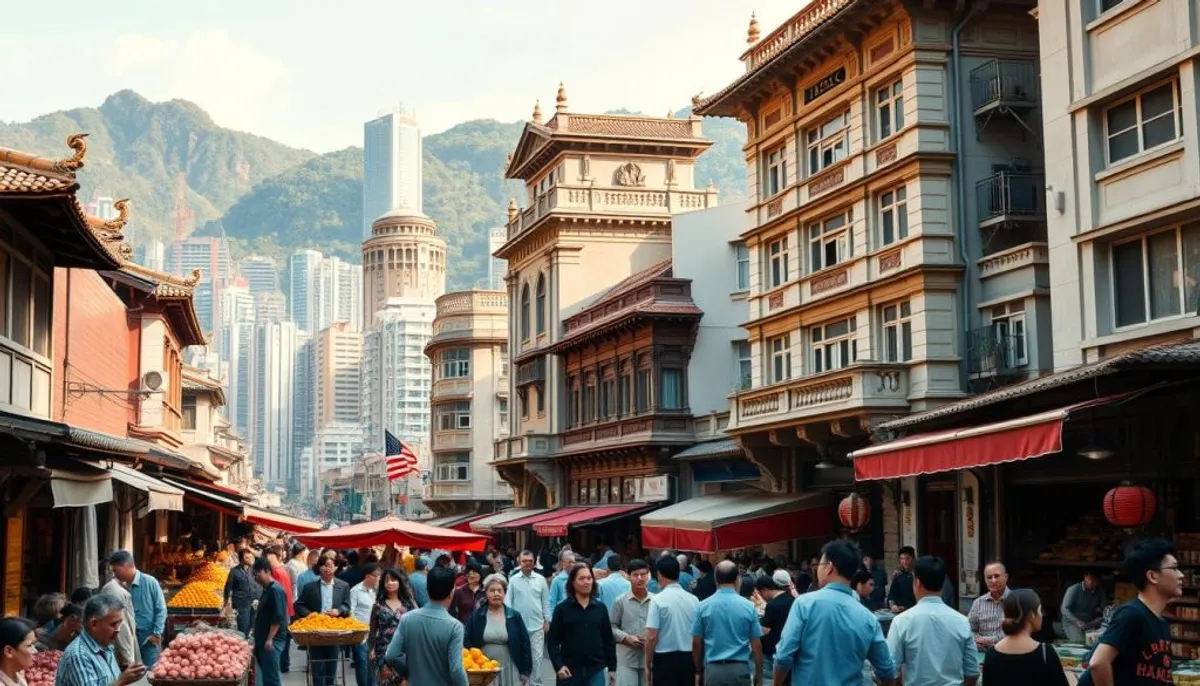
Disruptions Related to Japanese Occupation and Migrations
In December 1941, the Empire of Japan attacked Hong Kong. The capitulation occurred after 18 days of intense fighting.
The Japanese occupation (1941-1945) marked a dark period. Mass expulsions, rationing, and violence drastically reduced the population.
After 1945, recovery was rapid. In 1949, thousands of refugees began a true journey to the territory following the communist victory in China.
| Year | Event | Social Impact |
|---|---|---|
| 1842 | Treaty of Nanking | Beginning of British colonization |
| 1925 | Population Growth | Population reaches 725,000 inhabitants |
| 1941-1945 | Japanese Occupation | Depopulation and collective trauma |
| 1949 | Inflow of Refugees | Accelerated industrial development |
| 1966-1967 | Social Riots | Progressive reforms initiated |
The riots of 1966-1967 led to major social reforms. Sir Murray Maclehose established protective labor laws and compulsory education.
In the 1970s, China's opening positioned Hong Kong as a major economic center. This journey towards modernity enriched local life and its unique culture, including various aspects of taiwanese culture.
Hong Kong Culture: Art, Identity, and Modernity
At the heart of social transformations, the local creative scene has forged its own visual and auditory language. This artistic effervescence intensified around major historical events.
Artistic Expressions and the Dynamism of the Cultural Scene
The announcement of the handover in 1984 and the events of 1989 profoundly impacted creators. These pivotal moments stimulated intense reflection on identity through art.
The exhibition “Hong Kong Sixties, Designing Identity” in 1993 documented this emergence. Matthew Turner and Oscar Ho presented the evolution of a unique aesthetic.
The Development of a Collective Memory and Identity Affirmation
The West Kowloon Cultural District today symbolizes this dynamism. With M+ and the Hong Kong Palace Museum, it offers a spectacular setting near Victoria Harbour.
Hong Kong positions itself as the second-largest global art market after New York. All major auction houses are established here.
The 2024 partnership with Art Basel confirms this international recognition. March becomes the “Super March” with Art Basel, HK Walls, Art Central, and the rugby tournament.
Conclusion
The unique journey of this Asian metropolis demonstrates a remarkable ability to transform its complex heritage. Hong Kong has managed to create a strong identity from multiple historical influences.
We encourage you to embark on a journey to discover this wealth for yourself. Explore its world-class museums and authentic neighborhoods.
Every day spent here offers new discoveries, from traditional temples to contemporary art galleries. Hong Kong is not just a travel destination but a true cultural country.
Plan your stay during the “Super March” to enjoy exceptional events. Each day reveals the harmony between art, history, and modernity in this vibrant metropolis.
Understanding this culture is grasping how a territory transforms its history into creative strength. Hong Kong awaits you for an unforgettable journey to the heart of contemporary Asia.
FAQ
What are the best times of the year to visit Hong Kong?
Autumn (October to December) and spring (March to April) are ideal. The weather is pleasant, neither too hot nor too humid, perfect for exploring the city.
What typical dishes should one absolutely try on site?
Don’t miss the dim sum, roasted duck, and traditional pastries like egg tarts. The local cuisine is a true journey for the taste buds!
What is daily life like in this metropolis?
It’s a fascinating mix of fast-paced rhythm and moments of relaxation. People work hard but also enjoy gathering over a good meal with family or friends.
Does contemporary art hold an important place in the city?
Absolutely! From innovative galleries to major museums like M+, the artistic scene is very dynamic and perfectly reflects the unique character of this territory.
Is the religious landscape varied in Hong Kong?
Yes, there are Buddhist and Taoist temples, churches, and mosques. This diversity showcases the richness of the influences that have shaped society.