
At the heart of Central Asia, lies a fascinating destination where ancient traditions remain very much alive. This mountainous country offers an authentic experience, far from the beaten path.
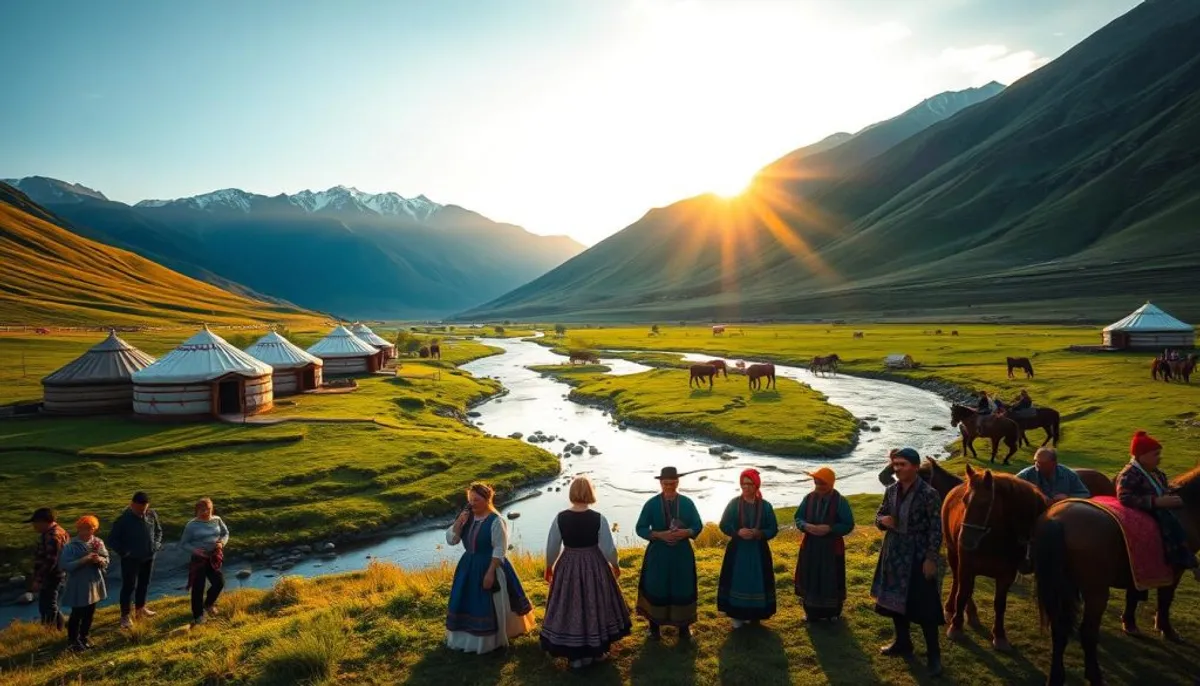
The national identity has been forged around a deep nomadic heritage. This spirit still influences many aspects of daily life today, from craftsmanship to social relationships.
The population, numbering around 5.3 million inhabitants, forms a unique ethnic mosaic. Kyrgyz, Uzbeks, and Russians coexist, creating a society rich in its differences.
Spirituality here is also diverse, marked by Sunni Islam tinged with shamanic and Sufi influences. This unique synergy contributes to the distinctiveness of this region of the world.
This article invites you on a journey to understand the historical and artistic foundations of this society, including the significance of visual art. Prepare to explore a cultural life of extraordinary depth.
Key Points to Remember
- Kyrgyzstan is a Central Asian country with a rich cultural heritage.
- The nomadic tradition profoundly influences the current way of life.
- The population is multiethnic, with a Kyrgyz majority.
- Sunni Islam is the main religion, mixed with shamanic traditions.
- Majestic natural landscapes are at the heart of national identity.
- This lesser-known culture offers preserved authenticity.
- Exploring this destination means discovering a people proud of their traditions.
History and Influences of Kyrgyz Culture
The journey of this Central Asian people is a long history of migrations and encounters, deeply influenced by humanist philosophy. Their Siberian ancestors gradually migrated southeast over several centuries.
They crossed paths with powerful empires. These encounters profoundly marked their identity.
From Nomadic Origins to Russian and Turkish Influences
In the region of Lake Issyk-Kul, prolonged contact with Turks in the 9th and 10th centuries was decisive. They adopted Islam and underwent a deep cultural influence.
In the 16th century, the Kara-Kyrgyz, who are the origin of the current name, populated the territory. The arrival of the Russians in the 19th century opened a new chapter.
The 20th century brought major changes, particularly in the writing system. The country gained independence in 1991, allowing the population to reconnect with its heritage.
| Period | Key Event | Major Influence |
|---|---|---|
| Until the 10th century | Migrations from Siberia | Encounters with the Blue Turks, Uighurs |
| 9th-10th centuries | Contact with Turks near Lake Issyk-Kul | Conversion to Islam, linguistic influences |
| 19th-20th centuries | Integration into the Russian Empire and then the USSR | Alphabet changes (Arabic, Latin, Cyrillic) |
| 1991 | Proclamation of independence | National and cultural renaissance |
The Evolution of the Epic Tale of Manas
The epic of Manas is an extraordinary literary monument. Passed down orally for centuries by storytellers, the manastchi, it celebrates the values of courage and unity.
Its transcription began around the 1800s. The first complete version was published in the 1920s. It remains a fundamental pillar of national identity.
The local language belongs to the group of Turkic languages. This linguistic link reinforces the historical depth of this unique epic.
Nomadic Life and Ancestral Traditions
The nomadic heritage continues to shape the daily lives of the inhabitants of this mountainous region. Semi-nomadic pastoralism is still practiced in many areas.
The Yurts and Mobile Habitat
The yurt represents much more than just a dwelling. It symbolizes family, land, and the universe, accompanying every stage of life.
Its structure combines birch branches for the dome and a lattice forming the walls. The exterior uses felt and wool, natural materials perfectly suited to the climate.
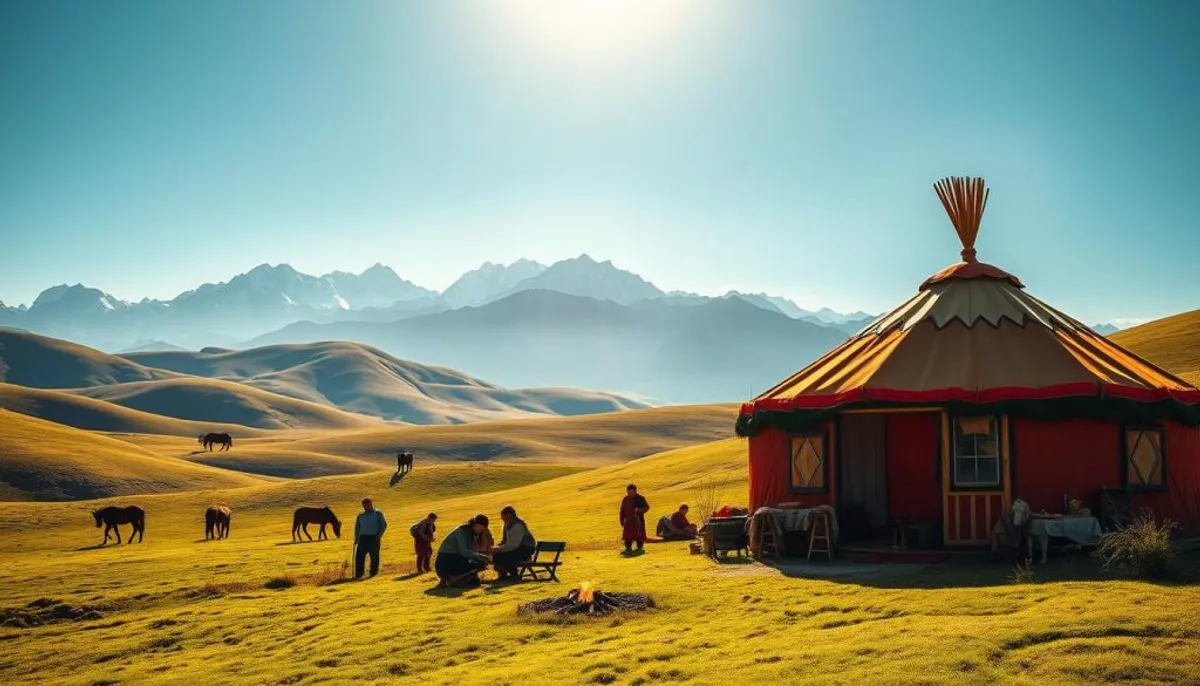
The tündük, a wooden circle at the top, is an essential cosmic symbol. It even appears on the national flag, testifying to its importance.
Ceremonies and Family Celebrations
Social life is marked by numerous family celebrations. These events mark important milestones in existence.
Weddings often include equestrian competitions showcasing the riders and their horses. These traditions strengthen community ties.
Memorial meals are organized seven days, forty days, and one year after a death. These moments allow family members to gather.
The interior of the yurts is adorned with textiles featuring patterns inspired by nature. These decorations create a warm and artistic atmosphere.
The Foundations of Kyrgyz Culture
Kyrgyzstan has a linguistic and social identity of remarkable richness. This diversity is the true glue of contemporary society.
Identity, Language, and Population
The main language belongs to the family of Turkic languages. This characteristic reflects historical ties with the peoples of Central Asia.
Official bilingualism also includes Russian. This Soviet heritage remains visible in daily life. About 30% of the population uses Russian as a lingua franca.
The population speaks more than thirty different languages. Uzbek, Ukrainian, and German are among the most widespread after the two official languages.
The traditional social organization is based on a unique clan structure. The people are divided into two major "wings" comprising forty tribes.
Each child patiently learns their paternal genealogy. The transmission occurs over seven generations. This knowledge forms the basis of family identity.
The Sanjyra carefully preserves these genealogical lists. Once recited orally, they are now transcribed to ensure their preservation.
In rural areas, this structure still influences social relationships. Marriage rules encourage unions between different tribes.
Music, Dance, and Artistic Expression
Musical and choreographic creativity reveals the deep soul of this society. These arts, including traditional dance, express the close bond with the natural environment and the ancestral way of life.Traditional Instruments and Musical Improvisation
Music draws inspiration from the majestic landscapes. The melodies evoke the gallop of horses and the sounds of the mountains.
The komuz, a three-stringed lute, is the king instrument. Mastery of it requires exceptional finger dexterity. The kyl kyyak and the temir komuz complete the traditional orchestra.
Poetic improvisation animates the aïtysh, highly valued verbal duels. These verbal contests reward the best artists with honorary prizes.
Traditional Dances and Theatre
National dances are a relatively recent creation. They developed notably in the 20th century.
The opera and ballet theatre, founded in 1926, holds an important place in contemporary life. It regularly presents quality performances.
Visual Arts and Felt Crafts
Textile craftsmanship represents a major form of expression. The felt carpets, handmade, adorn the interiors of yurts.
The bold patterns are directly inspired by nature. They use bright colors on local wool textiles.
This artistic tradition is currently experiencing a remarkable renaissance. It values skills passed down through generations.
Gastronomy, Beverages, and Ways of Living
The Kyrgyz table offers a direct immersion into ancestral traditions. This cuisine perfectly reflects the pastoral way of life of the mountains.
Traditional Dishes and Local Products
Lamb is the basis of the diet. Three emblematic dishes dominate family meals.
The shurpa combines meat with a vegetable soup. The beshbarmak combines lamb, broth, and fresh pasta.
The plov remains the essential national dish. Prepared with rice, carrots, and spices, it celebrates great occasions.
Dairy products play an essential role. Cheeses and yogurts accompany every meal.
Kumis, fermented mare's milk, represents the national drink. Its sour and slightly alcoholic flavor surprises unaccustomed palates.
Sharing Rituals and Daily Customs
The head of the family breaks the bread to allow everyone to serve themselves. This custom symbolizes hospitality and sharing.
Traditionally, food is eaten with the right hand. Guests may leave the table immediately after the meal.
Tea (tchaï) has its own social code. Served in small cups half-filled, it punctuates daily life.
Toktogul honey and fruits from the Ferghana Valley complement this authentic cuisine. These local products testify to an exceptional terroir.
Heritage, Tourism, and Cultural Sites
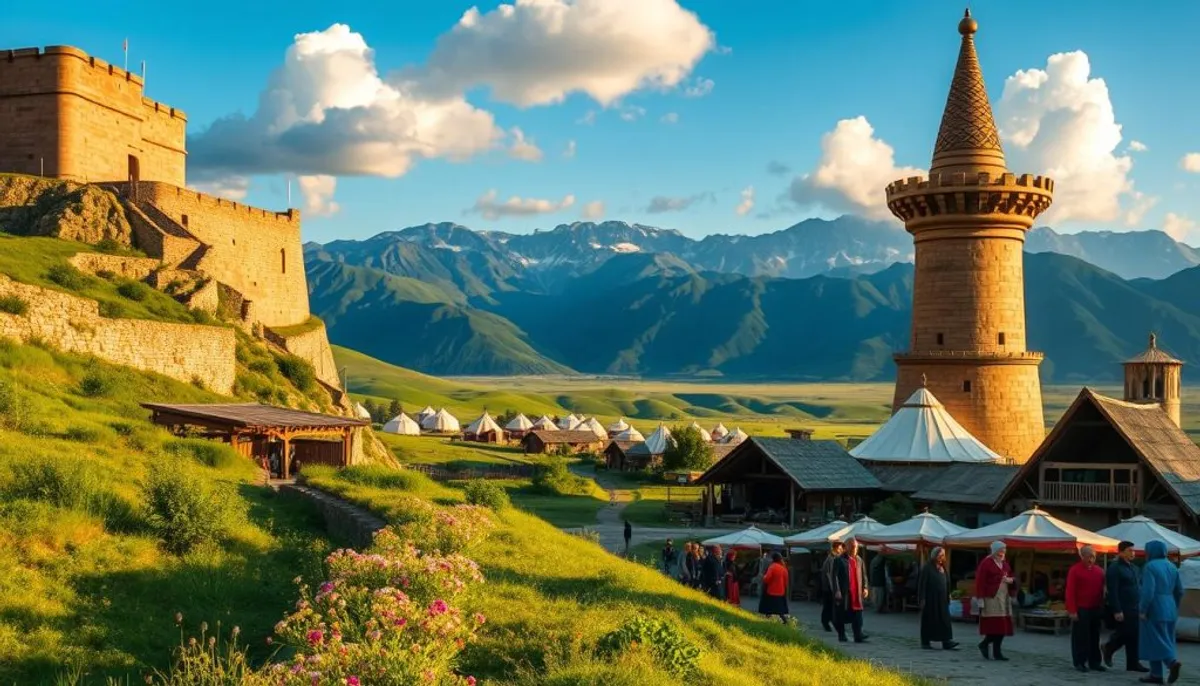
Since independence, tourism has developed around remarkable historical sites. Visitors discover a country where history blends with spectacular landscapes. One of the many cultural pass benefits is the opportunity to engage with these rich traditions and experiences.
Museums, Monuments, and Intangible Heritage
UNESCO has recognized several elements of heritage. The Silk Road and various traditions are listed.
Museums showcase exceptional collections. The State Historical Museum in Bishkek preserves archaeological treasures.
| Year | Inscribed Element | Type of Heritage |
|---|---|---|
| 2008 | Art of the Akyn Epic Storytellers | Intangible |
| 2013 | Epic Trilogy of Manas | Intangible |
| 2014 | Yurt Craftsmanship | Intangible |
| 2017 | Kok-boru Equestrian Game | Intangible |
Travel Routes and Immersion in Traditions
The circuits allow for experiencing authentic nomadic life. Visitors stay in traditional yurts.
The At Chabysh festival celebrates the horse for several days. The riders participate in traditional games.
Local craftsmanship offers felt carpets with patterns inspired by nature. These creations use local wool.
Conclusion
The Kyrgyz experience offers much more than just a simple tourist discovery. It is an authentic human encounter with a people proud of their nomadic roots.
This unique cultural heritage, including its intangible heritage, deserves our attention and protection. Its artistic and social diversity enriches our contemporary world.We warmly invite you to explore this fascinating country in Central Asia. The legendary hospitality of its inhabitants transforms every visit into a memorable experience.
Supporting artisans and preservation initiatives helps maintain these precious traditions. Everyone can contribute to this important mission.
The future of this radiant culture looks promising. A passionate young generation is perpetuating these skills while innovating.
This dynamic cultural life continues to inspire with its resilience and beauty. It represents a treasure to discover and cherish.
FAQ
What is the importance of the horse in life in Kyrgyzstan?
The horse is central in this Central Asian country. It has always been vital for transportation, work, and leisure for nomadic riders. Today, it remains at the heart of many equestrian games, and the production of mare's milk, used to make kumis, is a very vibrant tradition.
What typical dishes should be tasted during a trip?
The local cuisine is flavorful and generous! The national dish is beshbarmak, made with lamb meat and pasta. Kumis, a fermented drink made from mare's milk, is also very popular. These dishes reflect a lifestyle focused on livestock and nature.
What artisanal souvenirs should be brought back from a stay?
Felt carpets, or shyrdaks, are beautiful souvenirs. These colorful carpets, handmade with wool, feature unique traditional patterns. You will also find beautiful wooden objects and musical instruments, perfect for bringing a piece of this region home.
Is the epic of Manas still known today?
Absolutely! The Manas epic is a pillar of the people's identity. This long poem tells the story of a legendary hero. It has been passed down orally for centuries and remains highly celebrated, particularly thanks to storytellers who perpetuate this unique oral tradition in the world.
Is it easy to stay in a yurt during a visit?
Yes, it is an unmissable experience! Many accommodations, especially around Lake Issyk-Kul, offer nights in yurts. This allows you to experience an authentic immersion in the nomadic lifestyle, under traditional felt tents, for a truly memorable journey.