What exactly is culture? This term, so common in our conversations, has a richness of meaning that is often underestimated. It is not limited to the arts or music, but encompasses much more.
According to sociological approaches, it represents what is common to a group of individuals and what binds them together. UNESCO, for its part, defines it as the set of distinctive traits that characterize a society.

This fundamental concept helps us understand the world around us. It includes the values, beliefs, and ways of life shared by a community. Understanding these dimensions is essential to grasp contemporary social dynamics.
Modern encyclopedic platforms offer a valuable resource for exploring these questions. They provide access to structured and documented information on this complex subject.
This content offers you a guide to navigate through the various definitions. We will examine the academic, philosophical, and sociological perspectives of this fascinating notion.
Key Points to Remember
- Culture is a complex concept that goes beyond simple artistic practices.
- It encompasses the values, beliefs, and ways of life of a social group.
- Definitions vary between sociology, philosophy, and institutions like UNESCO.
- Understanding culture is essential for analyzing current social dynamics.
- Encyclopedic resources facilitate access to documented information on the subject.
Introduction
This guide accompanies you in discovering the multiple facets of culture. Our approach aims to make this rich and complex notion accessible.
Culture far exceeds the artistic framework. It encompasses social and religious structures as well as the intellectual manifestations of a society. This concept has evolved significantly since the 19th century.
Objectives and Scope of the Guide
Our article provides a panoramic view of the various meanings of the term. We will explore how culture influences every aspect of human life.
From social relationships to value systems, this guide covers all cultural dimensions. It is aimed at all curious individuals eager to deepen their understanding.
| Cultural Dimension | Individual Scope | Collective Scope | Contemporary Application |
|---|---|---|---|
| General Culture | Personal knowledge of each individual | Common foundation of a community | Adaptation to the digital world |
| Shared Values | Personal principles | Established social norms | Intercultural dialogue |
| Artistic Expressions | Individual creativity | Collective heritage | Technological innovations |
Anthropologists Kroeber and Kluckhohn identified over 150 different definitions in 1952. This diversity reflects the richness of the concept.
Our goal is to demystify this term sometimes perceived as elitist. We adopt a multidisciplinary approach integrating sociology, anthropology, and philosophy.
Historical Context of Culture
Since the dawn of humanity, the human being has developed complex systems to make sense of existence. This rich history dates back thousands of years, long before the first organized civilizations.
Our understanding of the term has evolved significantly over the centuries. Each era has brought its own vision of this fundamental concept.
Ancient Origins
The earliest traces of our intangible heritage date back more than 10,000 years. An excellent example comes from the petroglyphs of Gobustan in Azerbaijan.
These rock engravings testify to a society already organized around sophisticated symbolic practices. They show how our ancestors communicated their knowledge.
Evolution Through the Centuries
The modern term finds its roots in ancient philosophy. Cicero already spoke of cultura animi, the cultivation of the soul.
In the 19th century, Matthew Arnold gave the word a new nobility. He saw it as an ideal of human refinement accessible to all.
This turbulent history reveals how culture has become a central concept for understanding human societies.
The Multiple Definitions of Culture
The diversity of meanings of the word culture reflects its importance in the human sciences. This definitional richness reveals the complexity of a central concept for understanding societies.
In 1952, Alfred Kroeber and Clyde Kluckhohn recorded over 150 different definitions. This impressive number illustrates the multiplicity of possible approaches.
Contrasting Definitions
Each discipline provides its specific insight into this term. Sociology emphasizes shared practices within a society and cultures.
Anthropology views culture as the totality of socially learned behaviors. For example, it distinguishes what is culturally transmitted from what is genetic.
Guy Rocher proposes an integrative definition. He sees culture as “a linked set of ways of thinking, feeling, and acting.”
Common usage often gives a restrictive meaning to the term. It then refers to individual general culture.
The content of the concept itself varies considerably. It can refer to the fine arts or the totality of ways of life.
The form that this social reality takes also differs. It can be material or immaterial. Another example illustrates this duality.
This plurality gives full meaning to interdisciplinary study. It allows for a more complete understanding of human phenomena.
Philosophical and Anthropological Approaches
The human sciences offer complementary lenses to understand social phenomena. Philosophy establishes a fundamental distinction between what is acquired and what is innate.
This differentiation creates an essential conceptual framework for thinking about humanity in all its complexity.
UNESCO Perspectives
UNESCO develops an integrative vision of culture. It defines it as the set of distinctive traits characterizing a society.
This approach recognizes spiritual, material, and intellectual dimensions. It values the diversity of human expressions around the world.
Theories of Tylor and Boas
Edward B. Tylor proposed a revolutionary definition in the 19th century. His concept encompasses all aspects of social life.
Franz Boas introduced cultural relativism with his notion of Kulturbrille. Each society has its own values and perceptual filters.
Adolf Bastian suggests a fundamental psychic unity of humanity. His anthropological theories challenge cultural hierarchies.
| Approach | Central Concept | Major Contribution | Contemporary Impact |
|---|---|---|---|
| Philosophical | Culture vs Nature | Fundamental conceptual framework | Critical thinking |
| Anthropological (Tylor) | Inclusive definition | Holistic vision | Cross-cultural studies |
| Relativism (Boas) | Kulturbrille | Respect for differences | International dialogue |
These anthropological and philosophical theories have transformed our understanding. They encourage a respectful view of global diversity.
Arts and History at the Heart of Culture
At the heart of every society, works of art testify to collective values and aspirations. They serve as a faithful mirror of human concerns through the ages.
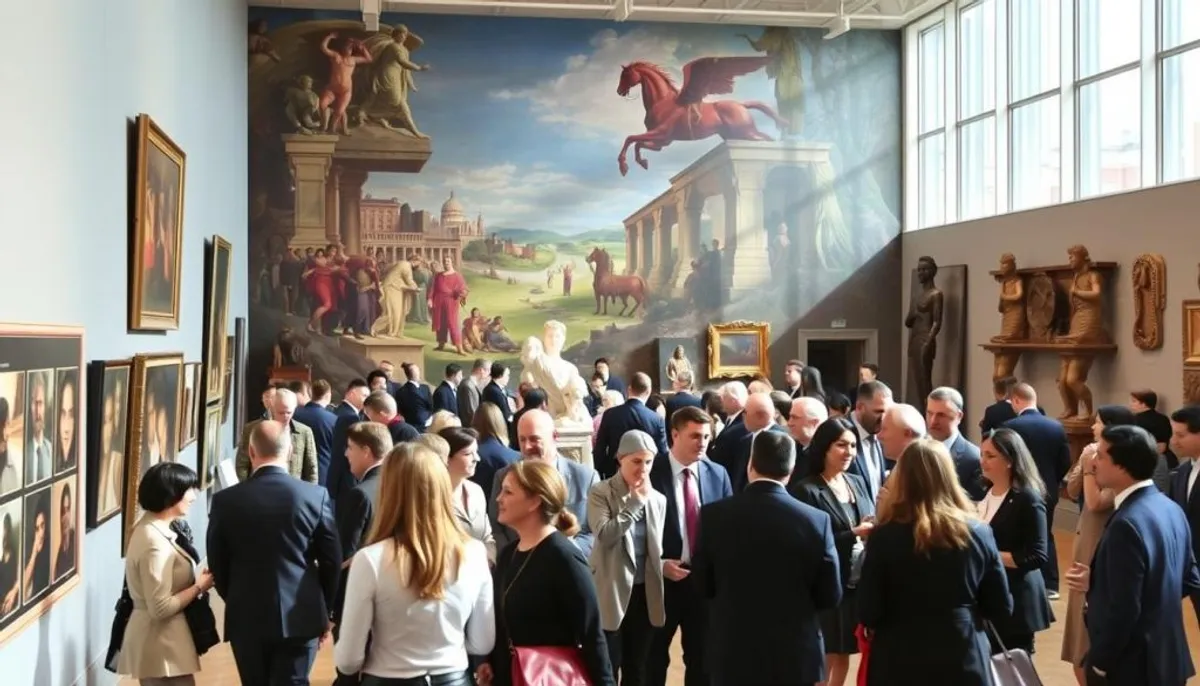
The history of art reveals the profound transformations of civilizations, including insights into government history. From prehistoric petroglyphs to contemporary installations, each artistic form reflects its time.
Robert Indiana's LOVE sculpture perfectly illustrates this phenomenon. This iconic work from 1970 has become a universal symbol of pop culture.
Music represents another fundamental expression. Pygmy polyphony, practiced since the 13th century, predates European developments by two hundred years.
The visual arts, literature, and cinema together form our heritage. They capture the essence of civilizations through the centuries.
Art movements like the Renaissance or Modernism show close links to social changes. Contemporary art today questions traditional boundaries.
This example demonstrates how participatory practices redefine the relationship between creators and audiences. Cultural history continues to be written through these innovations.
Impact of Technologies on Cultural Dissemination
Contemporary technological revolutions profoundly disrupt our relationship with cultural content. This transformation affects all aspects of production and distribution.
The cultural goods industry is undergoing an unprecedented mutation. Information technologies completely redefine economic models.
Role of Digital Media
Streaming platforms and the internet have democratized access to works from around the world. This massive dissimination creates a true cultural acceleration.
Communication is evolving towards more participatory forms. Social networks enable horizontal exchanges between creators and audiences.
Transformation of Cultural Practices
Everyone can now become a content producer. This democratization raises important questions about copyright.
The transition from printed books to e-books illustrates this evolution. Hybrid practices are emerging, blending traditions and innovations.
This digital revolution also creates new inequalities of access. The technological divide is becoming a major cultural issue.
Scientific Culture and Its Challenges
The scientific dimension constitutes an essential pillar but often overlooked aspect of our intellectual heritage. As early as 1862, the Bescherelle National Dictionary placed scientific knowledge at the forefront of the French definition.
The content of this culture far exceeds simple discoveries. It includes understanding research methods and developing critical thinking.
Our contemporary society faces major challenges where sciences become crucial. Climate change, pandemics, and biotechnologies require collective mastery of scientific knowledge.
Research itself varies according to national contexts, reflecting different social values. C.P. Snow already identified the false opposition between “the two cultures.”
The current challenge is to reconcile scientific and humanistic approaches. Democratization through education allows citizens to participate in technological debates.
Sciences thus represent a living component of our collective culture. Their integration into our intellectual heritage remains a fundamental challenge for our time.
Diversity of Cultural Expressions
The linguistic distinction between Bildung and Kultur reveals an essential duality in our understanding of social phenomena. In French, a single term designates these two complementary realities.
This definitional richness highlights the complexity of human expressions around the world. Each society develops its own traditions adapted to its environment.
Individual and Cultural Culture
The human being simultaneously cultivates two distinct dimensions. Personal education constitutes individual culture, while participating in a broader collective identity.
This duality illustrates the universal human nature expressed through particular forms. For example, an individual may master several languages while retaining their traditional roots.
The diversity of funeral practices demonstrates this variety of expressions. Each community develops rituals reflecting its conception of existence.
This approach opposes hierarchical visions of the past. It values each tradition as a unique contribution to our common heritage.
The contemporary challenge is to preserve this richness in the face of homogenization. The peaceful coexistence of differences enriches our collective nature.
Another significant example concerns family systems. They vary considerably according to contexts, demonstrating the adaptability of humans.
This diversity represents our most precious heritage. It allows each person to develop their individual identity while fitting into a broader social fabric.
Culture and Identity in France
France offers a fascinating model of cultural identity forged by centuries of history. This unique culture is characterized by a subtle balance between ancestral traditions and modernity.
Values and Traditions
Republican values deeply structure the French soul. Liberty, equality, and fraternity are not mere words, but living principles that guide society.
The State plays a central role in preserving heritage. This tradition dates back to the Gallicanism of Philip the Fair and is embodied today in institutions like France Culture.
- Secularism as a pillar of national identity
- Republican universalism as a model of integration
- The international influence of gastronomic and artistic traditions
Influence on Contemporary Society
The influence of this specific culture manifests in all aspects of French life. Intellectuals and artists hold a privileged place in public debate.
The State continues to actively intervene in cultural life. It funds theaters, museums, and public media, perpetuating a unique centralizing tradition.
France today must reconcile its heritage with the growing diversity of its population. This question animates reflections on the future of republican values.
Cultural traditions constitute a living heritage that evolves with its time. They contribute to the radiance of France in the contemporary world, serving as a vital form of cultural expression.
Economic and Political Issues of Culture
The economic and political dimensions profoundly shape our relationship with works and traditions. This sector represents a significant part of the French economy, generating substantial jobs and income.

Cultural Policy and Funding
The French State maintains a tradition of active intervention in artistic life. The Ministry of Culture has a significant budget to support creation and preserve our heritage.
Public funding raises passionate debates. Some defend public cultural service, while others advocate for a greater role for private patronage.
The specific law in this area governs several crucial aspects. It addresses intellectual property and the protection of works.
| Economic Aspect | Role of the State | Contemporary Issues |
|---|---|---|
| Weight of the cultural industry | Defense of cultural exception | Adaptation to digital |
| Job creation | Support for creation | Balance between public/private funding |
| Generated income | Protection of heritage | Commercialization vs diversity |
International trade agreements regularly test this cultural exception. French policy aims to protect cultural goods from being treated as mere commodities.
This approach reflects a vision where artistic creation transcends its economic value alone, highlighting the importance of art education. It embodies fundamental societal choices for our collective future.
The Role of Media in Cultural Dissemination
Modern media revolutionize our access to knowledge. They transform the dissimination of works and debates to an ever-widening audience.
This evolution surpasses traditional circles. It makes culture accessible to everyone, everywhere.
Focus on France Culture
Founded in 1945, France Culture embodies this public service mission. The station took its current name in 1963.
Its website and radio programming offer demanding and free content. It even received the award for best station in 2019.
Impact of Podcasts
Podcasts represent a true revolution. France Culture recorded 46.6 million downloads during the summer of 2019.
This format allows for on-demand listening. It completely changes our relationship with cultural communication.
Evolution of Platforms
Online dissemination creates lasting archives. Programs become resources that can be consulted at any time.
In 2022, the website migrated to the Radio France platform. This evolution attracts new listeners, with a record audience of 1.68 million per day.
The internet thus allows for total accessibility. It ensures the sustainability of content for future generations.
Interactions Between Culture and Communication
The links between culture and communication form a living circle where each element nourishes the other. This bidirectional relationship creates a dynamic system essential to any society.
The transmission of values and knowledge relies entirely on exchange mechanisms. Each community develops its own verbal and non-verbal codes.
These forms of communication vary considerably from one group to another. Interpersonal distance or eye contact have different meanings depending on contexts.
Intercultural interactions often reveal fascinating misunderstandings. They show how deeply our exchange styles are rooted in our collective heritage.
| Type of Communication | Cultural Role | Concrete Example |
|---|---|---|
| Tales and Stories | Transmission of values | Foundational myths |
| Social Rituals | Strengthening bonds | Traditional ceremonies |
| Non-verbal Symbols | Silent expression | Specific gestures |
Modern technologies today create new spaces for exchanges. The internet allows the emergence of transnational communities with hybrid cultures.
These complex relationships show how communication shapes the evolution of our intangible heritage. They constitute the beating heart of any living society.
Essential Components of Culture
To truly understand a society, one must analyze its fundamental elements that form a coherent system. These components are primarily transmitted through social learning from generation to generation, and a thorough cultural analysis can reveal the intricate connections between these elements.
Values, Norms, and Institutions
Values represent the core of any collective identity. They define what is considered important, just, or desirable within a community.
Social norms directly stem from these fundamental principles. They establish expected behaviors in different everyday situations.
Institutions such as family, school, or the State concretely embody these values. They ensure their transmission to new generations.
Julian Huxley proposes an interesting classification into three categories. Mentifacts concern ideological aspects, socifacts social relations, and artifacts the material dimension.
This analysis allows us to grasp how the different cultural elements harmoniously articulate. They thus create a common frame of reference for all members of a society.
Decoding the Concept of Culture on Wikipedia
The online collaborative encyclopedia today represents a major source of information for exploring complex concepts. It allows access to content constantly updated by international contributors.
This platform offers a detailed analysis of the term in its multiple dimensions. The structure of the online article facilitates navigation between different approaches.
In-depth Analysis of the Term
The definition provided integrates philosophical, anthropological, and sociological theory perspectives. Fundamental authors like Tylor, Boas, and Bourdieu are referenced.
The content also presents the limitations of the concept. It addresses critiques of essentialism and debates on cultural relativism.
| Aspect | Wikipedia Approach | Traditional Encyclopedias | Main Advantages |
|---|---|---|---|
| Updating | Continuous updates | Fixed editions | Information always current |
| Perspectives | Plurality of viewpoints | Unique editorial vision | Multicultural analysis |
| Accessibility | Complete free access | Often paid access | Demoncratization of knowledge |
This online resource thus constitutes a valuable tool for understanding the evolution of the concept. Its collaborative format reflects contemporary debates on culture.
The methodology of this modern encyclopedia, although debated, offers a dynamic vision. It shows how a term can be collectively apprehended.
Critical Approach and Debates on Culture
The concept of culture is currently the subject of lively debates among researchers. Specialists like Ingrid Piller or Adam Kuper question certain traditional uses of this notion.
Controversies and Viewpoints
A critical viewpoint highlights that the idea of culture could sometimes replace that of race. Some essentialist stereotypes might persist under the guise of cultural differences.
Pierre Bourdieu provides an important perspective. He shows how the legitimate culture of dominant classes marginalizes popular practices.
The controversies also oppose universalism and cultural relativism. Should we affirm common values or consider all practices as equally valid?
Limits of Traditional Definitions
The limits of classical approaches become clear. They often present cultures as homogeneous and stable entities.
This approach ignores internal diversities and dynamics of change. It tends to freeze identities and naturalize differences.
Current debates focus on the political instrumentalization of the concept. Notably in discourses on immigration that reify differences.
These critiques do not invalidate the notion but invite us to use it cautiously. We must recognize its constructed dimension and its role in power relations.
Conclusion
Having reached the end of this journey, we can now grasp culture in all its complexity. This fundamental concept continues to evolve with our constantly changing world.
The meaning of the term has enriched over the centuries. It now exceeds simple artistic practices to encompass economic, political, and technological dimensions.
In our globalized society, understanding cultural dynamics and cultural history becomes essential. This allows us to navigate between identity preservation and openness to exchanges.
Culture remains an indispensable gateway for analyzing social transformations. It offers valuable keys to give meaning to our collective existence.
This living concept invites us to continue exploring. Our contemporary world opens up new fascinating perspectives on this gateway to human understanding.
FAQ
What is culture in its broadest sense?
Culture encompasses all the knowledge, beliefs, arts, leisure, and habits that a person acquires as a member of a society. It is a complex system that shapes our worldview and interactions.
How have digital media transformed the dissemination of knowledge?
Online platforms and modern communication tools have democratized access to information. They allow for the rapid circulation of ideas and works, thus altering our relationship with creation and knowledge.
What is the influence of traditional values on contemporary French society?
Values such as secularism, attachment to language, or certain gastronomic practices continue to play a fundamental role. They constitute a common foundation while evolving with new generations.
Why is there talk of "scientific culture" today?
It is about making the discoveries and methods of sciences accessible to the general public. Understanding technological or environmental issues has become essential to participate in societal debates.
What is the role of an institution like UNESCO in this field?
UNESCO works to preserve world heritage, both material and immaterial. It also promotes the diversity of artistic expressions and dialogue between peoples to foster peace.
How is the concept of identity related to culture?
Our identity is largely built through the traditions, history, and social norms we share. These elements give us a sense of belonging and influence our way of being.