Welcome to our overview of the French agricultural world. We offer you an immersion into the practices that animate our rural territories.
The agricultural sector has been undergoing a profound transformation for several years. Farmers are adapting their methods to face climatic and economic challenges.
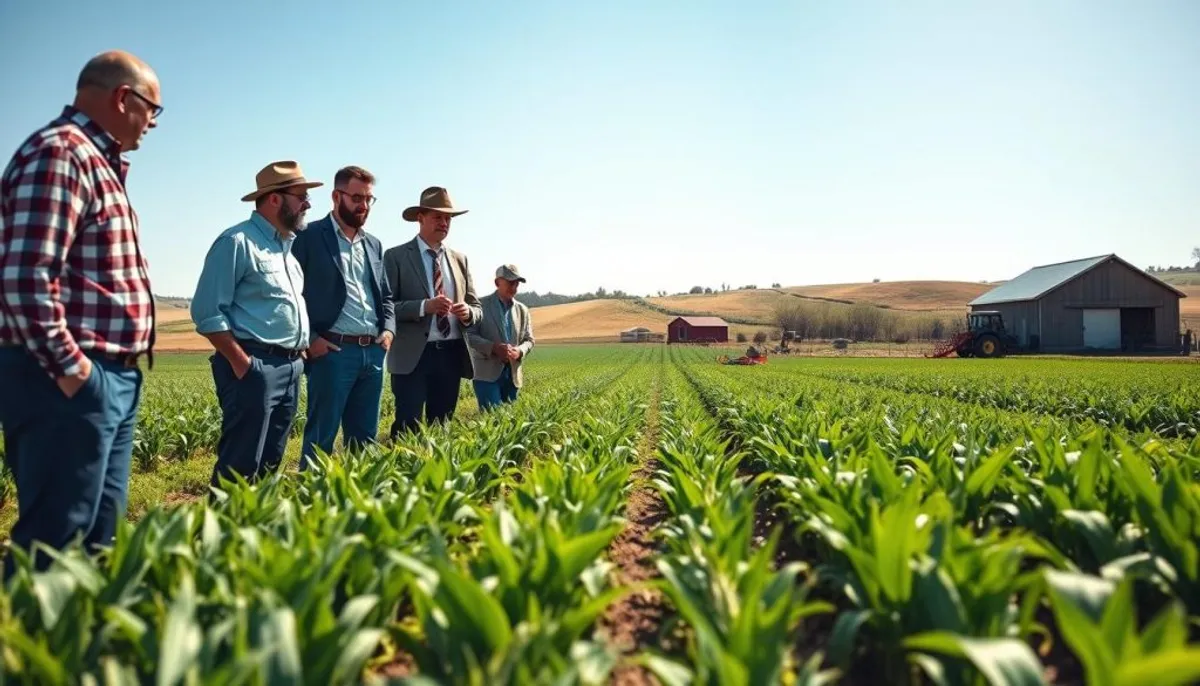
Today's agriculture focuses on innovation. New crops are emerging, and techniques are evolving to preserve the quality of the soil.
This report explores current plantations, from traditional cereals to legumes and other emerging productions, including interactive art. We decode crop rotation strategies and sustainable practices.
Testimonials from farmers and field data shed light on the realities of production. Discover how to optimize your yields with the best practices.
Key Points to Remember
- The French agricultural landscape is evolving rapidly.
- Adapting to climate change is a priority.
- New crops and techniques are improving sustainability.
- Soil health is a central concern.
- Technological innovation optimizes the profitability of farms.
- Rotation practices are essential for yields.
Introduction and Context of Current Agriculture
The French agricultural landscape is currently undergoing a significant transformation. This change is influenced by several key factors.
Sector Context and Recent Developments
In recent years, agriculture has evolved rapidly. Farmers are adapting their methods in response to new challenges.
Consumer demand is changing profoundly. They are now seeking more environmentally friendly products.
Technological development is providing innovative solutions. These tools improve farm efficiency while preserving resources.
Objectives of the Analysis and Scope of the Report
Our study examines current crops from several angles. We analyze their agronomic and economic performance.
The goal is to provide a comprehensive view of trends. This analysis relies on field data and feedback from experience.
| Aspect | 10 Years Ago | Today | Evolution |
|---|---|---|---|
| Technologies Used | Basic mechanization | Precision agriculture | +65% efficiency |
| Diversification of Crops | Dominant monoculture | Diverse rotation | +40% varieties |
| Sustainable Practices | Limited | Widespread | +80% adoption |
This report also covers innovations in rotation. It explores alternative crops gaining popularity while addressing issues related to hooliganism in the agricultural field.
Trends and Innovations in Cultivation Practices
Contemporary agriculture is experiencing an unprecedented technological revolution. These advancements are profoundly transforming planting methods and significantly improving results.
New Technologies and Planting Methods
Direct seeding systems represent a major innovation. They allow for more precise planting of various crops while preserving natural structure.
These modern techniques significantly reduce mechanical work. Farmers are observing notable improvements in planting quality.
Impact of Innovations on Soil and Crop Quality
The new methods directly benefit soil health. Improved structure promotes root development and enhances water retention.
The Chamber of Agriculture of Indre-et-Loire conducted successful trials. On hydromorphic loams, adapted techniques optimized production.
Farmers are noticing a marked improvement in the quality of crops. Germination rates are increasing, and plant vigor is significantly rising.
These innovations contribute to the sustainability of agricultural systems. They allow for better management of weeds and reduce environmental impact.
Cultural Rotation and Crop Diversification
Judicious alternation of plantations is emerging as a sustainable solution to current challenges. This strategic approach optimizes resources while preserving soil fertility.
Examples of Successful Rotations and Innovative Practices
Several French farmers demonstrate the effectiveness of diverse rotations. Philippe Lion, in Sud Touraine, combines winter cereals with sunflower and rapeseed.
Bertrand Patenôtre perfectly illustrates diversification with a dozen different species. His system includes beet, alfalfa, wheat, and even hemp or soybeans.
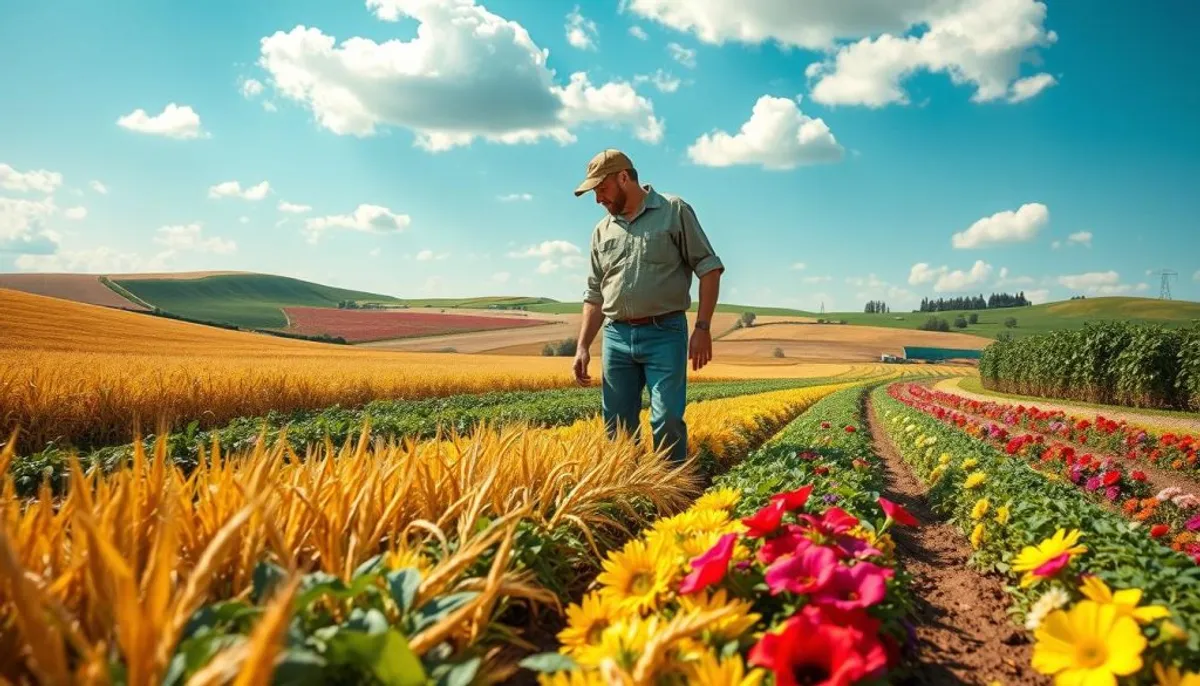
Vincent Seyeux adapts his crops according to the drainage of the plots. This flexibility demonstrates the importance of customizing each rotation.
| Type of Rotation | Main Advantages | Examples of Species |
|---|---|---|
| Short Rotation | Weed control | Wheat, barley, rapeseed |
| Long Rotation | Improved soil structure | Corn, legumes, cereals |
| Highly Diverse Rotation | Economic resilience | 10+ different species |
The integration of legumes like peas reduces fertilizer needs. Balanced rotations also protect against diseases.
These innovative practices are transforming modern agriculture. They ensure sustainable production for years to come.
Impact of Climatic Conditions and Soil Management
In the face of increasing weather uncertainties, soil management becomes a crucial issue. Farmers must constantly adapt to maintain their production.
Crop Adaptation to Climate Variations
The current climatic conditions push towards more resilient species. Sorghum is experiencing real success this year in dry areas.
Its resistance to drought makes it a wise choice. Where non-irrigated corn struggles, sorghum thrives fully.
Improvement and Structuring of Soils through Modern Practices
The powerful root system of sorghum naturally improves the structure of the soil. Its deep roots create beneficial galleries.
These improvements facilitate the circulation of water and air. Philippe Lion harvested under good conditions despite recent 77 mm of rain.
Reducing mechanical work also preserves soil quality. Modern techniques promote rich biological activity.
Each year brings its share of climatic challenges. Adapting practices ensures the sustainability of agricultural soils.
Crops in the Fields Right Now
The experience of pioneering farmers reveals the potential of certain productions. These alternatives present significant advantages for modern rotations.
Case Study: Sorghum and Its Agronomic Advantages
Philippe Lion, a cereal grower from Sud Touraine, has been cultivating this plant since 2006 on 40 hectares. Sorghum offers an excellent summer break in the rotation.
Its resistance to drought makes it ideal where non-irrigated corn struggles. Yields reach 63 qx/ha with only 120 units of nitrogen.
The harvest requires little drying due to a natural moisture content of 19.5%. This crop represents an economical and high-performing option.
Comparative Analysis with Other Crops like Soybeans
Bertrand Patenôtre systematically integrates soybeans into his Champagne rotations. Late sowing around April 10 ensures good planting conditions.
Yields of soybeans have remained stable between 28 and 32 qx/ha for four years. The harvest requires no additional drying.
Compared to corn, soybeans offer notable economic and environmental advantages, while also contributing to social justice. These two alternative plants wisely enrich current rotations.
New Perspectives and Alternative Crops
Plant innovation opens up unprecedented economic perspectives. These alternative plants meet market demands for sustainable products.
Integration of Hemp, Bamboo, and Medicinal Herbs
Hemp has seen remarkable resurgence since 2016. This plant offers multiple outlets in various industrial sectors.
Its production is used to create eco-friendly materials and textiles. Giant bamboo represents another promising option.
Initially ornamental, it is now valued for its sustainable applications. Medicinal herbs constitute an expanding market.
| Type of Crop | Main Outlets | Agronomic Advantages |
|---|---|---|
| Industrial Hemp | Textiles, construction, cosmetics | Structures soils, low inputs |
| Giant Bamboo | Eco-sustainable materials, textiles | Rapid growth, durability |
| Medicinal Plants | Pharmaceutical, aromatic | Diversification, lucrative niche |
These alternative species, including traditional music, allow for intelligent diversification. They respond to new consumer demands.
Regulatory recognition facilitates their development. Farmers thus gain access to promising markets.
The Economic Stakes and Market Outlets for Agriculture
Economic viability is the main criterion guiding farmers' choices. Market prices and available outlets directly influence farm profitability. Additionally, Jewish beliefs play an important role in certain agricultural practices, influencing farmers' decisions.
Cost Analysis, Prices, and Valuation of Productions
The analysis of production costs reveals complex economic realities. Some alternative species have lower prices but better margins due to reduced expenses.
Vincent Seyeux notes that flax seed or buckwheat can sometimes be difficult to sell. However, controlling costs allows for maintaining a satisfactory economic margin.
| Type of Crop | Average Production Cost | Average Selling Price | Estimated Net Margin |
|---|---|---|---|
| Conventional Wheat | 350 €/ha | 280 €/t | 150 €/ha |
| Fava Bean | 220 €/ha | 240 €/t | 180 €/ha |
| Buckwheat | 180 €/ha | 320 €/t | 200 €/ha |
Development and Feedback from Farmers
The development of commercial sectors remains a major challenge. Storage organizations often hesitate in the face of small volumes of alternative productions.
Farmers observe that diversification helps to smooth economic risks. Over several years, this strategy secures income against price fluctuations.
The recent surge in prices for wheat and corn creates a paradoxical market dynamic. It could threaten marginal crops in the short term but favor their valuation in the medium term.
Feedback and Optimized Practices in the Field
Experienced farmers today share their successes with direct seeding techniques. These methods demonstrate their effectiveness across different plots.
The analysis of practices shows significant improvements. Farmers optimize their interventions for better results.
Concrete Examples of Planting and Direct Seeding
At Philippe Lion's farm, the soil structure allows for successful full direct seeding. Sorghum stalks remain upright after harvest.
This technique promotes the maintenance of structure. The passage of the seeder becomes easier over these residues.
Seeding before May 10 is not recommended for sorghum. This plant requires well-warmed soils.
Weeding represents a particular challenge. Approved products offer a limited spectrum of action.
| Seeding Technique | Main Advantages | Required Conditions |
|---|---|---|
| Direct Seeding on Straw | Preserved soil structure | Upright stalks, stable soil |
| Integration of Legumes | Saving on nitrogen fertilizers | Adapted rotation, healthy soil |
| Cover Crops | Rapid decomposition | Compatible species, timing |
The integration of legumes like fava beans brings multiple benefits. Atmospheric nitrogen fixation reduces costs.
Quality seeds and an adapted technique ensure success. Each farm must personalize its approaches.
Conclusion
Testimonials from French farmers illustrate a profound evolution towards more resilient models. This analysis demonstrates that the success of agricultural systems relies on the diversity of species integrated into rotations, as well as culinary traditions like Lyonnaise cuisine that value these local products.
Each type of planting brings specific advantages. Optimizing management requires a systemic approach considering the entire rotation.
Alternative plantations can be successfully integrated despite changing conditions. The development of new sectors encourages this transition towards more sustainable agriculture.
Cultural diversity represents a real opportunity to build the agriculture of tomorrow. It allows for reconciling economic performance and environmental respect.
FAQ
What are the main current trends in crop rotation?
Today, farmers are increasingly diversifying their crop rotations. Integrating legumes like alfalfa or clover into the rotation naturally improves soil fertility. This practice also reduces the need for weeding and strengthens plant resistance.
How do new technologies help improve crop quality?
Modern tools, such as sensors for analyzing soil, allow for more precise seeding. This approach optimizes the use of water and products, resulting in better production quality and higher yields.
What advantages does sorghum cultivation present this year?
Sorghum is very interesting right now due to its high drought resistance. It requires less water than corn and offers good market outlets, especially for animal feed. It is a robust plant that adapts well to changing climatic conditions.
Is industrial hemp a crop of the future for farmers?
Absolutely! Hemp is experiencing a real resurgence. It requires little or no weeding, suppresses weeds, and improves soil structure. Its outlets are numerous: textiles, construction, and even food, making it a highly profitable crop.
How to effectively manage plots with direct seeding?
Direct seeding involves planting seeds without prior soil tillage. This method preserves moisture and soil life. To succeed, it is crucial to manage cover crops and residues from the previous harvest well.