
Welcome to the discovery of a fascinating country in West Africa! The Gambia stands as a true cultural gem nestled in the heart of Senegal. This small country elegantly stretches 480 km along the majestic Gambia River.
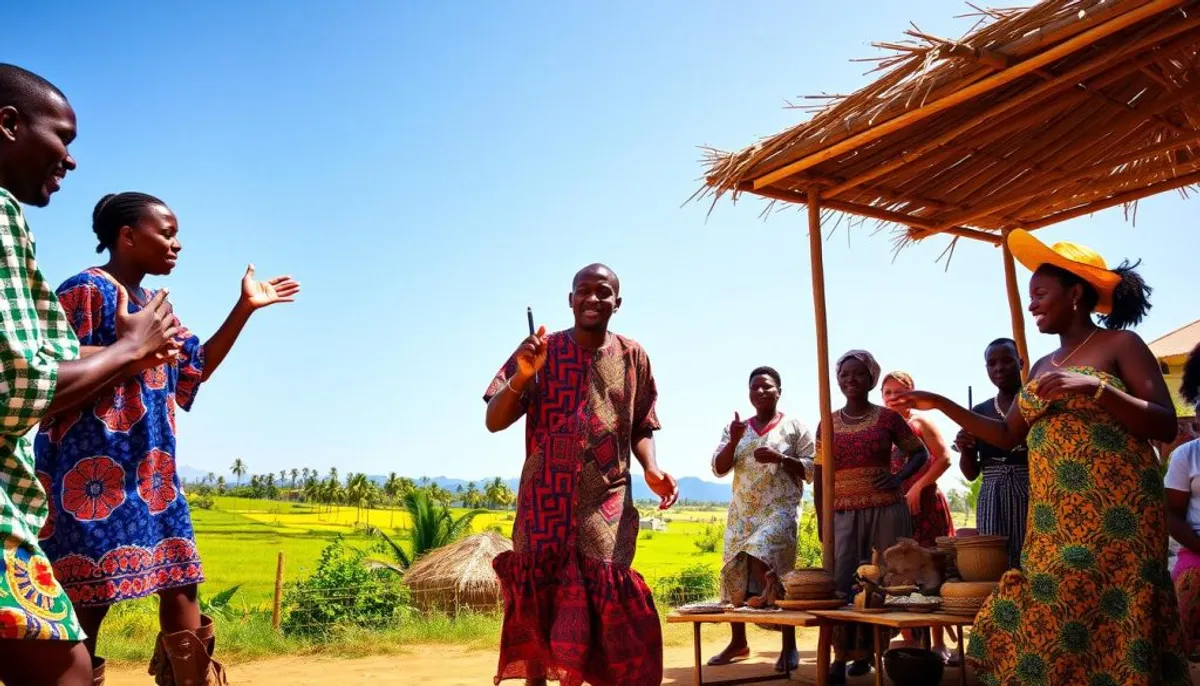
With a population exceeding 2.6 million inhabitants, this nation is home to a remarkable ethnic mosaic. Mandingoes, Fulas, Wolofs, and Soninkés coexist harmoniously, creating a rich and diverse social fabric.
The linguistic diversity is exceptional, with nearly 18 languages spoken. English serves as the official language, while Sunni Islam permeates daily life, tinged with traditional African beliefs.
This unique country deserves exploration of its vibrant traditions and preserved cultural heritage. Each community contributes to this distinctive Gambian identity.
Key Points to Remember
- The Gambia is a small country in West Africa landlocked by Senegal
- Its population exceeds 2.6 million inhabitants spread across several ethnic groups
- The country has about 18 different languages
- English is the de facto official language
- 95% of the population practices Sunni Islam with African traditions
- Gambian culture is rich and diverse despite the small size of the country
- The unique geographical position influences regional cultural exchanges
Exploring Gambian Culture and Identity
Let’s dive into the heart of Gambian identity, a unique blend of ancestral traditions and modern influences. This West African nation has managed to preserve its heritage while opening up to the contemporary world.
Cultural Definition and Challenges
The cultural identity of this country encompasses observable practices by its 2.3 million inhabitants. It represents a delicate balance between preservation and adaptation.
The British colonial history has left its mark, notably the adoption of English as the official language. Yet, local traditions remain vibrant and constitute the heart of national identity.
The Constitution guarantees every citizen the right to practice their culture. This Article 32 protects diversity while promoting unity.
The Role of Traditions in National Unity
The various ethnic communities share interconnected stories. Their common regional influences create a sense of collective belonging.
Traditions serve as a bridge between ethnic groups. They strengthen social cohesion in this West African region.
In the face of globalization, cultural preservation represents a significant challenge. But the inhabitants of this country proudly maintain their heritage.
This part of Africa demonstrates how diversity can become a strength. The different communities coexist harmoniously thanks to their shared values.
Ancestral Traditions and Customs
The ancestral customs of The Gambia form a living heritage that shapes the existence of the communities. These millennia-old practices structure daily life and strengthen family ties.
Ritual Practices and Ceremonies
The Kankurang represents a Mandingo initiation rite recognized by UNESCO. This ceremony marks the transition to adulthood for young men.
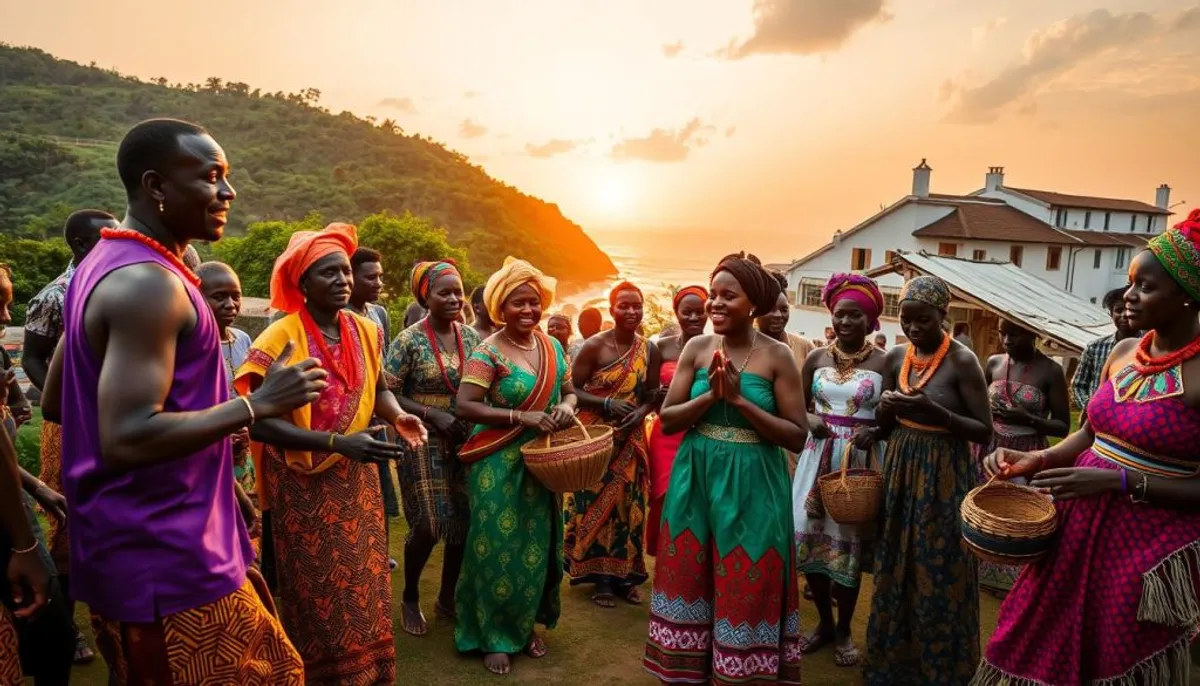
The Jola practice the Futampaf, a rite of passage transmitting ancestral knowledge. These traditions teach respect for nature and the environment.
| Traditional Rite | Community | Main Objective | Recognition |
|---|---|---|---|
| Kankurang | Mandingue | Male initiation | UNESCO Heritage |
| Futampaf | Jola | Transmission of values | Local tradition |
| Ndut Rite | Sérère | Spiritual ceremony | Ancestral practice |
Religions and Traditional Beliefs
Islam coexists harmoniously with animist beliefs. Marabouts play a crucial role in this religious symbiosis.
The Gambian family integrates various spiritual influences into its life. The mythological stories of the Diola with Samay and Kumpo enrich this heritage.
This tradition of religious syncretism reflects remarkable openness. Each community preserves its practices while respecting those of others.
Music, Art, and Cultural Expressions
Gambian artistic expressions vibrate to the rhythm of ancestral traditions and contemporary creations. This part of social life occupies a central place in the daily lives of the communities.
The Richness of Gambian Music
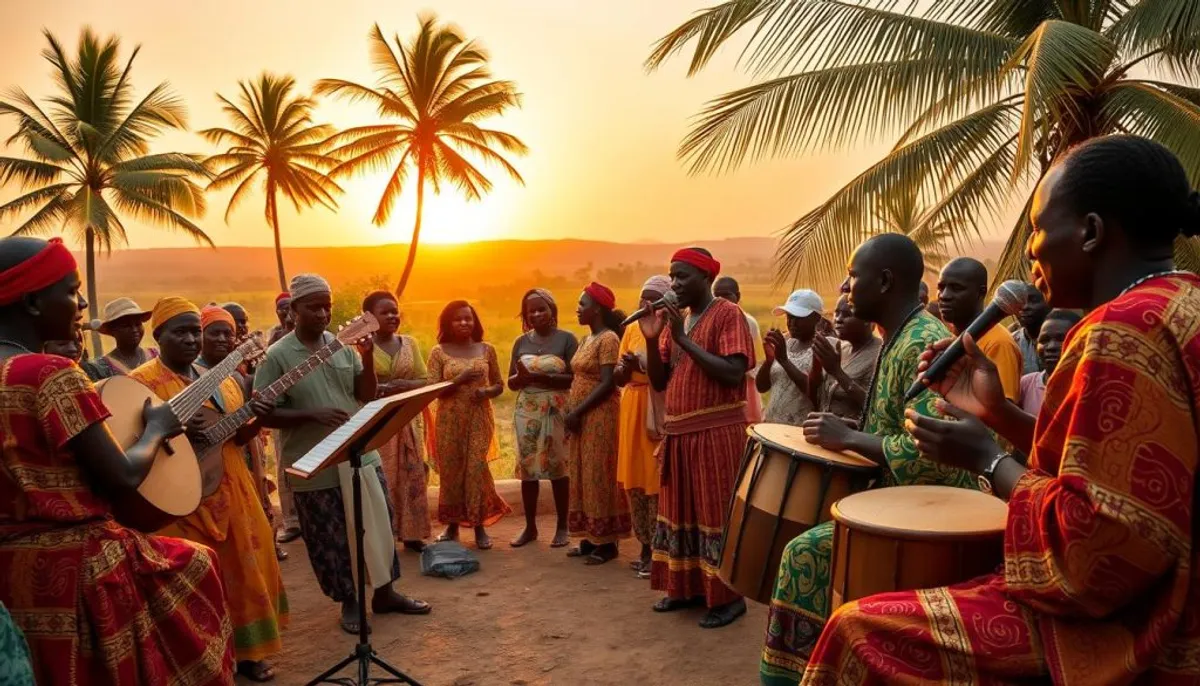
Traditional music utilizes iconic instruments like the kora. This 21-string harp-lute produces enchanting melodies characteristic of the genre.
The tama, a talking drum, accompanies important ceremonies. Artists like Marie Samuel Njie and Laba Sosseh have marked the musical history.
Dance, Performing Arts, and Handicrafts
The Sabar dance of the Wolof and Jola performances at bougarabou enliven celebrations. Tamsier Joof Aviance represents a notable figure in the choreographic scene.
Local literature is enriched by authors like Fatou Jallow. Cinema is emerging with productions like The Mirror Boy.
Traditional handicrafts transmit valuable skills across generations. These creations reflect the identity of the different ethnicities.
These artistic expressions shine well beyond borders, contributing to the African cultural world. They constitute a living and evolving heritage.
Historical Influences and Community Diversity
The historical heritage of this West African country has profoundly shaped its linguistic and ethnic diversity. British colonization has left a lasting imprint on social and political organization, influencing the understanding of armenian history as well.
Colonial Heritage and Linguistic Evolution
English remains the official language since the colonial era. This situation creates a unique linguistic landscape where 18 local languages coexist.
Mandingue (42.5%), Fula (17.1%), and Wolof (14.2%) dominate daily exchanges. French retains notable importance due to proximity to Senegal.
Mosaic of Ethnic Communities
The current population of 2.6 million inhabitants forms a rich human tapestry. Each group brings its traditions and particular history.
The Mandingues descend from the Mali Empire. The Fulas traditionally practice nomadic herding. The Wolof excel in trade and urban crafts.
Impact of Cultural Exchanges in West Africa
The geographical position fosters intense exchanges with neighboring regions. The Wolof serves as a lingua franca in this part of West Africa.
These interactions continuously enrich the different communities. They create a dynamic and open cultural identity.
Conclusion
The spicy flavors and ancestral rituals characterize this unique African nation. The small country proudly maintains its traditions such as thiéboudiène, the famous Wolof rice, and liberian cuisine, central dishes of social life.
The UNESCO recognition of Kankurang attests to the important place of this culture in the world heritage. The stories and customs are passed down within the family, a fundamental pillar of society.
The Gambian nature, notably its majestic river, has profoundly influenced lifestyles. This West African region continues to enrich the world with its cultural diversity.
The future looks promising between the preservation of values and contemporary openness. The Gambian family perpetuates this unique heritage that deserves to be discovered by the entire world.
FAQ
What are the most spoken languages in this small West African country?
The Wolof is widely spoken, but English is the official language. Mandinka, Fula, and other local languages are also spoken by different communities across the regions.
How is family and social life organized?
Life revolves around the extended family and community values. Respect for elders and mutual aid are fundamental. Meals, often rice-based, are important moments of sharing.
Does music play an important role in traditions?
Absolutely! Music, dance, and stories told by griots are at the heart of ceremonies and the transmission of history. The kora, a string instrument, is very emblematic.
What historical influences have shaped current practices?
The country has been influenced by its colonial heritage and its place in the West African region. These exchanges have enriched customs, festivals, and crafts, creating a unique identity.
How do traditions contribute to national unity?
Cultural practices and common celebrations, such as naming ceremonies, strengthen the bonds among the inhabitants. They help preserve a sense of belonging despite the diversity of populations.