
Welcome to New Caledonia, an archipelago in the South Pacific where different communities harmoniously blend. With approximately 270,000 inhabitants, this French overseas territory offers exceptional human diversity. The population mainly consists of the Kanak, an indigenous Melanesian people, alongside Caldoches, Polynesians, and other communities.
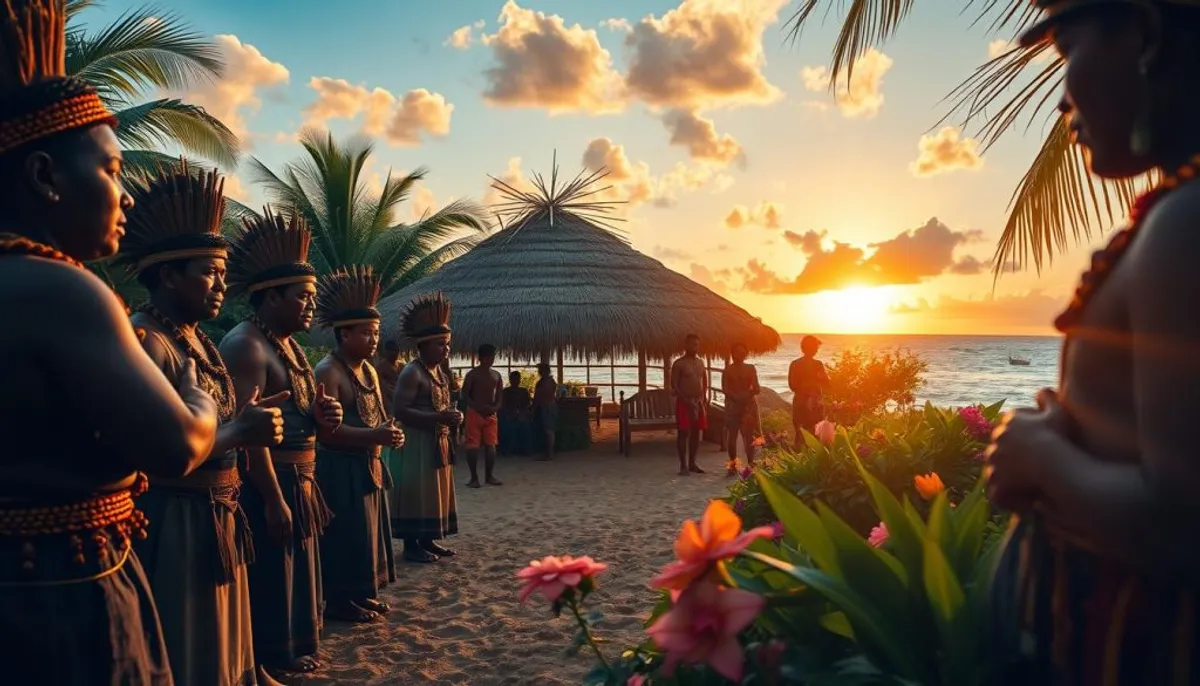
Melanesian culture constitutes the identity core of this region. It manifests through vibrant ancestral traditions and a unique social organization. This immaterial wealth coexists with remarkable material heritage, creating an authentic cultural experience for visitors. The cultural richness of Madagascar further enriches this fascinating picture.
This article invites you to discover the multiple facets of this captivating culture. We will explore together the rites and ceremonies, traditional dances, and customs that structure the lives of the communities. You will understand why this encounter leaves unforgettable memories for those who take the time to discover it, and how it offers a cultural advantage to the participants.
Key Points
- New Caledonia has about 270,000 inhabitants spread across different communities
- Melanesian culture represents a fundamental element of the territory's identity
- Kanak heritage includes ancestral rites, dances, and customary ceremonies
- Traditional social organization still structures contemporary life
- Visitors discover a welcoming people after initial exchanges
- The archipelago offers a unique cultural experience in the Pacific world
- This article explores living traditions and immersive experiences
Introduction to Kanak Culture
Discover the ancestral pillars that support the unique social structure of this indigenous community. This rich tradition finds its roots long before the 18th century and the arrival of European explorers.
Origins and Core Values
The history of the Melanesian people dates back several millennia, with a origin deeply rooted in foundational myths. The indigenous population developed a harmonious view of the world long before contact with the West.
The core values have structured this society for centuries. Respect for ancestors and the sacred bond to the nurturing land guide relationships among the inhabitants. Community solidarity prevails over individualism.
The arrival of missionaries in the 19th century marked a historical turning point. Despite external influences, the principles of reciprocity and exchange endure. The philosophy of living together remains at the heart of Caledonian identity.
Kanak Traditions and Customs
The custom system represents the backbone of social relations in the indigenous community. This ancestral practice governs all significant exchanges in community life.
Traditional Rites and Ceremonies
The major milestones of existence give rise to specific celebrations. Birth, initiation, and marriage follow well-established protocols.
The pilou animates these significant moments. This traditional dance particularly accompanies the yam cultivation cycles.
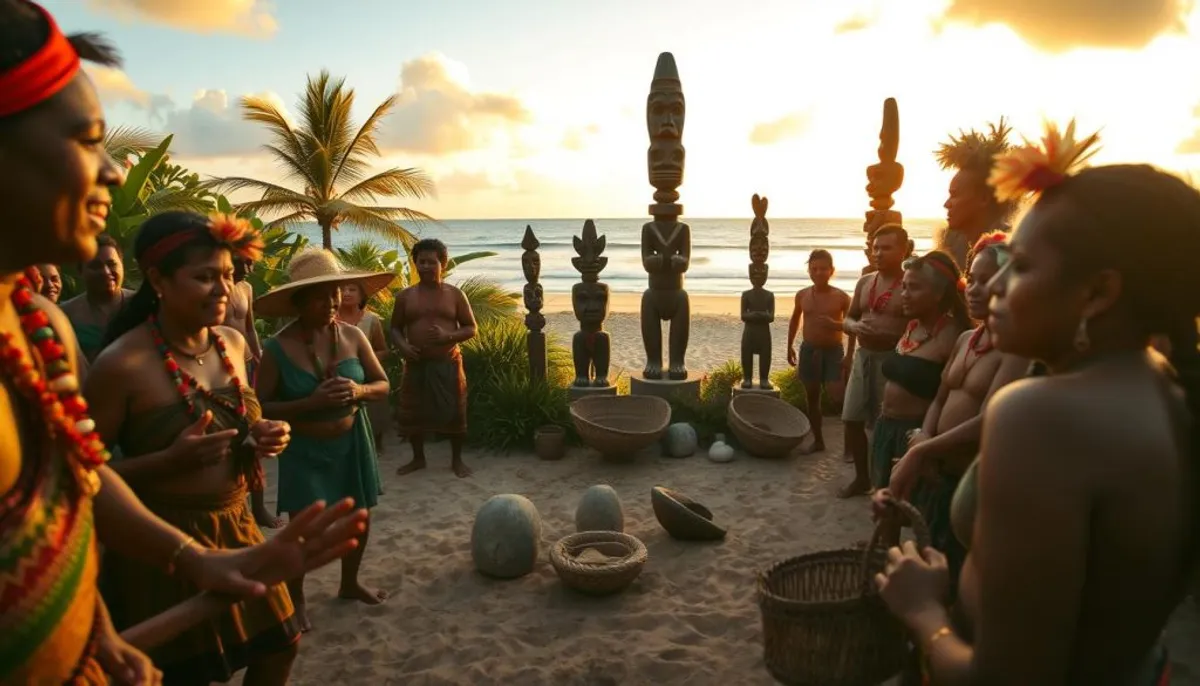
This sacred tuber symbolizes honor and ancestors. Its importance structures the ceremonial calendar of the tribes.
Custom and Its Welcoming Rituals
During a visit to a tribe, the customary gesture is essential. The visitor offers a manou containing a symbolic gift to the chief.
This gesture of welcome establishes a bond of mutual respect. The chief places his hand on the offering and utters words of welcome.
| Occasion | Main Ritual | Meaning | Participants |
|---|---|---|---|
| Birth | Presentation to the clan | Community integration | Extended family |
| Marriage | Exchange of customs | Union of lineages | Two clans |
| Tribal celebration | Collective pilou | Social cohesion | Entire community |
| Official visit | Offering of the manou | Protocol respect | Chief and guest |
These traditions create places of transmission between generations. They maintain the continuity of ancestral customs in contemporary society.
Social and Family Life in Kanak Clans
New Caledonia has 341 tribes that form a unique social network in the Pacific. This organization structures the daily life of indigenous communities.
Each tribe groups several clans linked by complex relationships. These links between clans ensure the cohesion of the whole.
Social Organization and Tribal Structure
The society is organized into customary districts led by the Great Chiefs. They oversee several tribes.
The Small Chiefs lead each tribe and represent the interface with the authorities. They ensure the connection between different people.
The clan constitutes the fundamental social unit. It groups families bearing the name of a common ancestor.
Each clan has a specific function such as fisherman or cultivator. This specialization forms the basis of the organization.
The Ancestors' Legacy in the Family System
The family combines matrilineal and patrilineal aspects. The maternal uncle symbolically gives life.
The mother carries the child, while the father assigns the name. This name confers a social place and access to land.
The ancestors remain present in daily life. Their spirits guide important decisions.
Each clan has a large traditional round house. It is built of wood and plant materials.
The central post symbolizes the Great Chief. The ridge pole represents the ancestors and the spirits of the clan.
This architecture is an integral part of social life. It unites people around common values.
Immersive Experiences and Cultural Activities in New Caledonia
Beyond the landscapes, the archipelago reveals its human richness through privileged exchanges. Visitors discover authentic activities that create lasting bonds.
Discovery of Nakamals and Kava
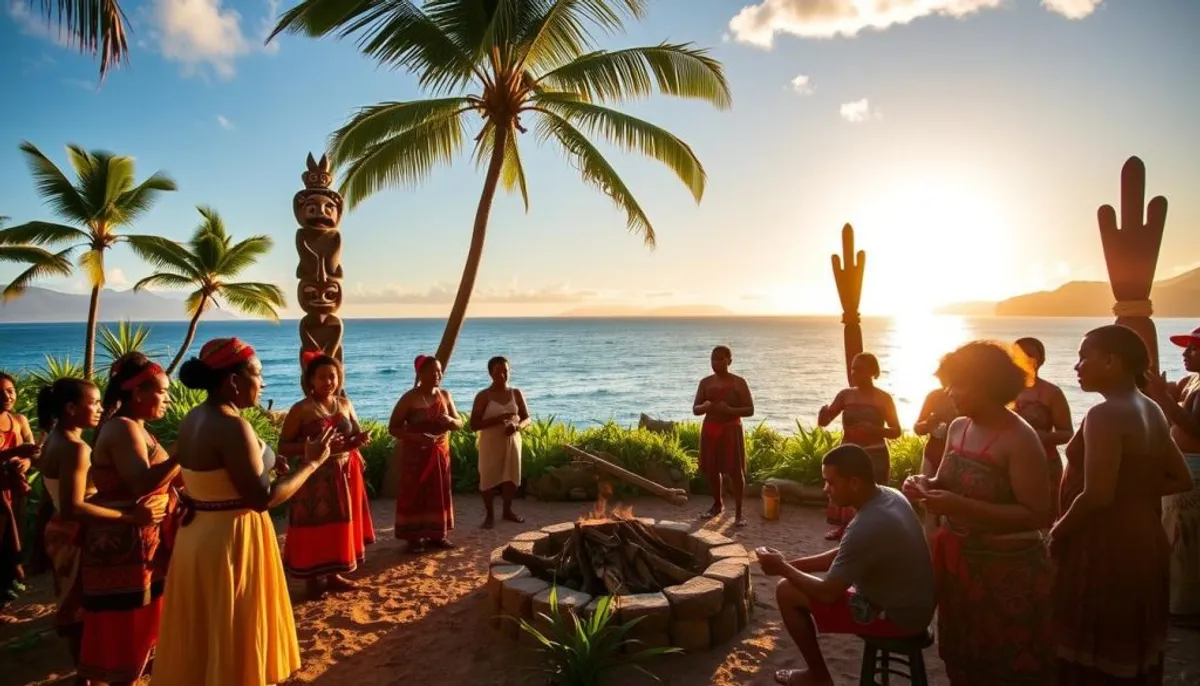
Nakamals are an emblematic meeting place. Marked by colorful lanterns, they welcome all inhabitants at dusk, offering a glimpse into the New York nightlife.
Kava, a relaxing drink made from roots, is shared there. Served in a half coconut, it is consumed according to a precise ritual.
Traditional Canoe and Lagoon Excursions
Paddling a outrigger canoe offers a unique experience. The Bay of Upi at Pin Island reveals majestic landscapes.
This initiation allows for the discovery of ancestral know-how. The transmission occurs from generation to generation.
Weaving and Wood Carving Workshops
The majority of hospitality structures offer craft workshops. Weaving coconut palm leaves creates utilitarian and decorative objects.
Wood carving reveals the symbolism of traditional patterns. These activities often take place in a traditional house.
The Tjibaou Cultural Center and the various islands provide a conducive environment for these discoveries. Each place thus becomes a space of art and sharing.
The Role of Heritage in Kanak Culture
Since the 19th century, a unique system for preserving ancestral lands structures the territorial organization. Indigenous reserves ensure the protection of customary lands for future generations.
Preservation of Customary Lands and Ancestral Knowledge
The archipelago has 58 districts and 8 customary areas on Grand Terre and the islands. This organization forms the basis for land management for the entire population.
The chiefs play a central role in this preservation. The district chief and the tribal chiefs work with the authorities to protect the heritage.
| Administrative Level | Number of Units | Main Role | Representation |
|---|---|---|---|
| Customary Areas | 8 | Regional Coordination | Customary Council |
| Districts | 58 | Territorial Management | Great Chief |
| Tribes | 341 | Community Life | Tribal Chief |
| Reserves | Multiple | Land Protection | Communities |
The transmission of knowledge forms an essential part of this preservation. The elders teach the young traditional techniques.
The Tjibaou Cultural Center, within the country, enhances this heritage. It showcases the art and traditions of most tribes in New Caledonia.
Conclusion
Your journey to New Caledonia can become a transformative encounter. The exceptional richness of Kanak culture constitutes a unique living heritage, blending millennia-old traditions with contemporary adaptations.
To truly understand this culture, direct immersion with the communities is essential. Avoid superficial tourist observations and opt for authentic exchanges within the tribes.
Intergenerational transmission keeps the entire heritage alive despite modernization. Ancestral knowledge continues to be shared between young and old.
Participate in customary welcomes while respecting the protocols. This profound human experience transforms your perception of the world and leaves unforgettable memories.
Experience this fascinating culture that testifies to a harmonious vision with nature. Your personal discovery will enrich you sustainably.
FAQ
What exactly is "custom"?
Custom is a set of rules and gestures that organize life in society. It governs exchanges between clans, respect for ancestors, and the welcome of people. It is the basis of living together on the islands.
How is traditional society organized?
The structure relies on tribes and clans, each with its great chief. Customary lands are at the center of this organization, linking the population to its environment and heritage.
What does the ridge pole on a house symbolize?
The ridge pole, often carved from wood, is a pillar of local art. It represents the spirits of the ancestors and the link between the world of the living and that of origins. It crowns the house, an important gathering place.
What activities allow you to discover these traditions?
You can participate in weaving workshops, attend ceremonies like the pilou, or share a welcoming gesture around kava in a nakamal. Excursions in traditional canoes also offer a great immersion.
What is the role of customary authorities today?
The chiefs and great chiefs play an essential role in preserving ancestral knowledge. They ensure respect for the lands and customs, ensuring transmission to new generations.