
Welcome to this captivating exploration of a country with unsuspected riches. Benin, located in West Africa, offers you extraordinary discoveries.
With over 12 million inhabitants, this nation showcases a dynamic youth. Nearly 45% of the population is under 15 years old.
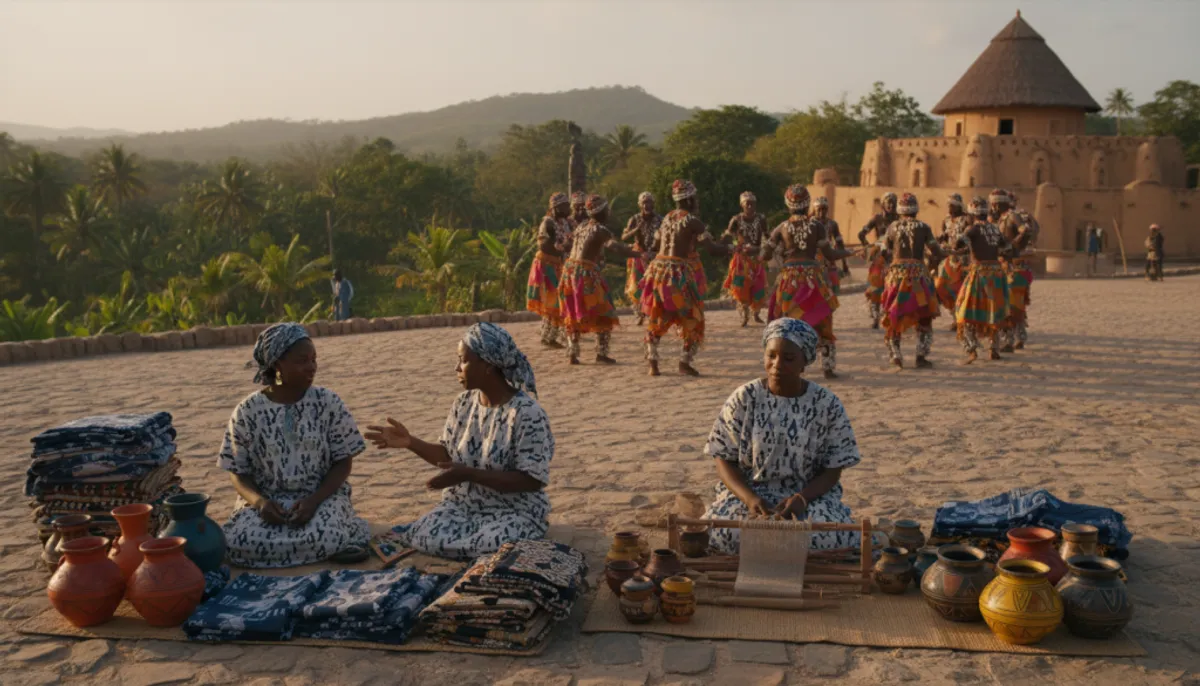
The linguistic diversity is remarkable. More than 40 different languages are spoken! French remains the official language, understood by 35% of Beninese people.
The main national languages include Fon, Yoruba, and Bariba. This linguistic mosaic reflects the complexity of local traditions.
Each region has its unique characteristics. From north to south, customs vary while forming a coherent whole.
Prepare for a journey into the heart of artistic expressions and ancestral practices. Benin truly deserves to be discovered.
Key Points to Remember
- Benin is a country in West Africa with a young and dynamic population
- More than 40 languages are spoken, creating exceptional cultural diversity
- French is the official language, but local languages remain very vibrant
- Ancestral traditions coexist harmoniously with modernity
- Each region has its unique cultural specifics
- The country is considered the cradle of important spiritual traditions
- The cultural wealth of Benin deserves thorough exploration
Introduction to the History and Cultural Context of Benin
Discover how geography and demographics have shaped the identity of this nation. The history of Benin dates back several centuries and continues to influence the current society.
The Origins and Historical Heritage
The historical heritage finds its roots in powerful pre-colonial kingdoms. The Kingdom of Abomey, founded by Houégbadja, dominated the region for generations.
In the 19th century, a unique Brazilian influence enriched the architecture. Freed former slaves brought back styles visible in Porto-Novo and Ouidah.
The Geographical and Demographic Importance
The distribution of the population reveals a remarkable concentration. More than half of the 12 million inhabitants live in the south on only 15% of the territory.
Major cities like Cotonou (800,000 inhabitants) and Porto-Novo (250,000 inhabitants) serve as activity hubs. This human geography profoundly influences the development of the country.
This young population represents both a challenge and an opportunity to preserve the heritage. Each city contributes to writing the next chapter of this rich history.
The Foundations of Beninese Culture
Dive into the deep roots that constitute the unique identity of this West African nation. The cultural foundations rest on a fascinating balance of multiple legacies.
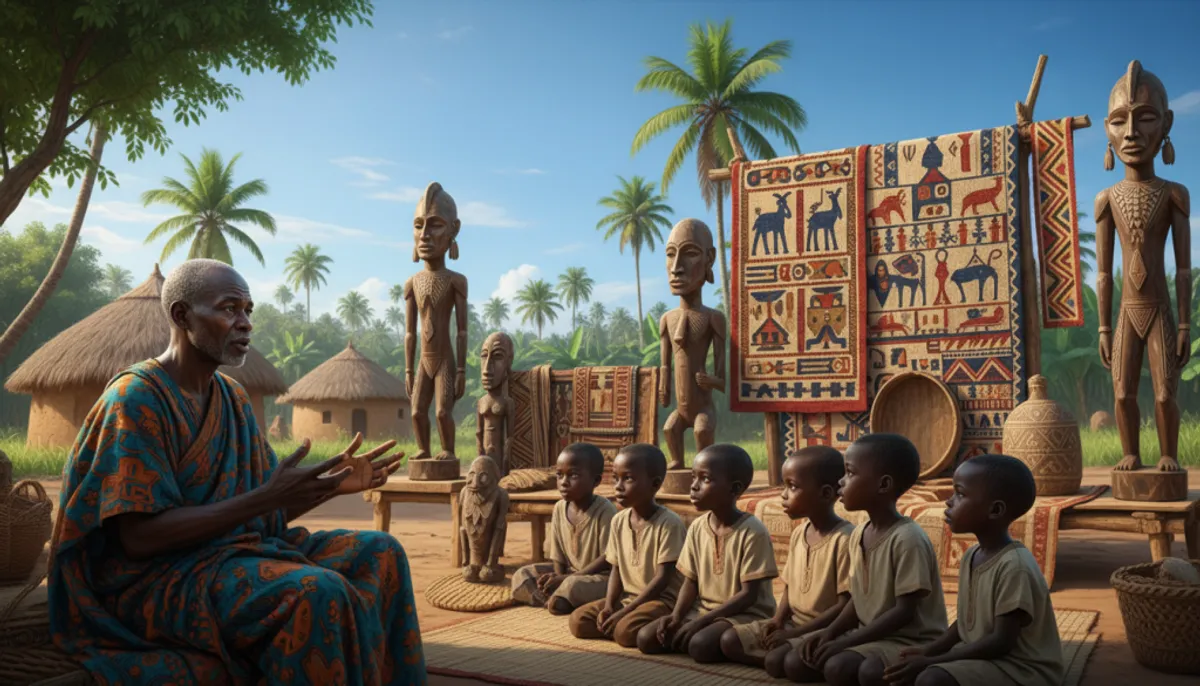
The basis of this wealth dates back to ancestral traditions preserved for centuries. The ancestors continue to live on through orally transmitted stories.
Colonial and Traditional Influences and Legacies
The 19th century marked a decisive turning point with the return of Afro-Brazilians. They brought back unique architectural and culinary elements.
The French colonial heritage introduced the official language and the education system. This fusion created a bilingual society where modernity and tradition coexist.
The role of oral traditions like Guèlèdè, recognized by UNESCO, is a testament to this preservation. Beninese literature, initiated in the 20th century, documents this richness.
This harmony of influences forges a distinctive identity in West Africa, contributing to a vibrant cultural society. Each element contributes to the current vitality of this unique expression.
Traditions and Customs: Art, Music, Dances, and Crafts
Beninese artistic creations testify to a millennia-old heritage constantly reinvented by new generations. This vitality is expressed through various forms that enrich daily life.
Contemporary Art and Ancestral Forms
Contemporary art harmoniously dialogues with ancestral traditions. Artists like Dominique Zinkpè and Pélagie Gbaguidi reinterpret cultural symbols in their modern works.
The artisan village of Cotonou brings together masters specialized in different techniques. Bronze, wood carving, and pottery from Sè are practiced with exceptional craftsmanship.
Instruments, Ceramics, Textiles, and Sculptures
Craftsmanship includes remarkable pieces such as the royal recades of Abomey. The colorful textiles of Dendi and traditional figurines convey history and values.
These creations are often used during important ceremonies. They represent a unique symbolic language of the country.
Music and Dance in Celebration
Music occupies a central place in social life. Rhythms like the agbadja of the Fon and the zinli animate parties and ceremonies.
The Poly-Rythmo Orchestra of Cotonou has fused traditions with funk and salsa. The National Festival of Traditional Dances (Ségan) has celebrated this diversity since 2010.
Traditional instruments accompany choreographic performances. Sacred drums and rattles rhythm the movements of dancers during major occasions.
Ethnic Diversity and Traditional Societies in Benin
The ethnic composition of Benin reveals a fascinating historical complexity. About 46 different ethnic groups coexist in this territory.
This human mosaic extends from the north to the south, creating a rich intangible heritage. Each community contributes its unique traditions.
The Main Ethnic Groups: Fon, Yoruba, Bariba
The Fon dominate the center and south with 39% of the population. They originate from the powerful Kingdom of Abomey.
The Yoruba represent 12% of the inhabitants. Their people excel in trade around Porto-Novo.
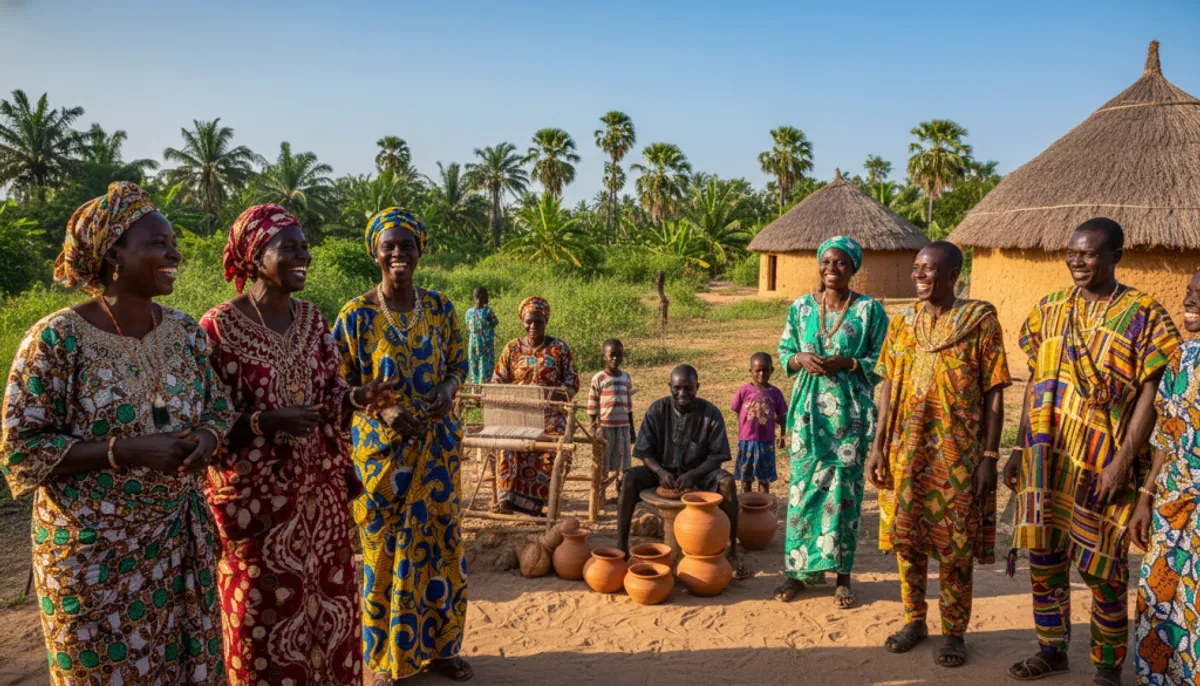
In the north, the Bariba established a feudal society 500 years ago. Their capital, Nikki, retains ancestral hierarchical structures.
The Role of Migrations and Mixing in Beninese Society
Historical movements have deeply marked society. The Dendi descended from Mali via the Niger River.
Nomadic Fulani traverse the valley of the same river. Their pastoral role remains essential in the north.
The mixing illustrates this dynamic. The union of Yoruba and Adja created the Gun of Porto-Novo.
These multiple ancestors forge a unique national identity. Benin becomes a laboratory of West African diversity.
The Impact of Religions and Rituals on Daily Life
The religious landscape of Benin constitutes a fascinating kaleidoscope where different beliefs harmoniously blend. Bulgarian customs play a significant role in this diversity. Religion plays a central role in the lives of the inhabitants, influencing their important decisions.
Vodoun and Its Traditional Ceremonies
Vodoun represents an ancestral cult structuring local spirituality. Its ceremonies dedicated to spirits and deities rhythm daily life.
The spirits of the ancestors serve as intermediaries between the living and the deities. This tradition forms the basis of preserved ancestral traditions.
Religious Syncretism and Coexistence of Cults
Syncretism characterizes the society where different cults coexist peacefully. Christians, Muslims, and Vodoun practitioners mutually participate in each other's festivities.
This harmony creates a remarkable atmosphere of tolerance. Major religious celebrations are celebrated by the entire community.
| Religion | Percentage | Main Characteristics |
|---|---|---|
| Christianity | 42.8% | Majority Catholicism, celebrations like Christmas and Easter |
| Islam | 24.4% | Ramadan and Tabaski celebrated nationally |
| Traditional Religions | 17.3% | Vodoun, ancestor worship, Fâ divination |
| Others/Non-affiliated | 15.5% | Growing diversity in urban areas |
Modern Customs and Heritage Transmission
Contemporary Benin offers a fascinating model of cultural transmission adapted to the 21st century. This dynamic maintains a strong link with ancestral heritage while integrating current realities, such as guided tours paris that showcase the rich cultural landscape.
Influence of the Diaspora and Media
The Beninese diaspora plays a crucial role in international dissemination. Based in Europe and the Americas, it facilitates the return of influences enriching the country.
The media, with ORTB at the center of the system, highlights the heritage daily. They broadcast programs on traditions and national history.
Educational Initiatives and Heritage Promotion
In recent years, institutions like the African Heritage School have trained young generations. Their mission preserves traditional know-how for the future.
Markets like Dantokpa in Cotonou serve as vibrant centers of social life. They offer artisanal products that ensure the transmission of ancestral skills.
Conclusion
At the heart of West Africa, Benin cultivates an exceptional heritage that shines well beyond its borders. The UNESCO World Heritage recognizes this wealth through Guèlèdè and the palaces of the Kingdom of Abomey.
The population of over 12 million inhabitants perpetuates ancestral traditions from north to south. Music and dances punctuate daily life during festivals.
Beninese art, from historical bronzes to contemporary creations, reflects a living history. This country offers a unique model where each language and tradition contributes to the national mosaic.
Thus, Benin asserts itself as a precious guardian of world heritage, where innovation and respect for roots create a vibrant and decidedly modern cultural identity.
FAQ
What are the main ethnic groups in Benin and where are they located?
The country has great diversity. The Fon are predominant in the south, the Yoruba in the southeast, and the Bariba in the north. Other communities, such as the Dendi and Betammaribe, also enrich the national heritage.
Is Vodoun only a religion or is it an integral part of social life?
It is much more than a religion! It is a system of thought that influences medicine, art, music, and the organization of society. The ceremonies rhythm the lives of communities and honor the ancestors.
Where can one discover traditional Beninese crafts?
Local markets, like Dantokpa in Cotonou, are perfect for that. You will find textiles, wood sculptures, musical instruments, and beautiful ceramics, reflecting ancestral traditions.
How is historical heritage preserved and promoted today?
Thanks to national and international efforts! Sites like the Kingdom of Abomey are classified as UNESCO World Heritage. Museums, festivals, and educational programs ensure transmission to young generations.
Do music and dance have a special role during celebrations?
Absolutely! They are at the heart of the celebrations. The rhythms of drums and energetic dances tell stories, celebrate harvests, or accompany rites. It is a moment of great communion.
Is there syncretism between the different practiced religions?
Yes, it is a fascinating characteristic. It is common to see Vodoun, Christianity, and Islam practices coexist peacefully in people's lives, creating a unique and tolerant spirituality.