Welcome to the captivating universe of Hungary. This Central European country has a strong identity forged by a tumultuous history. Located at the crossroads of several civilizations, its heritage is a unique blend of Eastern and European influences.
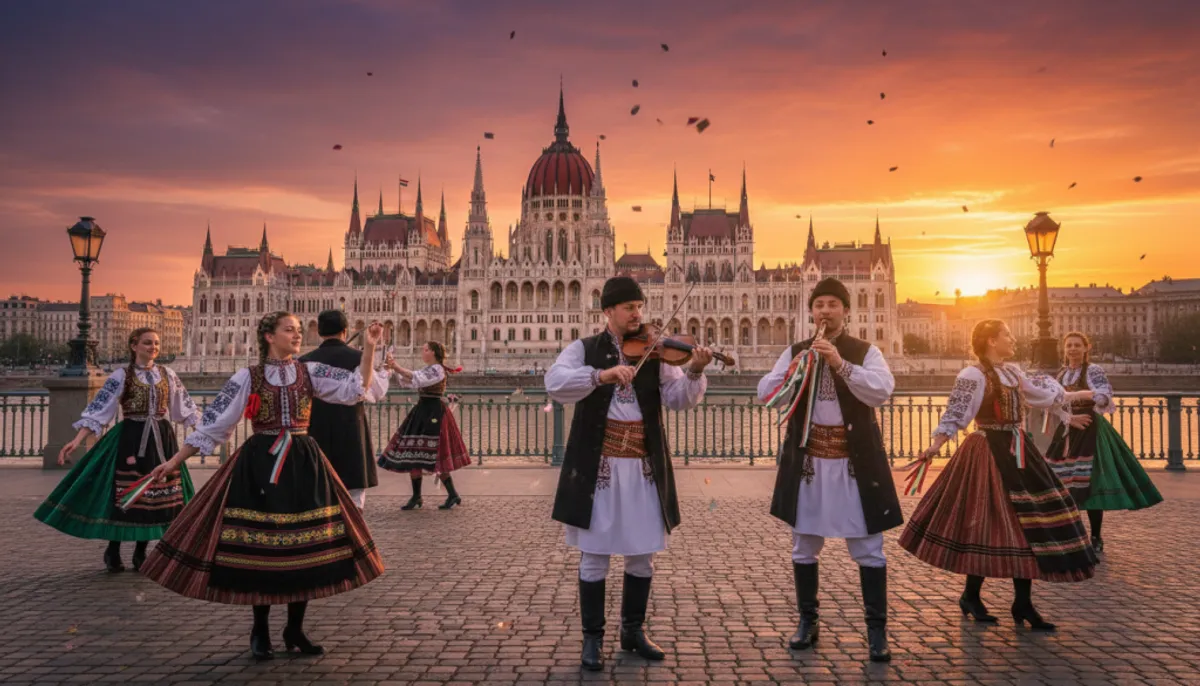
The origins of the Magyar tribes and the Ottoman presence have profoundly marked its development. This rich culture manifests vibrantly in its folklore, music, and craftsmanship. From traditional dances to delicate embroidery, every detail tells a story.
We will explore together the many facets of this nation. From its fascinating history to its delicious gastronomy, through its national symbols and folk festivals. Get ready for a journey into the heart of living traditions and an authentic way of life.
Key Points to Remember
- Hungary is located at a unique cultural crossroads in Europe.
- Its heritage is marked by Eastern and Ottoman influences.
- Folklore, including dance and music, is particularly rich here.
- Traditional craftsmanship (pottery, embroidery) remains very much alive.
- The Hungarian language is unique in Europe.
- Gastronomy is a central element of its identity.
- The country's complex history has shaped its current culture.
Introduction to Hungarian Culture
Hungary reveals itself as a true cultural kaleidoscope at the heart of Europe. This nation has about 10 million inhabitants and presents remarkable diversity.
Key Concepts and Cultural Diversity
The Magyar identity is based on a deep attachment to traditions. A sense of community and openness to modernity characterize this society.
The territory is home to numerous national minorities. These communities enrich the heritage with their own traditions.
| Minority | Population | Main Regions | Cultural Contributions |
|---|---|---|---|
| German | 220,000 | Transdanubia | Architecture, gastronomy |
| Roma | 600,000 | Everywhere | Music, craftsmanship |
| Slovak | 17,693 | North | Folklore, traditions |
| Croatian | 15,620 | South | Dialects, customs |
| Armenian | 32,000 | Budapest | Commerce, arts |
Historical and Geographical Influences
The strategic position at the crossroads of Central Europe has favored constant exchanges. Neighboring regions have marked the country's development.
The Ottoman, Austrian, and Soviet occupations have shaped the national identity. These diverse influences create a unique synthesis.
The Magyar diaspora exceeds 5 million people worldwide. Hungarians abroad keep the traditions alive.
This tumultuous history has forged a resilient character. The heritage preserves its authenticity while evolving.
Origins and Historical Evolutions
The Eastern tribal origins form the foundation of national evolution. This past rich dates back to the migrations of the Magyar tribes from the Ural Mountains.
Ottoman and Tribal Influences
The seven Magyar tribes conquered the Carpathian Basin at the end of the 9th century. This settlement, called Honfoglalás, marks the beginning of a fascinating history. Hungarian chronicles preserve this ancestral memory.
The Ottoman occupation lasted over 150 years. It left a remarkable architectural legacy. The thermal baths and some transformed mosques testify to this influence.
The founding myths include the Turul, a mythological bird and ancestor of the Árpád. The legend of the miraculous stag still guides the collective imagination. These tales form a lively oral tradition.
Through the centuries, the medieval kingdom evolved into a modern democracy. This complex history continues to shape the national identity today.
National Symbols and Traditions
The symbolic heritage of the country unites generations around common values. These emblems tell a rich story and preserve the collective memory.
The National Anthem and Iconic Emblems
The Himnusz, national anthem, expresses a deep attachment to the homeland. This patriotic poem set to music evokes the trials and hopes of the people.
Among the symbols, the Turul, mythological bird, embodies the divine strength of origins. The tulip, an emblematic flower, has adorned folk art for centuries.
Festivals and Rituals Related to Heritage
The calendar includes several memorable dates. March 15 commemorates the revolution of 1848, while August 20 celebrates Saint Stephen, the founder of the state.
October 23 marks both the revolution of 1956 and the proclamation of the Republic. These events strengthen the sense of national belonging.
January 1 and Christmas celebrations keep family traditions alive. These moments bring loved ones together around specific rituals.
Myths, Legends, and Folklore
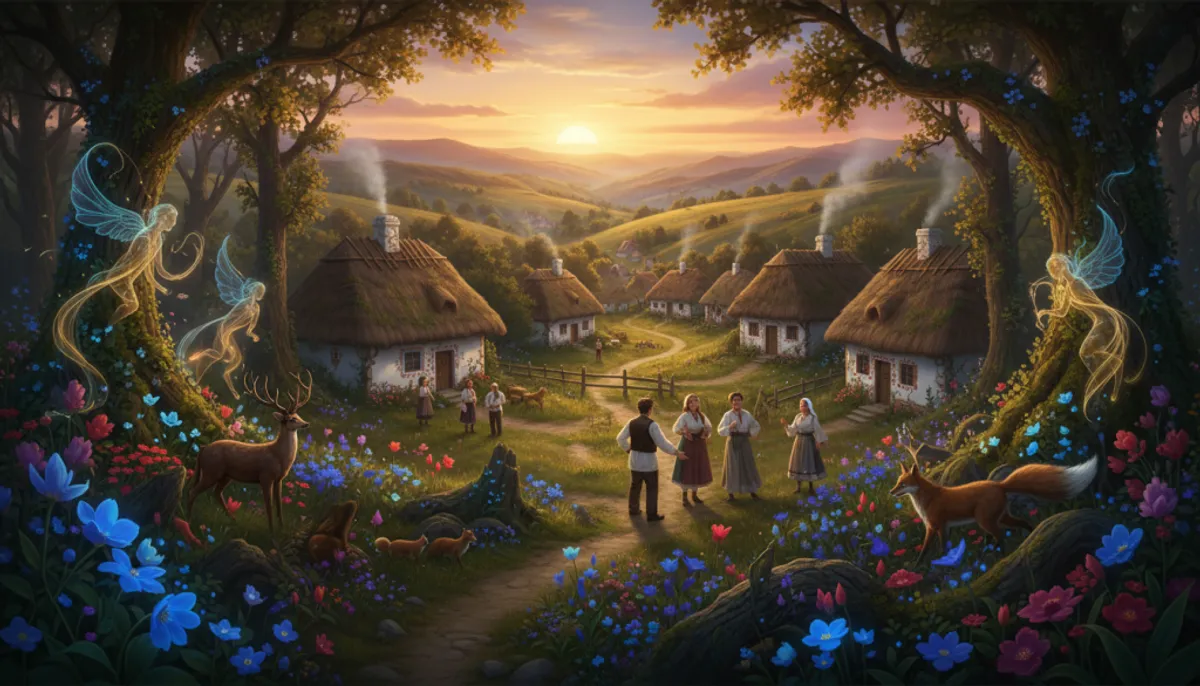
Hungarian folklore transports its listeners into a world populated by fantastic creatures and legendary heroes. These ancestral tales preserve the collective memory.
Mythological Narratives and Legendary Characters
Hungarian mythology presents captivating figures like the Turul, divine bird and messenger of the gods. The Sárkány guards treasures while the Ördög embodies cunning in popular tales.
The founding legends include Hunor and Magor, twin brothers and ancestors of the tribes. The miraculous stag is said to have guided the peoples to their promised land.
Folk Dances and Traditional Tales
The Csárdás represents the national dance with its slow and fast movements. Other forms like the Verbunkos and Legényes enrich this choreographic tradition.
The Táncház movement, created in 1972, revitalizes these practices. Young generations learn the steps, the music, and ancestral songs.
Folktales feature brave heroes and talking animals. Shamanic elements testify to ancient beliefs.
The white horse symbolizes nobility and freedom in this rich folklore. It remains present in contemporary life through traditional horseback riding.
Art and Craftsmanship: Living Heritage
Hungarian craftsmanship reveals a treasure of creativity preserved through the ages. This cultural heritage testifies to centuries of know-how passed down from generation to generation.
Traditional Craft Techniques, Including Matyó
The Matyó embroidery represents one of the most famous artistic expressions. This flat stitch technique creates colorful floral patterns, particularly stylized roses.
The town of Mezőkövesd, in the northeast, is the cradle of this unique art. Visitors can discover artisans' workshops and acquire authentic objects.
Among other remarkable techniques, there are delicate lace and decorative paintings on furniture. Woodworking produces exceptional pieces like kopjafa and Székelykapu.
| Type of Craft | Main Region | Characteristics | Traditional Use |
|---|---|---|---|
| Matyó Embroidery | Mezőkövesd | Colorful floral patterns | Folk costumes |
| Herend Porcelain | Herend | Refined tableware | Table art |
| Zsolnay Ceramics | Pécs | Iridescent glazes | Architectural decoration |
| Kékfestés | Rural Regions | Blue-white textile printing | Domestic textiles |
The Herend and Zsolnay porcelain factories enjoy worldwide fame. Their creations combine technical excellence and artistic inspiration.
The Kékfestés, an ancestral textile printing technique, produces distinctive blue and white patterns. These craft traditions enrich daily life and celebrations.
Contemporary designers like Ernő Rubik perpetuate this creative heritage. They blend modern innovation with respect for ancestral traditions.
Traditional Cuisine and Beverages
Hungarian culinary art offers a unique sensory experience in Central Europe. This cuisine represents a remarkable fusion of French elegance adapted through Austria and rustic dishes of Asian origin.
Authentic Gastronomy and Signature Dishes
Goulash perfectly embodies this culinary synthesis. It comes in two iconic versions: the thick stew and gulyásleves, a generous soup.
These preparations owe their characteristic color to red paprika. This spice forms the aromatic base of many dishes in the country.
Among the must-try specialties are spicy fish soup and chicken paprika. Stuffed peppers and Debrecen sausages complete this culinary picture.
| Traditional Dish | Type | Main Ingredients | Region of Origin |
|---|---|---|---|
| Goulash | Stew/Soup | Beef, paprika, potatoes | Great Plain |
| Stuffed Peppers | Stuffed Vegetable | Bell pepper, minced meat, rice | Szeged |
| Debrecen Sausage | Charcuterie | Pork, smoked paprika | Debrecen |
| Palacsinta | Dessert | Crepes, sweet/savory filling | Hortobágy |
Iconic Beverages: Pálinka and Others
The pálinka represents the national spirit, distilled from various fruits. Its alcohol content can reach 70%, traditionally consumed as an aperitif.
Hungarian wines enjoy worldwide acclaim, notably Tokay, known as the "Wine of Kings." The Egri Bikavér and wines from Balaton complement this rich offering.
The tradition is to toast with the expression egészségedre, but never with beer. This custom dates back to the historical events of 1849.
National Holidays and Celebrations
The rhythm of the year in Hungary comes alive with a particularly rich festive calendar. These special days blend ancestral traditions and modern commemorations.
Festive Calendar and Notable Holidays
The year starts strong with New Year's Day on January 1. Spring brings two major festivals:
- March 15 honors the revolution of 1848
- August 20 celebrates the foundation of the state
- October 23 commemorates the revolution of 1956
During Easter, women decorate artistic eggs. The custom of sprinkling tends to disappear.
The village of Hollókő preserves these rites. Its inhabitants wear colorful costumes during events.
At the end of February, the Busójárás Carnival in Mohács dazzles. UNESCO-listed, it chases away winter with wooden masks.
On March 1, red and white bracelets are exchanged. A charming spring tradition.
The name days (névnap) offer an additional occasion for celebration. Each first name has its date in the calendar.
These religious and civil holidays structure the year. They create special moments of sharing with family.
Music and Dance: Hungarian Rhythms
The Hungarian music scene showcases a sound palette ranging from classical airs to folk rhythms. This diversity reflects the country's rich history and openness to external influences.
Classical Melodies and Gypsy Traditions
Composers Béla Bartók and Zoltán Kodály have marked the history of world music. They integrated local folklore into their classical works.
Franz Lehár excels in operetta while Joseph Kosma composes famous French songs. Their legacy endures through generations.
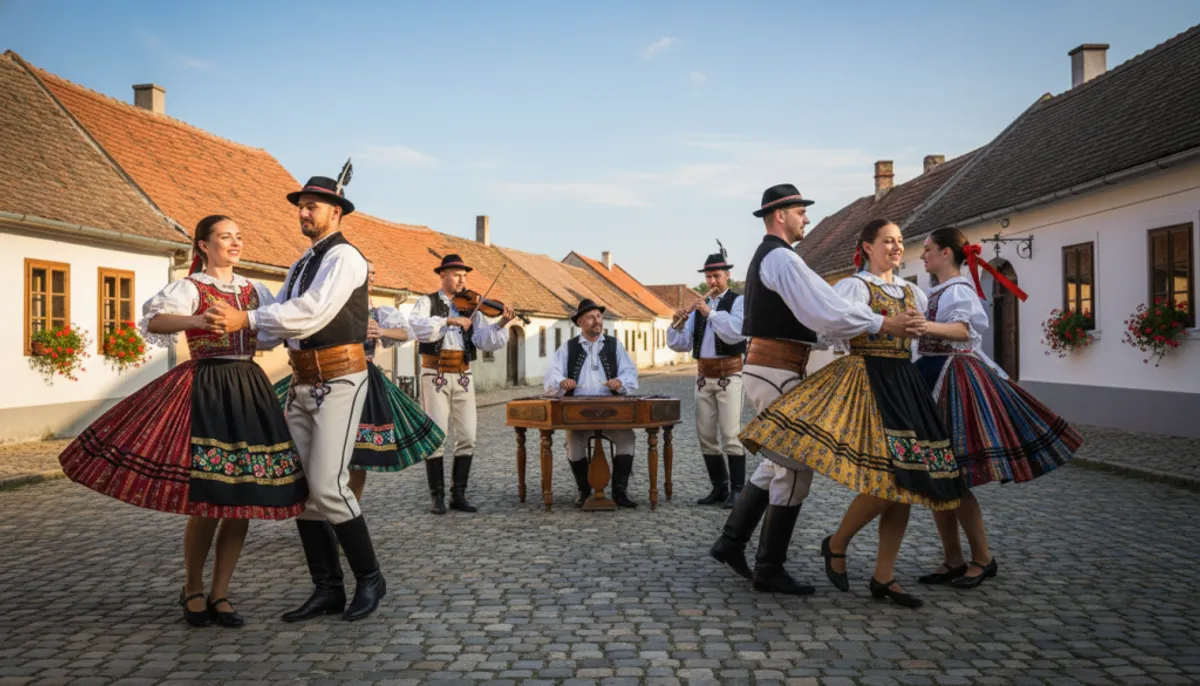
Gypsy music, with its virtuosic violins and cymbalum, deeply moves. This passionate tradition fascinates visitors from around the world.
The State Opera and Franz Liszt University train excellent musicians. These institutions preserve the musical heritage.
The Táncház movement, born in 1972, revitalizes folklore. It creates spaces where dancers and musicians perpetuate regional traditions.
| Festival | Type of Music | Location | Particularity |
|---|---|---|---|
| Sziget Festival | Contemporary | Budapest | 500,000 visitors |
| Miskolc Opera Festival | Classical | Miskolc | International |
| Halmos Béla Festival | Traditional | Gyula Castle | World music |
| VOLT Festival | Rock/Electro | Sopron | Alternative stage |
The festivals animate cultural life throughout the year. Local rock has been developing since 1965, showcasing constant creativity.
The Budapest Café and Budapest Spring Festival celebrate contemporary creation. These events attract an international audience to every venue.
Language, Education, and Literature
The Hungarian linguistic and educational system reveals a unique approach to knowledge transmission. This fascinating language belongs to the Finno-Ugric family, creating a bridge with Finnish and Estonian.
Linguistic Diversity and Educational Institutions
The Hungarian language presents a complex structure with fourteen grammatical cases. Its vowel harmony system and agglutinative nature make it a challenge for learners.
The linguistic landscape includes several minority languages. There are communities speaking German, Romani, Slovak, and Croatian. This diversity enriches daily life.
The educational system offers quality institutions. International high schools like the French High School Gustave-Eiffel in Budapest coexist with reputable universities. Esperanto can be chosen as a foreign language in exams.
| Type of Institution | Notable Example | Specialty | Impact |
|---|---|---|---|
| International High School | French High School Gustave-Eiffel | Bilingual education | Cosmopolitan training |
| Public University | Loránd Eötvös University | Fundamental research | Intellectual elites |
| Language School | Confucius Institute | Oriental languages | International openness |
| Conservatory | Franz Liszt Academy of Music | Musical training | Artistic heritage |
Hungarian literature shines through the centuries. From 15th-century works to contemporary creations, it explores all facets of human life. This literature is an essential part of the heritage.
Among famous authors, Imre Kertész received the Nobel Prize. Magda Szabó, Péter Nádas, and László Krasznahorkai enrich this literature. Their translated works introduce the Hungarian language to the world.
The diaspora keeps the Hungarian language alive abroad. Communities in America and Europe preserve this valuable linguistic heritage.
Diving into Hungarian Culture: Traditions and Modernity
Beyond its ancestral traditions, this nation shines on the world stage. Its influence far exceeds its geographical borders.
Global Impact and Contemporary Evolution
Intellectual excellence is manifested through several Nobel laureates. John Harsanyi in economics and Imre Kertész in literature illustrate this contribution to the world heritage.
The practice of thermal baths dates back centuries. The Széchenyi and Gellert establishments in Budapest attract visitors from around the world. These therapeutic places are an integral part of daily life.
Sports also testify to this international excellence. Swimming and water polo regularly produce Olympic champions. This tradition of physical excellence has endured for generations.
| Cultural Institution | Location | Specialty | Impact |
|---|---|---|---|
| Fine Arts Museum | Budapest | European Art | International Collections |
| National Gallery | Budapest | Local Art | National Heritage |
| Műcsarnok | Budapest | Contemporary Art | Modern Creation |
This society maintains a remarkable balance between preservation and innovation. The world thus discovers a dynamic and resolutely modern culture.
Etiquette and Cultural Differences
For travelers and expatriates, mastering Hungarian manners opens the doors to authenticity. These social codes reflect a culture where respect holds a central place.
Etiquette, Social Codes, and Behaviors
A firm handshake with direct eye contact is the standard greeting. Men wait for women to extend their hand first.
Punctuality is an important marker of respect, especially in a professional context. Arriving late can be perceived as a lack of consideration.
At the table, certain rules naturally apply:
- Wait for the host to start eating
- Taste all the offered dishes
- Avoid toasting with beer
Using formal address is customary in formal situations. Informal address is used only when explicitly offered.
Adaptation Tips for Expatriates
For a successful integration, a few simple principles facilitate daily life. Learning a few words like "Köszönöm" (thank you) shows a genuine willingness to adapt.
Respecting the sensitive history of the country avoids misunderstandings. Avoid negative comparisons with your home nation.
Family and social traditions occupy a central position. Névnap (name days) and sharing meals create authentic bonds.
Patience with bureaucracy and openness make the experience more enjoyable. These practical tips help each journey become an enriching adventure.
Conclusion
At the end of this discovery, it is clear that the Hungarian heritage constitutes a unique European treasure. This exceptional richness results from centuries of history where multiple influences have harmoniously integrated.
From traditional craftsmanship to contemporary arts, every part of this culture deserves exploration. A journey to major cities like Budapest offers the ideal opportunity to discover this diversity.
We encourage you to visit remarkable museums and participate in cultural events throughout the year. From January to the end of December, every tradition celebrated enriches the experience.
This authentic immersion in local life allows for a true understanding of how a country honors its past while building its future. Hungary thus offers a remarkable example of cultural preservation.
FAQ
What are the main influences that have shaped the country and its cultural heritage?
The Hungarian world has been marked by numerous influences over the centuries. The Ottomans left a mark on architecture and cuisine, while the Magyar tribal traditions form the basis of its folklore. The role of the Austro-Hungarian Empire has also been decisive in its history and arts.
Can you name a unique folk tradition?
Absolutely! Matyó craftsmanship is renowned. Originating from the Mezőkövesd region, it is distinguished by its very colorful and complex floral embroidery. This art, passed down from generation to generation, is a jewel of living heritage.
Are there any particularly important holidays or festivals in the calendar?
Yes, several events punctuate the lives of Hungarians. The national holiday on August 20 celebrates King Saint Stephen. March 15 commemorates the revolution of 1848. The end of winter is marked by the Busójárás carnival in Mohács, a spectacular folk event.
Is the Hungarian language difficult to learn for a French speaker?
The Hungarian language, from the Finno-Ugric family, is very different from French. Its grammar and origins may seem complex at first. However, its internal logic and fairly phonetic pronunciation make it easier to learn with motivation!
What is the role of family and social life in this country?
Family occupies a central place. Bonds are generally very strong, and large gatherings for celebrations are common. Social life is often based on a circle of close friends and relatives, where hospitality is an important value.
Which museums or cities would you recommend for a first trip?
For a first immersion, Budapest is a must with its museums like the Hungarian National Museum. The city of Pécs offers a mix of Ottoman and Baroque architecture. To discover rural regions and traditions, a stay around Lake Balaton or in the Great Plain is ideal.