In the heart of Western Europe, a small state fascinates visitors from the world over. This nation, home to nearly 12 million inhabitants, boasts an exceptional cultural wealth. Its geographical location makes it a unique crossroads of French, German, and Dutch influences.
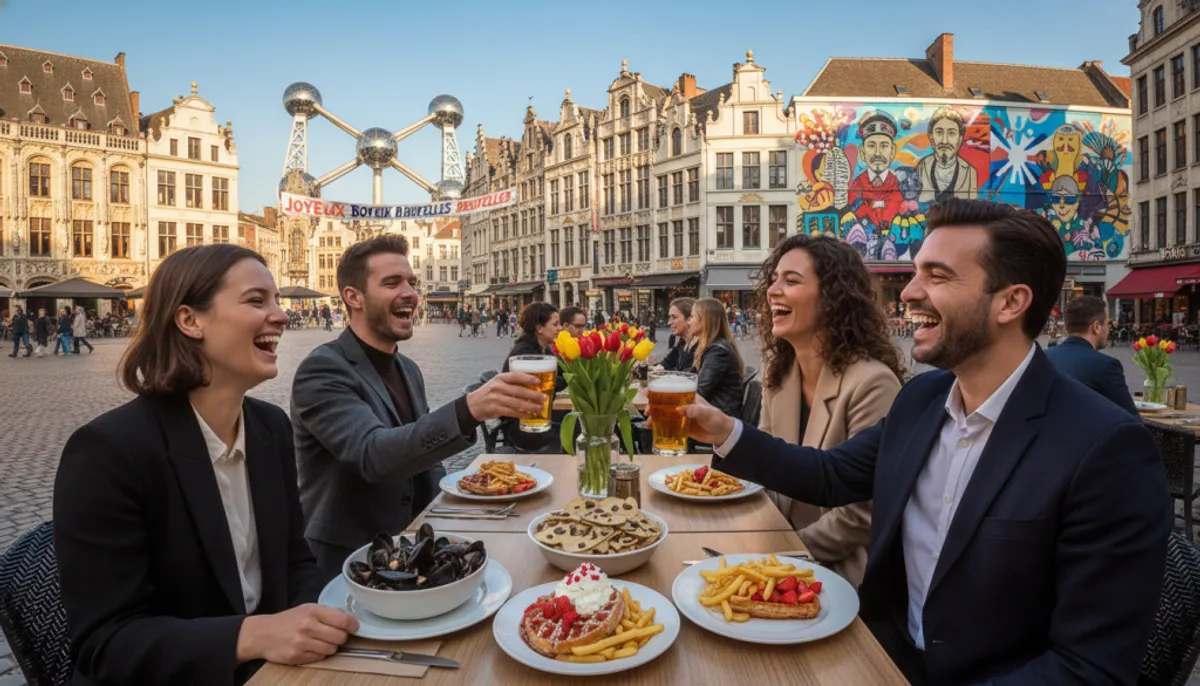
This country harmoniously brings together three distinct linguistic communities. Dutch, French, and German coexist peacefully. This diversity forges a complex yet deeply united national identity. The inhabitants share a remarkable historical and cultural heritage.
Belgium excels in many artistic fields. Its refined art is expressed through renowned gastronomy and exceptional brewing skills. The varied architecture and surrealist movement testify to its creativity. Comics also hold a prestigious place here.
Our exploration will focus on three main axes. We will discover the tumultuous history of this nation. We will dive into its vibrant folk traditions. Finally, we will savor its iconic gastronomy, a true national pride.
Key Points to Remember
- Belgium has three official languages: Dutch, French, and German
- The country serves as a cultural crossroads between French, Germanic, and Dutch influences
- Belgian culture shines in gastronomy, brewing, and architecture
- Surrealism and comics are recognized fields of excellence
- Despite its small size, the country attracts visitors from all over the world
- The three linguistic communities share a common cultural heritage
- The article will explore Belgian history, traditions, and gastronomy
Introduction to Belgian Culture
Three official languages coexist harmoniously in this country with multiple historical influences. This linguistic diversity creates an exceptional socio-cultural context in Europe.
Historical and Socio-Cultural Context
The heritage of this nation results from a long common history. From the Germanic and Roman invasions to the Spanish, French, and Dutch occupations, each period has left its mark.
The independence gained in 1830 consolidated this unique identity. The Catholic religious heritage also plays a significant role, particularly during the Counter-Reformation.
Understanding this past allows for grasping the current regional specificities. The successive influences have created an original mosaic over the centuries.
Objectives and Issues of the Article
Our exploration aims to provide a comprehensive view of this rich culture. We will discover its historical roots, living traditions, and renowned gastronomy.
An important contemporary issue concerns the preservation of heritage. It is about maintaining cohesion among communities while adapting to modern developments.
This article will allow you to discover the multiple facets of this artistic expression. From its ancient origins to its current creations, each aspect finds its place in a coherent whole.
The Historical Roots of Belgian Culture
Since Roman times, this region has undergone multiple political transformations. The successive influences have shaped a unique identity over the centuries.
History reveals how different civilizations exercised their power over this territory. Each period has left lasting traces in contemporary society.
European and Religious Influences
The Catholic Church played a fundamental role during the Counter-Reformation. It encouraged pilgrimages and processions that contrasted with Protestant sobriety.
These popular religious manifestations had a considerable impact on folklore. The influence of the Church has persisted through time.
“The diversity of influences has created an exceptional cultural wealth.”
The Legacy of Occupations and Independence
The path to independence was long and complex. After the Spanish and Austrian occupations, Napoleonic France deeply marked the territory.
In 1830, the proclamation of independence created a sovereign state. This foundational event is celebrated every July 21.
The separation from Luxembourg in 1839 consolidated the current borders. This independence allowed for the development of a unified national identity.
| Period | Dominant Influence | Lasting Legacy |
|---|---|---|
| 15th century | Spanish Netherlands | Religious traditions |
| 18th century | Austrian domination | Baroque architecture |
| French Revolution | French occupation | Napoleonic civil code |
| 1815-1830 | Annexation to the Netherlands | Linguistic tensions |
The tensions between Germanic northern and Roman southern influences created a characteristic duality. This diversity forged a unique society in Europe.
The Artistic Domains and Varied Cultures
Major innovations have emerged from this European cultural melting pot in the arts. This nation has produced revolutionary artistic movements that have marked history.
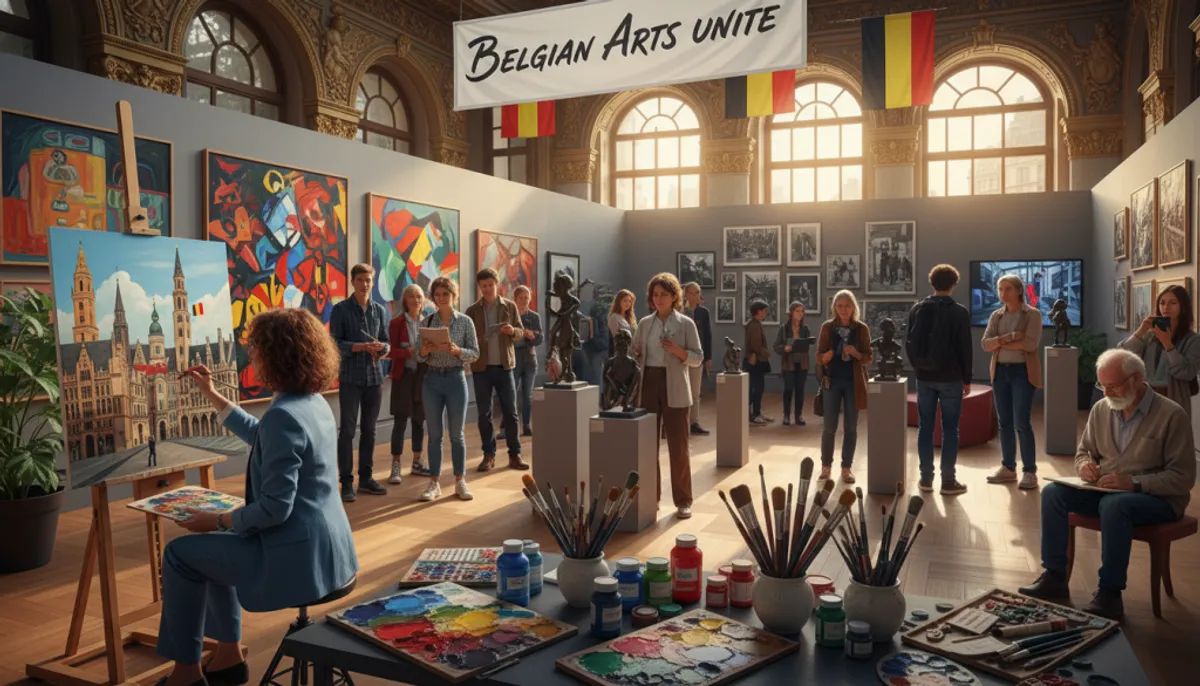
Painting, Architecture, and Art Nouveau
The school of Flemish primitives revolutionized painting in the 15th century. They introduced oil painting techniques and innovative realism.
Art Nouveau was born in 1893 with Victor Horta. His Tassel Hotel represents a major architectural work. This movement influenced European art as a whole.
Comics and Literature
Comics are a true national treasure. Hergé created Tintin, followed by a host of talented authors.
The school of Marcinelle developed the clear line style. This comic has a unique graphic identity. Belgian comics shine internationally.
Music, Dance, and Festivals
The electronic music scene of the 1980s was pioneering. Styles like new beat emerged locally.
Contemporary dance features renowned choreographers. Anne Teresa De Keersmaeker revolutionized stage language. Music and dance animate numerous festivals.
| Artistic Movement | Period | Main Innovation |
|---|---|---|
| Flemish primitives | 15th century | Oil painting |
| Art Nouveau | Late 19th | Organic architecture |
| Comics | 20th century | Clear line |
| Electronic music | 1980s | New beat |
In-Depth Exploration of Belgian Culture
The international recognition of the artistic creations from this territory far exceeds its geographical boundaries. This influence spans several centuries and touches all continents.
The International Influence of Belgian Arts
Maurice Maeterlinck won the Nobel Prize in Literature in 1911. This distinction attests to the literary excellence of the country.
The Flemish painters of the Renaissance were invited to European royal courts. They exported their revolutionary know-how throughout the world.
“The universality of Belgian works transcends borders and eras.”
Hergé is considered the father of European comics. His character Tintin has been translated into over 70 languages.
The surrealist scene includes major figures like René Magritte. His works are exhibited in the greatest museums.
| Artistic Domain | Iconic Figure | International Impact |
|---|---|---|
| Literature | Georges Simenon | Commissioner Maigret translated worldwide |
| Comics | Hergé | Tintin sold 250 million copies |
| Architecture | Victor Horta | Art Nouveau disseminated internationally |
| Painting | René Magritte | Works in museums worldwide |
Belgian Art Nouveau inspired global artistic movements. Victor Horta revolutionized modern architecture.
This creative diversity ensures a constant presence on the global cultural stage. The works continue to influence new generations.
The Traditions and Folklore of Belgium
A rich intangible heritage manifests itself through popular celebrations and age-old rituals. These traditions bring life to the streets and squares of the cities throughout the year.
Popular Rituals and Traditional Festivals
The Binche carnival represents an emblematic celebration with its Gilles in spectacular costumes. This celebration attracts an impressive number of visitors each year.
The Ducasse of Mons, affectionately nicknamed the Doudou, features a ritual combat between Saint George and the dragon. Thousands of spectators attend this theatrical performance.
| Event | City | Period | Particularity |
|---|---|---|---|
| Binche Carnival | Binche | February-March | Gilles and oranges |
| Ducasse of Mons | Mons | Trinity Weekend | Saint George/dragon combat |
| Gentse Feesten | Ghent | July | 10 days of festivities |
| Marches of Entre-Sambre-et-Meuse | Walloon region | May-June | Ancient military costumes |
Legends, Myths, and Processional Giants
The giants of Ath and other monumental figures parade through the streets during processions. This tradition shared with northern France is inscribed in the world heritage.
Manneken-Pis symbolizes Brussels with its legendary story. Till the Trickster and the horse Bayard complete this folkloric pantheon.
The Flemish communities celebrate their holiday on July 11, commemorating the Battle of Courtrai. Belgian traditions continue to evolve with modern events like the Zinneke Parade.
Gastronomy and Iconic Beers
The art of dining is a fundamental pillar of national identity. This gastronomy, renowned worldwide, combines German generosity with French refinement.
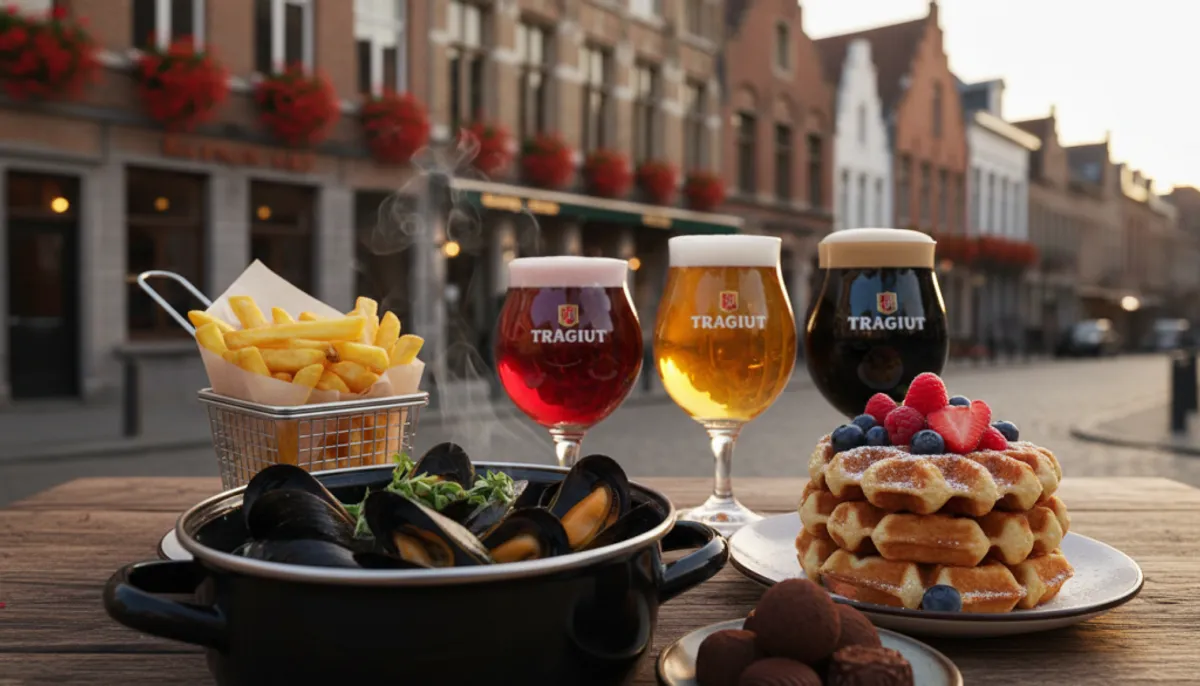
Gustatory pleasures hold a privileged place in daily life. Each region offers its specialties with passion and authenticity.
Culinary Delights: Fries, Chocolates, and Waffles
Fries are a true national institution. Invented in the 19th century near Huy, they are enjoyed in traditional fry shops.
More than 500 artisanal chocolatiers dot the territory. Prestigious brands like Godiva and Neuhaus export their pralines worldwide.
Beer enjoys exceptional international recognition. Inscribed in the intangible heritage of UNESCO, it boasts over 700 varieties.
From Trappist beers to Brussels lambics, the diversity is impressive. This ancestral brewing know-how is a source of pride for the country.
Liège and Brussels waffles accompany indulgent breaks. Speculoos and craquelin complete this pastry tradition.
Regional specialties like Waterzooi or Flemish carbonade tell a unique gustatory story. This authentic gastronomy delights the most discerning palates.
Linguistic Diversity and Regional Identities
Brussels, as a bilingual capital, perfectly embodies the linguistic complexity of this nation. About 60% of its inhabitants speak French, while Dutch complements this unique urban landscape.
The country is divided into three major linguistic regions. In the north, Flanders has 59% Dutch speakers. The southern Walloon region comprises 40% French speakers.
The eastern part is home to a small German-speaking community of about 1%. This distribution results from a long historical evolution.
The law of November 8, 1962, definitively established the linguistic border. In 1977, three administrative regions were created: Flemish, Walloon, and Brussels.
Each community has its flag and national holiday. Regional dialects like Walloon and Western Flemish enrich this diversity.
The language represents a major identity issue. It sometimes creates tensions but also an exceptional cultural richness.
Contemporary Cultural Practices
Belgian cities pulse with the rhythm of major festivals and cultural events. This creative effervescence combines traditional heritage and bold innovations.
Artistic Innovations and Modern Festivals
The electronic music scene has established itself for about thirty years. Pioneering genres like new beat emerged in the 1980s.
Tomorrowland attracts a colossal international audience. I Love Techno and the Festival des Ardentes energize Liège.
The revolutionary fashion of the Six from Antwerp has conquered the international scene. Their original creations win prestigious awards.
The Evolution of Cultural and Educational Practices
The educational system is organized according to linguistic communities. Schools and universities train the talents of tomorrow.
Art schools and conservatories value artistic education. This cultural policy promotes public access to creative practices.
The city of Ghent shines with its 10 Days Off festival. Brussels offers remarkable cultural institutions.
This dynamic ensures vibrant music and awards recognizing artistic excellence. Electronic music continues to evolve with its loyal audience.
Conclusion
The journey through the artistic history of this country reveals a surprising wealth. Despite its small size, the impressive number of Belgian talents has marked European history.
From the painting of Flemish primitives to surrealist works, each century brings its genius. Comics find their most famous authors here, with Hergé as a founding figure.
Music occupies a special place, from Jacques Brel to Stromae. Their musical legacy transcends borders and generations.
Each Belgian city offers a unique journey into this living heritage. The Brussels and Flemish cities invite you to discover this vibrant cultural life.
This school of creation continues to inspire the whole world. Belgian artists prove that cultural greatness does not depend on the size of a country.
FAQ
What is the difference between Flanders and Wallonia?
Flanders, in the north, is primarily Dutch-speaking, while Wallonia, in the south, is French-speaking. These two regions have distinct governments and unique cultural landscapes, particularly in art, music, and even gastronomy.
Which comic book authors are the most famous in Belgium?
The country is the birthplace of many masters of the 9th art. Hergé, the father of Tintin, and Peyo, creator of the Smurfs, are essential figures. Their works have conquered the world and are a source of pride for the local heritage.
Is Belgian beer really that varied?
Absolutely! With hundreds of varieties brewed in abbeys or by artisans, the diversity is immense. From refreshing whites to strong Trappists, each type offers a unique experience, recognized as a UNESCO world heritage.
Is there a national dish in Belgium?
It is difficult to designate just one, but fries, served in a cone with mayonnaise, are an institution! The gastronomy is also famous for its fine chocolates, waffles, and waterzooi, a delicious stew.
What is the significance of Art Nouveau in the architecture of cities?
A very important heritage! Architects like Victor Horta marked Brussels with their style in the early 20th century. Their creations, with their curved lines and ironwork, still attract art lovers from around the world today.
Who are the great names in painting from this country?
The territory has given birth to major artists who have influenced European art. Pieter Brueghel the Elder, with his peasant life scenes, and René Magritte, master of surrealism, are two emblematic examples of this rich past.