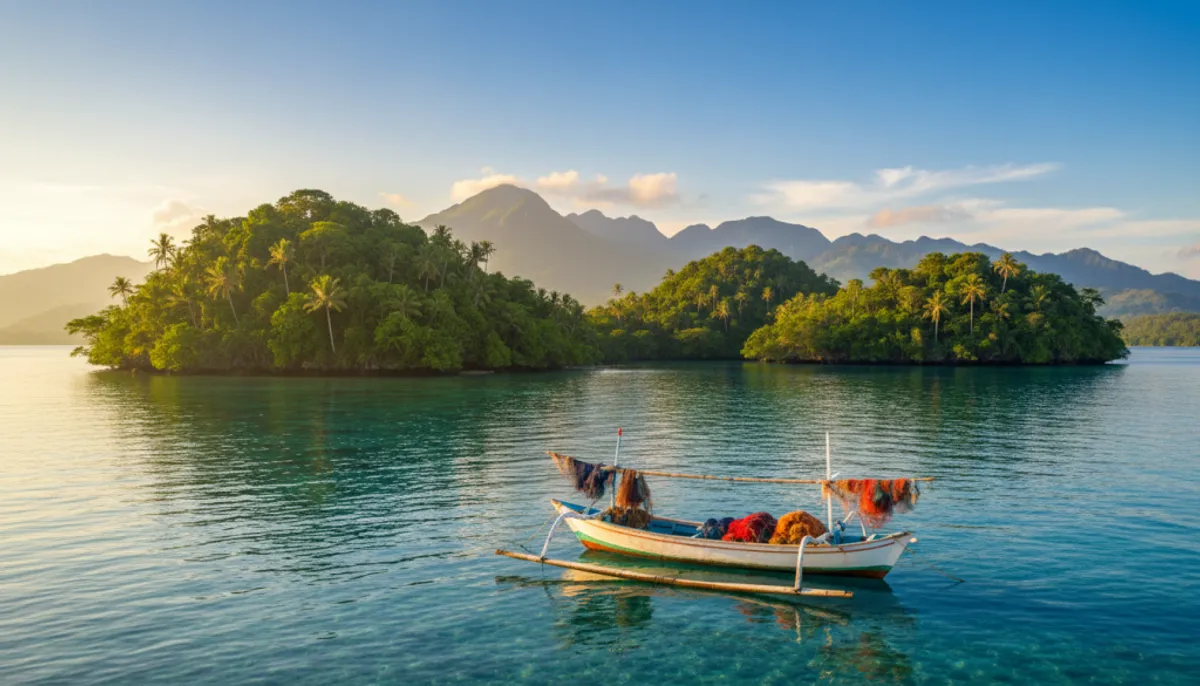
Welcome to a fascinating journey into the heart of an enchanting archipelago. Over 17,000 islands are scattered between mainland Asia and Australia. They form the largest island nation on the planet.
This vast country has approximately 237 million inhabitants. The name "Indonesia" was coined in 1850 by the anthropologist James Richardson Logan. The concept of a unified nation, however, is more recent, emerging in the 1920s.
What strikes immediately is an extraordinary cultural diversity. Each region, such as Java, Sunda, or Bali, has its own customs and languages. This collective creates a mosaic of unparalleled richness.
The identity of this island world is unique. It harmoniously blends ancestral traditions with varied religious influences and modernity. It is a fascinating balance to discover.
Key Points to Remember
- Indonesia is the largest archipelago in the world, with over 17,000 islands.
- The country is home to a population of nearly 237 million inhabitants.
- Its name was created in the 19th century, but the national identity was built later.
- Cultural diversity is immense, with distinct traditions on each island.
- The unique identity of the country results from a mix of traditions, spiritualities, and modernity.
- This harmony between the old and the new forms the heart of its living heritage.
Introduction to Indonesian Culture
The idea of a unified nation has germinated amidst an extraordinary ethnic and linguistic mosaic. This chapter explores how this identity has been constructed.
Historical Origins and Cultural Formation
The modern notion of a nation is recent. It emerged in the 1920s thanks to local political movements.
Independence was proclaimed on August 17, 1945. This date is now the national holiday. Parades celebrate this event every year.
The national army played a key role in the war against the Netherlands. At the same time, the movement for education forged a common identity.
The Budi Utomo, created in 1908, aimed to provide modern education to Indonesians. It laid an essential first stone.
Diversity of Peoples and Languages
With over 750 ethnic groups, the population is incredibly varied. Each island develops its own cultures.
This fragmentation poses a challenge for unity. There are officially 583 languages and dialects.
Thus, bahasa Indonesia has been adopted as a common lingua franca. It allows everyone to communicate from one end of the archipelago to the other.
| Major Ethnic Group | Approximate Population | Geographic Distribution |
|---|---|---|
| Austronesians (e.g., Javanese) | Majority of the population | Across most islands |
| Papuan | About 1 million | Western New Guinea |
| Indonesian Chinese | Significant community | Mainly in urban areas |
This diversity is both the strength and a constant challenge of the country. It shapes its history and daily life.
The Richness of Local Traditions and Customs
From animist rites to grand religious festivals, traditional practices weave the thread of social life. This universe forms a mosaic where each piece has its place and story.
Ancestral Customs and Folk Legends
The heritage draws its strength from beliefs that predate the major religions. Foundational myths, such as that of Ibu Pertiwi, have been told for hundreds of years.
Customs change radically from one island to another. For example, the caste system still structures Bali. In contrast, the Minangkabau traditions in Sumatra give a central role to women in the family.
Ceremonies mark every significant stage. Once in a lifetime, one celebrates the transition to adulthood. Animist practices coexist with more recent rites, creating a unique balance.
Exploring Indonesian Culture
Beyond the landscapes, it is in daily practices that the Indonesian soul reveals itself. This exploration immerses us in a rhythm of life where every gesture has meaning.
Daily Practices and Rites
Rice is much more than a food. It is at the heart of rituals celebrating fertility and prosperity. It is offered as a sign of gratitude.
Spiritual practices are part of daily life. Regular prayers, offerings, and respect for sacred days create harmony. This rhythm honors traditions.
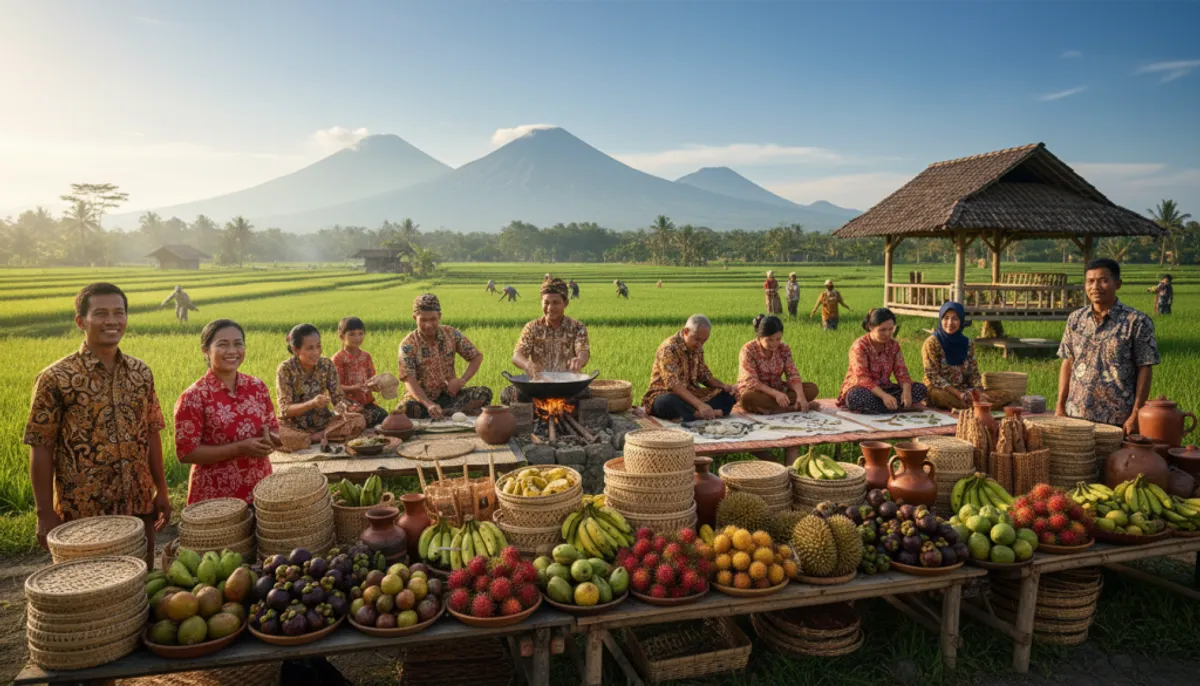
Simple gestures follow precise codes. The way to greet or hand over an object shows deep respect. These customs are passed down from generation to generation.
Cultural Symbols and Foundational Myths
National symbols unite the country. The red and white flag, the Garuda eagle, and the anthem "Indonesia Raya" embody this unity. They are a rallying point for all.
Foundational myths feature heroes. These figures fought for independence and dignity. Today, they are celebrated as National Heroes.
At the center of many villages, there exists a sacred place. It is often a temple, a mosque, or an ancient tree. It symbolizes the link between the community and its spiritual roots.
The Religious and Spiritual Influences
The Indonesian spiritual fabric is characterized by a recognized and protected diversity. Several religions coexist in this country, creating a unique landscape.
Islam, the Pillar of Indonesian Society
Islam is practiced by 85 to 88% of the population. This makes Indonesia the most populous Muslim nation in the world.
The local practice is distinguished by its tolerance. It often integrates animist and Hindu elements. Sharia is not applied, except in the province of Aceh.
Hinduism, Buddhism, and Animist Traditions
Balinese Hinduism is a unique syncretic form. It blends Hindu traditions with local rites. About 4 million people practice it.
Buddhism is maintained primarily by the Chinese community. It represents less than 1% of believers. The Borobudur temple is a major symbol of it.
The state officially recognizes five religions. These are Islam, Protestantism, Catholicism, Hinduism, and Buddhism. Confucianism also enjoys a special status.
Freedom of worship is guaranteed by the constitution. This peaceful coexistence illustrates the national philosophy of Pancasila.
Indonesian Gastronomy and Craftsmanship
Exploring flavors and handmade creations offers another gateway to the heart of the archipelago. Each region reveals its identity through its dishes and art objects.
Iconic Dishes and Culinary Discoveries
Rice is the central element of cuisine. It comes in many specialties like the famous nasi goreng.
Flavors blend chili, coconut milk, and peanuts. You will taste rendang, a spicy beef stew, or grilled satays.
During your journey, always drink bottled water. Enjoy fresh fruit juices made from rambutan or mangosteen.
Traditional Craftsmanship and Authentic Souvenirs
Local craftsmanship is extraordinarily rich. Indonesians excel in batik, a textile inscribed in UNESCO heritage.
You will also find wood carvings and silver jewelry. For example, the markets of Yogyakarta are filled with treasures.
Prefer these authentic souvenirs. Avoid items made from coral or turtle shells to protect the islands and their environment.
The Art and Performance in the Archipelago
Under the moonlight, the shadow of the wayang puppets dances to the rhythm of the gamelan. The performing arts constitute a living treasure. They enchant villages several times a week.
Traditional Dance, Theater, and Puppetry
The wayang puppet theater has been recognized by UNESCO since 2008. It presents the epics of the Mahabharata. Its forms vary from shadows (kulit) to wooden figurines (golek).
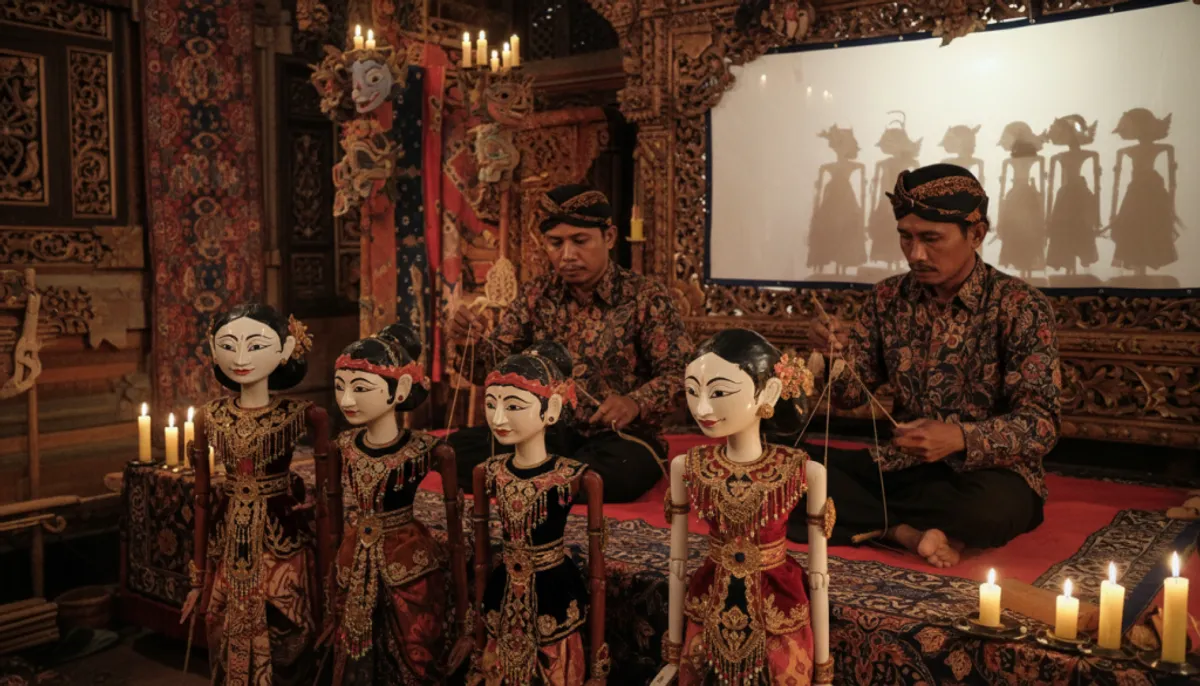
For many years, this theater has served as subtle political critique. The Teater Koma troupe is very popular. The performances gather an entire community.
| Art Form | Type | UNESCO Recognition | Characteristic |
|---|---|---|---|
| Wayang Kulit | Shadow theater | 2008 | Leather puppets |
| Wayang Golek | Wooden puppets | 2008 | 3D figurines |
| Saman Dance | Aceh dance | 2011 | Synchronized movements |
| Gamelan | Musical ensemble | – | Metal instruments |
At the center of each island, dance also expresses myths. The saman dance and Balinese dances are also inscribed in UNESCO. The gamelan orchestra accompanies these arts with its enchanting sounds.
Languages and Cultural Diversity
The extraordinary patchwork of languages in Indonesia tells the story of a nation built on diversity. This country-archipelago officially has over 583 languages and dialects.
Official Language and Rich Dialects
The official language is bahasa Indonesia. Only 13% of the Indonesian population speaks it as their mother tongue. It unites administration and media.
The majority first speaks their regional language. Javanese dominates with 34.8% of speakers. Next are Sundanese and Madurese.
| Regional Language | Percentage of Speakers | Main Region |
|---|---|---|
| Javanese | 34.8% | Central and East Java |
| Sundanese | 13.9% | West Java |
| Madurese | 6.1% | Madura |
| Minangkabau | 3.6% | West Sumatra |
About 70% of the inhabitants regularly use bahasa Indonesia. This lingua franca has colorful local variants. English is the main foreign language, while Dutch is fading away.
Etiquette and Social Customs in Indonesia
Your stay in Indonesia will be much more enriching if you master a few essential rules of etiquette. They facilitate exchanges and show your respect.
Etiquette, Gestures, and Symbols to Respect
The use of hands follows strict codes. The left hand is considered impure.
Avoid using it to eat, give, or receive anything. Instead, offer with both hands to elders.
Body language is crucial. Speaking with hands on hips shows anger. Pointing is very impolite.
Demonstrations of affection in public are rare. Avoid hugs and intertwined dances.
In sacred places, wear a sarong. Cover legs and shoulders. Always remove your shoes.
Practical Tips for Travelers
Adapt your way of dressing. Avoid overly short or low-cut outfits.
Physical contact in public is tolerated between same-sex individuals. Couples maintain distance.
For tips, plan about €5 per day for a guide. About €3 for a driver.
If you wish to help, do not give money in the street. Instead, give structured donations to a village chief.
| Situation | To Avoid | To Prefer |
|---|---|---|
| Use of Hands | Giving with the left hand | Using the right hand or both hands |
| Body Language | Hands on hips, pointing | Discreet gestures, hands together |
| Attire in Sacred Places | Naked arms and legs | Sarong, covered shoulders, shoes removed |
| Behavior in Public | Kissing, dancing intertwined | Reserve, polite distance |
| Donations and Help | Money to beggars | School supplies given to authorities |
Indonesians are patient and smiling. Respond to their friendly greeting. This will make your journey memorable.
Conclusion
In conclusion, Indonesia offers much more than just a tourist destination. This country is a living example of peaceful coexistence among diverse cultures and spiritualities. Islam has been in dialogue with other traditions for years, creating a unique social harmony in the world.
Since its independence, the nation has placed family and mutual respect at the center of collective life. Your journey will have shown you how cuisine and traditional arts shape the daily lives of Indonesians.
Each island adds its color to this mosaic. Whether in a bustling street or during a ceremony, every encounter enriches. At the end of this journey, one understands that education in traditions shapes the future.
For once, the journey does not truly end. The archipelago leaves a lasting imprint on the hearts of those who open themselves to its richness.
FAQ
What is the main characteristic of life in the Indonesian archipelago?
Its diversity is extraordinary. With over 17,000 islands, the country is home to hundreds of ethnic groups and languages. This mosaic of cultures creates a unique living heritage in the world, where each region has its own customs and arts.
How do religions coexist in Indonesia?
Islam is the majority, but Hinduism (notably in Bali), Buddhism, Protestantism, and Confucianism also shape local spirituality. This plurality influences traditions, festivals, and even architecture throughout the country.
What does the wayang puppet show represent?
Wayang is a shadow or puppet theater considered a classical art. It stages epics like the Ramayana, blending entertainment, philosophy, and education. It is a profound cultural symbol of Indonesian history.
Is there a gesture to avoid in public?
Yes, it is important not to give or receive anything with the left hand, as it is considered impure. Always use your right hand, especially for social interactions and during meals.
What role does rice play in cuisine and customs?
Rice is much more than a staple food; it is a gift from the earth and a symbol of life. It is at the center of many rituals and offerings. Sharing it is an act of hospitality deeply rooted in social life.
What is the best time to discover local traditions?
Around August 17, the national holiday celebrating independence. The streets are lively with parades and traditional games. It is an ideal time to feel the pride and unity of Indonesians.