
Welcome to this guide designed to clarify a fundamental concept of our society. We will explore this concept that goes far beyond the monuments we admire.

The cultural heritage represents a set of goods, tangible or intangible, that hold artistic or historical significance. It constitutes a precious legacy bequeathed by past generations.
This heritage belongs to both private entities and public communities. Our collective responsibility is to pass it on, intact or enriched, to those who will follow us.
This first part will allow you to grasp the scope of this field. You will discover how it includes cathedrals, as well as traditions and know-how.
We will address the major issues related to the preservation of this common good. A crucial challenge for our identity and our future.
Introduction to the concept of cultural interest and heritage
Let us explore together the historical roots that have shaped our understanding of heritage. This notion dates back centuries and deserves special attention.
Historical and cultural context
The term "heritage" comes from the Latin "patrimonium". It originally referred to the family inheritance passed down from father to son.
In the 12th century, this notion began to evolve. The first signs of reflection on preservation appeared.
Jean-Pierre Babelon and André Chastel emphasize the importance of religious and monarchical factors. These elements laid the foundation for our current conception.
| Period | Evolution of the concept | Relevant fields |
|---|---|---|
| Roman Antiquity | Family inheritance | Tangible goods |
| Middle Ages | Reflections on preservation | Religious objects |
| 1980s | Significant broadening | Architecture, landscapes, ecology |
Why this term is essential today
In our modern society, cultural heritage meets a crucial need. It maintains a tangible link to our past.
Globalization and rapid changes make this value more important than ever. It preserves our collective identity.
Heritage has become a communication tool between generations. It connects our history to our future.
Genesis and historical evolution of cultural heritage
Let us discover how our conception of heritage has been built, century by century. This fascinating evolution reveals the roots of our current commitment.
From medieval origins to the Renaissance
In the Middle Ages, the first elements considered as heritage were the relics of saints and the regalia. The collections of royal libraries already formed a precious treasure.
Renaissance Italy marked a decisive turning point. It was here that the first private collections were born, laying the foundations of our modern cultural heritage.
In the 17th century, François Roger de Gaignières traveled throughout France. He created a comprehensive inventory of monuments and art objects, preserving the memory of the Middle Ages.
The impact of the Revolution and the Enlightenment
The French Revolution radically transformed our relationship with cultural goods. They shifted from private property to public goods.
Abbé Grégoire asserted a revolutionary idea: national objects "belong to no one, are the property of all." This collective vision profoundly changed the value assigned to heritage.
Books and libraries were particularly protected under the banner of public education. This period established the foundations of our modern preservation policy.
Understanding cultural interest def: definitions and perspectives
Let us examine the different meanings of the term heritage through French dictionaries. This exploration reveals the semantic richness of a fundamental notion, including its deeper meaning.
The Larousse presents five definitions of heritage, showing its evolution. It shifts from a family asset to the common inheritance of an entire country.
Definitions from various historical corpuses
The first definition refers to the goods received from ancestors. The fifth includes the set of transferable elements of a company or community.
The CNRTL defines “cultural” as relating to the acquisition of knowledge. This perspective enriches our understanding of cultural heritage.
The evolution of the usage of the term shows a gradual broadening. It moves from an economic view to an artistic and scientific conception.
This notion goes beyond mere material goods. It encompasses the intellectual values that constitute the wealth of a person or society.
Intangible cultural heritage complements this vision. It includes social practices and community know-how.
Cultural heritage: tangible versus intangible
Let us dive into a crucial distinction that structures our collective heritage. These two complementary facets enrich our understanding of heritage.
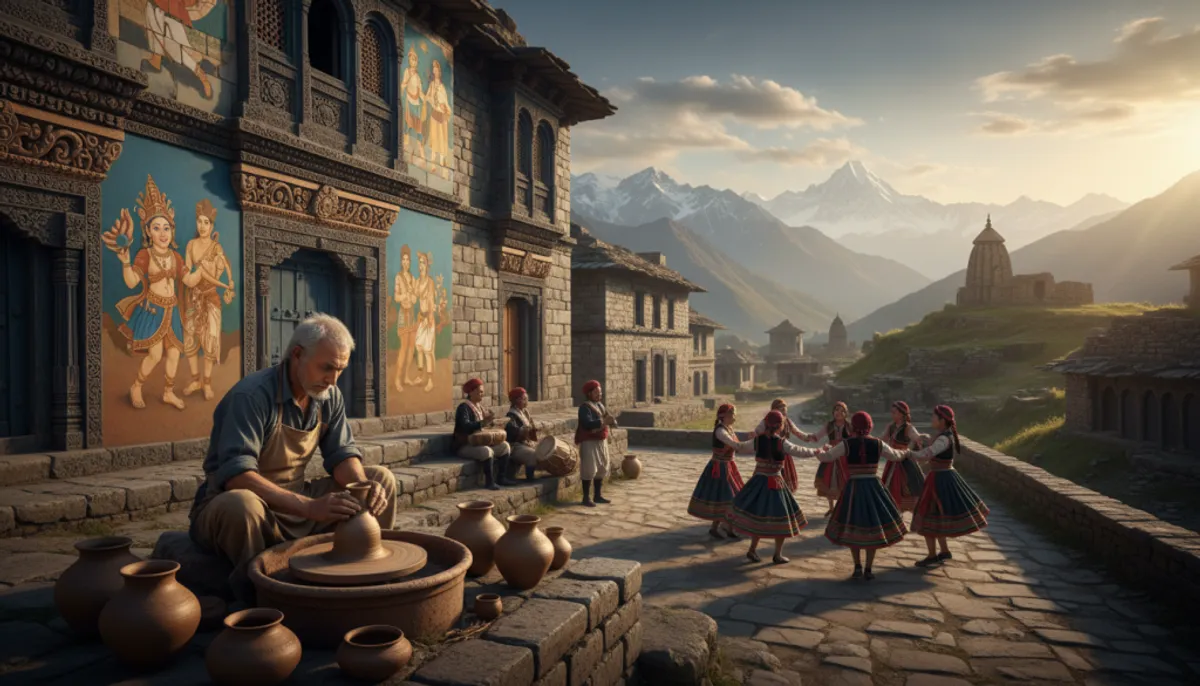
Tangible goods and monuments
Tangible heritage encompasses everything we can see and touch. It forms a concrete set of architectural, landscape, and artistic goods.
These elements include historical monuments, archaeological sites, and industrial heritage. They attract millions of visitors each year.
Traditions, know-how, and oral expressions
Intangible cultural heritage represents the living dimension of our legacy. It consists of traditions, know-how, and cultural expressions.
These social practices and knowledge are transmitted orally. They include the performing arts and traditional crafts.
| Characteristics | Tangible heritage | Intangible heritage |
|---|---|---|
| Nature | Tangible goods | Living practices |
| Transmission | Physical conservation | Oral communication |
| Examples | Monuments, art objects | Traditions, know-how |
These two parts of heritage are inseparable. Their values complement each other to form our identity.
The challenges of preserving and transmitting heritage
Let us discover the international mechanisms that protect our collective heritage around the world. The preservation of heritage represents a major challenge that has mobilized the international community for decades, including the contributions of former ministers of culture.
National and international initiatives
UNESCO plays a central role with its World Heritage List established in 1972. This fundamental convention for the protection of cultural heritage was ratified by France in 1976.
The treaty of 2003 complements this approach by recognizing the importance of intangible heritage. The Granada Convention (1985) marked Europe by promoting coordinated preservation policies.
The European Heritage Days, organized since 1999, illustrate this desire for communication with the public. Other European conventions create a protective legal network.
The active transmission of knowledge goes beyond mere physical conservation. These policies encourage the development of solidarity among nations to protect the heritage of humanity.
The contribution of culture to the construction of French identity
Let us discover how French culture has been built stone by stone through its heritage. Our heritage is not a mere asset received passively.

André Malraux stated: “Culture is not inherited; it is conquered”. This vision summarizes our active relationship with heritage.
As early as 1804, the state entrusted libraries to municipalities. This policy placed books at the heart of public education.
Victor Hugo advocated for legal protection of monuments. He saw in this cultural heritage the soul of the nation.
| Period | Contribution to identity | Key actors |
|---|---|---|
| 19th century | Legal protection of monuments | Victor Hugo |
| Early 20th century | Cultural democratization | François Guizot |
| Contemporary era | Integration of diversity | Local communities |
This evolution reflects our republican values. Heritage unites people beyond their differences.
The communication around this cultural set strengthens our sense of belonging. Our society continues to enrich this common good.
Emblematic examples and historical illustrations
Let us explore some concrete examples that embody the notion of heritage. These illustrations show how our legacy takes shape in tangible and significant elements.
The Reims Cathedral and the role of UNESCO
The Notre-Dame de Reims Cathedral represents an exceptional asset of world heritage. Inscribed since 1991, it symbolizes French monarchical history.
This monument perfectly illustrates the heritage value on an international scale. UNESCO plays a crucial role in its recognition and protection.
The highlighting of such sites demonstrates the importance of global cooperation. Each generation must pass on these treasures intact.
Other significant heritage references
Cultural heritage goes beyond just architectural monuments. The Memory of the World list (1992) includes documents of universal importance.
It includes the Declaration of the Rights of Man and the memory of the Suez Canal. These books and archives form an essential part of heritage.
These examples show that our legacy constitutes a coherent whole. It tells the human story through various media and arts.
Each protected element contributes to building our collective memory. This portal to the past deserves careful preservation for the future.
Conclusion
At the end of this exploration, we can now grasp the full scope of our collective legacy. Heritage proves to be much more than just a simple collection of ancient objects.
It represents a living set that belongs to all of humanity. Our responsibility goes beyond conservation to include continuous enrichment.
Each generation thus becomes a guardian and transmitter of this common good. The transmission to future generations is a fundamental issue for our society.
The development of a true culture of preservation is essential. This field requires our active commitment to build a meaningful future.
By understanding this collective dimension, we can all contribute to valuing this exceptional cultural heritage and cultural expression. It forges our identity and enriches our common culture.FAQ
What exactly is cultural heritage?
Cultural heritage is a set of goods, both tangible and intangible, to which a society or nation attributes exceptional value. It can include monuments, works of art, as well as traditions, language, or know-how. It is a legacy from the past that we must pass on to future generations.
What is the difference between tangible and intangible heritage?
Tangible heritage includes physical goods such as buildings, books, or works of art. Intangible heritage represents living practices: language, music, culinary traditions, or artisanal knowledge. Both are essential to our identity.
Why is the preservation of heritage so important?
Preservation is crucial because it protects our collective memory and our diversity. It allows us to maintain a connection with our origins and values. Organizations like UNESCO, through the World Heritage Convention, play a key role in this protection on a global scale.
How does a tradition become an integral part of heritage?
A tradition or know-how is recognized as cultural property when it is considered to carry significant value for a community. Its transmission from generation to generation and its role in social cohesion are determining criteria for its inscription on protection lists.
What is the impact of the French Revolution on our heritage?
The Revolution marked a turning point by creating a notion of national heritage, belonging to the people and no longer just to the Church or royalty. This period initiated a policy of protection for cultural goods, laying the cultural foundations for modern preservation conventions.