
The expression “when I hear the word culture, I draw my revolver” is a sadly famous phrase often associated with totalitarian regimes and their disdain for art and intellect.
This controversial quote actually comes from the play “Schlageter” written by the Nazi writer Hanns Johst in 1933. The exact phrase is “When I hear the word culture, I take the safety off my Browning.”
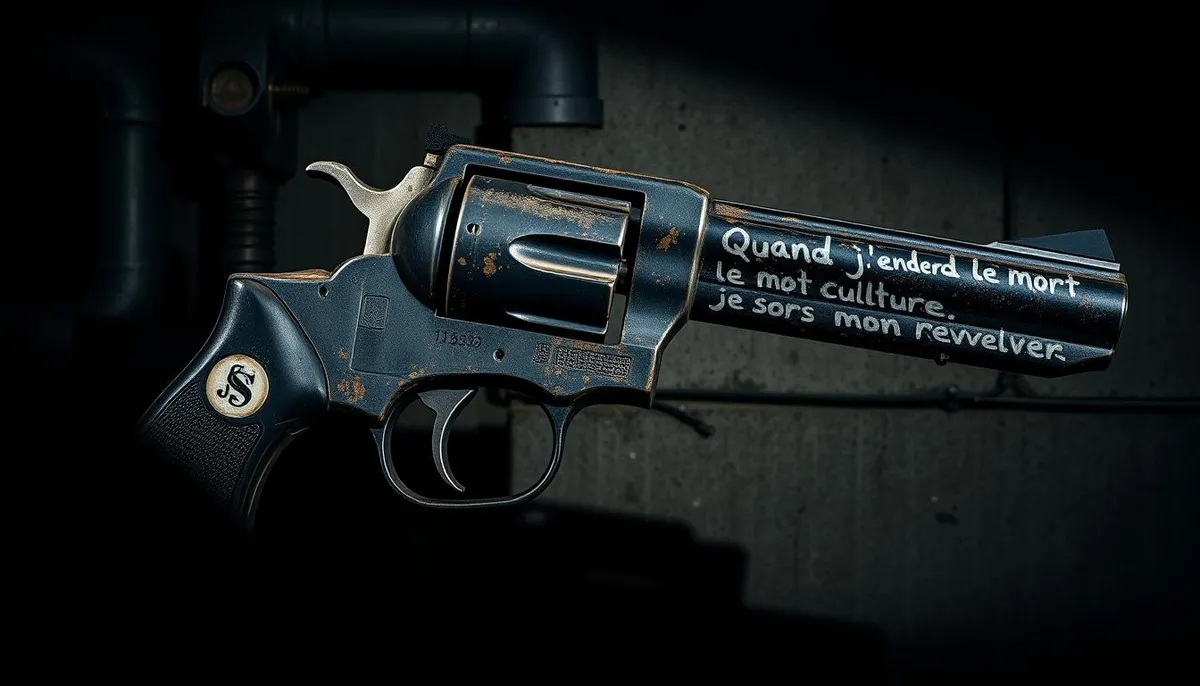
The origin of this phrase and its historical context are essential for understanding its profound meaning in European cultural history. We will explore how this expression became a symbol of the opposition between brute force and intellectual thought.
The controversial origin of this famous quote
The expression ‘when I hear the word culture’ has its roots in the history of German theater. This quote, often associated with the Nazi regime, has an origin that deserves to be explored in detail.
A misattribution to Nazi dignitaries
For a long time, this quote has been attributed to high-ranking Nazi officials, but this attribution is incorrect. The true source of this expression is found in a play titled “Schlageter,” written by Hanns Johst.
The play was performed in Berlin in April 1933, during Adolf Hitler’s 44th birthday, a particularly dark moment in German history marked by the Reichstag fire and the opening of the Dachau concentration camp.
The true source: Hanns Johst's play “Schlageter”
The play “Schlageter” features Albert Leo Schlageter, a German fighter from World War I executed by the French in 1923 for acts of sabotage in the Ruhr. The Nazi regime transformed Schlageter into a national martyr, erecting over a hundred monuments in his honor.
The play is part of Nazi cultural propaganda aimed at creating mythical heroes to galvanize German nationalist sentiment.
It is crucial to understand the historical context in which this play was written and performed to fully grasp the cultural consumption dynamics and the significance of this controversial quote.
The exact wording of “when I hear the word culture, I draw my revolver”
The quote “when I hear the word culture, I draw my revolver” is often misattributed, but what is its true source? This phrase, which has become synonymous with the repression of art and culture under the Nazi regime, deserves a thorough analysis.
The original phrase and its variations
The play “Schlageter” by Hanns Johst, presented in April 1933, contains the original phrase: “Wenn ich das Wort Kultur höre, entsichere ich meinen Browning!” This wording differs slightly from the quote commonly attributed to the Nazis. The variation in wording may be attributed to translation and oral transmission of the quote.
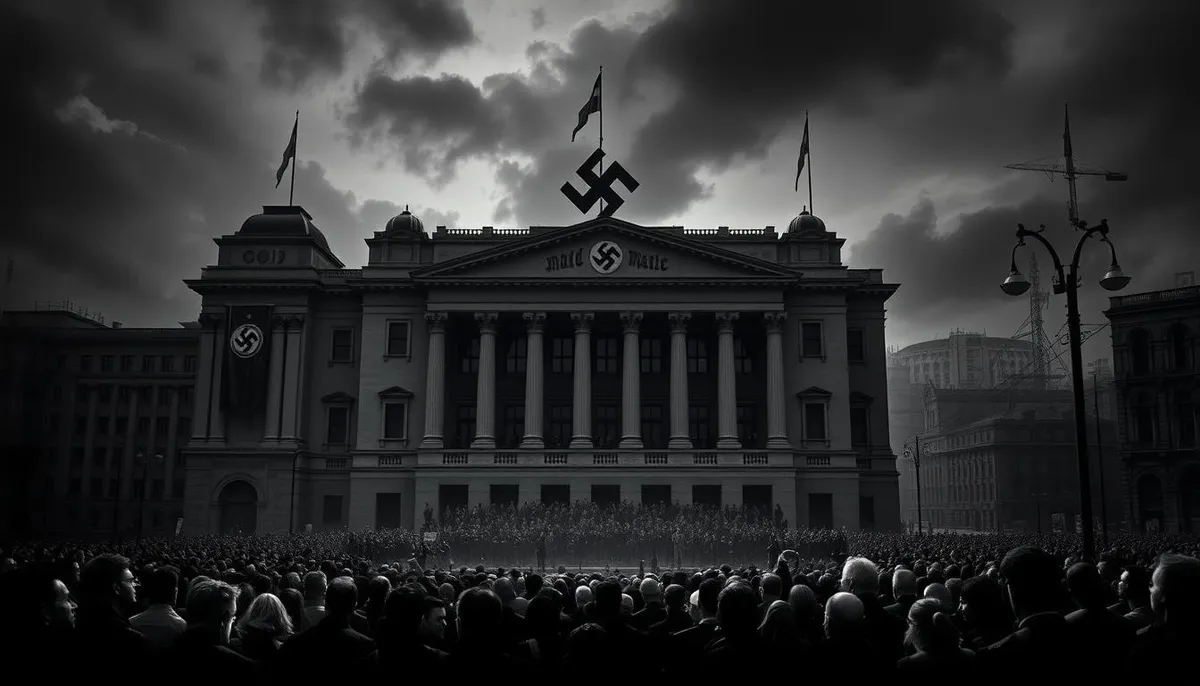
The historical context of the play and its author
Hanns Johst, a former expressionist and pacifist author, rallied to the National Socialist regime. His rallying was not isolated; many German intellectuals sought to adapt to the new regime. The play “Schlageter” was an effective propaganda tool for disseminating Nazi ideas.
| Event | Date | Context |
|---|---|---|
| Reichstag Fire | February 1933 | Marks the beginning of Nazi power consolidation |
| First Book Burnings | May 1933 | Suppression of non-conformist literature and art |
| Opening of Dachau Camp | March 1933 | First establishment of a concentration camp |
The meaning and symbolism of the expression
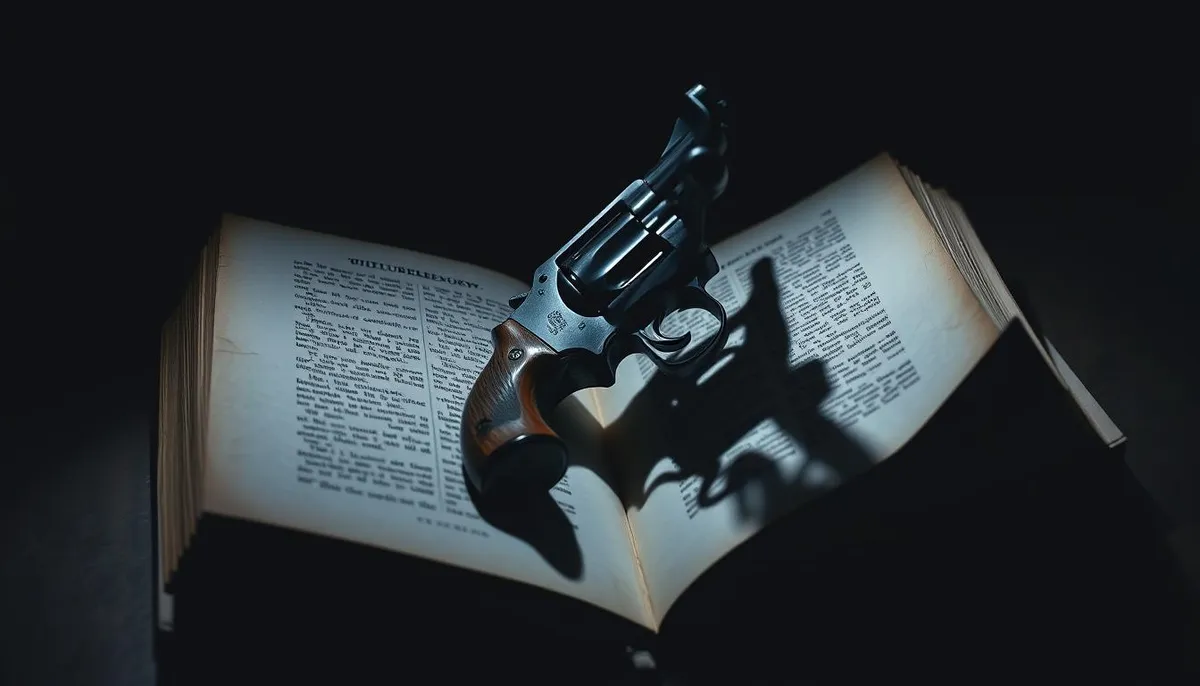
The expression ‘when I hear the word culture, I draw my revolver’ has become a symbol of the tension between brute force and intellect. This phrase, often associated with the Nazi regime, reflects a worldview where physical power and domination by force are valued at the expense of education and intellectual development.
The Nazi regime's contempt for unofficial art
The Nazi regime had a very restrictive approach to art and culture, favoring works that glorified Nazi ideology and rejecting those deemed “degenerate.” This expression illustrates the deep contempt for any form of art or thought that did not conform to the party's directives.
Brute force against intellect and education
The opposition between the firearm and culture symbolizes the preference for expedient solutions and violence as a means of action, at the expense of reflection and education. This dichotomy reflects a mentality where force prevails over intellect.
| Aspect | Characteristic | Impact |
|---|---|---|
| Brute Force | Physical power and domination | Rejection of education and culture |
| Intellect | Reflection and intellectual development | Valuation of the complexity of thought |
| Expression | Symbol of anti-intellectualism | Warning against the violent rejection of culture |
This expression has become a universal warning against anti-intellectualism and distrust of cultural elites, resonating even today as a reminder of the importance of education and culture in our societies.
Conclusion: the contemporary legacy of this expression
Today, this expression is used to denounce anti-intellectual excesses and threats to culture. The expression “when I hear the word culture, I draw my revolver” has become a symbol of resistance against authoritarian regimes that seek to stifle freedom of expression.
This phrase, originating from a Nazi play, has transcended its historical context to become a major cultural reference. It reminds us of the importance of defending culture and education against ideologies that reject them.
The history of this quote also teaches us to verify the exact origin of famous expressions, as misattributions can distort our understanding of history. Quotes like this continue to shape our perception of historical periods and the ideologies they represent.
Finally, the study of this expression allows us to understand how words can survive their original context and acquire new meanings over time. This phrase invites us to reflect on the fragility of culture in the face of authoritarian regimes and on the importance of defending artistic and intellectual freedom of expression.