
Welcome to the exploration of a fascinating heritage. South Sudan, a young nation in East Africa, possesses a vibrant identity shaped by a complex history.
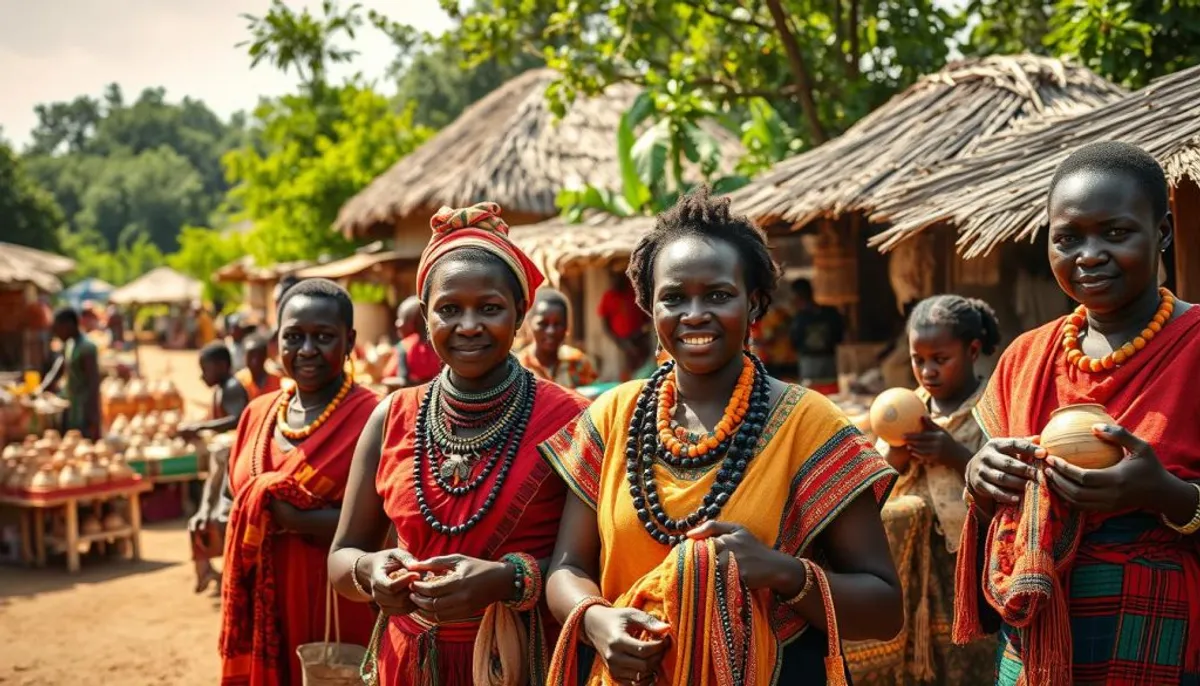
This country, independent since 2011, is situated at a unique geographical crossroads. It marks the meeting point between the Arab-Muslim and Sub-Saharan African worlds.
This strategic position has contributed to forging an extraordinary social mosaic. Over 200 distinct ethnic groups coexist, each bringing its traditions and languages.
This diversity is the beating heart of South Sudanese culture. It represents an invaluable wealth but also a challenge for this nation in construction.
Understanding this South Sudanese culture allows for grasping the current stakes. The inhabitants of this territory navigate between preserving their heritage and modernization.
This article invites you to discover the many facets of this cultural expression. From languages to arts, we will explore how a young country builds its identity in the contemporary world.
Key Points to Remember
- South Sudan is a young country independent since 2011.
- Its culture is marked by exceptional ethnic diversity (over 200 groups).
- Its geographical position makes it a crossroads of cultural influences.
- The preservation of this rich heritage in the face of modernization is a crucial issue.
- Its unique identity blends ancestral legacies and recent national construction.
General Introduction
The emergence of South Sudan as a sovereign state marks an important chapter in the history of the region. This nation gained its independence in 2011 after decades of struggle for self-determination.
The country is structured around ten federal states. These administrative divisions reflect the geographical and ethnic diversity of the territory. They find their origins in three fundamental historical provinces.
The population of the south is distinctly different from that of the neighboring North. Predominantly Christian and animist communities are observed, unlike the mostly Muslim North. This religious and ethnic difference has long shaped relations between the two regions.
Despite its youth as a nation, South Sudan relies on millennia-old traditions. Ancestral legacies remain vibrant in contemporary society.
The country faces major challenges in building a unifying national identity. The preservation of the rich local culture represents a crucial issue for its future.
The Many Facets of South Sudanese Culture
Let’s dive into the heart of the vibrant expressions that define this unique society. The heritage of this young country draws from millennia-old traditions while integrating contemporary influences.
Ancestral Traditions and Historical Heritage
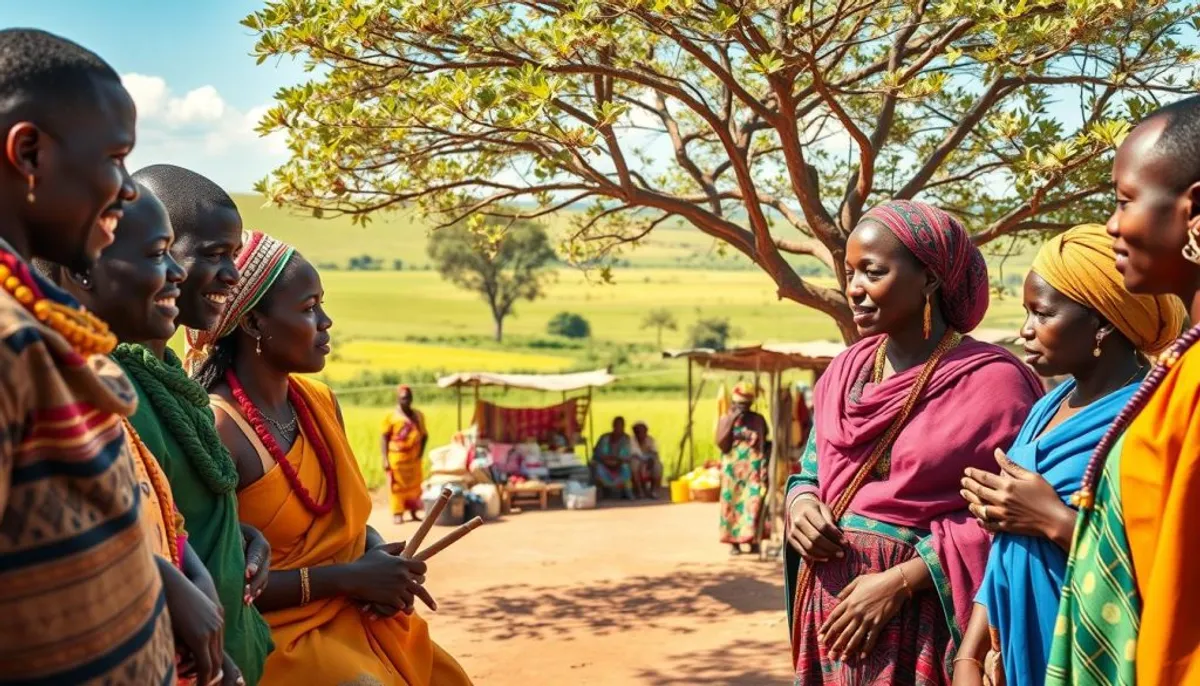
Traditional social practices form the basis of community life. Discussions under the tree of wisdom represent an essential part of this tradition.
These moments of collective discussion allow for the transmission of knowledge between generations. They date back several years and continue to animate social life.
Religious coexistence illustrates this cultural synthesis. Animist beliefs value sacred plants and animals, while Christianity brings new spiritual figures.
Contemporary Perspectives
Since independence, the country of the south has sought to build a unified national identity. This approach must respect local particularities while opening up to the modern world.
Oral traditions remain the main vector of transmission. In a society where writing was long less present, spoken word retains a central place.
Faced with globalization and urbanization, the inhabitants adapt their practices. They preserve their roots while integrating contemporary innovations.
Historical Context and Ancestral Influences
The historical journey of this young nation is rooted in millennia-old kingdoms. Prestigious civilizations like Kush and Meroë flourished for over a thousand years in the Nile Valley.
These African empires left a lasting legacy. They established traditions that would influence the following centuries.
From the Kingdom of Kush to Civil Wars
The medieval period sees the emergence of kingdoms such as Nobatia and Alodia. These entities maintain Christianity from the 6th to the 16th century.
The cultural conflict intensifies with the arrival of the British in 1898. The Anglo-Egyptian Condominium creates a profound administrative division.
The colonizers impose English in the south while maintaining Arabic in the north. This policy forges two distinct identities within the same territory.
Impact of Colonization and Independence
The first civil war breaks out in 1955, just before independence. This war foreshadows decades of armed conflict.
The second civil war (1983-2005) and the post-independence war (2013-2018) deeply mark society. These civil wars cause hundreds of thousands of victims.
English becomes the official language of the south after the Addis Ababa Agreement. This linguistic recognition consolidates the distinct identity of the region.
The accession to independence in 2011 crowns this long struggle. The south finally asserts its cultural and political specificity.
Ethnic Diversity and Linguistic Wealth
The South Sudanese territory is home to a plurality of communities with varied traditions. This human diversity constitutes an exceptional heritage for the young state.
The Multiple Languages and Dialects
South Sudan has over 200 different languages spread across three major families. These linguistic families reflect ancient historical migrations.
English has served as the official language since the south's independence. It coexists with Djouba Arabic, a widely used lingua franca.
| Ethnic Group | Main Language | Linguistic Family | Numerical Importance |
|---|---|---|---|
| Dinka | Dinka | Nilo-Saharan | Largest Group |
| Nuer | Nuer | Nilo-Saharan | Second in Importance |
| Shilluk | Shilluk | Nilo-Saharan | Historically Important Group |
| Bari | Bari | Nilo-Saharan | Influential Community |
Ethnic Groups and Oral Traditions
Each community preserves its history through oral traditions. These narratives transmit foundational myths and practical knowledge.
The inhabitants of South Sudan face preservation challenges. The standardization of local languages requires significant resources.
Despite these obstacles, the commitment to safeguard this linguistic heritage remains strong. The various languages continue to animate daily life throughout the south.
Religious Practices and Cultural Influences
The spiritual landscape of South Sudan reveals a fascinating mosaic of beliefs and traditions. This religious diversity profoundly shapes the daily lives of communities.
Traditional Religions and Animism
Ancestral beliefs persist among 21 to 32% of the population. Animists value sacred plants and animals while integrating Christian elements.
This unique synthesis keeps traditional pantheons alive. Among the Dinka, the deities Deng and Garang continue to inspire ritual practices.
Christianity and Islam in the Social Fabric
Christianity dominates the country with 60 to 76.8% of adherents. The Catholic Church represents 37% of this religious community.
Anglican and Maronite churches complement this Christian landscape. These institutions play a crucial role in education and social cohesion.
Islam remains a minority with only 2.2 to 6% of believers. This presence reflects historical contacts with the Arabic-speaking North.
Over the months and years, these spiritual traditions continue to evolve. They adapt to the modern world while preserving their essence.
Artistic Expressions and Traditional Crafts
The hands of South Sudanese artisans carry a precious memory. Their craftsmanship, including mauritanian local crafts, constitutes an intangible cultural heritage of exceptional richness.These skills encompass weaving, pottery, and basketry. Leatherwork and the making of ritual tools are passed down from generation to generation.
Vernacular architecture represents a major aspect of this art. Dinka houses, with their conical thatched roofs, are perfectly adapted to the tropical climate of the south.
Unfortunately, many techniques have regressed since colonization. Globalization and conflicts have accelerated this concerning disappearance.
A critical lack of documentation makes transmission difficult. Without adequate census, these practices risk being lost forever.
Local and international initiatives today seek to revitalize this irish craftsmanship. They aim to make it a vector of identity and a source of development for South Sudan.Artisans face major challenges: access to raw materials, competition from imported products. Their resilience reflects a deep attachment to their art.
Music, Dance, and Performing Arts
The vibrant rhythms of South Sudan resonate well beyond its borders. This dynamic artistic scene blends ancestral traditions with modern influences, including contemporary art in the central african republic.Traditional Rhythms and Musical Improvisation
Contemporary music incorporates afro-beat, reggae, and hip hop. Artists like Emmanuel Jal use their art to promote peace.
The collective Ana Taban has been actively campaigning since September 2016. The documentary “Beats of the Antonov” showcases artistic resilience during conflicts.
Dance Movements and Street Theatre
Traditional dances of the Nuba enliven community ceremonies. Improvisation remains fundamental in these expressions.
Street theatre is experiencing remarkable growth. The South Sudan Theatre Company uses this accessible form to raise public awareness.
These performing arts preserve national identity in the face of contemporary challenges, captivating the reader. They represent an essential vector of social cohesion.Gastronomy and Culinary Traditions
The South Sudanese table tells a story of diversity and resilience. Each ethnic community brings its ancestral recipes and unique preparation methods, showcasing the rich culinary traditions of the region.This culinary richness reflects adaptation to local resources. The preparation method of basic ingredients varies according to the regions of this country in the south.
Typical Dishes and Local Specialties
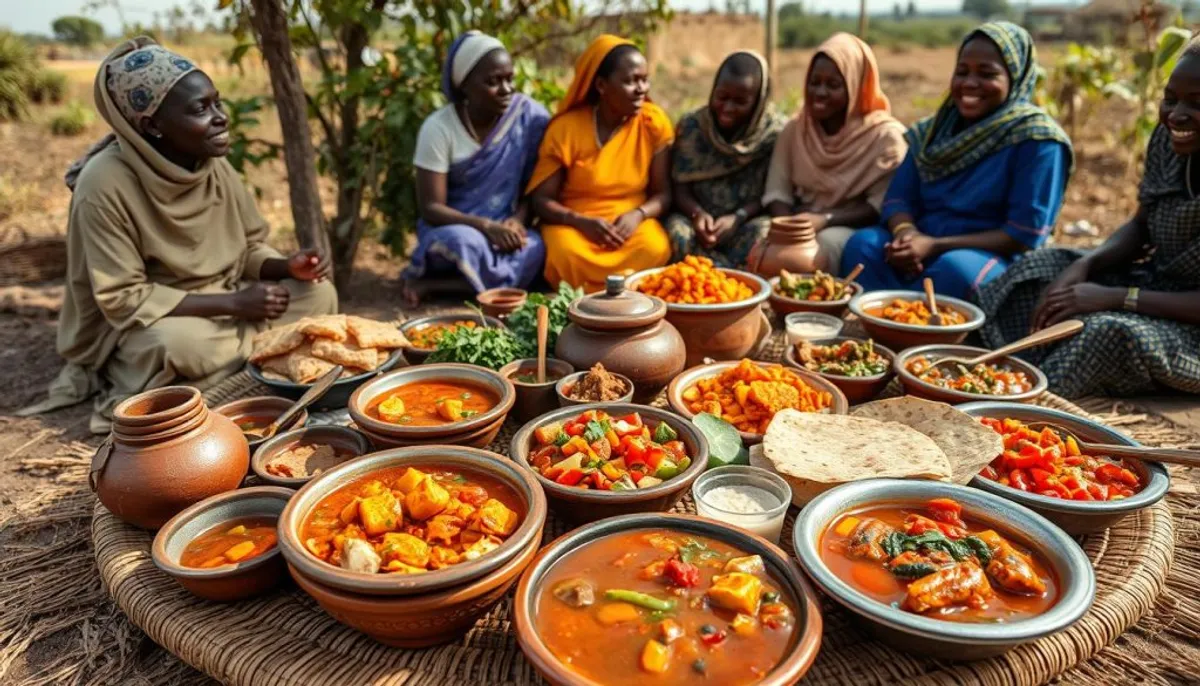
Sorghum is the staple grain of the diet. Drought-resistant, it serves as the base for traditional flatbreads like fermented kisra.
Stews simmer for several days to develop their flavors. They combine local meats and vegetables like okra.
| Type of Food | Main Examples | Common Use | Nutritional Importance |
|---|---|---|---|
| Flatbreads | Kisra, Asidah, Gourrasa | Daily accompaniment | Source of energy |
| Vegetables | Onions, Eggplants, Lentils | Stews and salads | Vitamins and fibers |
| Tropical Fruits | Mangoes, Guavas, Tabaldi | Fresh consumption | Natural antioxidants |
| Beverages | Jabana coffee, Fruit juices | Refreshment | Essential hydration |
Access to drinking water remains a major challenge in some regions. This situation affects the safe preparation of food.
Traditional beverages like jabana coffee follow elaborate social rituals. Natural fruit juices provide vital hydration under the hot climate.
Contemporary Art and South Sudanese Literature
The pages of South Sudanese literature are written with ink mixed with tradition and modernity. This creative expression draws from ancestral oral narratives while adopting contemporary forms.
The majority of works use English, the official language inherited from colonial history. This feature allows for international dissemination of stories.
Engaged Literature and Poetry
Pioneering figures like Taban lo Liyong have laid the foundations of a distinctive literary tradition. Born in 1938, this intellectual paved the way for a generation of writers.
Francis Deng explores Dinka identity in works like The Seed of Redemption. His novels address the tensions between traditional heritage and the modern world.
The young author Stella Gaitano represents this new literary voice. Born in 1979, she addresses themes of war and national reconstruction.
Ibrahim Ishaq also contributes uniquely. His work enriches this evolving literary landscape.
Visual Arts, Sculpture, and Crafts
The collective Ana Taban has been actively advocating for peace since September 2016. These artists use murals and performances as tools for engagement.
Documentary cinema offers valuable information about creative resilience. Beats of the Antonov (2014) shows how art survives during conflicts.
Despite this richness, South Sudan still has no UNESCO World Heritage site. This absence contrasts with the vitality of local artistic expressions.
Contemporary creations merge traditional techniques with modern language. They reflect the unique experience of this southern country in the current world.
Impact of Conflicts on Culture and Heritage
Years of civil war have disrupted the transmission of traditional knowledge. This conflict has profoundly affected the collective heritage of the young state.
Between July 2011 and September 2018, violence caused between 380,000 and 400,000 deaths. Entire communities lost their holders of ancestral traditions.
Consequences of Civil War on Traditions
The phenomenon of the "Lost Children of Sudan" illustrates this rupture. Thousands of displaced children have been deprived of family cultural transmission.
Mass displacements have fragmented collective practices. Over 4 million people have fled violence, including 1.9 million internally displaced persons.
The dramatic impoverishment (82.3% below the poverty line) makes it impossible to invest in preservation. Famine threatens 7 million people, relegating cultural concerns to the background.
Despite these traumas, resilience remains remarkable. Musical and dance practices persist even in the most difficult contexts.
The peace agreement signed in September 2018 offers an opportunity for reconstruction. The valorization of common heritage can serve as a basis for national reconciliation.
South Sudanese Culture in the Modern World
Faced with globalized currents, this young republic seeks to preserve its rich ethnic mosaic while building a national identity. Becoming the 193rd member state of the UN in 2011, the country asserts its place in the contemporary world.
Globalization and Preservation of Identities
South Sudan must contend with the growing influence of international media. Social networks spread foreign cultural models that threaten local traditions.
The diaspora plays a crucial role as a bridge between the south and the outside world. It maintains vibrant ties with the home country while integrating new influences.
Rapid urbanization transforms traditional lifestyles. Juba, the capital, becomes a laboratory of hybrid expressions where the old and modern coexist.
Organizations like RAPEC support the development of creative industries. They help document and valorize heritage in the face of modernization pressures.
This year marks an important step in national construction. South Sudan seeks a balance between national unity and respect for the 200 ethnic groups that form its wealth.
Media, Tourism, and Heritage Promotion
The dissemination of cultural information in South Sudan relies on a diversity of media supports. These tools play a vital role in preserving traditions in the face of contemporary challenges.
Role of Media in Cultural Dissemination
The media landscape includes newspapers like The Citizen and The Juba Post. These publications disseminate articles on local traditions despite limited resources.
Community radios are the main vector of information in rural areas. Southern Sudan Radio and Radio Miraya reach populations where literacy remains low.
National television channels offer programs on the identity of the country. They broadcast traditional music and cultural debates to urban dwellers.
| Type of Media | Main Examples | Target Audience | Cultural Impact |
|---|---|---|---|
| Newspapers | The Citizen, Juba Post | Urban Population | Written Dissemination |
| Radios | Southern Sudan Radio, Miraya | Rural Areas | Oral Transmission |
| Televisions | SSTV, Ebony TV | Young Generations | Visual Programs |
| Online Sites | Sudan Tribune, SSNA | International Diaspora | Remote Connection |
Tourism and Attractiveness of Intangible Heritage
The tourism sector faces a constant struggle against persistent insecurity. Foreign governments advise against travel to this southern country.
Yet, the territory holds exceptional natural sites along the White Nile. Wildlife and authentic traditions represent untapped potential.
The French Institute in Juba serves as a center for cultural promotion. It facilitates artistic exchanges between France and South Sudan.
Conclusion
South Sudan reveals a unique cultural treasure in Africa, including the rich heritage of liberian traditional art. This intangible wealth brings together over 200 ethnic groups with vibrant traditions.
Since the independence of July 9, 2011, the country has been building its national identity. Despite the challenges, the resilience of the inhabitants is impressive.
Religious and linguistic coexistence enriches this culture. The official English coexists with Djouba Arabic and ancestral languages.
The peace agreement of September 2018 offers real hope. The south can now valorize its exceptional heritage.
This young nation deserves our attention and support. Its cultural future promises fascinating developments.
FAQ
How many languages are spoken in South Sudan?
The country boasts an incredible linguistic diversity with over 60 indigenous languages recorded. English is the official language, while Arabic plays an important role in everyday life. This richness reflects the mosaic of ethnic groups present in the country.
When did South Sudan gain its independence?
South Sudan became an independent state on July 9, 2011, after decades of struggle and a long civil war. This day is now celebrated each year as the national holiday, a key moment in the country's history.
What are the main religions practiced?
Christianity, particularly in its Catholic and Anglican forms, is widely practiced. Islam and traditional African religions, often of an animist type, also constitute an important part of the religious landscape and influence the customs of guinea-bissau.
How have conflicts affected cultural heritage?
Successive civil wars have had a profound impact on the preservation of traditions, dances, and crafts. Despite this, the inhabitants make remarkable efforts to keep their heritage alive, notably through music and oral narratives.
What are the typical dishes of South Sudanese cuisine?
The cuisine often uses grains like sorghum and maize, accompanied by sauces based on meat, fish, or vegetables. Meals are an important moment of sharing, reflecting community values and the warm hospitality of the populations.