
At the heart of the Indian Ocean, a small island shines with its unique identity. This island, Mauritius, is a true crossroads where the past and present meet. Its history, marked by successive waves of settlement, has shaped an extraordinarily diverse society.
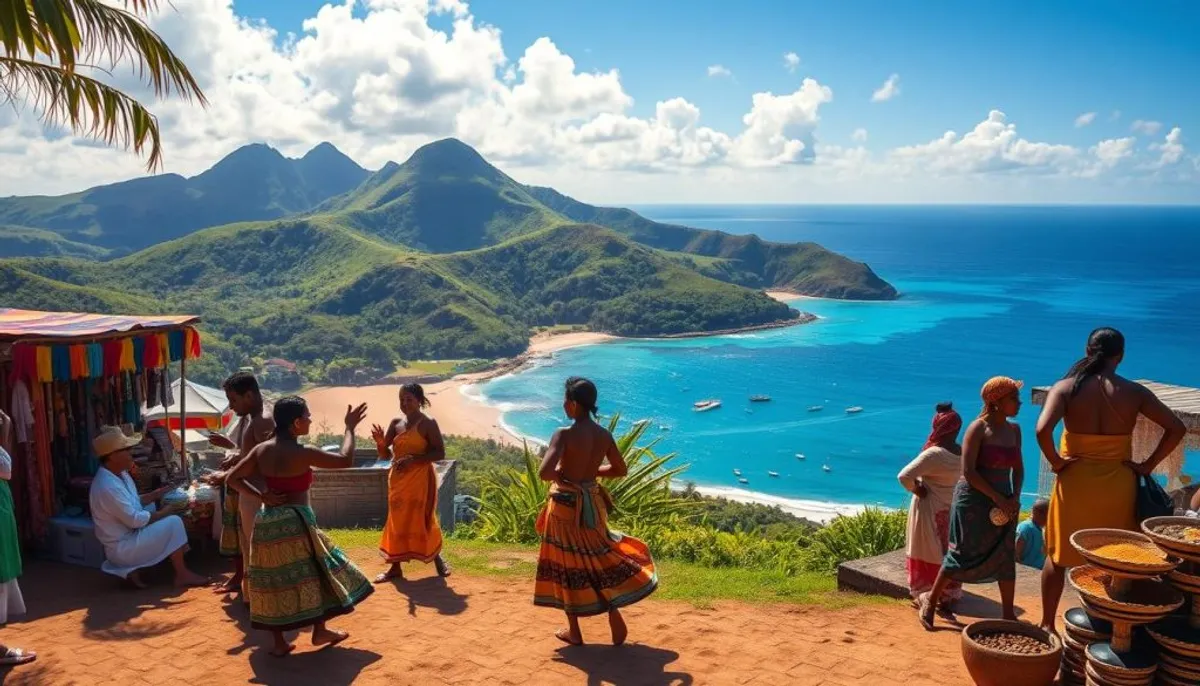
Discovered centuries ago, this territory has seen Arabs, Portuguese, Dutch, French, and English pass through. These colonizations brought populations from Africa, India, and China. Today, more than 1.2 million inhabitants coexist in remarkable mutual respect.
This ethnic mix is experienced daily. It is manifested in the languages spoken, the festivals celebrated, and especially in an inventive fusion cuisine. Hindus, Muslims, Christians, and Buddhists harmoniously share this island space.
The richness of this nation lies in its ability to unite its varied heritages. It has transformed a complex history into a model of “living together.” This introduction invites you to explore the multiple facets of this unique national identity, including the many cultural places in france that reflect similar values of diversity and unity.
Key Points to Remember
- Mauritius is a unique cultural crossroads in the heart of the Indian Ocean.
- Its history is marked by successive settlements from four continents.
- The population of over 1.2 million inhabitants forms a mosaic of communities.
- Different religions coexist and respect each other on the island.
- Mauritian cuisine is a creative fusion of varied flavors.
- The country is a successful example of multiculturalism and living together.
Historical Heritage and Multiple Influences
The first traces of Mauritian history appear as early as the 5th century with Arab navigators. These explorers named the territory Dina Arabi on their maritime maps.
The island remained uninhabited until the arrival of the Dutch in 1598. They named this new territory Mauritius in honor of their prince.
The First Inhabitants and Colonial Conquests
The French took control in 1715, renaming the place Isle de France. Under French administration, the island rapidly developed with modern infrastructure.
In 1810, the British conquered the territory after a short battle. They governed for 158 years until independence.
Migrations, Slavery, and Indian Engagement
The servile population increased significantly during the 18th century. The number of slaves rose from 18,100 in 1766 to 49,080 in 1797.
These individuals primarily worked on sugar cane plantations. The abolition of slavery in 1835 marked a major turning point.
To replace the labor force, nearly 450,000 Indian workers arrived between 1835 and 1909. They also cultivated cane under difficult conditions.
| Year | Historical Event | Demographic Impact |
|---|---|---|
| 1598 | Arrival of the Dutch | First colonization |
| 1766 | French census | 18,100 slaves recorded |
| 1835 | Abolition of slavery | Arrival of Indian workers |
| 1968 | Independence | New political status |
These successive waves of migration over several centuries determined the origin of today's multiculturalism. The island of Mauritius gained its independence in 1968 after long years of colonization.
Mauritian Culture: The Influence of Local Communities
The human diversity of Mauritius is revealed through its four main groups. Each community brings its unique richness to the social fabric.
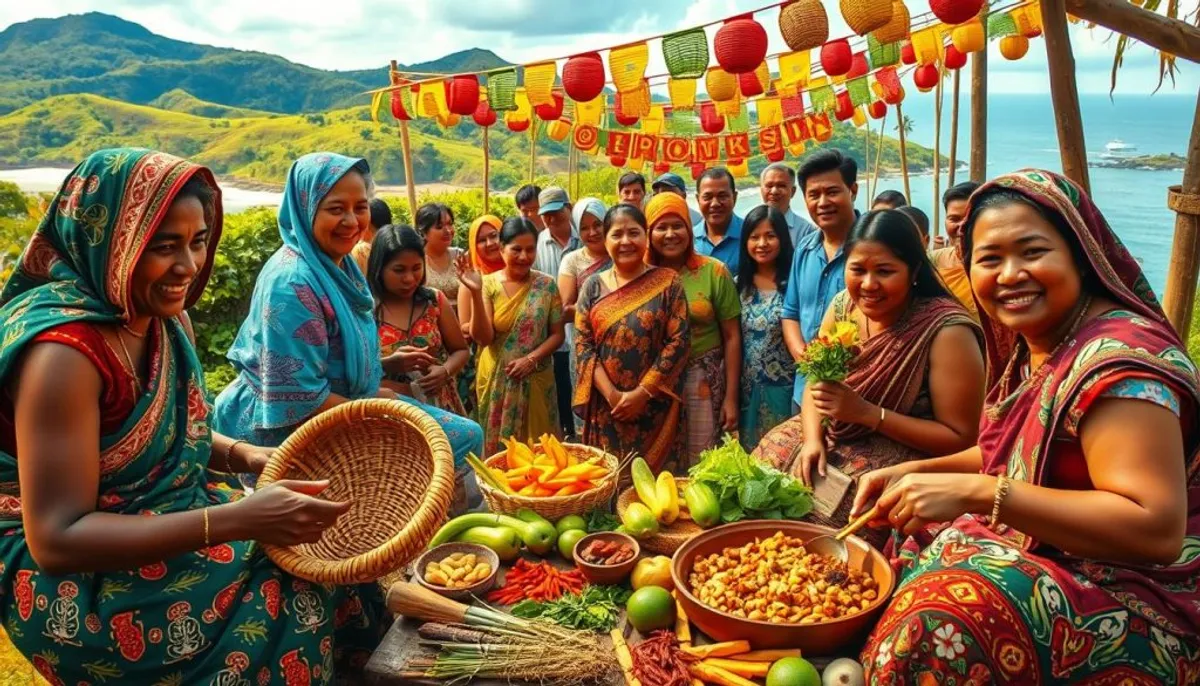
Indo-Mauritians, Creoles, Sino-Mauritians, and Franco-Mauritians
Indo-Mauritians make up 68% of the population. They perpetuate traditions from India.
The Creole community represents 27% of the inhabitants. They descend from African and Malagasy slaves.
Sino-Mauritians account for 3% of the population. They dominate the retail trade.
Franco-Mauritians constitute 2% of the inhabitants. They maintain significant economic influence.
| Community | Percentage | Origins | Main Contribution |
|---|---|---|---|
| Indo-Mauritian | 68% | Indian workers | Hindu and Muslim traditions |
| Creole | 27% | African slaves | Afro-French culture |
| Sino-Mauritian | 3% | Chinese merchants | Economic influence |
| Franco-Mauritian | 2% | French settlers | Language heritage |
The Mauritian Creole unites all these communities. This common language facilitates exchanges between the groups.
This peaceful coexistence is the strength of this country. The island of Mauritius shows how different origins can harmonize.
Artistic Expressions and Traditional Music
Artistic expression in Mauritius represents a true kaleidoscope of creativity. This cultural vitality draws its roots from the complex history of kiribati and the territory.
The Mauritian Sega, a Symbol of Identity and Resistance
The sega is the most emblematic musical expression. Born in the plantations in the 18th century, it served as an outlet for African slaves.
This traditional music uses authentic instruments like the ravanne and the maravane. The enchanting rhythm accompanies a characteristic sensual dancing.
Legends like Ti Frère and Serge Lebrasse have perpetuated this art. The Mauritian sega received UNESCO recognition in 2014.
Dance, Theater, and Visual Arts on the Island
The dancing of the sega is characterized by movements imitating ancestral work. The bodies never touch, respecting traditional codes.
Theater in Mauritian Creole has seen remarkable development. Playwrights like Henri Favory have highlighted this language.
Mauritian visual arts draw inspiration from tropical landscapes. This multiple creativity attracts researchers and visitors from around the world.
Craftsmanship and Culinary Diversity on the Island of Mauritius
Handmade creations and recipes passed down through generations constitute a tangible heritage. This island reveals its soul through artisanal objects and authentic flavors.
Artisanal Workshops and Ancestral Know-How
Artisanal activities preserve techniques that are four centuries old. Artisans use only local materials such as ebony wood and vacoa leaves.
In Curepipe, Creole artisans master traditional basketry. Their baskets last twenty years thanks to the natural treatment of the fibers.
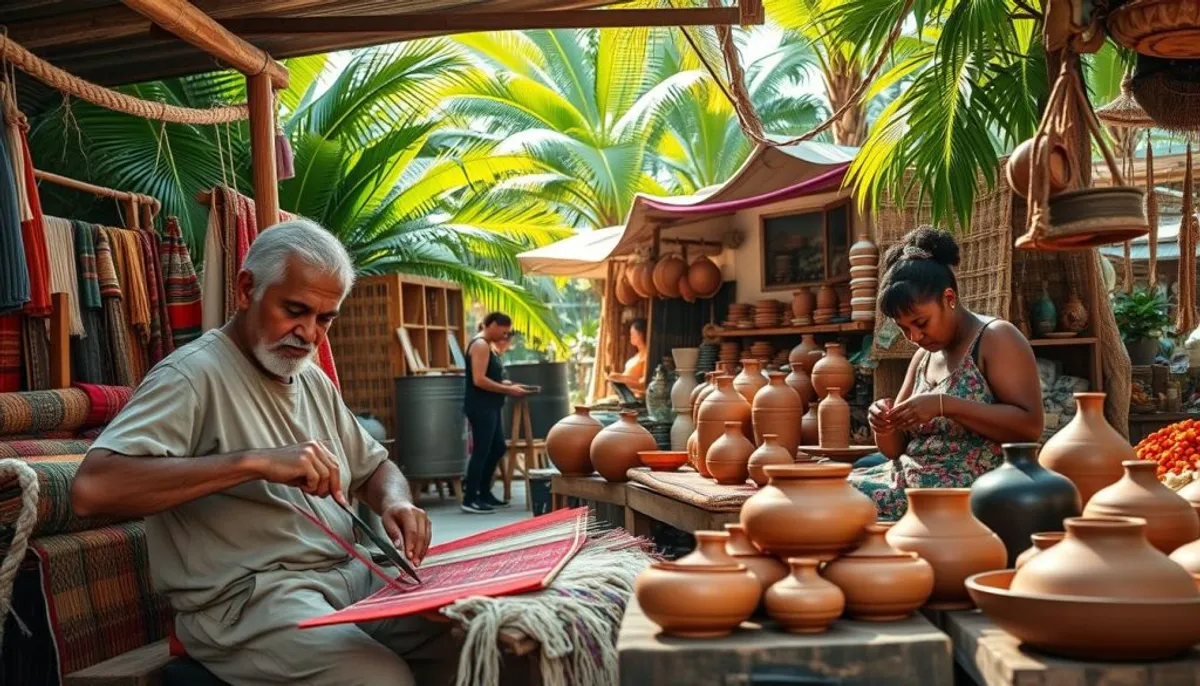
Sino-Mauritian jewelers work with 22-carat gold using ancestral methods. Their creations blend Chinese motifs and Hindu symbols.
Flavors and Recipes: Fusion of Culinary Traditions
The local cuisine represents an exceptional mix of Indian, Chinese, and Creole flavors. This unique fusion delights visitors from around the world.
Rice is the staple food of the Mauritians. It appears in iconic dishes like briani and Cantonese rice.
Markets feature stalls offering fresh spices and local specialties. Culinary activities allow learning to prepare traditional recipes.
This gastronomic diversity perfectly reflects the rich heritage of the island. Each community has contributed to this cuisine recognized throughout the Indian Ocean, including influences from the stunning landscapes of the french alps.
Cultural Heritage and Places of Worship
The sacred architectural heritage of Mauritius forms an open-air museum. More than 500 religious sites testify to four centuries of spiritual history.
Temples, Mosques, Churches, and Historical Pagodas
The Maheswarnath temple in Triolet, built in 1819, remains the oldest Hindu sanctuary. Its colorful walls illustrate episodes from the Ramayana.
In Port Louis, the Jummah mosque has dominated the urban landscape since 1853. Its Indo-Islamic architecture adapts perfectly to the tropical climate.
Churches like Notre-Dame de Cap Malheureux and Chinese pagodas complete this panorama. These buildings attract thousands of visitors each year.
Museums, Heritage Sites, and Cultural Institutions
Religious festivals enliven the island throughout the year. Divali in October lights up the nights with 300,000 lamps.
The celebrations of Holi in March color the streets in spring. The Chinese New Year in February sees dragons parading in Port Louis.
UNESCO has recognized several musical traditions. Traditional sega was inscribed in 2014, validating the richness of this heritage.
The National Museum of Natural History preserves the memory of the island. These institutions offer various cultural activities to visitors.
Conclusion
The Mauritian experience demonstrates how varied heritages can merge to create a unique national identity, including the rich aspects of comorian culture. This country in the Indian Ocean represents a living model of coexistence where different communities have shared the same territory for generations.
Every day on this island, Mauritians live their rich heritage through festivals, fusion cuisine, and artistic traditions, including the kuwaiti tradition. This Mauritian culture evolves naturally, blending respect for roots with contemporary openness.The island of Mauritius now attracts visitors from around the world to the ocean islands. They discover for several days this exceptional cultural laboratory of the Indian Ocean islands.
Over the years, this island nation has transformed its complex history into strength. The island of Mauritius continues to inspire with its ability to unite differences in the Indian Ocean.
The coming days will see this dynamic strengthen. This country demonstrates that diversity is a wealth for all communities of the ocean islands.
FAQ
What are the main festivals celebrated on the island?
The island of Mauritius is renowned for its many celebrations. You can attend the Chinese New Year, the Hindu festival of Maha Shivaratri, the spring festival (Holi), Divali (the festival of lights), as well as Easter and Christmas. These festivals reflect the diversity of the communities and are often public holidays.
What is the must-try typical dish?
Mauritian cuisine is an experience in itself! An iconic dish is rougaille, a spicy tomato sauce often served with rice, lentils, and fish or meat. Dholl puri (stuffed pancakes) are also a street food staple in Port Louis.
Is sega the only traditional music?
The Mauritian sega is the most well-known music and dance, born from the time of slavery. However, you will also hear bhojpuri (Indian influence) and modern sega, which mixes current sounds. Each style tells a part of the history of the Indian Ocean.
What cultural sites should be visited on a first trip?
For a complete immersion, start with Port Louis and its Aapravasi Ghat, a UNESCO World Heritage site. Don't miss the Pamplemousses Botanical Garden, the Château de Labourdonnais, and the many colorful temples, such as the Tamil Kadresson or the Kwan Tee Pagoda.
Is local craftsmanship easy to find?
Absolutely! You will find beautiful arts and crafts in the markets, such as the Central Market of Port Louis. Boat models, woven baskets, and textiles are popular souvenirs that perpetuate ancestral know-how.