
Welcome to a discovery journey at the heart of an unknown destination. Suriname reveals itself as a true gem of South America, where ancestral traditions and multicultural influences harmoniously blend.
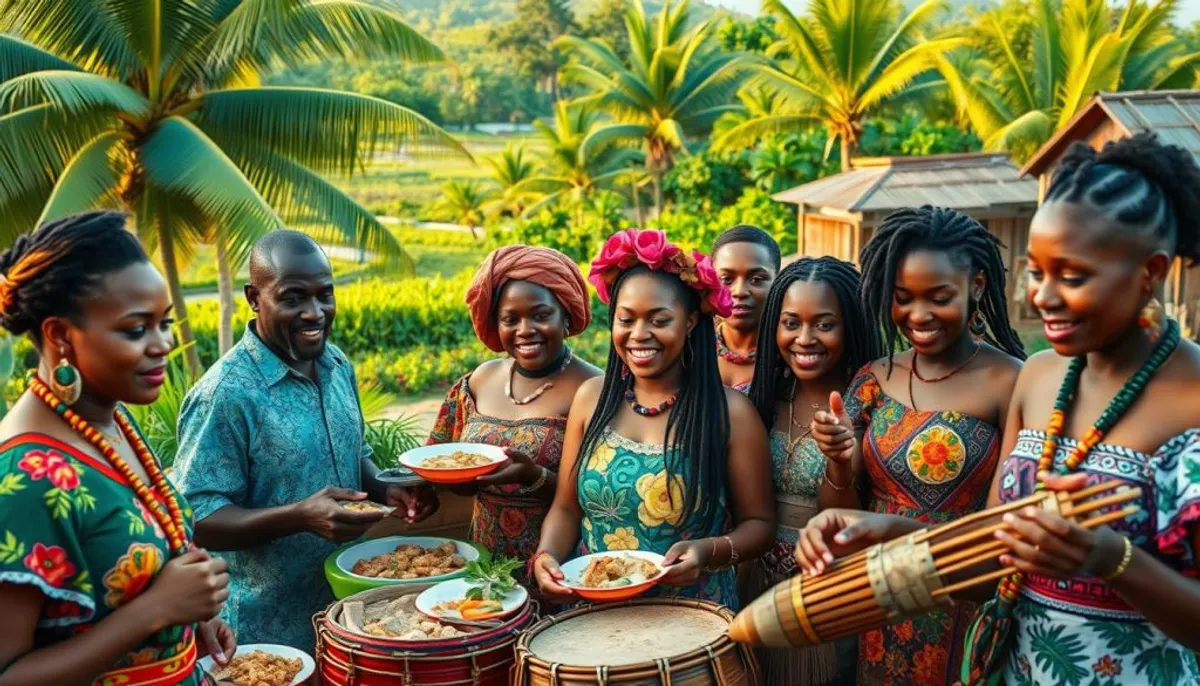
This country is located in the northern part of the continent, bordered by the Atlantic Ocean. With approximately 600,000 inhabitants across a vast territory, it has a low population density. The majority of people live along the coast, while the immense Amazon rainforest covers most of the territory.
The uniqueness of this nation lies in its exceptional ethnic mosaic. Descendants of Africa, India, Indonesia, China, and indigenous peoples coexist here. This unique diversity in the world creates a cultural richness of remarkable authenticity.
Key Points to Remember
- Suriname is a sparsely populated country in South America
- Its population is mainly concentrated along the Atlantic coast
- The Amazon rainforest covers most of the territory
- An exceptional ethnic diversity characterizes this country
- Several cultural influences blend harmoniously
- This nation offers a living and authentic cultural heritage
- A unique experience awaits curious visitors
Introduction to Surinamese Culture
Dive into the heart of an exceptional human mosaic. This country is characterized by a fascinating demographic composition where several communities coexist harmoniously.
The distribution of ethnic groups reveals incredible richness. Hindustanis, Maroons, Creoles, and Javanese make up the majority of the population.
| Ethnic Group | Percentage | Main Origin |
|---|---|---|
| Hindustanis | 27.4% | India |
| Maroons | 21.7% | Africa |
| Creoles | 15.7% | Mixed |
| Javanese | 13.7% | Indonesia |
| Mixed | 13.4% | Mixed |
This diversity is also reflected in religious beliefs. Christians, Muslims, and Hindus practice their faiths side by side.
Daily life in Suriname is marked by this plurality. Each group maintains its traditions while participating in a common nation.
The Surinamese peoples, of diverse origins, have created a unique model of coexistence. This multicultural harmony defines the identity of the country.
The History and Multicultural Origins
The historical adventure of Suriname begins long before the arrival of Europeans. This complex history explains the current diversity of the country.
The Indigenous Peoples and Early Migrations
The first indigenous peoples settled around 1100 BC. The Arawaks arrived in the first century, followed by the Kalinagos around 900.
These Amerindians established the cultural foundations of the territory. They developed traditions that endure today.
The Arrival of Colonists and the Role of Slavery
In the 17th century, the United Provinces established a colony named Dutch Guiana. This colonization radically transformed the region.
The system of slavery became central to the economy. Approximately 37,000 African slaves worked on the plantations.
They cultivated sugar, coffee, and cotton. This period profoundly marks the origin of the current society.
The abolition in 1863 triggered new migrations. Workers arrived from India, Java, and China.
This painful history paradoxically creates exceptional wealth. The Amerindians maintain their traditions despite the upheavals.
The Evolution of Surinamese Culture Through the Centuries
The Surinamese national identity has been forged through decisive political stages. This tumultuous history has profoundly influenced the social development of the country.
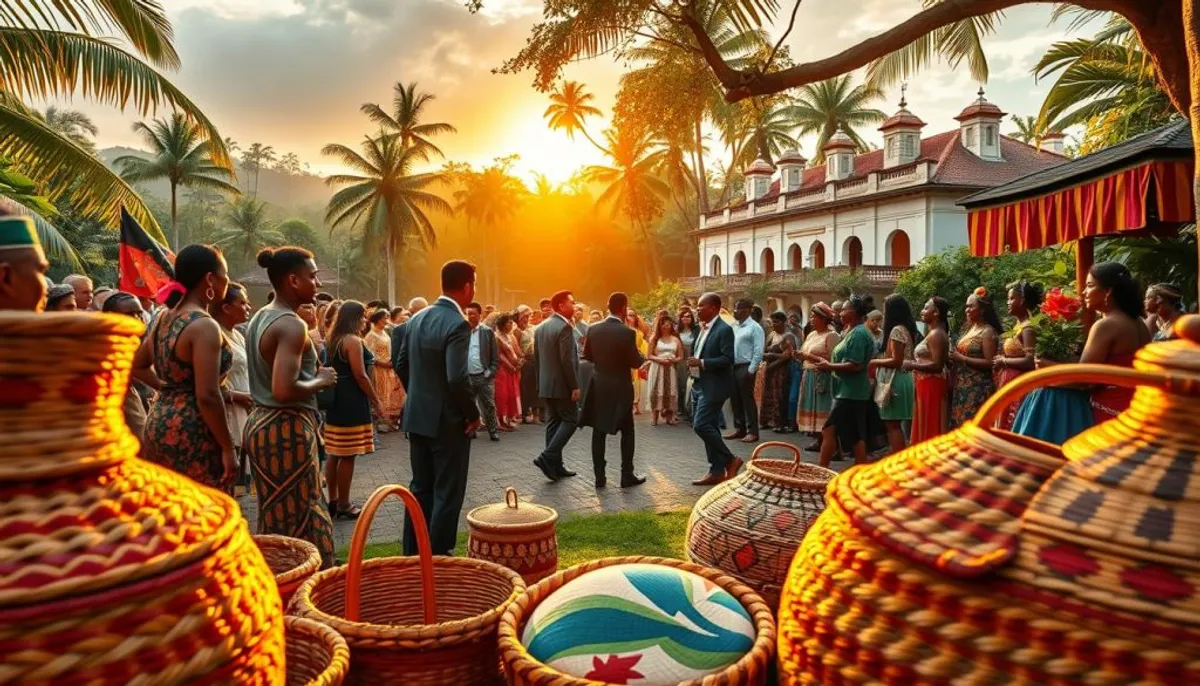
From Colonial Period to Independence
In 1954, this colony gained internal autonomy from the Dutch crown. This step marked the first moves towards national sovereignty.
Independence came on November 25, 1975. The colonial territory then became a sovereign republic. This date is now celebrated as a national holiday.
Social and Cultural Transformations
The democratic government experienced a turbulent period. In 1980, a military coup led by Desi Bouterse established a dictatorship.
Later, in 1986, a revolt triggered a civil war. The conflict deeply destabilized the country for several years.
The Kourou peace agreement in 1989 allowed for reconstruction. Democracy was restored in 1992, opening a new era for this multicultural nation.
The Influences of Marriages and Festive Traditions on Suriname
Marital unions in this multicultural country offer a unique window into its rich heritage. These celebrations bring together different communities in vibrant festivities.
Pre-Marriage Rituals and Wedding Ceremonies
Each ethnic group brings its specific traditions. The African descendants perform energetic ritual dances. Indian ceremonies include Mehndi and Saptapadi.
The Fusion of African, Indian, Javanese, and Indigenous Traditions
The Javanese incorporate the Siraman, a purification bath. The indigenous peoples center their rituals around nature. This fusion creates unique ceremonies.
| Ethnic Group | Main Ritual | Meaning | Typical Duration |
|---|---|---|---|
| Maroons | Ancestral Dances | History of Resistance | 2-3 hours |
| Hindustanis | Mehndi | Protection and Beauty | 4-6 hours |
| Javanese | Siraman | Spiritual Purification | 2 hours |
| Indigenous | Natural Blessings | Connection to Spirits | 1-2 hours |
The Impact of Ceremonies on Cultural Identity
These multicultural marriages strengthen the social fabric. Each union becomes an act of celebration of diversity. Religion plays a central role in these festivities.
Social life revolves around these celebrations. They often last several days. The different groups learn to understand each other.
The Linguistic and Creole Diversity of Suriname
At the heart of this multicultural nation, languages tell a fascinating story. No fewer than 25 different idioms coexist harmoniously, creating a unique linguistic landscape in South America.
Official Languages and Popular Creoles
Dutch remains the official language, inherited from the colonial period. About 100,000 people speak it as a second language, primarily in administration and education.
Among the most spoken languages, Hindustani dominates with 150,000 speakers. Sranan Tongo, a creole lingua franca, has 120,000 users. The latter serves as a bridge between different ethnic groups.
Surinamese Javanese maintains its vitality with 60,000 speakers. Guyanese creoles, Aukaan, and Saramaccan complete this rich linguistic panorama.
The Coexistence of Varied Linguistic Influences
These creole languages present a lexical base primarily of English. Saramaccan also incorporates Portuguese elements, while Sranan Tongo draws from French.
This linguistic hybridization reflects historical exchanges. Maroon communities developed these creoles as strong identity markers, mixing English, French, and sometimes Spanish.
Daily multilingualism perfectly illustrates the peaceful coexistence of cultures. Each speaker naturally navigates between several of these languages, thus preserving an exceptional linguistic heritage.
The Gastronomic Richness and Cultural Celebrations
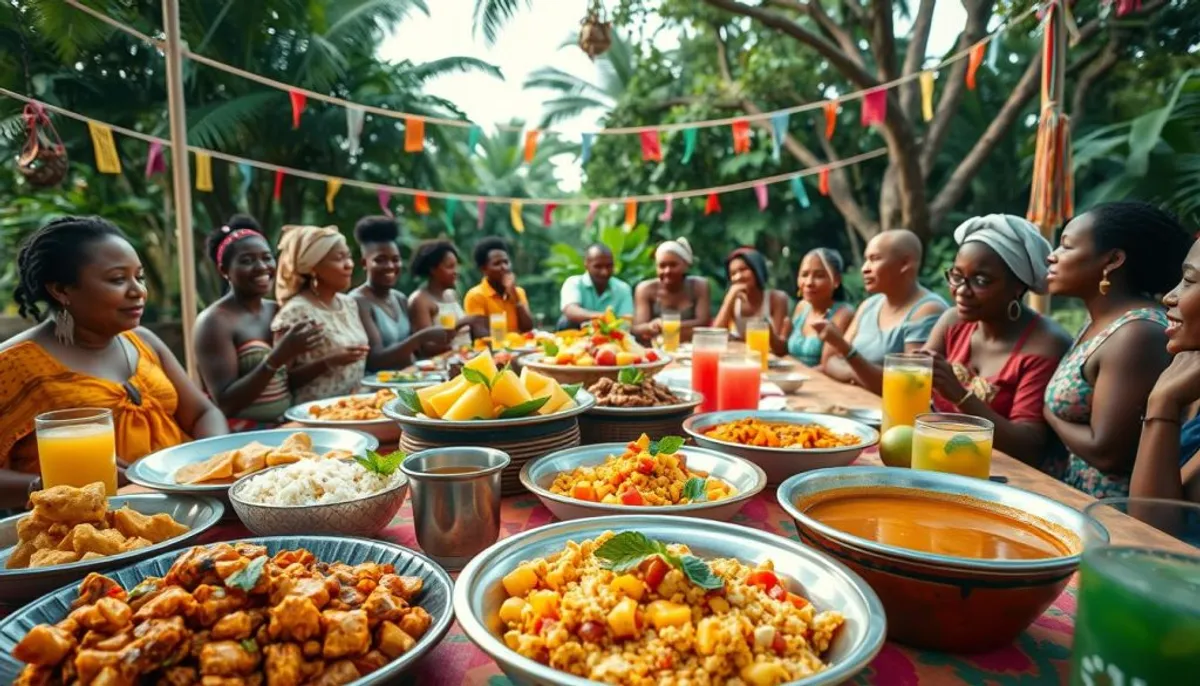
The Surinamese table reveals a symphony of flavors where each dish tells a multicultural story. This unique culinary fusion attracts the attention of the whole world.
Traditional Dishes and Local Flavors
The country offers exceptional gastronomy. Pom, a creole specialty made from tubers, symbolizes national identity.
Indian influences bring roti and spicy curries. Javanese delights like nasi goreng complete this diversity. Each community contributes to this culinary richness.
Authentic Music, Dance, and Festivals
The music scene vibrates to the rhythm of kaseko. This unique genre blends African and Caribbean influences.
The celebrations unite all ethnic groups. Independence, Holi Phagwa, and Carnival showcase unity in diversity. These festivals reinforce the living culture of this nation.
This festive harmony positions the country as a unique destination. Creole traditions coexist with multiple heritages.
The Relationship Between Nature, Geography, and Cultural Identity
The Surinamese territory presents a fascinating duality between coastal areas and dense forest. This unique spatial organization profoundly influences the lifestyle of its inhabitants.
The majority of the population resides along the Atlantic coast. Only 3% of the territory hosts major urban centers.
The Influence of the Amazon Rainforest
The immense Amazon rainforest covers 97% of the country. This tropical vegetation defines the national identity.
The indigenous communities maintain their ancestral traditions in this forest. They draw resources and inspiration from this preserved environment.
Exceptional biodiversity represents a precious heritage. It also poses challenges for sustainable development.
| Geographical Region | Characteristics | Population | Main Activities |
|---|---|---|---|
| North Coastal Zone | Lowlands, urbanized | 95% of inhabitants | Commerce, administration |
| Southern Interior | Tropical forest, savannas | 5% of inhabitants | Agriculture, traditions |
The Maroni and Corantijn rivers serve as essential communication axes. They also mark the borders with French Guiana and Guyana.
This position at the heart of South America creates rich cultural exchanges. Geography continues to shape the social evolution of the country.
The Influence of Colonization on Surinamese Identity
The Dutch colonial legacy still shapes Surinamese identity today. This colonization that began in the 17th century left deep marks on social organization.
The system of slavery was particularly harsh. African slaves endured extreme conditions in the plantations.
Maroons became a fundamental act of resistance. These autonomous communities in the forest created a unique culture, now an essential component of national identity.
After the abolition in 1863, the Dutch recruited contract workers. This massive immigration from India and Indonesia radically transformed the ethnic composition.
| Colonial Aspect | Period | Immediate Effect | Contemporary Legacy |
|---|---|---|---|
| Dutch Administration | 17th-20th century | Imposed official language | Dutch legal system |
| Plantation Economy | 1650-1863 | Racial social division | Persistent economic inequalities |
| Post-Slavery Immigration | 1863-1916 | Ethnic diversification | Current multicultural society |
| Transition to Autonomy | 1954-1975 | Preparation for independence | Hybrid governmental structure |
Independence in 1975 opened a difficult period. The 1980 coup established a military government for a decade.
The civil war of the 1980s directly resulted from inherited tensions. These years of conflict tested the resilience of the young nation.
The inhabitants today undertake important memory work. This foundation of reconciliation allows for the construction of a unified national identity.
Contemporary Aspects and Preservation of Cultural Traditions
Contemporary Suriname navigates between modernity and the preservation of its ancestral traditions. This country has functioned as a stable democracy since the adoption of its Constitution in 1987.
The National Assembly has 51 elected members. The current government must manage a complex legacy while building the future.
Modern Adaptations of Traditional Rituals
Young generations innovate while respecting their roots. Weddings now incorporate technology and social networks.
This fusion creates unique celebrations. The foundation of traditional ceremonies remains intact despite these evolutions.
Initiatives for Enhancing Cultural Heritage
Programs protect important historical sites. Indigenous communities play a crucial role in this preservation work.
Cooperation with French Guiana strengthens these efforts. This collaboration goes beyond border issues for mutual benefit.
The country seeks its place in the modern world. This quest for balance defines its current identity.
Conclusion
At the end of our exploration, Suriname appears as a living laboratory of tolerance and integration. This country in South America demonstrates how diverse ethnic groups can coexist harmoniously.
The rich history, from the first Amerindians to the independence of 1975, has forged a unique identity. Despite the trials of the years of war, the population has preserved its heritage.
The Amazon rainforest covering 97% of the territory remains fundamental to national identity. The government and communities continue a constant effort to enhance this diversity.
This nation offers the world valuable lessons in coexistence. Each day becomes an act of multicultural celebration, inviting all the inhabitants of the globe to discover this hidden gem.
FAQ
Where does Suriname's cultural diversity come from?
This diversity comes from its history. The country has seen the arrival of Amerindians, European colonists, African slaves, and then contract workers from India and Java. Each group has brought its traditions, creating a unique blend in South America.
What languages are spoken in Suriname?
Dutch is the official language, but Sranan Tongo, a creole, is widely spoken. Hindi, Javanese, English, and indigenous languages are also heard. This variety reflects the richness of the ethnic groups.
How has geography influenced life in Suriname?
The Amazon rainforest covers most of the territory, influencing lifestyle. Most inhabitants live along the coast, while the interior, along the rivers, is home to communities with preserved traditions.
When did Suriname gain its independence?
The country became independent from the Netherlands on November 25, 1975. This independence marked a new chapter in its history, allowing for the development of a unique national identity.
What typical dishes should one try?
Surinamese gastronomy is delicious! Try the *roti* of Indian origin, the *pom* (a creole festive dish), or *moksi-alesi* (mixed rice). These flavors tell the story of the different peoples who built the country.