
Welcome to a journey into the heart of a millennial heritage often overlooked. In France, we generally speak of "Berber" tradition, but this term conceals a much deeper reality.
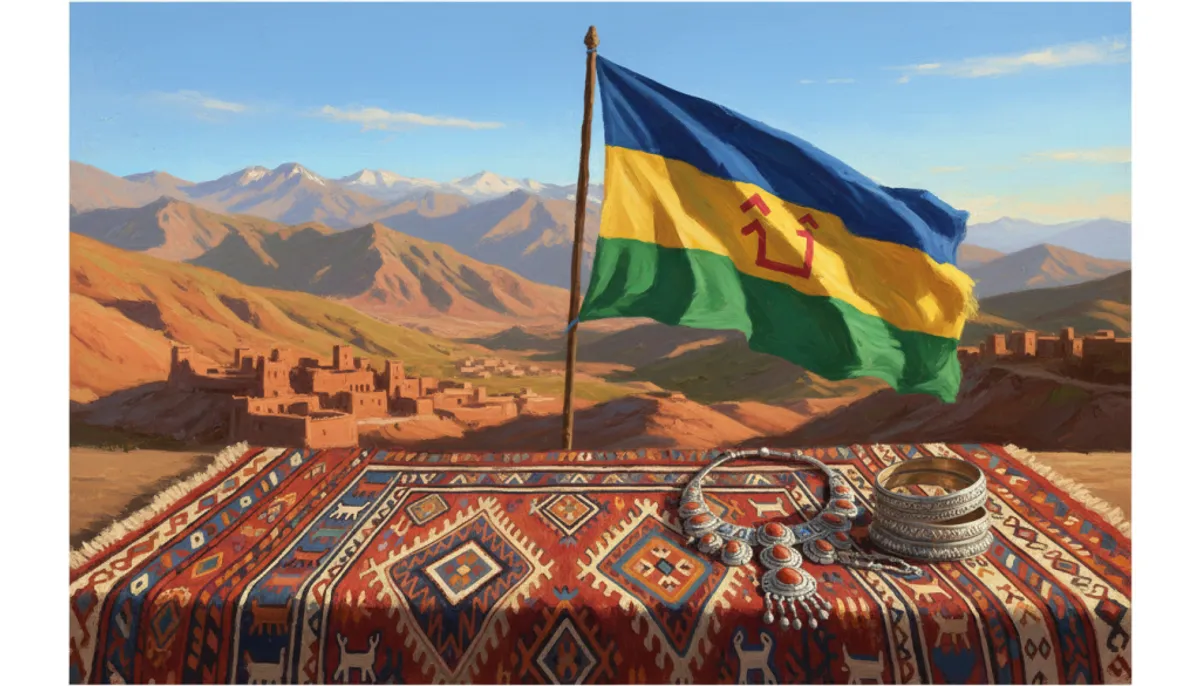
The word "Berber" comes from the Greek "barbaros," which referred to foreigners. The peoples concerned prefer the name "Amazigh", meaning "free man." This designation represents a true identity reappropriation.
This heritage largely relies on oral transmission, a key factor in its longevity since antiquity. Artistic motifs, such as the triangles of the mother goddesses of the Canary Islands, can be found from Libya to Egypt.
In France, Amazigh communities create a living bridge between two worlds. They share this exceptional heritage that enriches our cultural diversity. This article invites you to discover all the facets of this fascinating tradition.
Key Points to Remember
- Discovery of an overlooked millennial heritage in France
- Difference between the terms "Berber" and "Amazigh"
- Importance of oral transmission in this tradition
- Dynamic presence of communities in France
- Artistic richness with universal symbolic motifs
- Contribution to French cultural diversity
General Introduction to Amazigh Culture
Embark on a journey to meet a unique heritage that unites several North African nations. This millennial tradition, rooted in saharan traditions, spans a vast territory called Tamazgha.
It encompasses Morocco, Algeria, Tunisia, as well as Libya and Mauritania. This presence is also found in Niger, Mali, Egypt, and the Canary Islands.
Context and Interest for France
In France, this rich history is part of a century-old migration. The communities have brought with them an exceptional heritage.
This contribution significantly adds to the diversity of French cultures. It creates living bridges between the Mediterranean shores.
Presentation of Unique Traditions and Customs
Social practices rest on three fundamental pillars. The extended family, the sacred bond to the land, and the language as a means of transmission.
Legendary hospitality and remarkable community solidarity are observed. These values transcend geographical boundaries.
Identity is forged around the name "Amazigh", meaning "free man." This term replaces the old Greek term "Berber."
The Origins and Fascinating History
Let us trace the fascinating journey of an identity that has endured through the ages with resilience. This history of kabyle culture dates back millennia, long before the great Mediterranean civilizations.Ancient Roots in North Africa
Archaeological research reveals origins deeply rooted in the continent. This indigenous people have occupied the region since the earliest antiquity.
Their presence extended from the Canary Islands to the Nile Valley. They developed sophisticated social systems adapted to their environment.
Historical Influences and Major Evolutions
Over time, various civilizations have marked this history. Phoenicians, Romans, and Byzantines have successively influenced its development.
This complex cultural evolution has created a unique heritage. Despite invasions, fundamental traditions have been preserved.
"The true strength of a people is measured by its ability to preserve its essence while evolving with its time."
| Period | Major Influence | Cultural Impact |
|---|---|---|
| Antiquity | Mediterranean Civilizations | Commercial and artistic exchanges |
| Middle Ages | Arab Conquests | Partial linguistic integration |
| Modern Era | European Colonizations | Resistance and adaptation |
This rich history testifies to a remarkable capacity for adaptation. The heritage continues to thrive after so many years.
The Unique Characteristics of This Culture
Let us discover the fundamental pillars that define this remarkable identity. Two essential elements stand out particularly.
The Richness of the Amazigh Language
The language is the living heart of this tradition. It presents an exceptional diversity with several regional dialects.
Each variant reflects local specifics while sharing a common base. This linguistic unity demonstrates the cohesion of the people.
| Main Dialect | Region of Use | Particularities |
|---|---|---|
| Tamazight | Central Morocco | Standardized variant |
| Tachelhit | Southern Morocco | Distinctive pronunciation |
| Tarifit | Northern Rif | Mediterranean influences |
Oral Traditions and Knowledge Transmission
The oral transmission represents an ancestral mode of communication. It allows for the preservation of knowledge for millennia.
This method ensures the longevity of knowledge across generations. Historical and poetic narratives are thus naturally passed down.
The entire community benefits from this rich tradition. It keeps the collective heritage alive.
Artistic and Craft Expressions
Dive into a vibrant artistic universe where each creation tells a millennial story. Traditional arts, including Taiwanese art, express identity through varied forms of expression.Music, Dance, and Visual Arts
Music occupies a central place with its distinctive rhythms. It blends diverse influences to create a unique style.
Dances like Ahwach and Ahidous represent fascinating performances. They combine singing, poetry, and body movements around the bendirs.
The visual arts manifest through painting, sculpture, and architecture. Geometric motifs adorn fabrics and decorations.
Traditional Craftsmanship and Authentic Jewelry
Craftsmanship reveals exceptional know-how across different regions. Each territory develops its specialties.
Silver jewelry from Tiznit showcases remarkable technical mastery. These objects carry deep symbolic significance.
Beni Ouaraïn carpets illustrate textile richness. Their geometric motifs on a white background create unique works.
These artistic creations constitute a living heritage. They continue to inspire contemporary generations.
Amazigh Culture and Its Influence on Identity
How does an ancestral heritage continue to shape modern society? This tradition holds a fundamental place in contemporary identity construction.Impact on Moroccan and French Identity
In Morocco, this richness represents an integral part of national history. King Mohammed VI officially recognized this identity in 2000.
He then spoke of "our Amazigh and Arab identity" during the creation of IRCAM. This institution, established in 2001, plays a crucial role in preserving the heritage.
In France, communities maintain a powerful link to their roots. They thus enrich the cultural diversity of France.
Diversity and Social Bonds within Communities
Diversity manifests through different dialects and religious practices. Some tribes preserve pre-Islamic beliefs alongside Islam.
Within the people, a deep sense of community unites members. Hospitality and solidarity create cross-border connections.
Berbers from the North often feel closer to those from the South. This strong collective identity helps preserve social cohesion.
Unmissable Festivals and Cultural Events
Experience the vibrant energy of celebrations that rhythm the lives of communities. These events create bridges between generations and countries.
They allow for the discovery of unique artistic expressions. Each manifestation offers a living example of transmission.
The Timitar Festival and Other Events
The Timitar Festival in Agadir attracts thousands of visitors every summer. Artists from different countries present traditional music performances.
In Fez, the Sacred Music Festival regularly incorporates performances. Cinema finds its place with the International Film Festival in Tiznit.
| Event | Location | Specialty |
|---|---|---|
| Timitar Festival | Agadir | Music and dance |
| Sacred Music | Fez | Spirituality and poetry |
| Amazigh Film | Tiznit | Contemporary cinema |
Traditional Celebrations and Festive Rituals
Yennayer marks the new year according to the agricultural calendar. This January celebration unites families around symbolic meals.
Traditions also express themselves during weddings and births. These events keep ancestral practices alive.
The harvest festival, Tafaska, celebrates summer harvests. These rituals strengthen identity across the ages.
The Preservation of Amazigh Heritage
Concerted efforts are currently underway to protect a cultural treasure long marginalized. This mobilization ensures the sustainability of an exceptional heritage in the face of contemporary challenges.
Governmental and Associative Initiatives
Since 1999, Morocco has engaged in an active preservation policy. The Royal Institute of Amazigh Culture (IRCAM), created in 2001, plays a central role in this mission.
Civil society actively participates in this dynamic. Associations and collectives organize events that highlight this rich heritage.
Projects for the Transmission of Traditional Practices
Innovative programs promote the transmission of ancestral know-how. Myriem Naji documents artisanal techniques to make them accessible.
These ancestral practices find new vitality through these initiatives. Intergenerational transmission ensures their continuity.
The development of tourist circuits also supports local artisans. These projects preserve a living heritage while creating economic opportunities.
Transmission through Orality and Writing
Orality and writing are two essential pillars in preserving this heritage. This dual approach ensures continuous transmission over time.
The Role of Tifinagh and Oral Narratives
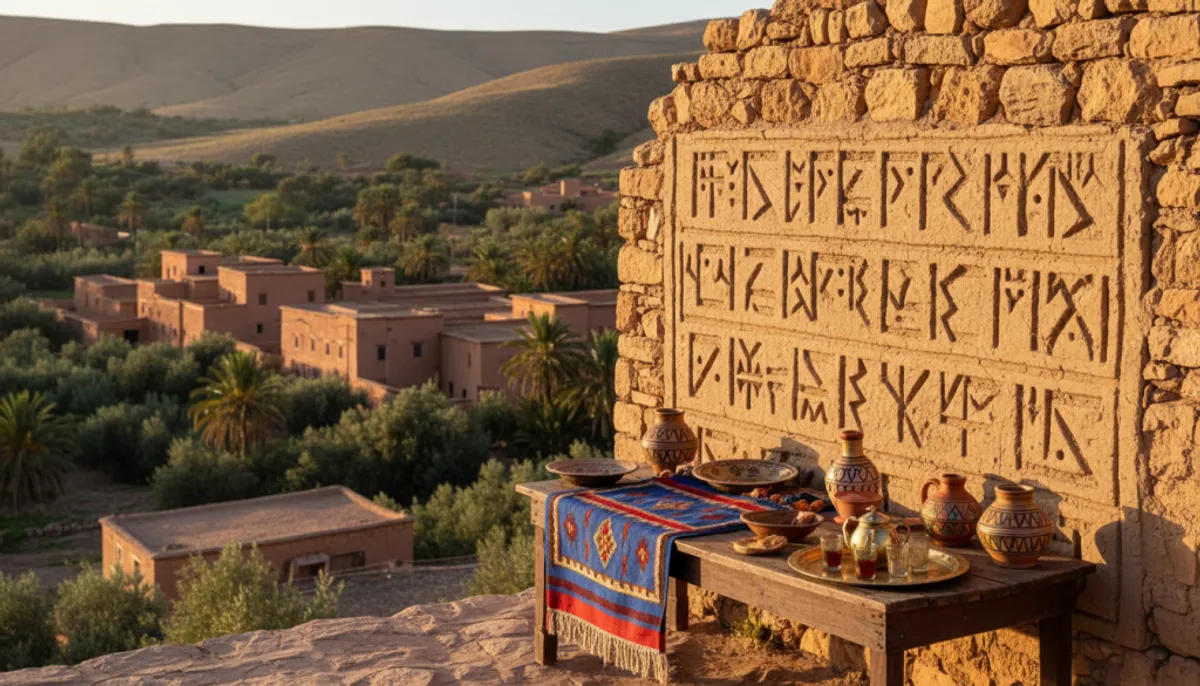
Tifinagh writing is distinguished by its unique geometric forms. It serves as a valuable complement to the rich oral tradition.
This ancestral communication goes beyond mere words. It includes gestures, songs, and rituals in a complex exchange space.
Innovations and Contemporary Figures
Artists like Farid Belkahia reinterpret traditional motifs. Their work establishes a bridge between past and present.
The poet Hawad uses Tifinagh in his modern creations. This adaptation shows the vitality of the language in the current world.
These innovations preserve the essence of ancestral objects and symbols. They ensure a dynamic transmission to new generations.
Amazigh Culture in Modern Society
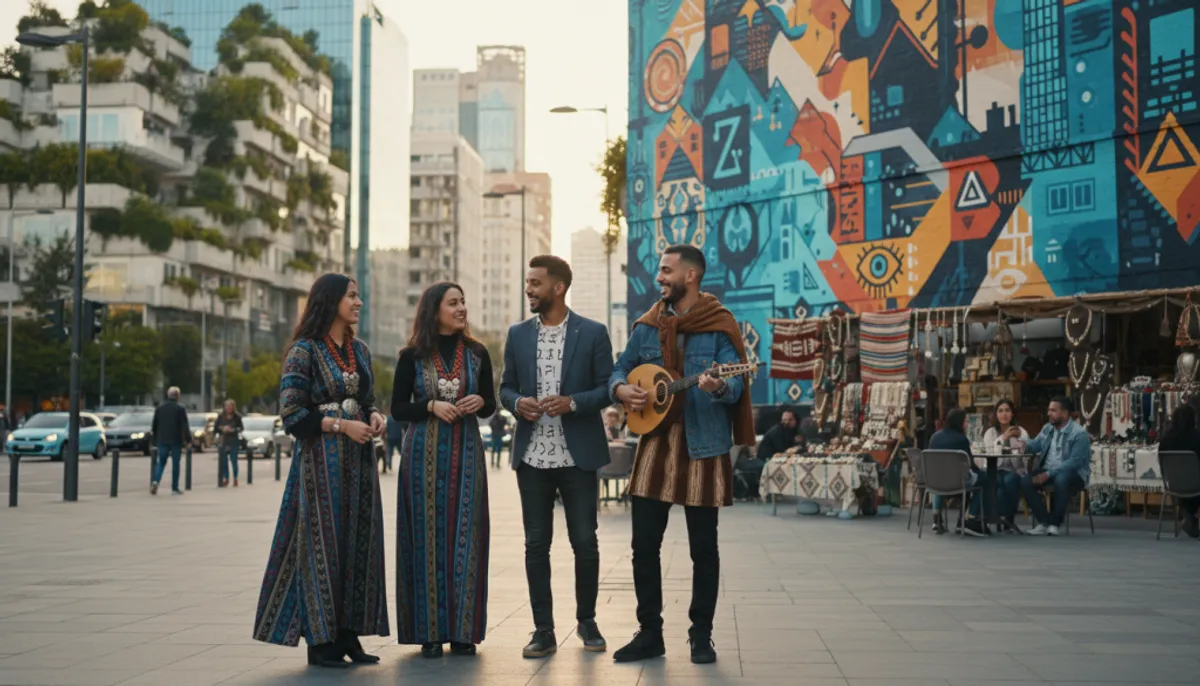
In the heart of major metropolises, this rich identity continues to shine and evolve. Communities keep their traditions alive while adapting to contemporary realities.
Adaptation to French and International Contexts
Integration into the French space demonstrates a remarkable capacity for adaptation. Ancestral practices find new expressions in different countries.
This transnational community creates bridges between cultures. It enriches the French social landscape with its diversity.
Encounters between Modernity and Ancestral Traditions
Contemporary artists creatively reinterpret traditional motifs. This fusion creates a harmonious whole between past and present.
The role of this tradition goes beyond mere preservation. It actively participates in discussions about diversity in our globalized world.
Institutions like Mucem enhance these fruitful exchanges. They offer a space for dialogue between different regions and generations.
Conclusion
Exploring this cultural universe opens fascinating perspectives on our shared humanity. This millennial heritage transcends borders to touch the universal.
Its preservation represents a crucial challenge for future generations. The transmission of knowledge and traditions ensures the continuity of this exceptional wealth.
In France, this presence significantly enriches our cultural diversity. It creates living bridges between different communities.
We invite you to continue this discovery for yourself. Each encounter with this people and its heritage offers a new perspective on our shared world.
FAQ
What are the countries of origin of this North African identity?
Its roots primarily extend to Morocco, Algeria, Tunisia, Libya, and parts of Mali and Niger. It is a heritage that unites several nations.
How is the language transmitted today?
Transmission occurs through orality, within families, and increasingly through formal education. Associative initiatives in France also play a key role in this preservation.
Are there events to discover it in France?
Absolutely! Festivals, conferences, and exhibitions are regularly organized in various cities. These events allow people to experience the music, dance, and meet the community.
What makes craftsmanship, like jewelry, so special?
Each piece is unique. The motifs and symbols used tell a story, often related to nature or ancestral beliefs. It is an art rich in meaning and history.
What is the role of oral traditions in this society?
They are fundamental! Tales, poems, and proverbs serve to convey knowledge, history, and values from one generation to another. It is a living library.