
Nestled in the heart of Southern Africa, this mountainous kingdom offers a rare authenticity. Completely landlocked within South Africa, Lesotho reveals hidden treasures.
Beyond the spectacular landscapes, it is a culture alive that permeates daily life. From remote villages to the capital Maseru, ancestral traditions resist modernization.
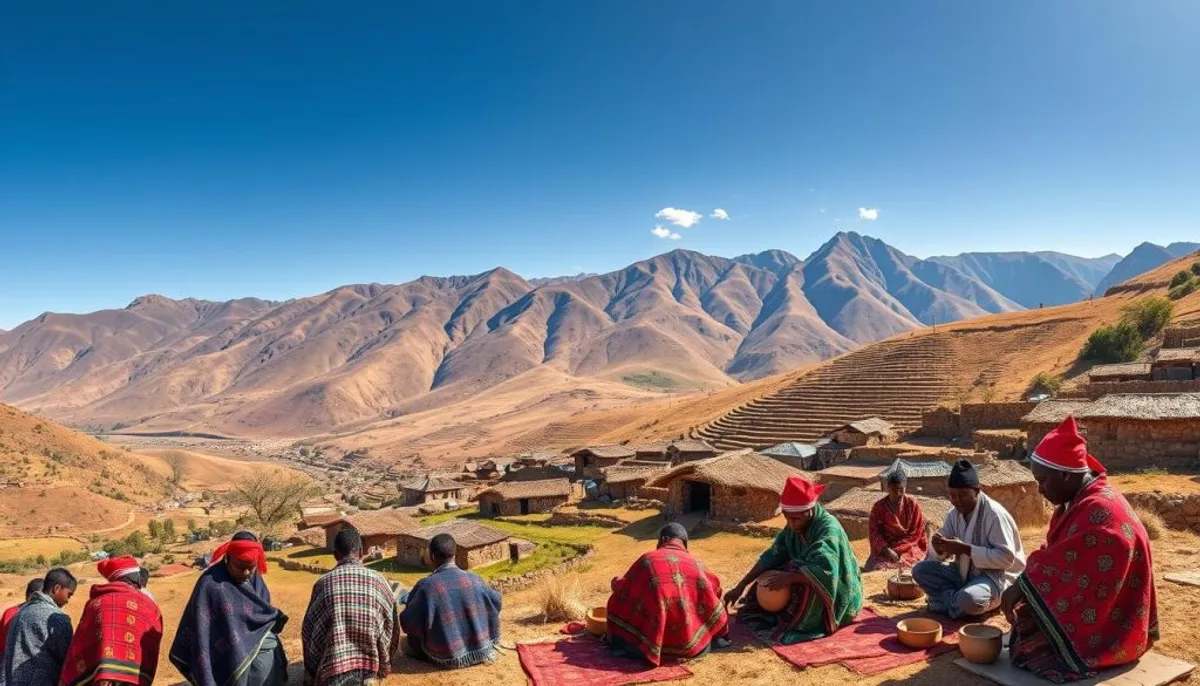
The Basotho people draw their roots from prehistory. Different Sotho tribes have settled in this territory over the centuries.
In the 19th century, Moshoeshoe unified these communities with vision. Thus, he created the modern Basotho nation, forging a remarkable legacy of peace.
Even today, these traditions structure social and spiritual life. The past harmoniously dialogues with the present in this unique country.
Key Points to Remember
- Lesotho is a small kingdom entirely landlocked in South Africa
- The Basotho people preserve vibrant centuries-old traditions
- Moshoeshoe unified the Sotho tribes in the 19th century
- The cultural heritage permeates the daily lives of the inhabitants
- The spectacular landscapes hide an authentic cultural wealth
- Ancestral traditions coexist with modernity
Diving into Lesotho Culture
Ancestral clans form the foundation of modern Basotho society. Bataung, Basia, Bafokeng, and other names perpetuate the memory of origins.
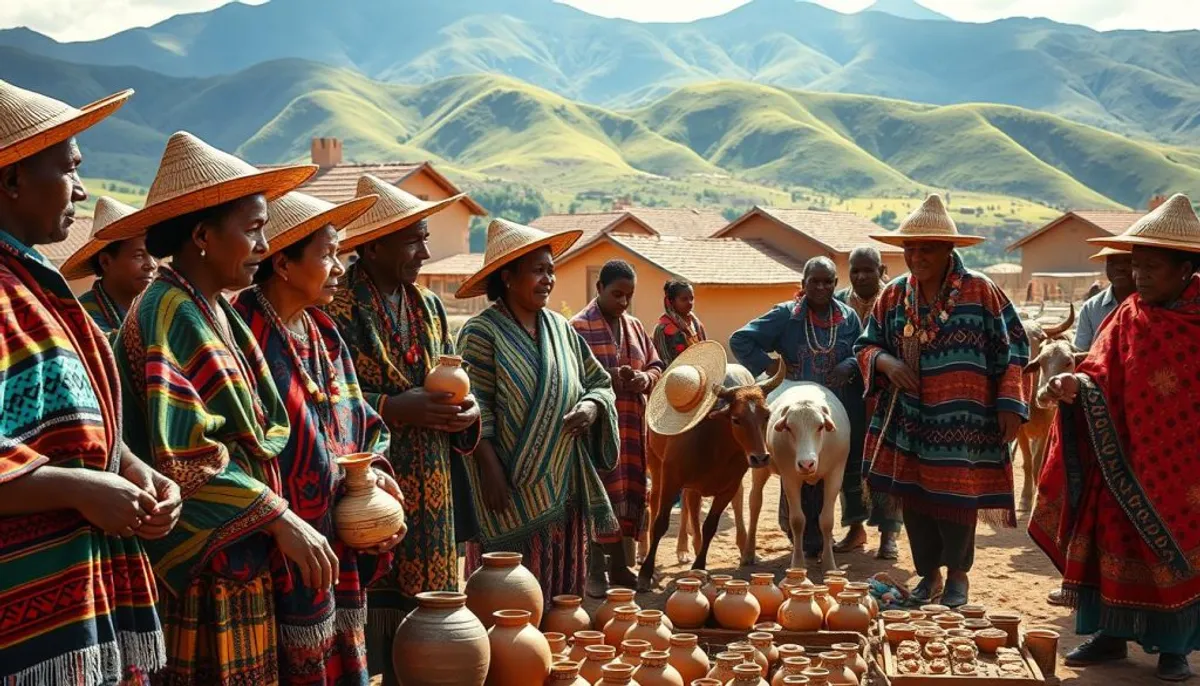
A Unique Historical Heritage
Until 1822, different tribes lived in peace. The invasion by the Nguni created a troubled period.
Moshoeshoe offered refuge at Thaba-Bosiu to the survivors. This visionary action allowed for the construction of a united Basotho nation.
The Essentials of Traditional Basotho Attire
The traditional blanket is much more than a garment. Received during rites of passage, it indicates social status.
The mokorotlo, a conical hat inspired by Mount Qiloane, symbolizes national identity. These clothing elements tell a living story.
These traditions structure daily life and connect the people to the modern world while honoring their past.
Ancestral Traditions and Beliefs
Basotho spirituality is rooted in a system of ancestral beliefs that guide every step of existence. The balimo, protective ancestors, watch over the living against malevolent forces.
Rituals, Ceremonies, and the Role of Ancestors
Ceremonies mark crucial moments in life. Births, marriages, and funerals follow specific traditions.
Cattle hold sacred importance beyond their economic value. Cows symbolize wealth and serve as bride price.
They also play a central role in rituals of communication with ancestors. This tradition strengthens the bonds between generations.
Oral History and Totems: Liboko, Lithoko, and Litsomo
Oral history preserves collective memory through three distinct forms. Each fulfills a specific function in the transmission of knowledge.
| Oral Form | Main Function | Traditional Carriers |
|---|---|---|
| Liboko (totems) | Identify clans and their origins | Heads of families |
| Lithoko (poems) | Celebrate warrior exploits | Griots and elders |
| Litsomo (tales) | Educate young generations | Grandmothers |
Initiation schools trained the youth for adulthood. Boys and girls learned the essential values for their roles in society.
These practices keep the Basotho culture alive despite modern changes, including various cultural practices in namibia. The people thus perpetuate their unique spiritual heritage.
The Cuisine and Culinary Heritage of Lesotho
Ska Moteane discovered a cultural urgency while searching for the roots of traditional gastronomy. This star chef returned to her home country in 2009 after a brilliant career in South Africa.
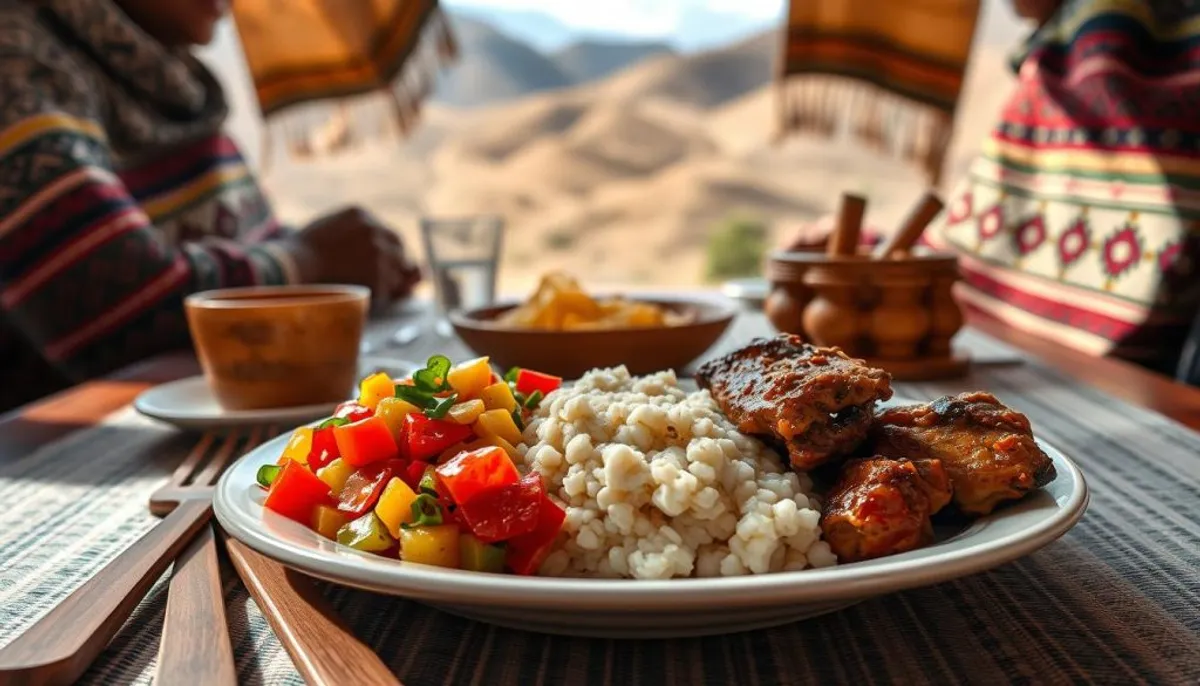
The Chef Ska Moteane's Approach to Preserving Food Culture
Faced with customer demand, she realized the complete absence of culinary documentation. Ska then embarked on an extraordinary journey to the most remote villages.
She collected from the elders the secrets of this cuisine with pure flavors. Basotho gastronomy is characterized by its simplicity and the use of few ingredients.
Traditional Recipes and Preparation Tips
Ska Moteane's book has preserved authentic recipes such as Nyokoe and free-range chicken with spinach. These dishes perfectly illustrate the traditional culinary approach.
| Traditional Dish | Main Ingredients | Preparation Time |
|---|---|---|
| Nyokoe | Sorghum, beans, salt | 40 min to 2 hours |
| Free-range chicken with spinach | Chicken, onions, African spinach | About 30 minutes |
I never knew how to prepare this dish. My grandmother used to make it, but she passed away before she could teach me the recipe.
The Importance of Food Sovereignty in Lesotho
The country, entirely landlocked in South Africa, heavily depends on imports. The pandemic revealed the dangers of this situation.
Ska is now working with local farmers to develop short supply chains. Her goal: to regain food autonomy while valuing culinary heritage.
Conclusion
This small African kingdom demonstrates how to honor the past while living in the present. The Basotho culture permeates every aspect of daily life, from traditional clothing to ancestral recipes, including the vibrant traditional central african dance.
In a world constantly evolving, the country represents an inspiring model. The Basotho people maintain their traditions while facing modern challenges.
Guardians of traditions like Ska Moteane work passionately. They ensure the transmission of this precious heritage to future generations.
Lesotho deserves to be discovered for its vibrant authenticity. Beyond the spectacular landscapes, a rewarding human experience awaits you.
The legacy of peace from Moshoeshoe continues to guide this nation. It inspires remarkable cultural resilience for the years to come.
FAQ
What is the most emblematic traditional attire of the Basotho people?
The most famous garment is the mokorotlo, a conical-shaped hat. It symbolizes Mount Qiloane, a sacred mountain. The wool blanket, the serape, is also very important for protection against the mountainous climate.
How is the importance of ancestors manifested in daily life?
The ancestors, or badimo, are considered spiritual guides. Their advice is sought during family ceremonies. Their blessing is essential for the well-being of the community and the harvests.
What are the typical dishes that must be tasted during a visit?
The papa, a corn porridge, is the staple food. It is often accompanied by moroho (leafy vegetables) and meat. Chefs like Ska Moteane reinterpret these recipes to celebrate local culinary heritage.
What do family totems, or liboko, mean to the Basotho?
The liboko are animal or natural emblems that define a clan's identity. They strengthen family ties and respect for the environment. These symbols are a precious heritage passed down through the litsomo, the folktales.
Why is food sovereignty crucial for Lesotho?
It allows the country to value its own resources and agricultural know-how. This strengthens autonomy and preserves a healthy lifestyle, rooted in traditions and adapted to the mountainous territory.