
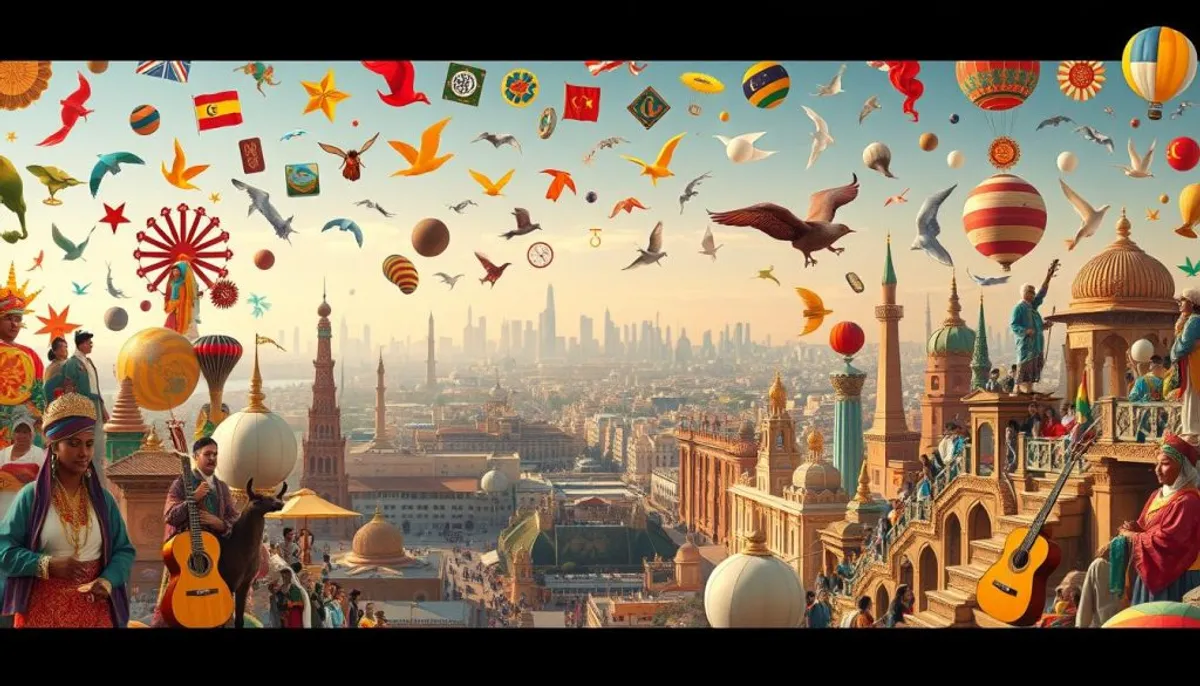
Welcome to this exciting exploration of cultural globalization, a phenomenon that profoundly transforms our contemporary societies. This process connects peoples, traditions, and identities on a global scale.
You will discover how these exchanges influence your daily life. From the music you listen to, to the dishes you enjoy, these connections create bridges between once-isolated communities.
Through concrete examples such as the popularity of K-pop, the integration of Indian cuisine in France, or the spread of Japanese manga, you will see how cultures enrich each other. This diversity represents a true wealth for our interconnected world.
This guide will help you develop a deep understanding of this complex subject. We will examine how modern technologies accelerate these exchanges and create new opportunities.
Prepare for an intellectual journey that will give you the keys to navigate this ever-evolving landscape. You will better understand your place in this globalized culture and its multiple facets.
Introduction to Cultural Globalization
Let’s dive into the heart of a phenomenon that redefines our interactions on a global scale. This globalization transforms the way individuals share their experiences and traditions.
Context and Importance of the Phenomenon
The transmission of ideas and values across the world creates an extensive social network. This process of exchange enriches our mutual understanding.
The importance of this dynamic lies in its impact on identities. It allows people from different backgrounds to better understand each other.
| Traditional Aspect | Modern Method | Impact on Exchange |
|---|---|---|
| International Travel | Digital Platforms | Acceleration of Contacts |
| Language Exchanges | Translation Apps | Immediate Facilitation |
| Traditional Media | Social Networks | Global Dissemination |
The Contribution of Modern Technology
The internet and digital tools have revolutionized this globalization. They enable instant communication between different cultures.
This technology creates unique opportunities for individuals. It democratizes access to knowledge and traditions from around the world.
Overview of Current Trends
Let’s decipher the cultural flows that characterize our interconnected era. These movements profoundly transform how cultures meet and enrich each other.
The current globalization produces surprising phenomena. American teenagers groove to the rhythm of Korean K-pop and the hallyu wave, while British families adopt Indian curry as a traditional dish.
The Evolution of Cultural Exchanges
Contemporary exchanges reveal remarkable diversity. Polynesian children discover Japanese animes like Pokémon and Dragon Ball.
These encounters between different cultures create new shared passions. People from around the world gather around content that transcends borders.
The Role of Social Networks and Media
Social networks accelerate this dynamic in spectacular ways. Platforms like TikTok and YouTube enable instant propagation of content.
This technology facilitates direct communication between diverse communities. Real-time interaction boosts the popularity of cultural phenomena.
Traditional and digital media now work together. They amplify the reach of creations from all corners of the globe.
Effects of Cultural Globalization: Exchanges and Identity Enrichment
Now let’s explore how encounters between diverse traditions, including those that embrace gender non-conformity, transform our identities. These interactions create genuine mutual enrichment that transcends borders.The exchange of ideas and values between different cultures opens new perspectives. Each person can thus build their identity with increased richness.
Diversity as a Driver of Innovation
Cultural diversity stimulates creativity and innovation. When cultures meet, they generate original solutions.
This dynamic benefits both individuals and entire societies. It allows for the integration of varied approaches to solve common challenges.
New Forms of Cultural Expression
Cultural exchange gives rise to hybrid expressions. These creations mix elements from multiple traditions.
Language plays a key role in these exchanges. It facilitates understanding between people from different backgrounds.
This cross-influence enriches the global heritage of indigenous cultures. Each culture retains its unique character while opening up to others.Fusion of Cultures and Emergence of Hybrid Identities
The interaction between different traditions gives birth to rich and complex identities that transcend borders. These creative blends represent a natural evolution in our interconnected world.
Today’s individuals build their identity by drawing from multiple heritages. This way of life allows for a more nuanced personal expression.
Concrete Examples of Cross-Influences
Research shows that immigrants harmoniously integrate elements from multiple cultures. This open-mindedness enhances their intercultural skills.
Interracial marriages create homes where children naturally develop a multicultural identity. They navigate effortlessly between multiple worlds.
| Cultural Domain | Traditional Influence | Modern Contribution | Hybrid Result |
|---|---|---|---|
| Cuisine | Ancestral Recipes | International Ingredients | Innovative Fusion Dishes |
| Music | Local Rhythms | Global Instruments | Mixed Styles |
| Art | Regional Techniques | Contemporary Aesthetics | Transcultural Works |
| Language | Traditional Expressions | International Neologisms | Enriched Dialects |
The cultural heritage thus gains new dimensions. Customs evolve while retaining their original essence.
This positive dynamic allows people to freely choose the aspects they wish to integrate. Each identity thus becomes unique and personalized.
The Challenges of Cultural Homogenization
The gradual standardization of lifestyles raises important questions about the preservation of particularities. This cultural homogenization represents one of the main challenges of our time.
Local traditions face increasing pressure from the global spread of standardized models. This uniformity threatens the rich diversity of human expressions.
Risks of Dilution of Local Traditions
Constant exposure to global content gradually erodes ancestral practices. Economically less influential communities are particularly vulnerable.
The cultural heritage risks being impoverished when younger generations adopt standardized lifestyles. This transformation profoundly affects the collective identity.
| Affected Domain | Manifestation of Homogenization | Impact on Local Specificities |
|---|---|---|
| Food | Establishment of International Chains | Disappearance of Traditional Recipes |
| Languages | Dominance of English in Media | Weakening of Regional Dialects |
| Arts | Standardization of Artistic Productions | Loss of Unique Craft Techniques |
Family and community customs lose their vitality in the face of this influence. Intergenerational transmission becomes more difficult.
Preserving authenticity requires conscious efforts for valorization. Each community must find a balance between openness and protection of its heritage.
Societal Impact of Cultural Globalization
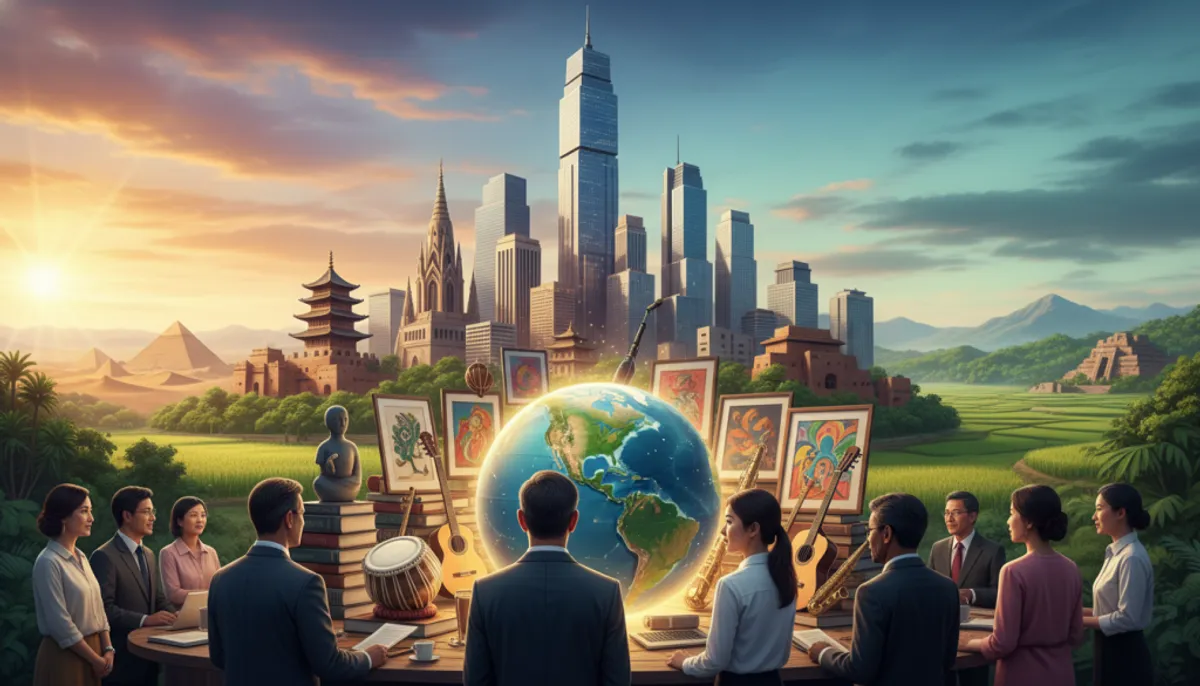
How does cultural globalization change our social life? This central question reveals profound transformations in our daily interactions.
Individuals today develop essential intercultural skills. This evolution directly impacts the structure and functioning of our communities.
Transformation of Norms and Values
Social norms evolve rapidly under the influence of international exchanges. Traditional values coexist with new perspectives.
This globalization encourages critical reflection on our habits. People naturally compare different systems of thought.
Effects on Social Cohesion
Social cohesion represents a major issue in this context. The harmonious integration of differences becomes crucial.
Individuals navigate between local attachment and global openness. This duality enriches their personal and collective identity.
| Societal Aspect | Advantages | Challenges | Solutions |
|---|---|---|---|
| Social Norms | Open-mindedness | Value Conflicts | Intercultural Dialogue |
| Community Cohesion | Enriching Diversity | Risk of Fragmentation | Collective Projects |
| Collective Identity | Mutual Enrichment | Identity Questioning | Inclusive Education |
| Social Integration | Cultural Innovation | Necessary Adaptation | Welcoming Policies |
The cultural impact on society requires balanced management. Local and global cultures can coexist harmoniously.
This dynamic fosters the development of valuable social skills. Individuals learn to value difference as a richness.
Opportunities Created by a Globalized Culture
Current trends open unprecedented perspectives for personal and collective development. This global dynamic generates remarkable opportunities in various areas of contemporary life.International markets today allow for the smooth circulation of cultural goods and services. Individuals thus discover products from all corners of the world.
Development of Cultural Innovation
The meeting of different traditions significantly stimulates innovation. This cross-fertilization fosters the emergence of original and hybrid creations.
Exchanges facilitate the rapid dissemination of best practices. Societies can thus mutually enrich themselves from their respective experiences.
This global interconnection boosts creativity and economic development. Artists and entrepreneurs access international audiences.
People develop valuable intercultural skills. These abilities are increasingly valued in the professional world.
The Role of Education and Media in Cultural Exchange
Education and media actively shape our understanding of international exchanges. These two areas play an essential role in how we discover other traditions.
Educational Initiatives and Integration Programs
Modern educational systems deliberately integrate multicultural perspectives. Programs like Erasmus allow students to experience complete immersion.
This approach develops empathy and intercultural skills. Young people learn different histories and ways of thinking.
Integration programs also assist newcomers. They facilitate language learning and cultural orientation.
| Type of Initiative | Main Method | Impact on Exchange |
|---|---|---|
| Study Abroad Programs | Direct Cultural Immersion | Development of Intercultural Skills |
| Multicultural Curriculum | Integration of Diverse Perspectives | Broadened Worldview |
| Integration Programs | Language and Cultural Learning | Facilitation of Adaptation |
| Virtual Exchanges | International Online Collaboration | Global Accessibility |
Influence of Media and Digital Platforms
Media platforms have transformed our access to global content. Netflix, YouTube, and social networks offer a comprehensive cultural panorama.
This technology democratizes exchange by reducing geographical barriers. People discover distant traditions from their homes.
The internet enables direct communication between different communities. This interaction fosters authentic understanding.
The media have a responsibility to promote respectful representations. They thus avoid stereotypes and cultural misunderstandings.
Future Perspectives and Trends
The future of cultural exchanges looks particularly dynamic thanks to technological advancements. Individuals from around the world will benefit from more immediate and immersive connections.
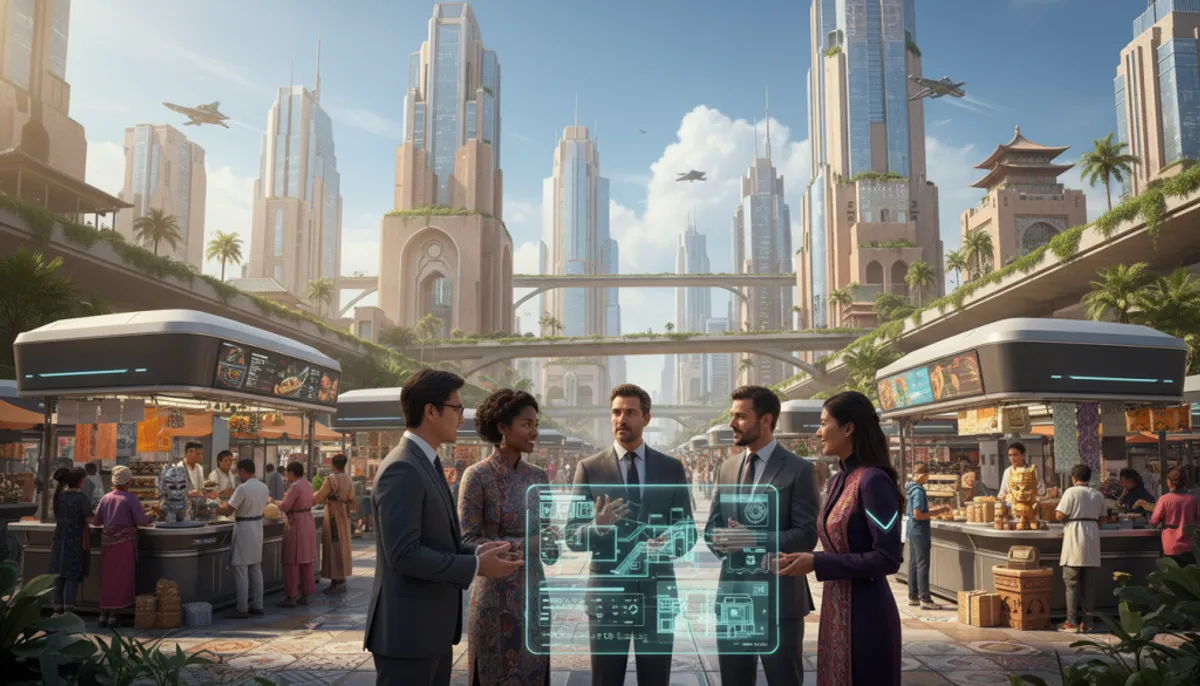
This digital evolution will profoundly transform how we share traditions and creations. Virtual platforms will enable unprecedented cultural encounters.
Adaptation to Global Challenges
Intercultural collaboration will become essential to solve global problems. Different societies will unite their strengths to face common challenges.
This adaptation will require increased open-mindedness. Cultures will learn to work together despite their differences.
Forecasts and Evolutions of the Cultural Landscape
The balance between preservation and innovation will represent a major issue. Societies will seek to protect their cultural heritage while opening up to exchanges.
Global diversity will remain a precious wealth to preserve. Emerging technologies like virtual reality will offer new possibilities for immersion.
This positive evolution will depend on our collective ability to value differences. The world of tomorrow will be more interconnected than ever.
Conclusion
This exploration leads us to essential reflection on our shared humanity. Globalization has transformed the way people meet and learn from each other.
We have discovered that cultural exchange offers extraordinary opportunities for developing a deeper understanding. Diversity represents a precious wealth that stimulates our collective creativity.
Success will depend on our ability to find a balance between openness and preservation of identities. By embracing our differences, we can build a more harmonious world.
The future of our societies rests on this mutual understanding. Let us continue to learn from each other to create a world where everyone finds their place.
FAQ
What is cultural globalization?
It is a process where different cultures of the world interact and exchange ideas, values, and customs. This interaction is facilitated by technology, media, and exchanges between individuals from various countries, enhancing cultural accessibility.
How does technology influence cultural exchange?
Technology, especially the internet and social networks, plays a crucial role. It enables rapid communication and facilitates the global dissemination of traditions, languages, and innovations.
Does globalization threaten cultural diversity?
It presents both challenges and opportunities. While there is a risk of homogenization, many initiatives aim to promote and preserve the unique cultural heritage of each community, including community events that celebrate local traditions and foster cultural exchange.
What are the benefits of this interaction between cultures?
These exchanges foster innovation, mutual understanding, and identity enrichment. They also open new markets and create opportunities for artists and creators worldwide.
How does education contribute to these exchanges?
Education plays an essential role in encouraging curiosity and respect for other cultures. School programs and integration initiatives help individuals better appreciate global diversity.