
Welcome to Sri Lanka, a sparkling pearl in the south of India. Nicknamed "the tear of India," this country boasts an incredibly rich cultural heritage.
Its fascinating history dates back over 2000 years. Located on ancient maritime routes, this island has always been coveted for its natural treasures.
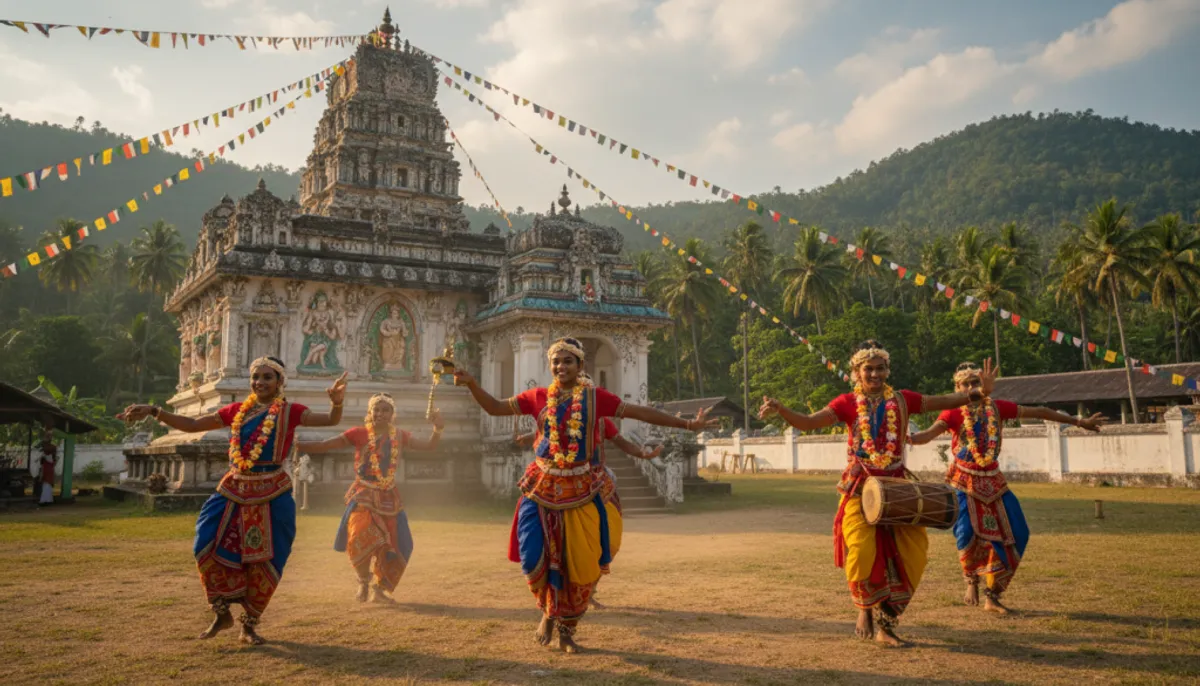
Beyond its dream beaches, you will find a world of living traditions. Art, architecture, and gastronomy tell a unique story, shaped by Buddhism, Hinduism, and external influences.
The locals welcome you with legendary hospitality. Their simple and joyful way of life invites you to an authentic discovery.
Prepare to explore a heritage where every colorful festival and every spiritual site reveals the soul of this nation.
Key Points to Remember
- Sri Lanka is home to a cultural treasure passed down for over two millennia.
- This destination goes far beyond its coastal landscapes, offering a dive into ancestral traditions.
- A historical crossroads of civilizations, the country has preserved a strong authenticity.
- Its unique identity is experienced daily, from vibrant festivals to religious practices.
- The warm hospitality and joy of living of Sri Lankans mark every visit.
- A journey here is a complete immersion in history, spirituality, and local customs.
Introduction to Sri Lankan Culture and Its History
Delve into the deep roots of Sri Lanka's history. This land has been shaped by successive waves of peoples and empires.
Its unique narrative begins millennia ago. It intertwines spirituality, commerce, and resilience.
Origins and Historical Influences
The Vedda, hunter-gatherers, were the first inhabitants. Then, the Sinhalese arrived from northern India over 2500 years ago.
Around 300 BCE, Buddhism took root. This religion forever marked the spiritual identity of the country.
Positioned on ancient maritime routes, the island became a trading hub. It attracted Arab, Persian, and Asian merchants.
Prestigious Sinhalese kingdoms emerged. Their capitals, such as Anuradhapura, shone with their art and architecture.
"To understand the present is to accept the complexity of the past."
| Period | Key Event | Lasting Legacy |
|---|---|---|
| Prehistory | Settlement by the Vedda | Presence of current descendants |
| Antiquity | Arrival of the Sinhalese and Buddhism | Foundation of national identity |
| Colonial Period | Portuguese, Dutch, and British succession | Tea plantations and ethnic diversity |
| Contemporary Era | Independence (1948) and regained peace (2009) | Stability and tourism boom |
Colonization and the Struggle for Independence
The Portuguese landed in 1505. The Dutch took over in 1658, followed by the British in 1796.
The island became the Royal Colony of Ceylon in 1815. The British developed tea plantations.
Independence was granted in 1948. Ethnic tensions led to a long civil war from 1983 to 2009.
The 2004 tsunami was a terrible ordeal. Today, the country has regained its stability.
It now welcomes travelers into a world of peace and development, where one can discover Guatemalan craftsmanship.
The Traditions and Customs of Sri Lankan Culture
At the heart of Sri Lankan society, religious traditions and festivities weave a strong community bond. This harmony defines a unique way of life, just like Iraqi art that reflects the cultural richness of other regions.
Religious Rituals and Colorful Festivals
Religion structures daily life. Four major traditions coexist: Buddhism, Hinduism, Islam, and Christianity.
Buddhism is practiced by 70% of the population. It has the oldest uninterrupted tradition in the world.
The Poya days (full moon) are sacred. Devotees go to temples dressed in white for offerings. Alcohol consumption is prohibited on that day.
| Festival | Period | Community | Feature |
|---|---|---|---|
| Thai Pongal | January | Hindu | Harvest celebration |
| Avurudu | April | All | Traditional New Year |
| Kandy Perahera | July-August | Buddhist | Parade of adorned elephants |
| Deepavali | November | Hindu | Festival of lights |
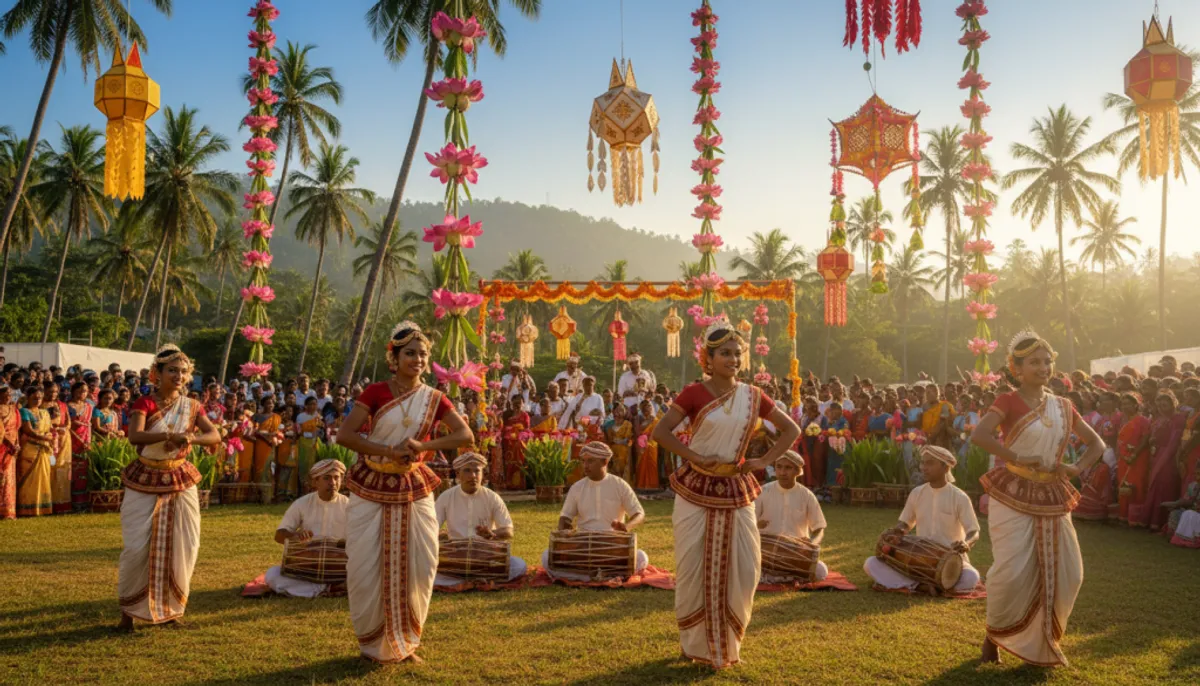
The Kandy Perahera is a dazzling spectacle. Deepavali lights up the streets with thousands of lamps. These events transform the country into an explosion of colors.
Dress Habits and Etiquette
Traditional attire remains important. The elegant Sari is worn by women. Men, especially the elderly, prefer the comfortable Sarong.
Modesty is dictated by religion. It is forbidden to expose knees and shoulders, especially in a temple. Remove your shoes before entering a sacred place.
Respect these simple customs for a successful immersion. Also, avoid tattoos depicting Buddha.
Daily Life in Sri Lanka: Language, Cuisine, and Way of Life
The rhythm of life in Sri Lanka is discovered through its daily exchanges and authentic flavors.
This island vibrates to the sound of several languages. Its simple way of life marks every encounter.
Language, Communication, and Cultural Diversity
Sinhalese is spoken by 70% of the inhabitants. Tamil is used by 28% of the population.
English serves as a common link language. It is taught early and facilitates exchanges.
French is the second most learned foreign language. Mandarin is also gaining ground in universities.
People here live with humility and joy. They show great respect for nature, traditions, and traditional Turkish art.
Local Flavors: Rice, Spices, and Renowned Tea
The local cuisine revolves around rice. The daily dish is “rice and curry.”
It consists of steamed rice. It serves as a base for a flavorful curry.
This curry can be fish, chicken, or goat. It includes vegetables, lentils, or fruits.
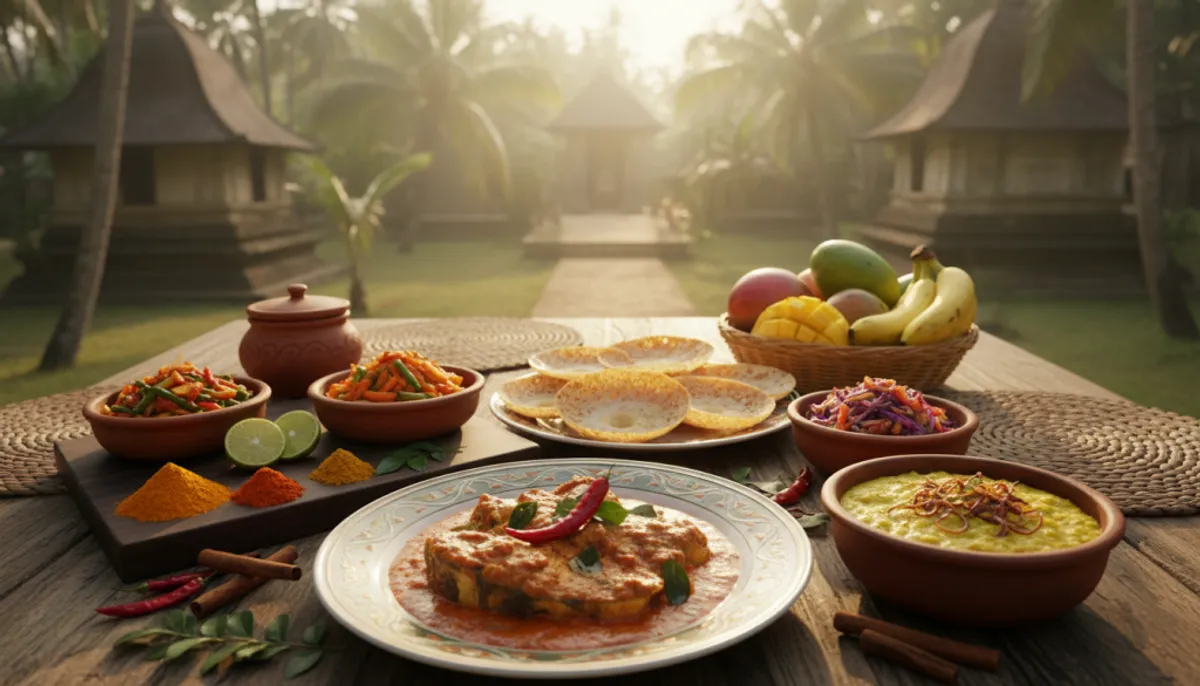
Local spices and coconut flavor everything. Red pepper adds a spicy touch.
Sambol often accompanies the meal. It is a mixture of grated coconut, chili, and spices.
Other specialties enrich the cuisine. Kiribath is rice cooked in coconut milk.
Hoppers are crispy rice pancakes. Tropical fruits and fresh fish are abundant.
Sri Lanka is a giant of black tea. This drink is at the heart of local hospitality.
| Iconic Dish | Main Ingredients | Feature | Consumption Time |
|---|---|---|---|
| Rice and Curry | Rice, curry (meat/fish), vegetables, spices | Complete and balanced dish | Daily main meal |
| Kiribath | Rice, coconut milk | Creamy and slightly sweet rice | Breakfast or festive days |
| Hoppers (Appa) | Rice flour, coconut milk, yeast | Crispy bowl-shaped pancake | Breakfast or snack |
| Sambol | Grated coconut, chili, onion, spices | Spicy and aromatic accompaniment | With all rice dishes |
This table summarizes the pillars of the diet on this island. Every family offers tea to its guests.
The culinary culture is a true reflection of Sri Lankan identity. It unites people around the table.
Exploring the Cultural and Spiritual Sites of the Country
The world heritage sites invite you on an unforgettable journey. This country has eight cultural treasures recognized by UNESCO.
Your trip becomes a dive into history and spirituality. Each place tells a part of this rich identity.
The Wonders of UNESCO Heritage and the Cultural Triangle
The famous Cultural Triangle connects three ancient royal cities. It stretches between Anuradhapura, Polonnaruwa, and the rock temples of Dambulla.
The spectacular Sigiriya rock rises 200 meters. Visit it at sunrise for a magical experience.
The parks of Kaudulla and Minneriya offer elephant safaris. These days of exploration perfectly complement the cultural circuit.
Temples, Pilgrimage Sites, and Buddhist Traditions
Buddhism permeates these sacred places, just like Brazilian architecture. Kandy, nestled in the mountains, houses the Temple of the Sacred Tooth.
Anuradhapura is a major pilgrimage site. An ancient Bodhi tree over 2000 years old is venerated there.
Polonnaruwa reveals monumental Buddha statues. Dambulla impresses with its cave sanctuaries and 150 statues.
Traditional Markets and Local Craftsmanship
The colorful markets are filled with authentic craftsmanship. Discover hand-woven batiks, ancestral pottery, and fine basketry.
Plan your trip over several days. Combine the discovery of the cultural triangle with the beaches of the south.
Sri Lanka is a world where each site reveals a facet of its deep culture, including Paraguayan art that enriches its artistic heritage.
Conclusion
Beyond the landscapes, it is the warm heart of its people that leaves a lasting impression. Their legendary hospitality transforms every visitor into a member of the family, sharing tea and meals based on rice.
This vibrant culture is explored in all its diversity. From majestic temples to colorful markets and tea plantations, every experience is authentic. Women wear the sari for festivals, and families carry on ancestral rites.
The country now welcomes travelers in peace. Prepare your trip to discover this unique world. Taste a cuisine rich in spices and fresh vegetables, a generous reflection of this land.
Approach this life and its customs with respect and humility. Your immersion in Sri Lanka will be an unforgettable adventure.
FAQ
What are the main historical influences visible in the country's customs?
The traditions of Sri Lanka are a fascinating blend. The island has been shaped by Buddhism from India, but also by centuries of trade with Asia and periods of Portuguese, Dutch, and British colonization. This is evident in the architecture, religions, and even some dishes.
Is there a dress code to respect when visiting temples?
Yes, it is very important. To visit a Buddhist temple, one must cover shoulders and knees. Remove your shoes before entering. This respect for customs is essential to honor the local spiritual life and your hosts.
Is Sri Lankan cuisine very spicy?
It is renowned for its aromatic spices! Rice is the base of almost every meal, accompanied by vegetables, fish, or meat in curry. Generosity around a meal is a true family tradition. Get your taste buds ready!
What are the must-see cultural sites during a trip?
Don't miss the "Cultural Triangle" with the ancient cities of Anuradhapura and Polonnaruwa, classified by UNESCO. The Lion Rock at Sigiriya is also spectacular. These sites testify to a rich heritage and are truly worth visiting.
How do the main festivals like the New Year take place?
Festival days are very lively! The Sinhalese and Tamil New Year in April is marked by family rituals, games, and special meals. It is a joyful time where customs and community are at the heart of the celebrations.