
Discover how to awaken the curiosity of young people with fun and educational activities. Questions about the world around us are an excellent way to stimulate learning.
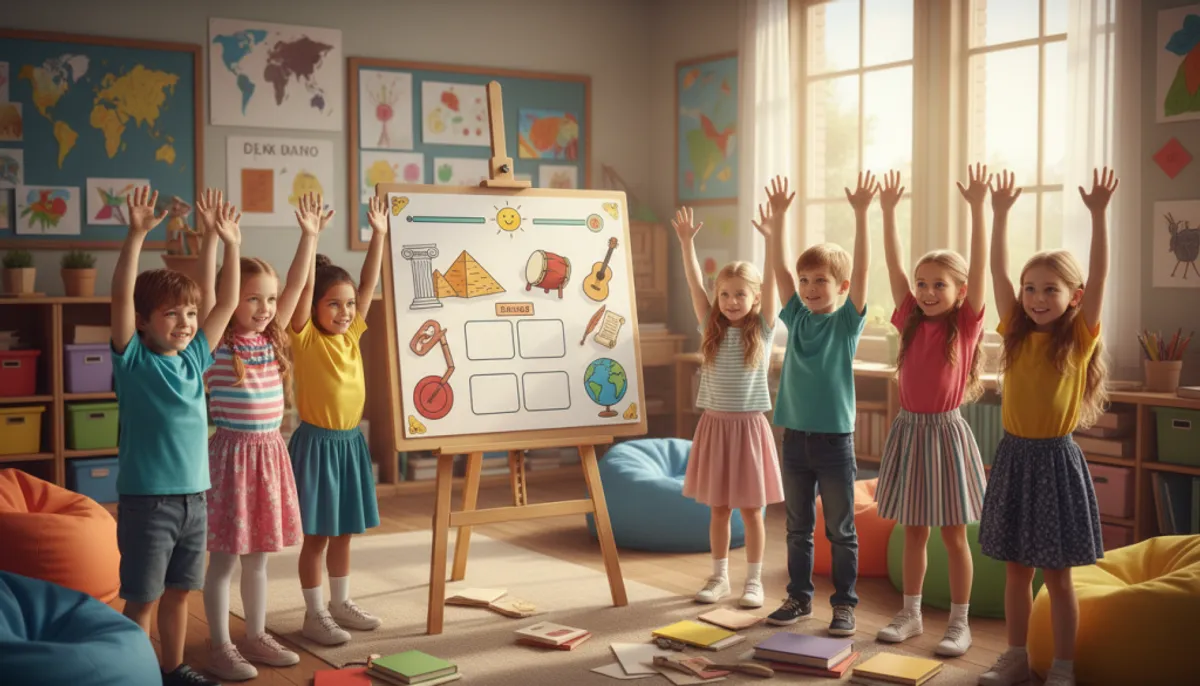
This guide offers you a modern approach to enrich the knowledge of younger ones. General knowledge games develop their intelligence and nurture their natural thirst for discovery.
You will learn to organize sessions tailored to each age. Our method transforms the acquisition of knowledge into pleasant and enriching sharing moments.
We will cover various captivating themes: animals, geography, science, and leisure. This diversity ensures a complete openness to the world. Each activity is designed to value participation rather than performance.
Introduction to the world of quizzes for children
Dive into the captivating universe of quizzes that amaze young minds. These educational tools transform learning into an interactive and memorable experience.
Why quizzes stimulate curiosity
Interactive questions naturally encourage the exploration of new subjects. They push young people to deepen their existing knowledge.
Between the ages of 11 and 14, cognitive abilities develop rapidly. Questionnaires promote active thinking and critical analysis.
Educational and fun objectives
These activities strengthen memory while developing logic. They enrich vocabulary and encourage structured thinking.
The balance between challenge and pleasure maintains engagement. Each correct answer becomes a personal victory that motivates continuation.
Sharing moments create valuable bonds between generations. The variety of formats adapts to different learning styles.
Diversity of quiz themes for little curious minds
Educational questionnaires stand out for their thematic richness, covering all areas of knowledge suitable for young people, including the bts general culture exam. This variety ensures a complete and balanced learning experience.
General knowledge and basic facts
General knowledge forms the essential foundation of learning. It addresses fundamental topics such as capitals, planets, and seasons.
These simple questions help young people from the age of 6 years understand the world around them. The answers can take different forms to maintain interest.
Quizzes on animals, geography, and more
Animal themes particularly captivate young minds. Each animal reveals fascinating characteristics to discover.
Geography opens horizons with its continents and oceans. Sports and its rules, such as the use of a ball, complete this exploration.
| Theme | Example question | Type of answer | Recommended age |
|---|---|---|---|
| General knowledge | What is the capital of France? | Open answer | 6 years and up |
| Animals | Which animal meows? | Multiple choice | 6-8 years |
| Geography | How many oceans are there? | True/False | 8-10 years |
| Sport | What color is a soccer ball? | Open answer | 7-9 years |
This thematic diversity allows for tailoring each session to specific interests. Alternating between subjects maintains motivation and engagement.
Children's quizzes: questions about animals and nature
Wildlife and its mysteries offer an endless playground for learning. Young people love exploring the fascinating diversity of land and aquatic species.

Discovering animals and their environment
Each animal has unique characteristics that aid in its identification. The name of the animal that meows is the cat, while the one with a trunk is called an elephant.
Natural habitats vary significantly. Some species live on land, others in water or oceans. This diversity showcases the richness of our world.
| Type of animal | Distinctive characteristic | Main habitat | Example |
|---|---|---|---|
| Domestic mammal | Meows and loves milk | Home | Cat |
| Wild mammal | Long trunk | Africa | Elephant |
| Aquatic bird | Pink color | Wetlands | Flamingo |
| Reptile | Shell | Water and land | Turtle |
| Fish | Scales | Ocean | Orca |
Learning through play with fun questions
Questions about animal behaviors make learning lively. What name do we give to the animal that basks in the sun? It's the lizard.
These activities also develop comparative observation. Young people discover the largest marine mammal or connect the agility of species to notions of sport.
The playful approach transforms discovery into a memorable adventure. Each correct answer becomes a personal victory.
Math puzzles and scientific challenges for children
Discovering geometric shapes and the mysteries of the cosmos naturally excites curious minds. These activities develop reasoning while maintaining the playful aspect essential to learning.
Simple problems and fun puzzles
Start with accessible questions about geometric shapes. “What do you call a figure with five sides?” The correct answer is pentagon.
Next, explore our solar system. “Which planet is closest to the sun?” Mercury is the right answer. These simple questions immediately captivate.
Creative riddles about time work particularly well. “When does 9 + 5 = 2?” The solution appears when telling the time.
Stimulating logic from a young age
These adapted challenges encourage progressive thinking. A child thus learns to analyze rather than just memorize.
Ask questions about our planet Earth and its phenomena. “How many days does it take Mars to orbit the sun?”
Always value the effort of research. The exact name of a shape matters less than the journey to get there.
Questions about cartoons and the musical universe
The enchanted worlds of cartoons and music create unforgettable memories for young people. This exciting theme allows for a playful and engaging approach to popular culture.
Iconic Disney characters and other cartoons
Children love recognizing their favorite heroes. What name does the little boy friend of Baloo go by? It's Mowgli.
The famous mouse with white gloves is named Mickey. Each princess has her unique story.
Snow White lives with seven dwarfs. The orange cat Garfield loves lasagna.
SpongeBob SquarePants lives in a house made of pineapple. Simba becomes king of the savanna.
Melodies and songs that mark childhood
Disney songs remain etched in memories. “Hakuna Matata” from The Lion King encourages a life philosophy.
“Let It Go” from Elsa resonates as an anthem of freedom. These melodies often speak of nature.
“Colors of the Wind” from Pocahontas evokes dialogue with the trees. Other songs celebrate the starry sky.
Characters sometimes share sport moments. Some play with a ball during memorable scenes.
These musical quizzes develop listening skills and memory. They are suitable for children from 3 years old.
The answers can include the name of the songs or characters. Animal friends like Winnie the Pooh complete this universe.
Culture questions for children: develop curiosity
The natural curiosity of young people is a treasure to be cultivated with care. This innate quality particularly flourishes between the ages of 6 and 14 years, a crucial period for intellectual development.

During these years, children build the foundations of their understanding of the world. The importance of general knowledge plays a fundamental role in their overall development.
The importance of general knowledge in development
Every person benefits from cultural openness from a young age. General knowledge enhances memory and develops logical reasoning.
A child regularly exposed to these learnings gains confidence. They approach school challenges with more ease and assurance.
Here are the main benefits observed in children of different ages:
| Child's age | Cognitive benefit | Social impact | Recommended duration per day |
|---|---|---|---|
| 6-8 years | Vocabulary enrichment | Better oral expression | 15-20 minutes |
| 9-11 years | Development of logic | Ease of integration | 25-30 minutes |
| 12-14 years | Critical thinking | Confidence in groups | 30-40 minutes |
These activities transform each day into a learning opportunity. Adapting the level ensures constant progress.
Understanding the modern world thus becomes more accessible. This approach promotes harmonious growth into adolescence.
How to organize and host a fun quiz
Transform your family space into an arena of knowledge with captivating challenges. Organizing a quiz requires careful preparation to ensure its success.
Each session can take different forms depending on the context. Adapt it to the number of participants and their age.
Tips for successful hosting
Create a welcoming atmosphere where each child participates freely. Establish clear rules from the start.
Give each team an original name to strengthen group spirit. Use an orange ball to designate the player who answers.
Vary the types of questions to maintain interest. Alternate between multiple choice and visual puzzles.
Using interactive tools to energize the game
Modern digital platforms transform the learning experience. They offer pre-designed templates to save time.
Integrate active breaks with sport challenges between series of questions. This maintains energy and engagement.
Involve the whole family in this daily adventure. Every man and woman can contribute to creating memorable moments.
Adjust the duration according to the age of the participants. Fifteen minutes is sufficient for the youngest.
Resources and inspirations to enrich your questions
Access a wealth of inspiration to renew your learning sessions. Specialized platforms offer comprehensive collections ready to use.
Online tools and interactive platforms
Websites like AhaSlides offer integrated templates to create interactive quizzes. These tools allow for varying types of questions and obtaining immediate answers.
They adapt to all ages, starting from 6 years old. Older ones benefit from more complex challenges.
Quiz library and practical examples
Collections of 100 questions cover various themes. Explore oceans, sports, or phenomena of the sky.
Personalize the content by replacing a generic boy with the name of a child from your home. This adaptation makes the experience more engaging.
| Type of resource | Number of questions | Target age | Main themes |
|---|---|---|---|
| General knowledge quiz | 100 | 6-14 years | Geography, history |
| Scientific challenges | 80 | 8-12 years | Water, sky, earth |
| Sports quizzes | 60 | 7-10 years | Ball, rules, records |
| Marine discovery | 50 | 9-14 years | Ocean, aquatic life |
These resources facilitate preparation over several days. They ensure reliable answers thanks to cross-referenced sources.
The orange ball from basketball becomes an exciting topic. Every person finds challenges suited to their level.
Conclusion
Educational quizzes represent much more than mere entertainment. They are essential educational tools for every child, and you can even use a cultural pass in stores to enhance the experience.These fun activities naturally stimulate the curiosity of young people. They reinforce their knowledge in an interactive and memorable way.
Investing in education is a precious gift. It will accompany children throughout their lives.
Regularly integrate these quizzes into your daily routine. Transform learning into moments of shared pleasure with family.
Every young person deserves to explore the world around them. Adapt the challenges to their level to promote their growth.
Remember that a good answer matters less than the learning process. Value reflection and discovery.
Discover all our services and providers near you. Does your young one have a thirst for knowledge? Explore our other quizzes that might interest you.
FAQ
At what age can we offer quizzes to a child?
What are the benefits of quizzes for the development of a boy or girl?
Where can I find ideas for questions on themes like geography or animals?
Many websites and children's books offer free resources. You can also create your own questions based on the child's interests, such as dinosaurs or planets.
How to make a quiz attractive for a group of friends at a birthday party?
Use varied materials: images, a ball to designate who answers, or even a board to keep score. The important thing is to maintain a playful atmosphere and value each participation.
Can quizzes help a child who has difficulties at school?
Absolutely! In game form, they allow for reviewing concepts without pressure. Approaching mathematics or science through fun puzzles can unlock certain apprehensions.