
In the heart of the Balkans, a fascinating country reveals a living heritage. This place, a crossroads of civilizations, possesses a unique folkloric richness in Europe.
Its observable practices harmoniously blend Eastern and Western influences. Here, ancient pagan rituals coexist with vibrant Orthodox celebrations.
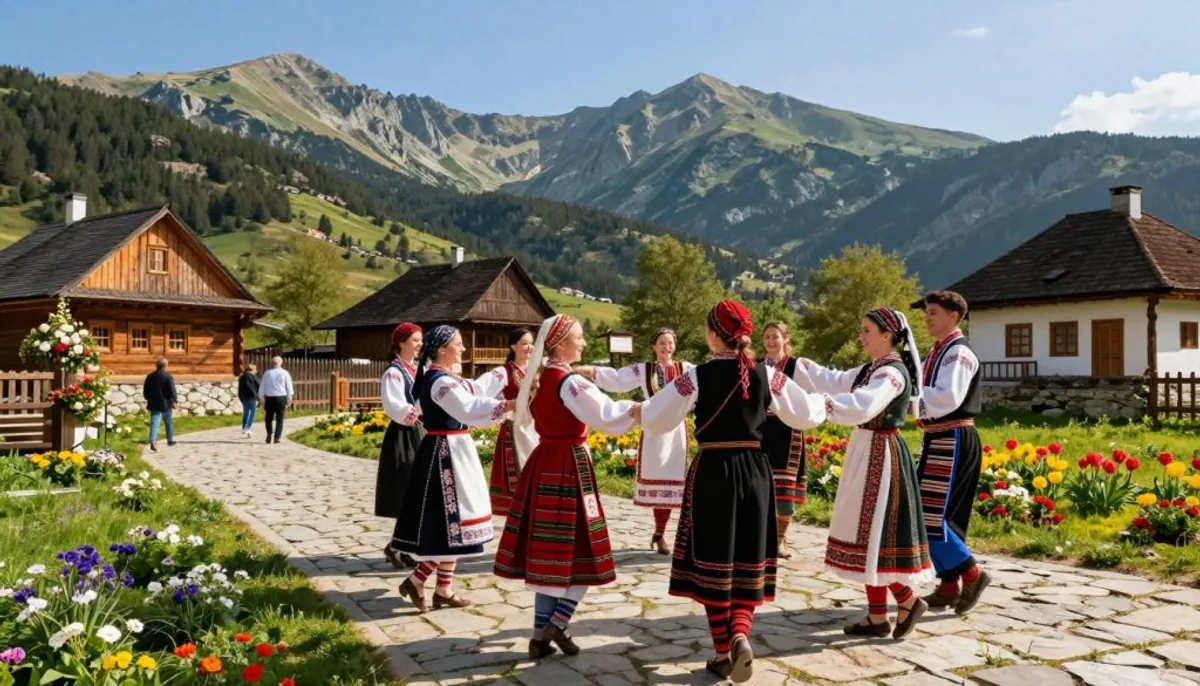
This article guides you through this universe. We will explore how a nation has managed to preserve its unique identity while evolving with the times.
Prepare for a captivating journey. You will discover ancestral traditions and customs that shape daily life. A warm and welcoming atmosphere awaits you.
Key Points to Remember
- Bulgaria is a crossroads of civilizations in Southeast Europe.
- Its folkloric heritage is unique, blending Eastern and Western influences.
- Practices include both ancient pagan rituals and Orthodox festivities.
- This country has managed to preserve its heritage while adapting to modernity.
- Its identity is forged through a rich history and vibrant traditions.
- Exploring these customs reveals a warm and welcoming society.
Introduction: Diving into the World of Bulgarian Culture
Recognized by UNESCO, a collection of treasures testifies to a millennial history. This heritage forms a cultural patrimony of exceptional diversity.
It reflects the multiple influences that have shaped this nation over the centuries.
Overview of Bulgarian Heritage
This small country is home to UNESCO World Heritage sites. Among them are architectural and archaeological gems.
- The Thracian tomb of Kazanlak, over 2300 years old.
- The rock churches of Ivanovo, with medieval frescoes.
- The Rila Monastery, a true gem of Orthodoxy in the mountains.
- The Boyana Church, with its realistic portraits from the 13th century.
Beyond the stones, an immaterial part is equally rich. It includes polyphonic songs and unique artisanal know-how.
Cultural Heritage and Challenges
Festive practices, such as Martenitsa or fire dancing, are alive. Preserving this heritage in the face of globalization is a major challenge.
The transmission to new generations presents a great interest. It is crucial for local identity and economy.
Understanding this heritage requires time and respect. It blends Slavic paganism and Orthodox Christianity in a complex cosmogony.
This universe forms a fascinating bridge between Europe and the East. It offers a deeply enriching human experience in the contemporary world.
Historical Origins and Influences
To understand the current identity, one must trace back through a complex and eventful history. The history of this country has seen major civilizations pass through its land.
Key Periods in Bulgarian History
The Thracians inhabited these lands over 3000 years ago. They left behind fascinating archaeological treasures.
The First Bulgarian Empire emerged in the 7th century. The adoption of the Cyrillic alphabet became an essential part of Slavic identity.
The Ottoman domination lasted nearly five centuries. It influenced architecture and gastronomy while reinforcing Christian traditions.
The liberation of 1878 is a founding moment. It gave birth to the modern state, celebrated every March 3rd.
The 20th century brought the communist period. It profoundly transformed society until 1989.
| Period | Key Dates | Major Event | Cultural Influence |
|---|---|---|---|
| Thracian Civilization | From 1000 BC | Gold of Varna (the oldest in the world) | Mythological and artisanal foundations |
| First Bulgarian Empire | 681-1018 | Adoption of Christianity and the Cyrillic alphabet | Solidified Slavic and Orthodox identity |
| Ottoman Domination | 1396-1878 | Reign of the Ottoman Empire | Architectural, culinary, and linguistic contributions |
| Liberation and Independence | 1878-1908 | Treaty of San Stefano (1878), independence (1908) | Emergence of the modern nation-state |
| Communist Period | 1946-1989 | Regime of the Bulgarian Communist Party | Profound social and political transformation |
This long and complex history explains the current richness. It harmoniously blends various influences from many regions.
Emblematic Traditions and Festivals
The arrival of spring and the fight against dark forces lead to striking spectacles. Two major events illustrate this living heritage.
Martenitsa: Symbol of Renewal and Fertility
Every March 1st, a celebration honors Baba Marta. From the end of February, colorful stands fill the streets.
People exchange red and white bracelets, the martenitsi. They symbolize wishes for health, happiness, and fertility.
The white represents purity and snow. The red evokes vitality and sunshine. This talisman is worn until the arrival of spring.
Then, it is hung on a fruit tree branch. This ancestral tradition is recognized by UNESCO.
Kukeri and Rituals to Chase Away Evil Spirits
Between January and March, Kukeri festivals transform villages. Men don imposing costumes made of animal skins.
They wear frightening masks carved from wood. Heavy copper bells create a deafening sound.
This parade aims to chase away evil spirits. It also invokes fertility, health, and abundant harvests.
The International Surva Festival in Pernik is the largest event. It brings together groups from all over the country for several days.
Popular Rites and Beliefs
Bulgarian people have a unique relationship with the sacred, nourished by centuries of religious syncretism. Their spiritual universe fuses ancient mythologies and Christian faith.
Mythologies, Superstitions, and Ancestral Rituals
Slavic deities like Perun or Dajbog subtly permeate daily life. Their myths influence rituals and numerous superstitions.
For example, offering flowers in even numbers is strictly avoided. It is also believed that whistling indoors attracts bad luck. These beliefs animate everyday life.
Spiritual Practices and Orthodox Influences
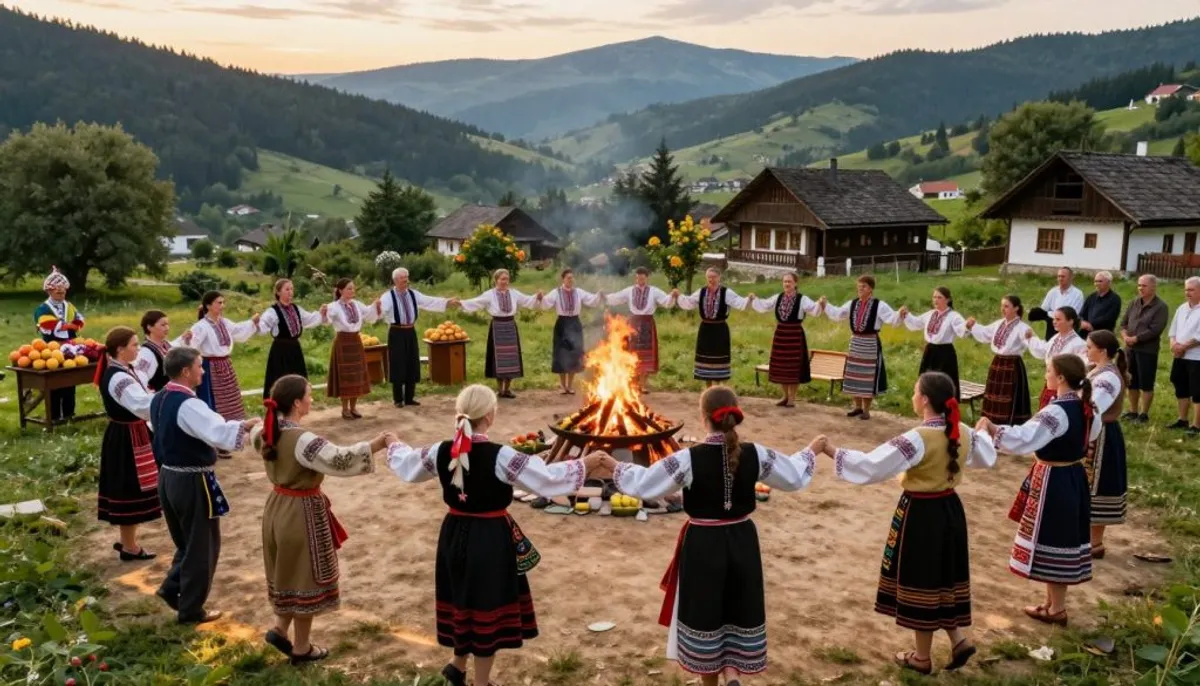
Nestinarstvo embodies this fusion spectacularly. During the feast of Saints Constantine and Helena on May 21, participants enter a trance.
They perform a ritual dance on fire, barefoot on embers. This extraordinary tradition, recognized by UNESCO, blends pagan practices and orthodoxy.
The Orthodox Church, which is the majority, preserves these spiritual practices. Its monasteries are guardians of the religious folklore.
Ethnographic research studies these living traditions. It recognizes their potential for contemporary artistic creation.
Bulgarian Culture: A Living Heritage
A network of cultural centers woven throughout the country ensures the vitality of a precious heritage. These tchitalichtés are present in every town and village.
They organize courses in dance, folk music, and embroidery. This transmission allows Bulgarian people to maintain a living connection with their roots.
The concept of intangible cultural heritage takes on its full meaning here. The traditions are not mere curiosities but structure social life.
UNESCO has recognized several of these practices. Martenitsa, Nestinarstvo, and the songs of the Babi of Bistritsa are among them.
This recognition attests to their universal importance. Unlike tourist folklore, these customs are authentically lived.
Younger generations rediscover these skills with pride. They actively participate in festivals and workshops.
This living heritage creates bonds across ages. It strengthens the sense of belonging to a community sharing common values.
Bulgarian Gastronomy and Table Arts
Friendliness is first experienced around a generously filled table. Every meal is a celebration of sharing and history, often featuring traditional dishes from german cuisine.
Traditional Dishes and Typical Recipes
The shopska salata is an emblem. Its tomatoes, cucumbers, and abundant white cheese please everyone.
The banitsa, cheese-filled pastry, is a breakfast and festive classic. Its fine filo dough crisps deliciously.
The festive calendar marks the culinary year. On February 14th, for Trifon Zarezan, winemakers are honored.
| Date | Event | Signature Dishes | Drinks |
|---|---|---|---|
| February 14 | Trifon Zarezan (Winemakers' Festival) | Vine leaf bread, stuffed chicken | Wine of the year |
| December 24 | Badni Vetcher (Christmas Eve) | Vegetarian meal (7, 9, or 11 dishes) | Wines, boza |
| Around March 1 | Baba Marta Season | Fresh spring produce, light dishes | Rakia, ayran |
The Christmas Eve dinner features a meatless meal. It includes an odd number of dishes, often seven or nine.
Drinks accompany every feast. The rakia, plum brandy, opens the meals. Local wines are excellent.
In March, spring is celebrated with fresh produce. This gastronomic tradition shows how central the table is to Bulgarian life.
Craftsmanship and Ancestral Know-How
The nimble fingers of artisans have woven a remarkably fine material heritage for centuries, including beautiful examples of yoruba art. This tangible legacy is passed down from generation to generation.
Embroidery, Pottery, and Craft Techniques
Traditional embroidery, or shevitsa, is a coded visual language. Each stitch and color expresses a local tradition and beliefs.
Pottery perpetuates Thracian techniques, especially in Troyan. The making of the gaïda, local bagpipe, requires exceptional time and skill.
| Region | Specialty | Characteristics | Craft Center |
|---|---|---|---|
| Rhodope Mountains | Embroidery | Geometric patterns, subdued colors | Village workshops |
| Thrace | Embroidery | Bright reds, gold threads, solar motifs | Plovdiv |
| Troyan | Pottery | Characteristic glaze, traditional shapes | Troyan Pottery School |
| Rhodope Mountains | Lutherie (Gaïda) | Goat skin, plum wood | Family workshops |
Each embroidered motif is a letter, each pot a sentence in the great book of our memory.
Ethnographic research and museums in Sofia and Plovdiv document these treasures. Cultural centers organize workshops to ensure transmission.
This manual creation also nourishes the living folklore. It is an essential tradition to preserve.
Music, Dance, and Performing Arts in Bulgaria
To the rhythm of the bagpipe and polyphonic songs, the Bulgarian soul expresses itself powerfully. This artistic expression forms a vital link between generations.
It animates village festivals and major international stages. It is the vibrant heart of a collective identity.
The Magic of the Gaïda and Folklore
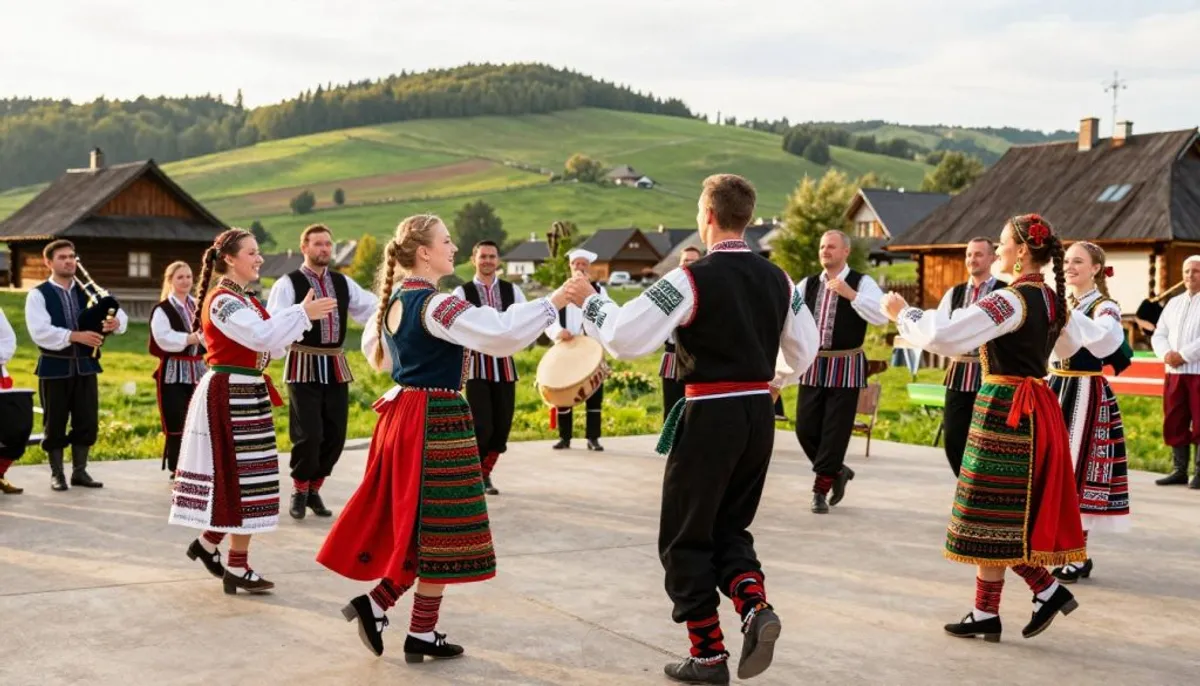
The melancholic sound of the gaïda resonates in the Rhodopes. This emblematic instrument guides traditional melodies.
The rhythms are unique, with measures of 7, 9, or 11 beats. They create a sensation that is both enchanting and complex.
Vocal ensembles like the “Mystery of Bulgarian Voices” have revealed this beauty to the world. The Babi de Bistritsa practice a polyphony recognized by UNESCO.
The collective dance, such as the horo, embodies the community spirit. Participants hold hands in a circle.
Many festivals mark the year. In January, the Surva celebrations combine music and dance and ritual dance.March events welcome spring. Summer sees gatherings like “Pirin Pee” in Bansko.
The contemporary scene is also dynamic. The Black Box Festival explores the boundaries of modern dance.
The National Academy of Music trains talents. This rich folklore remains a source of pride for Bulgarian people.
Bulgarian Etiquette and Manners
Navigating social interactions with ease requires knowing a few essential codes. Legendary hospitality is a pillar of this culture.
Social Codes and Non-Verbal Communication
Refusing an invitation to a meal or a party is often seen as an offense. One should accept with gratitude, even for a brief moment.
Respect for elders is fundamental. Young men and women give up their seats and use the titles “Gospojda” or “Gospodin.”
Non-verbal communication surprises foreigners. Nodding up and down means “no.” Shaking the head from side to side means “yes.”
During a meal, taste all the dishes. Compliment your host generously. It is a sign of great respect.
Offer flowers only in odd numbers. Remove your shoes when entering someone’s home. Never whistle indoors, as it brings bad luck.
Here are some summarized rules for your next visit:
| Context | Rule | Important Note |
|---|---|---|
| Invitation | Always accept | A refusal is impolite |
| Communication | Nodding = No Shaking head = Yes | The opposite of Western codes |
| Gifts (flowers) | Only odd numbers | Even numbers are for funerals |
| Entering a home | Remove shoes | Mark of respect and hygiene |
| During the meal | Taste everything and compliment | Values the host's effort |
Here are some tips for the beginning of your day or festivities. Observing them will allow you to have an authentic and warm experience.
Integration and Expatriation in Bulgaria
Settling in Bulgaria represents a rewarding adventure, provided you prepare well. This country attracts with its advantageous cost of living and preserved natural environment.
Tips for Settling and Succeeding in Expatriation
Your first step should be to join an expatriate association. In Sofia or Plovdiv, they organize friendly gatherings.
This helps you create a network quickly. For real estate in Bulgaria, there are many opportunities and attractive prices.
Learning the Cyrillic alphabet is very useful. A few basic phrases in Bulgarian will please your new neighbors.
Here are some essential steps: administrative formalities, bank account, and understanding the local healthcare system.
Adapting Your Lifestyle and Understanding Local Practices
The pace is more relaxed than in the West. Shops often close for a long lunch break.
Punctuality is flexible among friends. A delay of fifteen to thirty minutes is generally accepted.
Get involved in cultural centers, the tchitalichtés. Participate in festivals like Martenitsa in March or Trifon Zarezan in February.
This is the secret to a fulfilling Bulgarian life. You will transition from being a foreigner to a valued member of the community.
Contemporary Cultural Challenges and Perspectives
The major challenge for the country is to reconcile a millennial heritage with the demands of modernity. This fragile balance is a source of dynamism.
Modernity and Tradition in Balance
Since the end of communism, a spectacular renewal of interest in Romanian art has emerged. Younger generations rediscover their heritage with pride and creativity.The annual calendar illustrates this synthesis. The celebrations in January (Surva) and March (Martenitsa) now attract an international audience.
Tourism represents a major economic opportunity. It also raises questions about authenticity and the risks of folklorization.
The diaspora plays a crucial role in promoting Bulgaria internationally. It keeps the traditions alive far from the homeland.
The challenges are real: rural depopulation and the aging of master craftsmen. Transmitting complex skills requires time.
From the end of the 2010s to the beginning of the 2020s, new promising projects have emerged. They combine responsible tourism, craftsmanship, and organic agriculture.
Conclusion
The journey through these ancestral practices concludes, but the wonder persists. We have discovered a world heritage of exceptional richness. From colorful festivals to artisanal know-how, each custom tells a millennial story.
This country is home to listed sites and recognized traditions. Its heritage forms an essential part of European identity. It remains alive and evolves with its time, demonstrating remarkable vitality.
Participating in local celebrations helps preserve it. Understanding these customs enriches any travel or expatriation experience. Bulgarian culture, intertwined with latin american culture, invites authentic discovery, beyond clichés. It offers a unique vision of the continent's diversity.
FAQ
What is the most famous tradition for the beginning of spring in Bulgaria?
It is the Martenitsa. On March 1st, people exchange red and white pom-poms, symbolizing health and fertility. They wear them until they see a sign of renewal, like a stork, to chase away the evil spirits of winter and welcome the beautiful days.
Is there a festival dedicated to traditional costumes and masks?
Absolutely! The International Mask Festival “Surva” in Pernik is one of the largest in Europe. Here, you can admire the Kukeri, men dressed in skins and wearing huge masks, whose noisy dances aim to purify and fertilize the earth according to ancient rites.
Which typical dish best represents the local table art?
The Shopska Salata is a national emblem. This fresh dish, made of tomatoes, cucumbers, onions, peppers, and a generous sprinkling of grated white cheese (sirene), is often accompanied by a glass of rakia, a fruit brandy.
Is Bulgarian craftsmanship recognized worldwide?
Yes, several crafts are listed as intangible cultural heritage by UNESCO. Embroidery, pottery, and carpet making are among these ancestral practices. The patterns and techniques are passed down from generation to generation, preserving a unique heritage.
Does folk music use particular instruments?
Absolutely. The gaïda, a local bagpipe, is the king of folklore instruments. Its melancholic or joyful sound accompanies circle dances (horos). Traditional music and dance are at the heart of village festivals and major celebrations.
What are the main tips for an expatriate settling in the country?
The key is patience and an open mind. Learn a few basic phrases in Bulgarian and show interest in local customs, such as saying “Na zdrave” (Cheers) before drinking. Participating in traditional festivities is a great way to understand practices and build connections.