
Dive into the heart of a millennia-old civilization that has been shining for centuries in North Africa. This fascinating society is among the oldest in the region.
Its legacy has profoundly shaped the identity of Morocco and neighboring nations. Despite invasions and colonizations, it has preserved its unique authenticity.
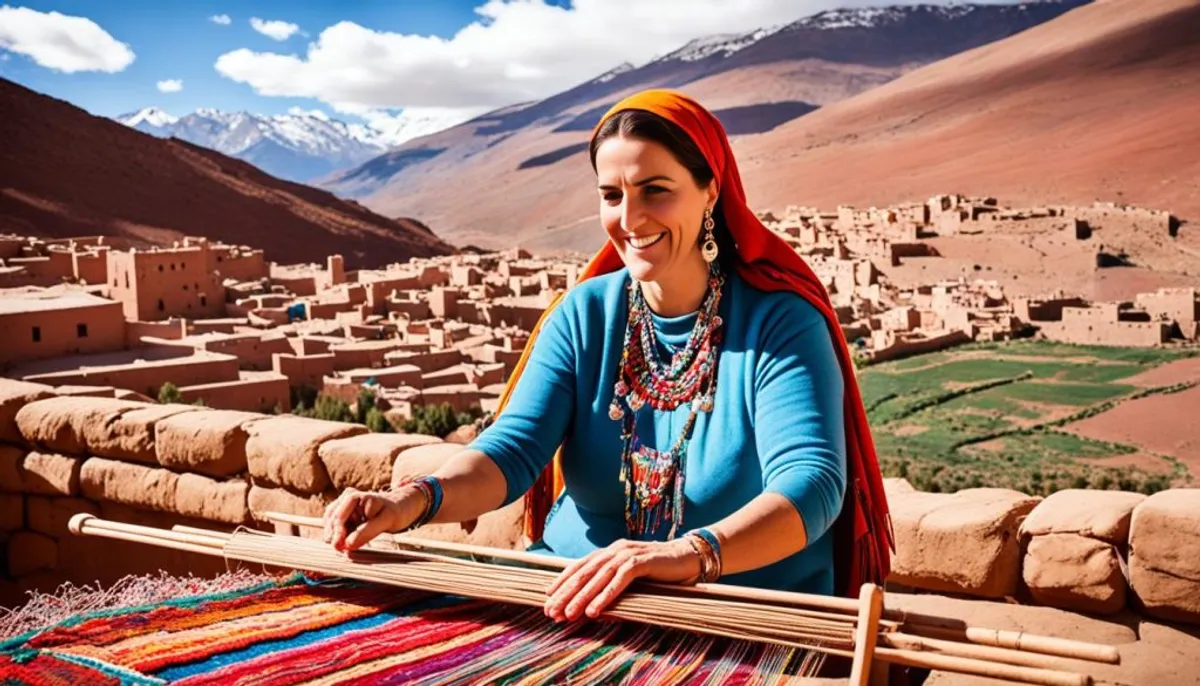
The richness and diversity of this tradition are remarkable. It represents about 65% of the Moroccan population today.
Its influence is manifested in language, craftsmanship, music, and gastronomy. These elements constitute an exceptional living heritage.
This article invites you to explore eight fundamental aspects. Together, we will discover the history, traditions, and preservation efforts.
Key points to remember
- Millennia-old civilization of North Africa
- Preserved heritage despite invasions
- Major influence on Moroccan identity
- Represents about 65% of the population
- Heritage rich in varied traditions
- Unique language, craftsmanship, and music
- Living and authentic culture
Origins and history of Berber culture
This indigenous population has a genealogy that challenges historical certainties. Experts continue to debate its true origin.
The term “Berber” comes from the Greek “Barbaros.” The Romans popularized it to refer to foreigners. However, these peoples prefer to call themselves “Amazigh,” meaning “Free Man.”
Early influences and migrations in North Africa
The arrival of the first ancestors would date back to the east of Egypt. Ancient Greek and Phoenician texts attest to their presence.
These groups formed kingdoms such as Numidia. They resisted Roman and Arab invasions for many years.
Myths and controversies surrounding its origins
Several hypotheses exist regarding the geographical origin. Some speak of Canaanite or Yemeni ancestry.
The heterogeneous nature of this Berber people complicates research. Its history remains a fascinating puzzle for historians.
The great dynasties and historical heritage of the Berbers
Between the 11th and 15th centuries, three great dynasties profoundly marked the history of the western Maghreb. Their influence transformed this region for several centuries.
Notable dynasties: Almoravids, Almohads, and Marinids
The Almoravids (1055-1147) united the Maghreb and Andalusia. They founded Marrakech as the capital.
The Almohads (1147-1269) succeeded them. They built the famous Koutoubia in Marrakech.
The Marinids (1248-1465) made Fes their center. They created prestigious madrasas.
| Dynasty | Period | Capital | Major contribution |
|---|---|---|---|
| Almoravids | 1055-1147 | Marrakech | Unification of Maghreb and Andalusia |
| Almohads | 1147-1269 | Marrakech | Monumental architecture |
| Marinids | 1248-1465 | Fes | Creation of madrasas |
Architectural remains and historical sites in Morocco
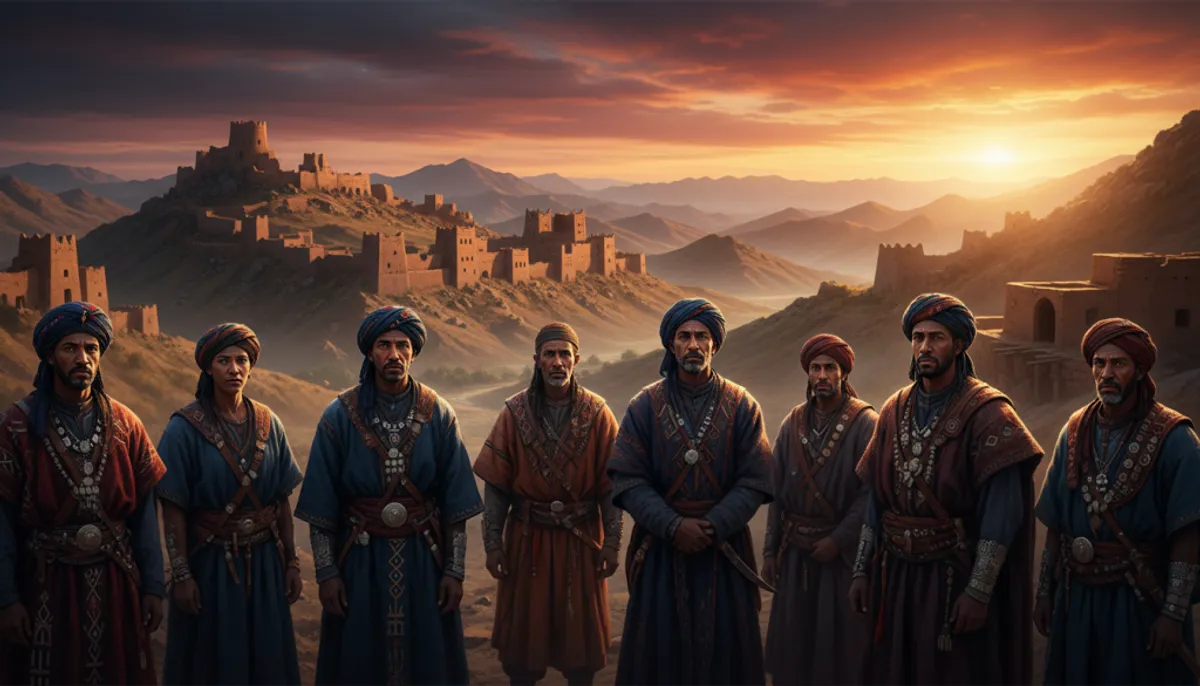
The architectural heritage remains impressive. Fortified kasbahs and ksours can be found.
Each site testifies to ancestral know-how. The collective granaries (agadirs) are remarkable.
The perched villages of the High Atlas constitute an exceptional site. The rammed earth construction techniques endure.
The preservation of each historical site is essential. These testimonies transcend the centuries.
Berber culture: identity, language, and traditions
The Tifinagh alphabet, over 2500 years old, represents one of the oldest linguistic treasures of North Africa. This Libyco-Berber writing system dates back to the 6th century BC.
The Tifinagh alphabet and the richness of dialects
The Amazigh people primarily use three dialects in Morocco. Tarifit dominates in the Rif, Tachelhit in the Southwest, and Tamazight throughout the country.
The constitutional recognition of 2011 officially established this language. Since then, the teaching of the Berber language has been developing in schools.
Oral transmission and traditional practices
The Amazigh culture prioritizes oral transmission, and the saharan culture carries the identity and history of this people.Amazigh women have created systems of symbolic communication. Their weavings and pottery tell intimate stories.
This culture maintains its coherence despite linguistic diversity. The language remains the living heart of its heritage.
The arts and crafts at the heart of Berber culture
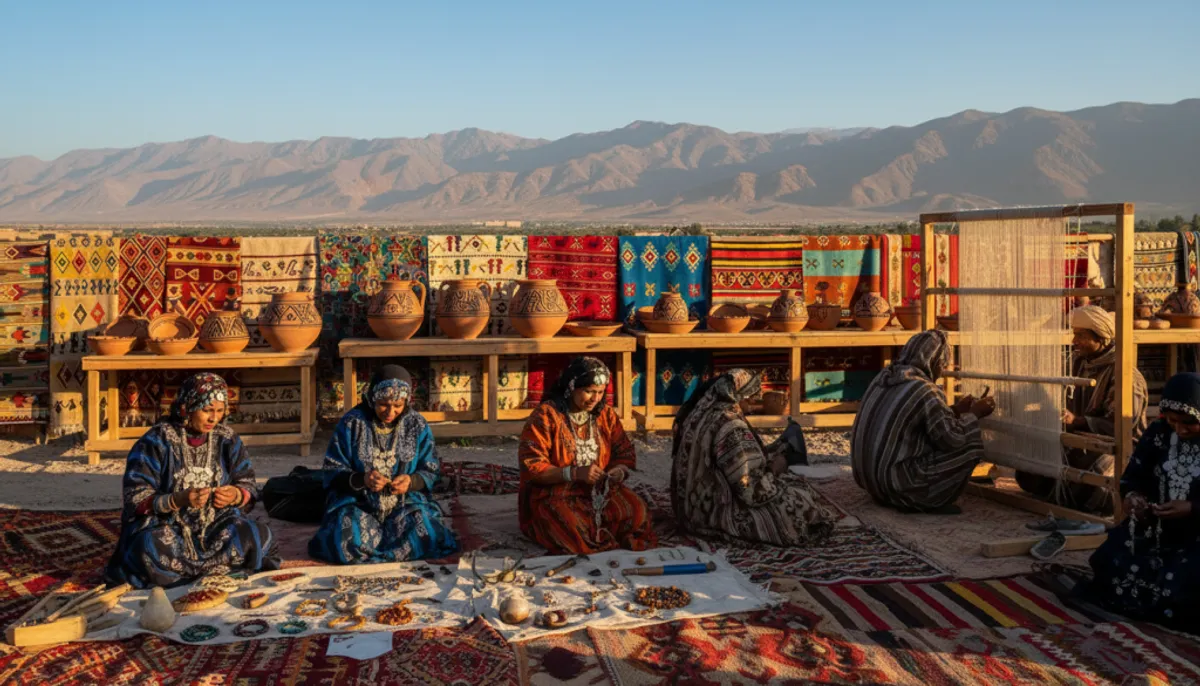
Amazigh craftsmanship, including kabyle craftsmanship, is a true economic and identity pillar for communities in Morocco. This artistic wealth manifests in several specialized fields.Pottery, weaving, and ancestral craft techniques
The traditional craftsmanship varies according to regions and tribes. Each area develops its unique specialties.
The Beni Ouarain rugs from the Middle Atlas are particularly renowned. They use very dense natural wool with geometric patterns.
The pottery of Chefchaouen and the jewelry of Tiznit testify to exceptional know-how. These creations combine beauty and functionality.
Music, songs, and traditional Berber dances
Music occupies a central place in social life. It accompanies celebrations and important rituals.
The Ahwach, a collective dance from the High Atlas, brings women and men together around a fire. This nocturnal tradition blends song, poetry, and percussion.
The bendirs and other instruments create catchy rhythms. These artistic expressions preserve collective memory.
Festivals and events celebrating Berber traditions
Amazigh festivals illuminate the Moroccan calendar with vibrant celebrations that attract thousands of participants each year, including various amazigh communities. These events are highlights for contemporary Amazigh culture.Major cultural events like the Timitar Festival
The Timitar Festival in Agadir represents the largest gathering dedicated to Amazigh culture. It annually brings together artists from all over Morocco and other countries.
Traditional music, dance, and poetry are magnified there. This flagship event showcases the vitality of Amazigh traditions.
The Sacred Music Festival of Fes offers another important platform. It integrates Amazigh spiritual musical expressions into an intercultural dialogue.
In Tiznit, the International Amazigh Film Festival gives visibility to contemporary filmmakers. These narrative creations enrich the cultural life of Moroccans.
Local celebrations and festive rituals
Yennayer, the Amazigh New Year celebrated in January, is now a national holiday. Families share traditional meals and perpetuate ancestral rituals.
Tafaska, the summer harvest festival, illustrates the deep connection to the land. These celebrations rhythm the community life in several regions.
In daily life, traditions are expressed during weddings, births, and religious festivals. Each tribe has its own festive customs.
These events strengthen social cohesion and transmit a precious heritage. They shape the identity of modern Moroccan society.
Preservation practices and contemporary recognition
Since 1999, a new institutional dynamic has emerged to protect Amazigh cultural heritage in Morocco. King Mohammed VI has made this preservation a national priority.
This political will has been realized through the creation of the Royal Institute of Amazigh Culture (IRCAM) in 2001. This organization works on the standardization and promotion of the language.
Governmental and educational initiatives
The constitutional recognition of 2011 marks a historic turning point. It establishes the Berber language as official alongside Arabic.
The government has integrated the teaching of this language in schools. Textbooks in Tifinagh and the training of specialized teachers support these educational practices.
Yennayer, the Amazigh New Year, is now a national holiday. This symbolic measure legitimizes traditional practices in Moroccan society.
Associative actions for the transmission of heritage
Associations play a crucial role in the preservation of Amazigh culture. They organize festivals, exhibitions, and cultural workshops.
Economic projects support local artisans. They develop tourist circuits highlighting traditional know-how.
These efforts ensure the vitality of Amazigh culture in the face of modernization challenges. Transmission to younger generations remains a priority.
Conclusion
In conclusion, this millennia-old tradition represents much more than a simple historical heritage for contemporary Morocco. It embodies the soul of a people proud to have preserved its authenticity through the centuries.
The diversity of cultural expressions – from regional dialects to local craftsmanship – testifies to a living richness. Amazigh women and men continue to pass on this precious heritage to younger generations.
Recent advances, such as the official recognition of the language, ensure an important place for this identity in modern society. Festivals and celebrations now enliven the cultural life of the country.
This civilization remains a model of resilience in the face of globalization challenges. Its future shines thanks to the commitment of communities to preserve their heritage of free men.
FAQ
What does the word "Amazigh" mean?
The term Amazigh means “free man” or “noble.” It refers to the indigenous people of North Africa and reflects their strong identity and independent spirit through the ages.
Is the Berber language uniform?
Not at all! It presents a great diversity of dialects according to regions and groups. For example, Tamazight is found in central Morocco, while Chleuh is in the High Atlas, each with its specificities.
What is the official status of this language today?
Recognition has evolved significantly. In Morocco, for example, Amazigh has been an official language alongside Arabic since the 2011 constitution, marking an important step for its preservation.
How are traditions transmitted?
Oral transmission occupies a central place. Stories, poems, and skills such as craftsmanship are passed down from generation to generation, particularly by women, the guardians of this living heritage.
What are the strong symbols of this culture?
The Tifinagh alphabet is an emblematic symbol. Music, silver jewelry, woven rugs, and geometric patterns of pottery are also very visible expressions of this artistic wealth.
Are there events to discover this culture?
Absolutely! Festivals like the Timitar Festival in Agadir or the Moussem of Tan-Tan are fantastic opportunities to experience music, dances, and meet the communities.