
Welcome to this fascinating exploration of an unknown yet extraordinary civilization. The Afars are a remarkable ethnic group whose presence spans three countries in the Horn of Africa.
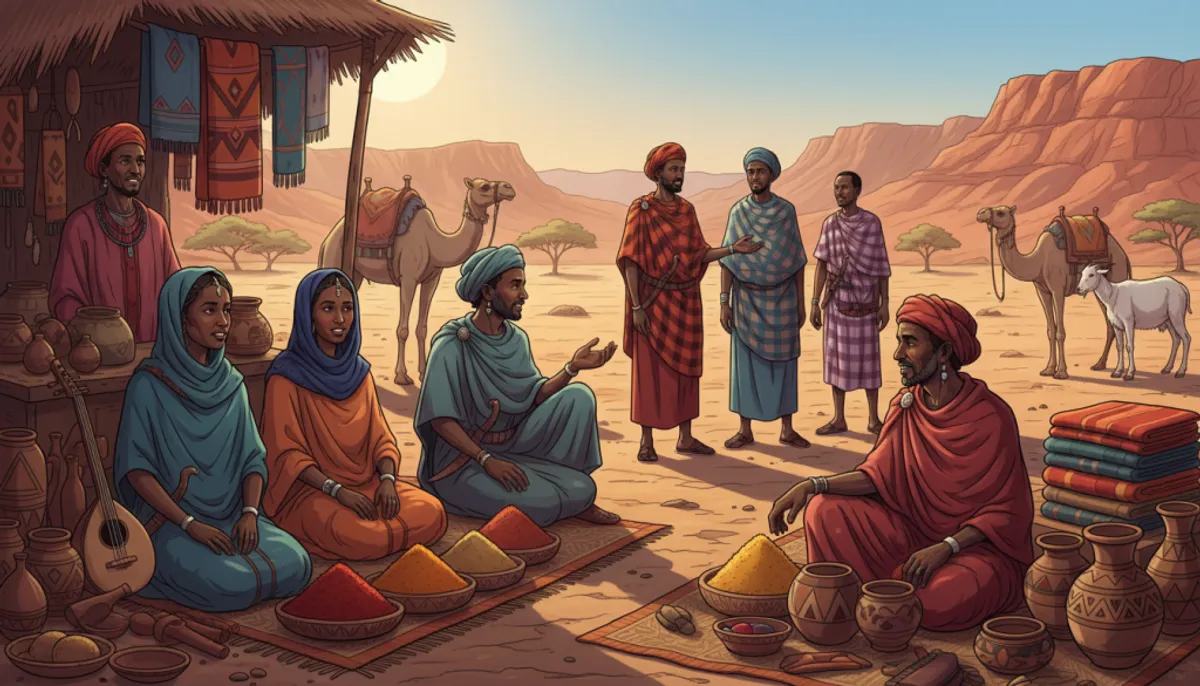
With nearly 6 million individuals, this community keeps its ancestral traditions alive. Their geographical distribution mainly covers Ethiopia, Eritrea, and Djibouti.
Their identity is shaped around Sunni Islam and their mother tongue, Afar. The latter belongs to the family of Eastern Cushitic languages.
This people have developed ingenious ways of life to adapt to the most extreme environments. Their cultural heritage represents a legacy of exceptional richness.
Through this article, discover how this civilization has preserved its authenticity through the centuries. Dive into a millennia-old history and spectacular landscapes.
Key Points to Remember
- The Afars number around 5.8 million people spread across three countries
- Their territory extends across the Horn of Africa, a region with a rich past
- Sunni Islam is their main religious confession
- Their language, Afar, belongs to the Eastern Cushitic group
- They have developed traditions suited to harsh environments
- Their cultural heritage deserves international recognition
- This civilization maintains its unique identity despite modern challenges
Introduction to Afar Culture
Discover a unique geographical space forming a triangle of 150,000 km² along the Red Sea. This territory connects three nations and is home to populations with millennia-old traditions.
Historical and Geographical Context
The Afar triangle extends from Awash in Ethiopia to the Dahlak Islands in Eritrea. Its western boundary follows the foothills of the Ethiopian Highlands. This geographical configuration profoundly influences the lives of the inhabitants.
The strategic position of this region explains its historical role in trade exchanges. Proximity to the Red Sea has favored contacts with the Arab world for centuries.
Objectives of the Ultimate Guide
This guide offers you a comprehensive view of all aspects of this civilization. You will understand how the environment has shaped unique and resilient ways of life.
Explore social organization, oral traditions, and skills adapted to extreme conditions. Discover an identity preserved despite contemporary challenges.
Origins and Historical Evolutions
Tracing the evolution of this ethnic identity immerses us in a complex and captivating narrative. Researchers continue to debate the early developments.
The First Mentions and Etymology
The origin of the name used today remains enigmatic. The first documented appearance dates back to 1522 in the form "Afara".
This people has been known by different names depending on the regions. The name by which they refer to themselves differs from external designations.
Some theories suggest a possible eponymous ancestor or Berber linguistic influences. These hypotheses enrich the debate about their roots.
Continuities and Historical Breaks
The 18th century marks a decisive turning point in the history of this people. It is during this time that the structures of the current political entity began to take shape.
Establishing continuities over several centuries is difficult to ascertain with certainty. Historical sources sometimes present confusions with other ethnic groups.
This mysterious origin and these complex evolutions shape a unique history. The current name conceals centuries of transformations and adaptations.
The Geography of the Afar Territory
The spatial configuration of this area offers striking contrasts. The vast territory spans about 150,000 km² across three countries.
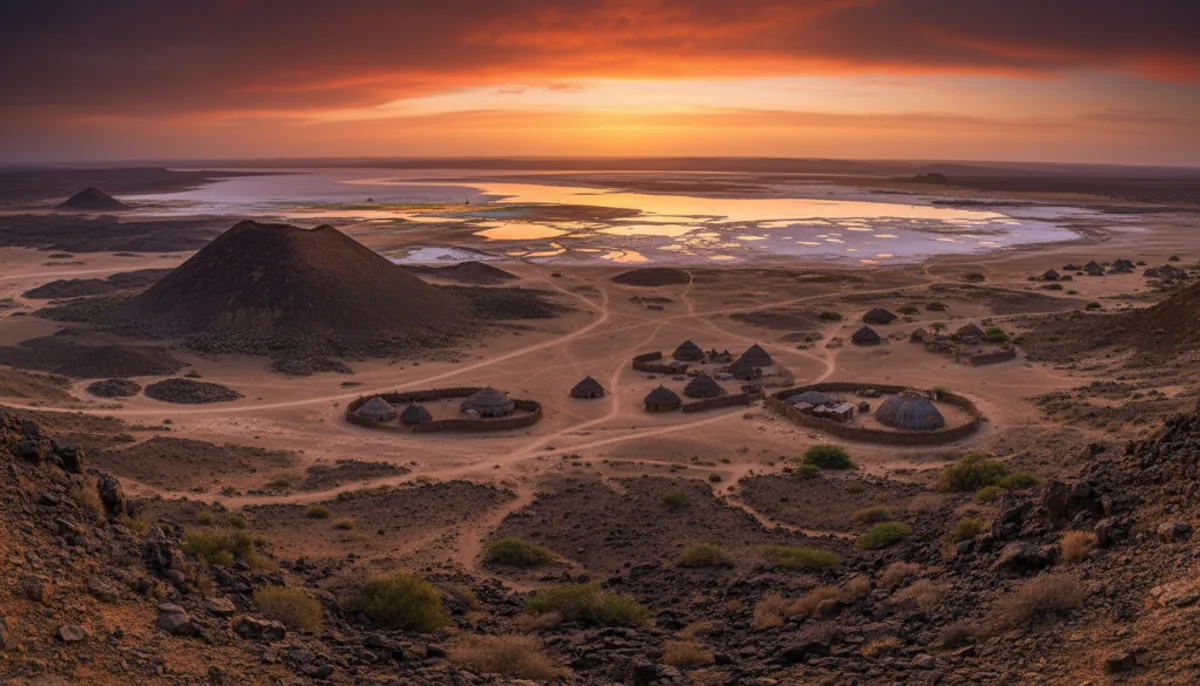
This region features impressive natural boundaries. To the south, the city of Awash marks a point of the geographical triangle.
Boundaries and Remarkable Sites
The north is home to the Dallol depression, one of the hottest places in Africa. Temperatures there regularly exceed 50°C.
Lake Assal in Djibouti represents the lowest point on the continent. It is located 150 meters below sea level.
The Erta Ale volcano remains in permanent activity with its unique lava lake. This geological phenomenon testifies to the intense dynamics of the region.
The Role of the Red Sea and Arid Zones
The Red Sea profoundly influences the local economy. It offers fishing resources and exceptional coral shores.
Arid zones dominate the landscape, but the Awash fertilizes vast plains. This watercourse flows into Lakes Gamari and Abbé to the south.
Salt extraction is a major economic activity. Salt from Lake Assal is harvested by hand and transported by caravans.
Society and Political Organization
The social organization of the Afars reveals a sophisticated political structure that has withstood the test of time. This unique political entity maintains its cohesion despite modern borders.
Traditional Structures and Sultanates
The territory is divided into units called bàc[ó], often translated as sultanate. Each unit has its own leader with various titles depending on the regions.
| Region | Leader's Title | Example of Sultanate |
|---|---|---|
| Awsa | Amóyta | Central Sultanate |
| Tagura and Rahayta | Darddr | Historical Sultanates |
| Northern Regions | Redantu | Northern Structures |
Tribes like the Modayto encompass eight distinct tribes. They share a common descent tracing back to Modaylé Arbâhim.
Customary Justice and Solidarity
The legal system combines Islamic and customary law. The madcd’a represents the traditional law that complements Sharia.
The afarré-m defines what all share, imposing solidarity and hospitality as fundamental duties.
Criminal responsibility is collective at the clan level. Age groups (fima) ensure social control between generations.
This organization allows the people to maintain their unity across three countries. The different tribes thus preserve their unique identity.
Daily Life and Modes of Subsistence
Traditional housing and economic activities reflect an ancestral know-how preserved. The inhabitants have developed ingenious solutions to live in this territory with harsh conditions.
Housing, Livestock, and Agriculture
The daboyta constitutes the traditional habitat. This palm fiber tent belongs to women and can be easily dismantled. It follows the movements of the herds.
Extensive livestock farming dominates the economy in favorable areas. The foothills of the highlands provide good pastures. The region features vegetation adapted to arid conditions.
| Economic Activity | Area of Practice | Main Products |
|---|---|---|
| Extensive Livestock Farming | Foothills of the Highlands | Milk, meat, hides |
| irrigated Agriculture | Oasis of Awsa | Sorghum (durrah) |
| Salt Trade | Lake Assal to Ethiopia | Salt transported by caravans |
Agriculture is practiced in oases like Awsa. Ancient irrigation systems allow the cultivation of sorghum. This grain is exchanged for livestock products.
The salt trade represents a major activity. Harvested at Lake Assal, it is transported to Addis Ababa by caravans. This economic fact structures exchanges in the north of the territory.
Every morning, the acacia senegal tree and other species provide valuable resources. The Afars possess exceptional knowledge of their environment.
The Language and Cultural Transmission
At the heart of ethnic identity lies a linguistic system of remarkable richness. This language called cafar-af by its speakers belongs to the Eastern Cushitic family.
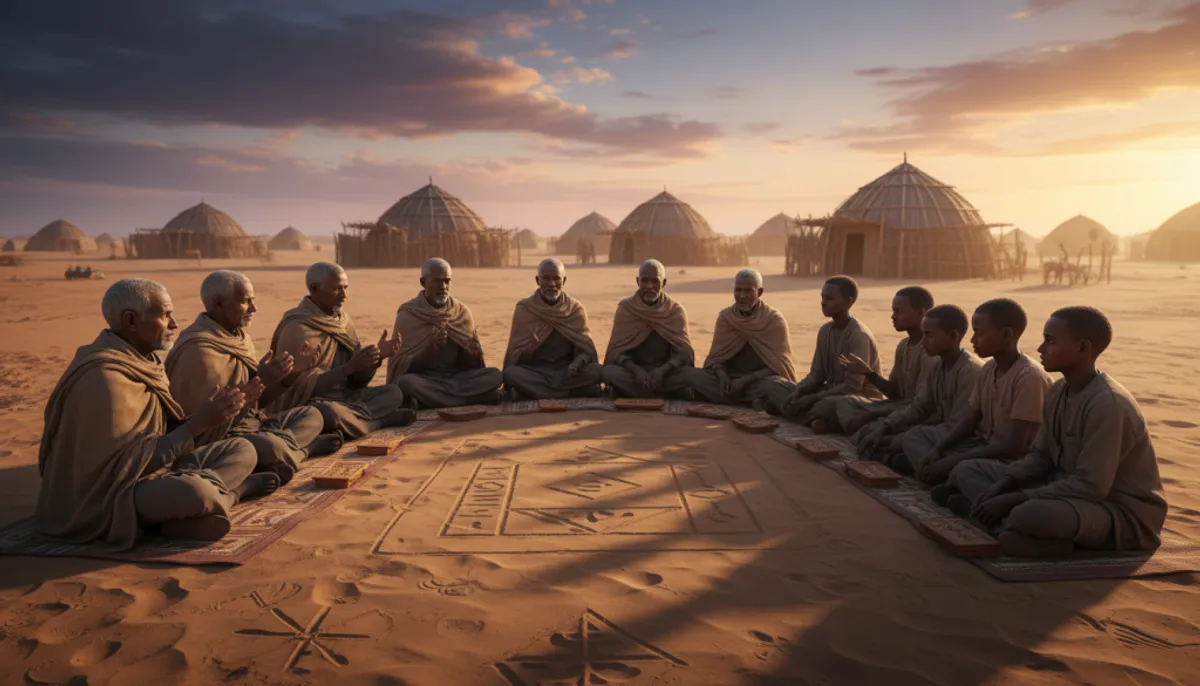
It forms a fundamental element of intangible heritage. Oral transmission ensures the sustainability of ancestral knowledge.
Dialects and Linguistic Features
The language is divided into two main dialects corresponding to the geographical regions. The north and south exhibit notable phonetic differences.
| Feature | North Dialect | South Dialect |
|---|---|---|
| Vowel Preservation | More pronounced | Frequent elision |
| Pharyngeal Consonants | Pronounced distinctly | Somewhat softened |
| External Influence | Limited | More perceptible |
The phonological system includes unique retroflex consonants. The standardized Latin spelling dates back to 1976.
Each name of a person or place reflects a specific worldview. The people use this language to convey their history.
The syntax follows the typical Subject-Object-Verb order. This structure is an integral part of linguistic identity.
Traditions and Cultural Practices
Social life is animated by ceremonies rich in symbols and emotions. These moments gather communities and strengthen bonds between generations.
Ceremonies, Poetry, and Oral Narratives
Oral art occupies a central place in identity expression. Traditional poetry, called gad, is sung publicly during major gatherings.
Intimate narratives, known as missila, are transmitted privately. The male poet, the gadabé, composes from sung fragments without a fixed structure.
Music varies by region, reflecting the diversity of groups. War songs like the ddbal testify to a past marked by conflicts.
Religious Influences and Convergence of Ideas
Sunni Islam, gradually adopted since the 8th century, has profoundly influenced practices. This influence from across the Red Sea has created a unique religious identity.
Marriage traditions follow precise rules. Marriage to a cross cousin (absuma) is a preference that is integral to the system.
Each place of life sees the chaféite rite and customary law coexist harmoniously. This convergence dates back to the origin of Islamic conversion in the 8th century.
Impact of Territory and Environment
The Afar territory constitutes a true open-air geological laboratory. This region is part of the most tectonically active areas on the planet.
The Earth's crust is exceptionally thin here, reaching only five kilometers in some places. This unique phenomenon allows direct observation of the forces shaping our planet.
Influence of Geology and Natural Phenomena
The spectacular mineral landscape testifies to intense geological activity. There are volcanic craters, lava flows, and vast salt flats.
In 1978, a plate divergence gave birth to the Ardoukouba volcano in just one week. This event serves as a reminder that this territory remains under the influence of powerful natural phenomena.
This area is also famous for the discovery of Lucy, the australopithecus fossil. This site has revolutionized our understanding of human origins.
Lake Abbé, fed by the Awash, is currently drying up. Waters are diverted from Addis Ababa for irrigation, affecting the local ecosystem.
The ubiquitous salt has structured the economy and trade exchanges. It lends its name to many places in this arid region.
Afar Culture in the Contemporary Context
Navigating between two worlds: this is the contemporary challenge for these populations with deep roots. The 20th century has radically transformed their daily reality.
National borders were drawn between 1891 and 1955, fragmenting their traditional space. This people now finds itself spread across three distinct countries.
Mix of Traditions and Modernity
The political control of their territory has gradually escaped customary structures. From 1885, Ethiopian expansion and European colonization redrew the map.
The former French Territory of the Afars Issas became the Republic of Djibouti in 1977. This modern political entity sees the Afars Issas sharing power in a delicate balance.
The tribes maintain their influence despite these upheavals. Each man and woman must now navigate state institutions.
On the other hand, modernization brings unprecedented challenges. Education and urbanization question the transmission of ancestral knowledge.
Despite tensions related to resource sharing, the tribes preserve their identity. This ability to adapt demonstrates their resilience in the face of change.
Conclusion
This immersion into the Afar universe reveals a civilization that has managed to navigate between tradition and modernity. Their millennia-old history in the Horn of Africa testifies to a remarkable capacity for adaptation.
The different tribes maintain their social structures despite the control shared among three countries. Their organization into clans and sultanates endures through the centuries.
The exceptional territory has shaped unique ways of life. From the salt trade to environmental knowledge, each inhabitant carries this rich descent.
This page of their history continues to be written, offering valuable lessons on identity preservation in the face of contemporary challenges.
FAQ
Where does the name "Afar" come from and what does it mean?
The name by which this people is known comes from their own language. It designates their collective identity. The eponymous ancestor, according to their narratives, would have given his name to all the clans and tribes that form this community today.
Where is the traditional territory of this people located?
Their historical region is located in the Horn of Africa, extending over areas of three current countries: Ethiopia, Djibouti, and Eritrea. It is an arid and spectacular land, bordered by the Red Sea and marked by the famous Danakil desert.
How was their society organized in the past?
The traditional political organization relied on a system of sultanates and confederations of tribes. These structures ensured resource management, customary justice, and territorial defense, creating a coherent political entity despite the vastness of the area.
What are their main activities for subsistence?
Nomadic livestock farming, particularly of camels, cattle, and goats, has always been at the heart of their economy. In some regions, salt extraction from the deposits of Lake Assal or the plains of Danakil has also been a crucial economic activity for centuries.
Is their language endangered today?
The Afar language, belonging to the Cushitic family, remains vibrant and widely spoken by the inhabitants of the region. It is a major pillar of cultural transmission, oral narratives, and poetry, resisting external influences.
How have the unique natural phenomena of their region influenced their culture?
The extreme geology, with its active volcanoes, lava fields, and hot springs, has profoundly shaped their worldview. These spectacular natural phenomena are reflected in their myths, their perception of the environment, and their great resilience.