
What does general knowledge really represent in our modern existence? Far from being a mere accumulation of facts, it serves as a true companion for navigating the contemporary world.

This varied knowledge helps us better understand the issues surrounding us. It transforms the way we approach daily and professional challenges. Having a solid foundation opens up unexpected perspectives.
The acquisition of these diverse knowledge significantly enriches our personal and social lives. It enhances our ability to communicate with others and grasp the nuances of complex situations.
This article will show you how to cultivate this valuable asset. We will explore accessible methods to broaden your intellectual horizons. The goal is to make this process stimulating and rewarding.
Key Points to Remember
- General knowledge is a living tool for understanding the world
- It improves critical thinking and open-mindedness
- This knowledge enriches daily conversations
- It opens interesting professional opportunities
- Intellectual development is accessible to everyone
- This approach positively transforms social interactions
Introduction to General Knowledge
General knowledge represents much more than a simple inventory of facts; it constitutes a true ecosystem of interconnected knowledge. This diverse knowledge accompanies us in all spheres of our existence.
Definition and Issues
It encompasses a set of knowledge covering history, geography, science, literature, and the arts. This intellectual wealth does not form an isolated discipline but rather a permanent dialogue between different fields.
In our current society, this knowledge base facilitates social integration and improves communication. It also strengthens our analytical capacity in the face of the complex challenges of the modern world.
Objectives for Learning and Personal Development
The acquisition of this knowledge aims to develop autonomous and critical thinking. It offers us valuable tools to understand multidimensional problems.
Cultivating one's natural curiosity thus becomes a valuable personal investment. This approach, accessible to all, opens unexpected perspectives for our growth.
Unlike a sterile accumulation, this solid foundation supports continuous learning throughout life. It helps us navigate easily in a constantly evolving universe, particularly through cultural evolution in the West.
General Knowledge in Education and Society
The French educational system has always placed a central emphasis on comprehensive intellectual training. From primary school, students encounter an education that goes beyond mere technical skills.
The Historical and Contemporary Role of Education
Since 1808, philosophy has been taught in secondary schools with a clear mission. Victor Cousin wanted it to shape "the honest man and the good citizen." This republican vision remains relevant today.
The Grandes Écoles continue this tradition of broad intellectual excellence. They cultivate minds capable of sound and structured reasoning.
The Impact on Citizenship and Living Together
This education creates a common foundation of shared references. It allows everyone to actively participate in democratic life.
As mathematician Wendelin Werner notes, science teaches us to discern fallacious reasoning. This ability is essential for an enlightened society.
| Level of Education | Main Objective | Developed Skills | Social Impact |
|---|---|---|---|
| Primary School | Common Knowledge Base | Intellectual Curiosity | Foundation for Living Together |
| Middle and High School | Development of Critical Thinking | Analysis and Reasoning | Active Citizenship |
| Higher Education | Intellectual Excellence | Cross-Disciplinary Expertise | Enlightened Leadership |
| Continuing Education | Personal Enrichment | Adaptation to Change | Social Cohesion |
This educational approach is not an elitist luxury. It forms the foundation for equal opportunities and the quality of collective life.
Key Areas of General Knowledge
Our intellectual panorama revolves around several essential pillars that shape our understanding of the world. These interconnected areas form a network of complementary knowledge.
History, Geography, and Science
History offers us valuable lessons about the evolution of civilizations. It sheds light on present choices through the analysis of past experiences.
Geography allows us to position ourselves in the world and understand contemporary issues. It develops essential spatial awareness.
Science enriches our view of nature and stimulates rational thought. Biology, physics, and astronomy reveal the mechanisms of the universe.
Literature, Arts, and Cinema
Literature explores the human condition through the ages. It sharpens our sensitivity and enriches our expression.
Visual arts and cinema constitute universal languages. They reflect the evolution of societies and mentalities.
These areas mutually influence each other. The history of art dialogues with literary currents, while literature draws inspiration from scientific discoveries.
Sports, gastronomy, and music complete this mapping of knowledge. This balanced approach fosters a comprehensive vision rather than narrow specialization.
Techniques to Enrich General Knowledge
Your brain has a natural capacity to store information effortlessly. However, you can optimize this function using strategies tailored to your profile, as well as information on the harvests.
Learning Strategies and Mnemonic Methods
Each person has a dominant memory type: visual, auditory, or kinesthetic. Identifying your style facilitates the lasting acquisition of knowledge.

Visual memory retains images and texts better. Auditory memory favors podcasts and oral explanations. Kinesthetic memory associates learning with movements and manipulations.
Incorporate short but regular sessions into your routine. Fifteen minutes daily are better than occasional hours. This regularity promotes memory anchoring.
Use proven techniques like the memory palace or acronyms. Associate complex ideas with familiar images. These methods transform the abstract into the concrete.
Vary your sources: books, documentaries, lectures. Activate your natural curiosity to connect new knowledge to your existing base. Learning then becomes a stimulating game.
These approaches make enriching your general knowledge accessible to everyone. It only takes method and perseverance to memorize complex things. Your brain loves these challenges!
The Playful Approach: Quizzes and Practical Exercises
Transforming learning into a game is a powerful method for firmly anchoring knowledge. This interactive approach makes acquiring new knowledge much more enjoyable and motivating.
Examples of Quizzes to Test Your Knowledge
Interactive questionnaires come in various forms suitable for all levels. Each format offers specific advantages for memorization.
| Type of Quiz | Main Advantages | Recommended Level | Ideal Frequency |
|---|---|---|---|
| Multiple Choice Questions | Identifying Gaps | Beginner | Daily |
| True/False | Reinforcing Basics | Intermediate | Weekly |
| Open-Ended Questions | Developing Expression | Advanced | Biweekly |
| Thematic Quizzes | Sector Deepening | All Levels | Monthly |
Repetition and Memorization Through Play
The key to success lies in spaced repetition. Retaking the same quizzes after a few days consolidates memorization.
Detailed answers with explanations and images help your brain create strong connections. This multimodality stimulates several types of memory simultaneously.
We recommend one quiz per day to establish an effective routine. Varying themes ensures balanced development of your knowledge.
Measuring your progress becomes a stimulating game that naturally maintains intellectual curiosity while exploring elements of Italian history.
General Knowledge: Quizzes and Difficulty Levels
Evaluating your intellectual achievements involves a gradual progression through four distinct levels. This structured approach allows you to tailor the challenge to your personal profile.
Quiz Levels: Easy, Intermediate, Difficult, and Extreme
The first level presents questions that are accessible with an average of about 75% correct answers. The intermediate level drops to 65%, while the difficult level falls below 55%.
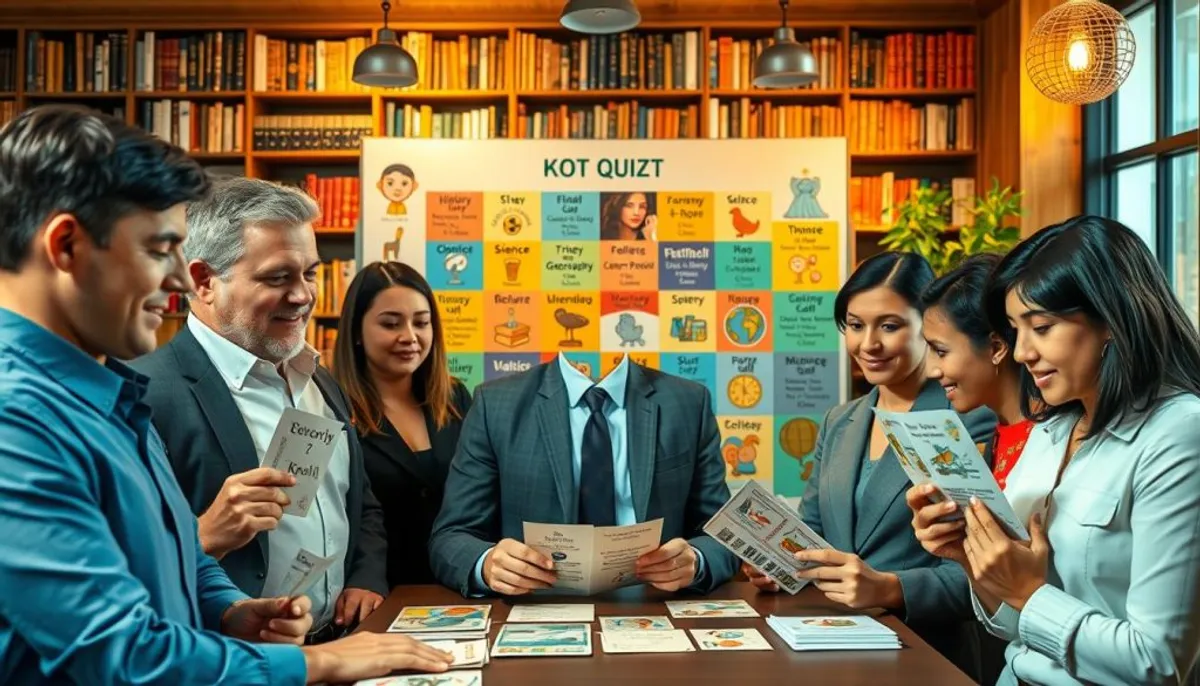
Each person perceives difficulty differently based on their interests. What seems simple for a history enthusiast may be complex for a scientist.
Tips for Progressing and Optimizing Performance
Start with the easy level to build confidence. Then analyze your mistakes to identify areas for improvement.
Video quizzes with time constraints develop your responsiveness. Vary the formats for comprehensive learning.
Establish a regular schedule and track your progress. Mistakes then become valuable learning opportunities.
The Historical and Philosophical Influence of General Knowledge
To understand the current value of our intellectual heritage, we must trace back to its oldest roots. This tradition dates back to ancient Greece with the concept of paideia. The study of culture is essential to appreciate this evolution.
The Romans developed this idea through Cicero. He coined the term humanitas to describe this educational process.
Ancient Origins and Humanistic Transmission
Cicero viewed this education as essential for human development. His "culture of the soul" prepared children to become fulfilled adults.
The Renaissance revived this ideal with the figure of "the honest man." The Enlightenment then enriched this vision with an encyclopedic spirit.
Descartes made it a pivot of rational thought, integrating elements of French style. Kant saw it as the reign of freedom in the face of nature.
Contemporary Debates and Perspectives
Hegel criticized an overly individualistic approach. Today, this tradition faces significant questioning.
Pierre Bourdieu denounces its role in social reproduction. Modern technical specialization questions its practical utility.
Political critiques have emerged, such as the Sarkozy controversy of 2007. Some institutions have eliminated corresponding exams.
Despite these challenges, it remains a valuable tool for critical thinking. Its humanistic essence continues to illuminate our understanding of the modern world.
Conclusion
Your journey towards a better understanding of the world begins with simple gestures. General knowledge is not an elitist privilege but a tool accessible to all.
The methods presented – such as regular quizzes and reading varied articles – make learning enjoyable. Start with simple questions and celebrate every progress.
Do you really know all the fascinating areas that surround us? History, literature, and science offer answers but also new questions.
Each discovery enriches your existence. The school of life remains open to all, ready to welcome your curiosity.
Start this endless journey today. Every effort builds solid knowledge that will illuminate your daily life.
FAQ
How can general knowledge be simply defined?
It is a set of varied knowledge about the world, history, arts, or sciences. It helps us better understand our environment and communicate with others.
Why is it important to develop general knowledge today?
It enhances critical thinking, facilitates exchanges, and strengthens citizenship. In professional or daily life, it opens doors and enriches discussions.
What are the essential areas to master as a priority?
History, geography, major authors in literature, and scientific discoveries form a solid foundation. The arts and current events complement this set.
Are there effective methods for learning and retaining knowledge long-term?
Yes! Regular reading, fun quizzes, and active discussions greatly help in understanding consumer behavior. Associating information with an image or anecdote also facilitates memorization.
Are quizzes really useful for progressing?
Absolutely. They transform learning into a game, stimulate curiosity, and allow you to verify your knowledge. It is an excellent tool for identifying strengths and weaknesses.
How to choose a quiz suitable for my level?
It is advisable to start with easy questions to build confidence. Then, gradually increase the difficulty to challenge yourself and progress.
Does general knowledge have a particular historical origin?
Its concept dates back to antiquity, with the humanistic ideal of forming enlightened minds. It has developed to transmit common knowledge and foster debate.