
Welcome to this exciting exploration of a unique universe, a fascinating blend where ancient traditions and modernity meet. This guide invites you to discover the richness and complexity of an identity that shines across the globe.
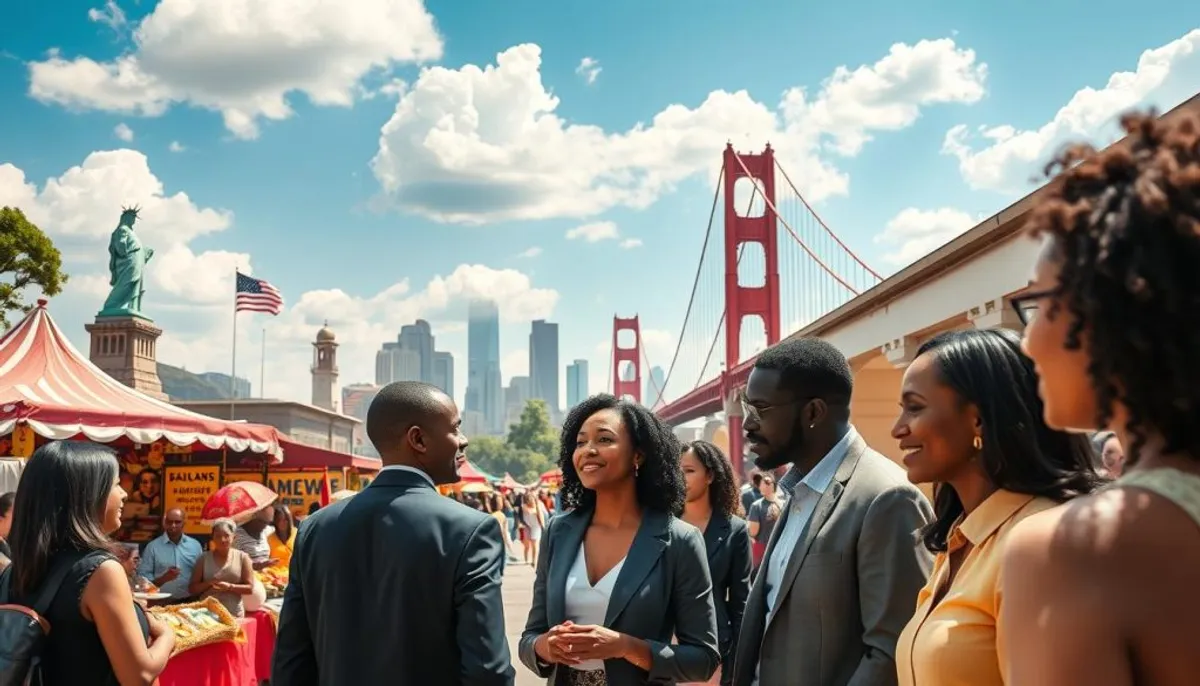
This country has built its identity by merging influences from everywhere. Its roots are primarily Western, but they have been enriched by contributions from Native American, African American, Asian, and Latino peoples.
This fusion has created a cultural model without equal. Many elements of this society have spread throughout the world thanks to modern media, exerting a global fascination.
We will decode together the social codes and mindsets that make this nation so special. Get ready for a captivating journey through the history and core values that unite this diverse people.
Key Points to Remember
- American culture has primarily Western roots but is extremely diverse.
- It has been built through the influence of many ethnic groups throughout its history.
- Its unique model combines ancestral traditions and contemporary innovations.
- It exerts significant global influence, particularly through mass media.
- Understanding its social codes and core values is essential.
- This nation is united despite its great ethnic and cultural diversity.
- Its identity is in constant evolution and reinvention.
Introduction to American Culture
Let’s dive into the heart of a society marked by its ability to integrate influences from all corners of the world. This nation has developed a unique identity that combines tradition and modernity.
Overview and Context
American culture is distinguished by its very specific social characteristics. It features a specific language, vibrant arts, and distinctive social codes.
This connected society strongly values individual freedom and personal responsibility. These fundamental principles have shaped its historical development.
Objectives of the Informative Guide
This guide aims to introduce you to the many facets of this fascinating culture, including the history of France. We will demystify clichés to reveal the authentic realities.
You will understand how the different cultural elements form a coherent whole. This understanding will help you better appreciate its global contributions.
| Cultural Element | Main Characteristic | Global Influence |
|---|---|---|
| American English | Distinct regional variants | Spread via media and technology |
| Film and Television | Dominant creative industry | Mass export of content |
| Popular Music | Fusion of diverse genres | International standards |
| Social Codes | Informality and optimism | Global relational model |
In fact, grasping the nuances of this culture allows for a better understanding of contemporary international dynamics. It is an enriching journey that illuminates our times.
The Historical Roots and European Influence
To understand the current American society well, one must go back to its colonial origins. For over one hundred and fifty years, the Thirteen Colonies developed an identity deeply marked by Europe.
The Colonial and British Heritage
England had a decisive influence on the early institutions. Universities, architecture, and even painting were often the work of British artists.
Colonial architecture drew from European Georgian and Neoclassical styles. Over time, local elements began to emerge timidly.
Puritan Influence and the Beginnings of American Art
The Puritans left a particular mark on the American mindset. They favored sobriety and banned superfluous ornaments from churches.
This pragmatic view long regarded art as a secondary activity. Early artists often had to perfect their training in Europe.
This period partly explains why the development of a distinct culture took so many years. The political break with England ultimately paved the way for authentically American expression.
Multicultural Influences in American Society
The demographic history of the United States tells an extraordinary saga of immigration and mixing. This nation has been built through the continuous influx of populations from all over the globe.
Contributions from African American and Latino Communities
The African American community represents about 12% of the population. This equates to nearly 40 million people.
Its influence has profoundly marked music, literature, and civil rights. African Americans have made essential contributions to national identity.
The Latino communities are experiencing remarkable growth. They bring a rich variety of language and cuisine.
Immigration and Cultural Melting Pot
More than 50 million immigrants have shaped this extraordinary country. This impressive number explains the current diversity.
Asian immigration constitutes a significant part of this phenomenon. It increased by 107% between 1980 and 1990.
These Americans from immigration create a vibrant mosaic. Their number reaches tens of millions of people.
This diversity makes the United States a fascinating human laboratory. Traditions from all continents meet and transform here.
Evolution of Culture Through the Centuries
The historical journey of this nation reveals a fascinating transformation since its colonial origins. This foundational period has shaped values that still endure today.
From the Beginning of the Colonies to the Birth of the United States
The adventure begins in 1565 with the Spanish settlement in St. Augustine. This first permanent colony marks the beginning of a lasting European presence.
In 1607, the English established Jamestown in Virginia. Then in 1620, the Pilgrim Fathers landed from the Mayflower. They founded Plymouth in Massachusetts.
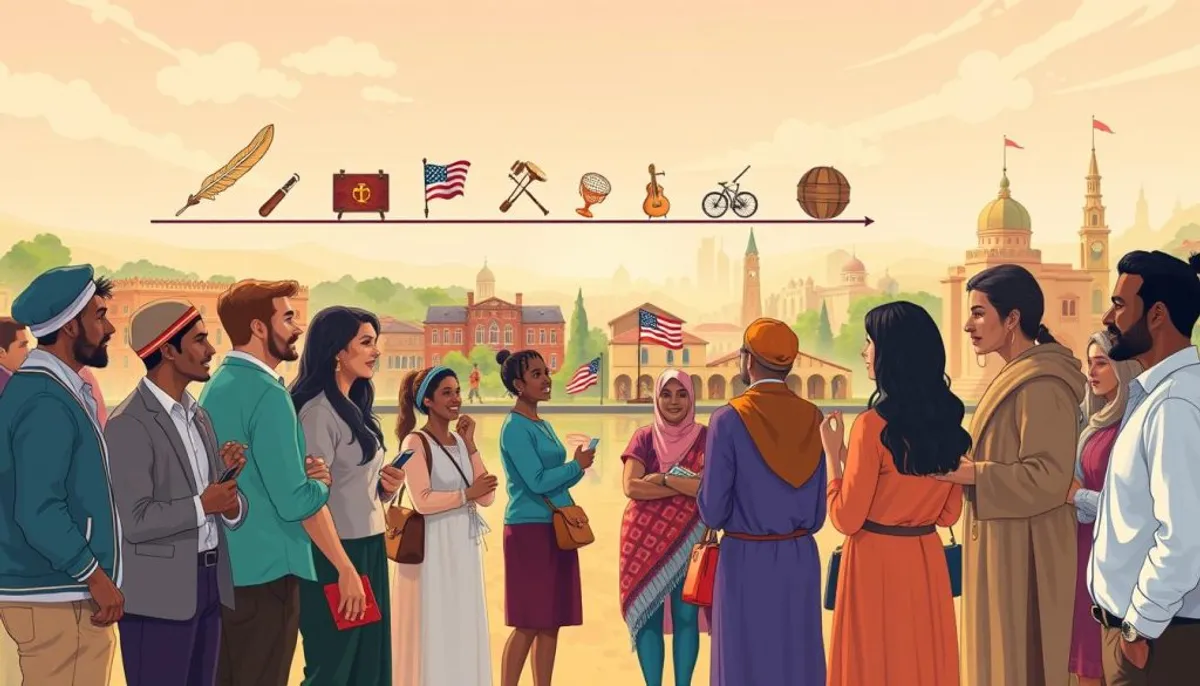
The creation of Harvard in 1636 shows the importance placed on education. This institution becomes a pillar of cultural transmission.
Over time, the Thirteen Colonies develop for nearly two hundred years. By 1733, they cover the entire East Coast.
July 4, 1776, marks a decisive turning point. The Declaration of Independence asserts the will of a sovereign country. This political break paves the way for a truly American identity.
| Date | Event | Cultural Significance |
|---|---|---|
| 1565 | Foundation of St. Augustine | First permanent Spanish colony |
| 1607 | Establishment of Jamestown | First lasting English colony |
| 1636 | Creation of Harvard | Foundation of the first educational system |
| 1776 | Declaration of Independence | Birth of a distinct national identity |
This era explains why the ideals of freedom remain ingrained in national identity. The diverse influences have created a truly unique culture.
Significant Periods of American Culture
The dark years of the Great Depression revealed the resilience of the American people through a remarkable artistic explosion, particularly in music, including trock music. This economic crisis paradoxically stimulated an unprecedented creative effervescence.
Transformations During the Great Depression and the New Deal
The massive unemployment of Americans during the 1930s severely impacted artists and writers. President Franklin D. Roosevelt responded with the New Deal, including an innovative cultural component.
The Works Projects Administration (1935) revolutionized public support for artistic work. This initiative employed thousands of unemployed creators, producing major works.
| Type of Work | Quantity Produced | Cultural Impact |
|---|---|---|
| Mural Paintings | 1,566 works | Decoration of public spaces |
| Sculptures | 17,744 pieces | Urban embellishment |
| Oil Paintings | 108,099 paintings | Enrichment of collections |
This period saw the emergence of socially engaged art. Figures like John Steinbeck gave voice to the millions of Americans affected by the crisis.
The state's intervention was particular in the history of national culture. It established an important precedent for public support of the arts.
Popular Culture and Its Global Impact
From movie screens to sports stadiums, American popular culture has captured imaginations worldwide. This extraordinary influence has spread through powerful vectors that speak a universal language.
Film, Music, and Sports as Cultural Vectors
Hollywood produced more than 5,000 films during the 1930s. Despite the economic crisis, Americans continued to favor cinema.
The Italian culture and American music have revolutionized musical codes worldwide. Cities like New York have become essential cultural capitals.
Typically American sports like American football and baseball have become major phenomena. They convey values of competition and teamwork.
Global Dissemination Through Modern Media
The advent of mass media has accelerated this global expansion. Radio, television, and then the internet have spread this culture across the world.
This dominance can be explained by the ability to produce accessible and entertaining content. They transcend linguistic and cultural barriers.
Events like the Super Bowl gather millions of viewers across the planet. New York and other cities symbolize this remarkable international influence.
Art and Cultural Policy in the United States
The support system for American culture is distinguished by its lack of centralized direction. Unlike many European countries, there is no Ministry of Culture in Washington.
The Role of Patronage and Grants
Philanthropy represents an essential part of cultural funding. This tradition dates back to the 19th century with legendary figures like Andrew Carnegie and John D. Rockefeller.
These philanthropists invested millions to build libraries and museums. Their legacy continues to inspire contemporary patronage.
Local and Federal Cultural Policies
The state of New York allocates about 50 million dollars annually to culture. The city of New York manages a budget of 131 million for thirty-four institutions.
The National Endowment for the Arts, created in 1964, is the main federal agency. Its modest budget highlights the importance of the private sector in this unique ecosystem.
| Administrative Level | Annual Budget | Managed Institutions |
|---|---|---|
| City of New York | 131 million $ | 34 institutions |
| State of New York | 50 million $ | Regional programs |
| National Endowment for the Arts | Federal budget | National support |
This hybrid model combines local grants, private donations, and self-generated revenues. It reflects the entrepreneurial values characteristic of American culture.
Regional Particularities and the Holiday Calendar
Through festivals and traditions, we discover how the United States manages to reconcile national unity and regional riches. This harmony is particularly manifested in the festive calendar that punctuates the year.
Regional Traditions and Festive Events
Each American region has its unique celebrations. Texas hosts spectacular rodeos while Nashville vibrates to the sound of country music.
Large cities like New York transform holidays into major events. St. Patrick's Day features impressive parades that attract huge crowds.
New Orleans perfectly embodies this regional variety. Its Mardi Gras, a French heritage, offers an explosion of colors and unique traditions in the country.
July 4th and Thanksgiving are the pillars of the national calendar. These celebrations bring millions of families together around shared rituals each time.
This festive mosaic illustrates how regional differences enrich the common identity. It demonstrates a remarkable ability to unite without homogenizing.
American Cultural Practices and Leisure
The American way of life is particularly revealed through its daily cultural practices. These activities reflect a dynamic lifestyle where entertainment and community engagement harmoniously coexist.
Museums, Gastronomy, and Entertainment Venues
American restaurants offer exceptional culinary diversity. From traditional diners to gourmet establishments, they reflect the ethnic richness of the country.
New York is home to prestigious institutions like the Metropolitan Museum of Art. These museums attract millions of visitors annually.
Large cities have developed complete cultural districts. Theaters, concert halls, and art galleries create vibrant ecosystems.
Cultural volunteering involves 93 million Americans. About 1,500 people work for free at the Boston Museum of Fine Arts.
| Type of Activity | Percentage of Participants | American Particularity |
|---|---|---|
| Cultural Outings | 40% of adults (2002) | Comparable rate to Europe |
| Jazz Concerts | Above the European average | Marked preference |
| Classical Music | 12% of the population | Faithful audience |
| Sports Events | Massive participation | Passion for American football |
Music and sports are pillars of leisure. Outdoor festivals and nightlife enliven the entertainment landscape.
Fashion and visual arts complement this rich cultural offering. Innovative restaurants contribute to this ongoing vitality, just like the top cultures that reflect current trends.
This diversity of activities shapes a unique way of life. Local restaurants reflect this constant creativity.
Religious Diversity and Its Manifestations
No aspect of American life illustrates national diversity better than its rich religious spectrum. This spiritual plurality constitutes a fundamental pillar of social identity.
Main Religions and Spiritual Movements
The American religious landscape reveals impressive figures. About 90% of the inhabitants declare a religious belief, while 70% are active members of a Church.
This religious fidelity is distributed among several major traditions. Protestants represent 56% of the population, followed by Catholics (28%).
| Religious Group | Percentage | Notable Characteristics |
|---|---|---|
| Protestants | 56% | More than 20 different congregations |
| Catholics | 28% | Strengthened by Hispanic immigration |
| Jews | 2% | Significant community in New York |
| Muslims | 1.5% | Growth since the 1960s |
The Impact of Sects and Alternative Communities
The freedom of worship has allowed the emergence of particular religious movements. Mormons count about 2 million followers and possess a considerable economic empire.
Other groups like Jehovah's Witnesses and Scientology sometimes operate like real businesses. This diverse community creates remarkable spiritual wealth.
Eastern religions are also gaining ground due to Asian immigration. This plurality demonstrates an exceptional capacity to welcome different beliefs.
Societal Issues and Cultural Modernization
Behind the facade of prosperity lie deep societal challenges that continue to shape the daily lives of Americans. These inequalities affect communities differently depending on their ethnic background and geographic location.
Contemporary Challenges and Social Changes
The African American community represents 12% of the population but suffers an unemployment rate twice that of whites. Despite advances in business and politics, this economic divide persists.
Native Americans hold negative records with unemployment exceeding 50%. Their life expectancy is reduced to 46 years, revealing dramatic conditions.
The fact that Washington and Detroit have a Black majority highlights the persistent spatial segregation. Chicago, Philadelphia, and New York reach 40% African American population.
Modernization comes through the work of neighborhood communities. Between 1990 and 2000, 2.5 million people left ghettos thanks to these local initiatives.
These issues also include the emancipation of women and the acceptance of sexual diversity. American society must rethink its social contract in the face of economic changes.
Over time, artists and activists mobilize to reconcile historical heritage and aspirations for equality. This essential part of public debate continues to shape the lives of Americans.
USA Culture: Mindsets and Identities
The relationship of Americans to freedom and exceptionalism defines their national character. This unique mentality combines optimism and individualism since the origins.
Exceptionalism and the Sense of Freedom
The idea of freedom constitutes the absolute pillar of identity. It permeates all aspects of life, from the political system to personal choices.
The pragmatic mentality inherited from pioneers values efficiency and entrepreneurship. This approach sees material success as proof of personal achievement.
The American spirit is characterized by unwavering confidence in infinite possibilities. The famous "American Dream" still attracts millions of immigrants.

Stereotypes versus Reality in Mindsets
Stereotypes about Americans coexist with a complex and innovative reality. Society combines academic excellence, artistic creativity, and community engagement.
Sports like American football and baseball perfectly embody national values. They celebrate competition, team spirit, and self-overcoming.
American exceptionalism permeates the collective mentality. This belief in a special mission explains the country's great achievements.
Americans constantly navigate between historical heritage and modern aspirations, while being influenced by Western modernity. This dynamic shapes their identity in perpetual evolution.
Future Perspectives and Transformations
The future of American identity is currently being shaped through profound transformations that redefine its cultural expression. The landscape is rapidly evolving under the influence of new technologies and social movements.
New Trends and Cultural Revolutions
Social media are radically transforming artistic creation and dissemination. This digital revolution offers unprecedented opportunities for independent creators.
The very idea of American culture is redefined each year. It now integrates contributions from new waves of immigration and the claims of minorities.
The whole world is witnessing increasing diversification beyond Hollywood products. Multicultural expressions now reflect the real complexity of society.
| Emerging Trend | Cultural Impact | Future Projection |
|---|---|---|
| Decentralized Creation | Emergence of local scenes | Increased role of communities |
| Social Movements | Influence on industries | More engaged consumption |
| Digital Technologies | New forms of art | Immersive experiences |
Movements for equality and environmental justice profoundly influence the creative industries. This evolution also transforms cultural consumption modes.
The future of American culture will likely be more participatory and inclusive. Its adaptability ensures its relevance in the contemporary world once again.
Conclusion
At the end of this in-depth exploration, we can now grasp the unique complexity of this national identity. This country has forged an exceptional model that fascinates the entire world.
The richness of this culture lies in its ability to integrate the contributions of millions of immigrants. It constantly develops distinctive characteristics in all artistic and social fields.
This society remains a remarkable example of dynamism and innovation. It preserves fundamental values such as freedom and faith in infinite possibilities.
Through this guide, we have discovered the historical roots and multicultural influences. We have explored contemporary practices, including current agriculture, and the future challenges of Americans.
Understanding this culture means apprehending the mechanisms of globalization. It is to recognize the tensions between tradition and modernity in our time.
This national identity will continue to evolve and surprise. Millions of individuals contribute every day to writing new pages of this history, thus shaping the way of life and the ideas of tomorrow.
FAQ
What are the main differences in the American mindset?
The American spirit strongly values the idea of individual freedom and optimism. Work and personal success occupy a central place. There is also a strong sense of patriotism and community, particularly visible during events like American football or baseball.
How does the variety of communities influence everyday life?
Society is a true melting pot. This diversity is felt in music, fashion, and especially gastronomy. Restaurants offer an incredible variety of dishes from around the world. Each region has its own specialties, making life very rich, especially concerning advertising in France.
What sports are the most popular in the country?
American football is a true institution, especially with the Super Bowl that gathers millions of people. Baseball is also deeply rooted, considered the national pastime. Basketball and ice hockey complete the major sports.
How is freedom of expression manifested in daily life?
This freedom is fundamental. It is expressed through art, music, public debates, and media. Americans are generally very direct in their communication, which can be surprising, but it reflects this cherished value.
What are the most important holidays of the year?
Thanksgiving is a major holiday centered around family and gratitude. July 4th, Independence Day, is celebrated across the country with fireworks. Halloween and Christmas are also significant moments, each with its own particular traditions.