Welcome to this fascinating exploration of our collective heritage. We will discover how this rich universe is constantly evolving.
Our centuries-old heritage today meets innovations that transform our relationship with art. This encounter creates an extraordinary dynamic.
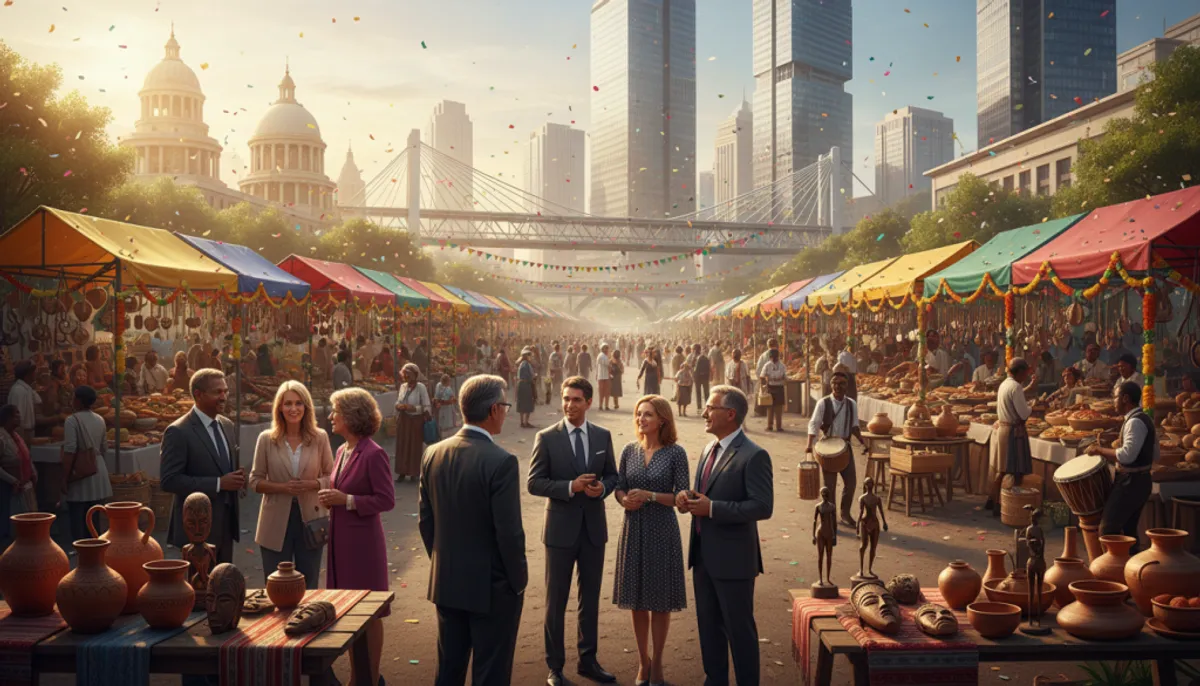
You will see how this heritage shapes our French identity while adapting to contemporary challenges. It is not just about museums or theaters.
This universe permeates our daily lives, our businesses, and our social relationships. It is much more accessible than we often think.
We will address issues of social inclusion and new forms of artistic expression. These elements democratize our relationship with this precious heritage.
Get ready for an exciting journey where traditions and modernity complement each other harmoniously. Together, they create a vibrant and dynamic landscape.
Introduction: The alliance between traditions and modernity
Social upheavals have revealed unsuspected cultural needs. Our artistic landscape is undergoing a period of profound transformation.
Current context and issues
During the lockdown, a collective awareness emerged. Citizens affirmed the fundamental importance of our artistic heritage.
Yet, the return to performance venues was timid. This contradiction shows that we were seeking something beyond the works themselves.
The real lack concerned human encounters and collective sharing. The social experience often takes precedence over artistic content.
The evolution of cultural practices
Our habits have radically changed in a few decades. We have moved from passive consumption to active participation.
Each person becomes an actor in their own artistic discovery. New spaces foster participatory exchanges.
This transformation responds to a deep need for human connection. It questions traditional models of dissemination.
Contemporary challenges concern accessibility and social inclusion. Our heritage must become a living and relevant common good again.
Exploring culture with a capital c: from tradition to innovation
The concept of heritage of excellence encompasses much more than mere works of art. It represents the entirety of intellectual creations that shape our collective identity.
Defining the concept and its multiple facets
This complex notion includes the arts, sciences, and literature. It transcends the boundaries of museums to touch all aspects of social life.
Recognized heritage is often associated with prestigious institutions. However, it also exists in more contemporary expressions.
The multiple dimensions of this heritage allow for a rich and diverse approach. Each facet deserves to be explored with curiosity.
The historical influence on culture
History has gradually defined what constitutes artistic excellence. This construction has taken place over several centuries.
The creations considered universal have stood the test of time. They continue to inspire current generations.
This historical perspective shows how hierarchies evolve. It invites us to question our certainties about artistic value.
Approaching this theme reveals fascinating connections. The past constantly dialogues with present innovations.
The roots of tradition in our society
Our contemporary society draws its strength from legacies passed down for centuries. These traditions form an invisible foundation that structures our relationships and behaviors.
They represent the solid foundations on which we build our collective identity. This intangible heritage connects us to those who came before us.
The values passed down from generation to generation
Ancestral customs convey essential principles that guide our existence. Each family perpetuates this precious heritage in its own way.
These teachings influence our worldview and our daily choices. They give profound meaning to our life in community.
Intergenerational transmission creates powerful links between past and present. It ensures continuity in a constantly evolving world.
Family rituals and local celebrations keep this heritage value alive. They provide stable reference points in the face of modern upheavals.
This transmission is never a simple reproduction. Each era creatively reinterprets the inherited legacy.
Understanding these roots allows us to build a future that honors our origins. This balance between tradition and innovation enriches our collective life.
Modernity and the mutation of cultural practices
Today, we are witnessing a silent revolution in our way of consuming art. Ancestral habits give way to innovative approaches that redefine our relationship with creation.
The impact of digital technologies
Online platforms have democratized access to works from around the world. They allow for immediate and personalized discovery.
This digital transformation creates new opportunities for emerging artists. Traditional barriers are gradually fading.
The new spaces for artistic encounters
Hybrid places are emerging, combining conviviality and participatory experience. These spaces encourage direct exchanges between creators and the public.
Each encounter becomes a moment of authentic sharing. The boundaries between spectators and actors naturally blur.
| Aspect | Traditional approach | Modern approach |
|---|---|---|
| Access to works | Specific physical locations | Multiple digital platforms |
| Public interaction | Passive consumption | Active participation |
| Social experience | Formal institutional framework | Friendly and inclusive environment |
This evolution responds to a deep need for human connection. It reinvents our relationship with art while honoring our heritage.
The value and experience of culture
Beyond its economic dimension, our artistic heritage possesses a value that is essentially human. This approach transforms our understanding of its real impact on society.
Each encounter with a work constitutes a unique experience that shapes our sensitivity. These privileged moments profoundly enrich our individual journey.
The role of personal experiences
Artistic practices actively contribute to building self-esteem. They allow individuals to develop their identity and confidence.
In various social contexts, foundational experiences are lived thanks to the commitment of dedicated artists. These encounters create opportunities for personal transformation.
Culture as a vector of well-being
Our artistic heritage acts as a true vector of psychological well-being. It contributes to the balance and flourishing of individuals.
Recognizing this transformative value legitimizes universal access to artistic practices. Every individual deserves to experience these enriching experiences.
Culture and artifacts: works and artistic expressions
Artistic works are the living witnesses of our collective heritage through the centuries. They materialize human creativity and connect us to our past.
These cultural artifacts take various forms, from paintings to contemporary performances. Each expression contributes to the richness of our heritage.
Accessibility to major works
The ministry has a clear objective: to make major creations accessible to the greatest number. This mission responds to a fundamental need for openness.
The challenge goes beyond simple museum visits. It is about creating bridges between generations and social backgrounds.
Dramatization of art and local initiatives
Many organizations are developing inclusive approaches across the territory. They recognize the value of each artistic expression.
These projects bring creations closer to populations far from major centers. They promote exchanges between scholarly and popular practices.
The goal is for everyone to find their place in this rich and diverse landscape. Whether one is a creator, spectator, or simply curious.
These initiatives transform our relationship with art. They make it closer, more human, and more essential to our collective life.
The influence of culture in business and daily life
The professional universe is deeply imbued with the collective values that shape our daily lives. This influence manifests in every aspect of organizational life.
The identity of a company is based on shared convictions among all its members. These fundamental principles guide decisions and behaviors at work.
Professional success often depends on the harmony between personal aspirations and collective vision. Each individual finds fulfillment when they share the ideals of their organization.
A clear and coherent atmosphere naturally attracts aligned collaborators. This synergy enhances efficiency and satisfaction in daily life.
Work environments reflect our relational choices and our approach to challenges. Understanding this dynamic allows for the creation of more harmonious spaces.
The balance between personal and collective values is the key to professional well-being. This coherence positively influences our entire life.
Cultural growth in the service of social inclusion
Social inclusion has become a privileged area of action for contemporary artistic projects. This approach profoundly transforms the relationship between works and territories.
Innovative partnerships are developing between cultural structures and local actors. They create positive dynamics in various contexts.
Cultural initiatives in underprivileged neighborhoods
Projects are multiplying in disadvantaged urban and rural areas. Artists engage alongside educational and social teams.
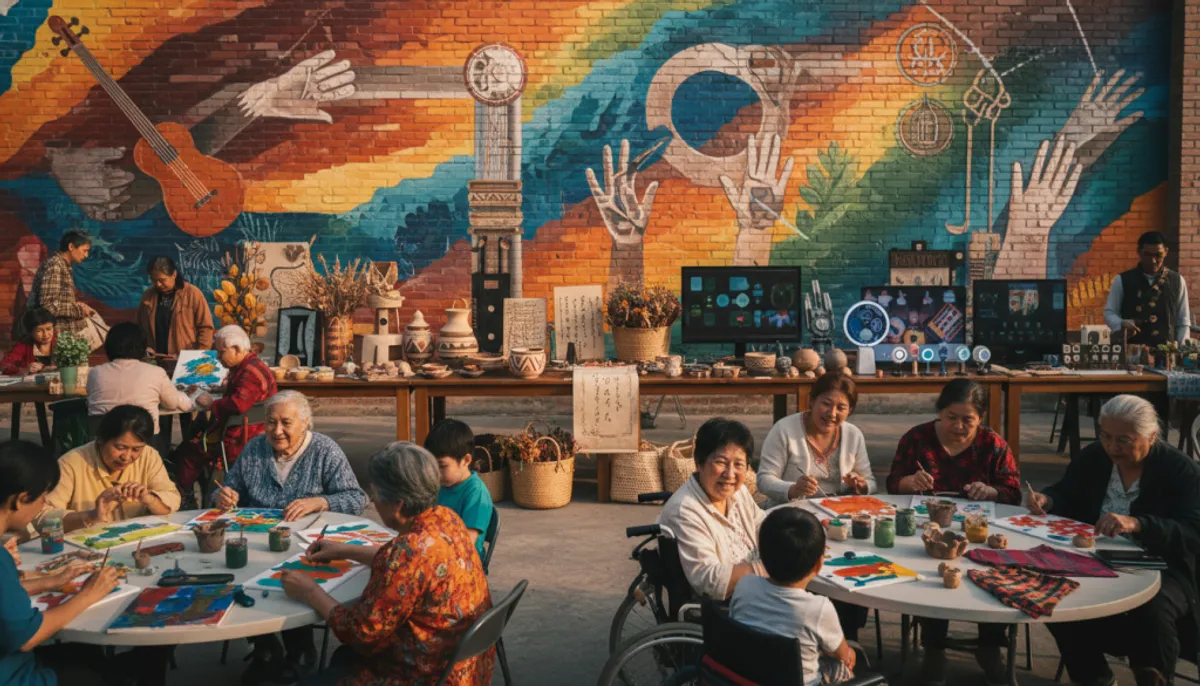
These actions reach diverse audiences: schools, prisons, nursing homes. Each intervention adapts to the specificities of the field.
The central place given to personal expression fosters emancipation. Participants discover new creative abilities.
The role of institutions in promoting inclusion
Traditional cultural institutions are reinventing their social missions. They are developing specific programs for distant audiences.
Financial and structural support allows for the sustainability of these actions. A genuine accessibility policy is gradually being implemented.
This approach recognizes the equal dignity of all individuals. It considers access to artistic practices as a fundamental right.
The experiences lived in these frameworks often become foundational moments. They open new perspectives for each participant.
Meetings and exchanges: living collective experiences
What we deeply missed during isolation was much more than the works themselves. We discovered that the true treasure lay in the possibility of sharing common moments.
The spaces for cultural sharing
New places are emerging today, designed specifically to foster encounters. These convivial spaces blend artistic creations and human exchanges.
There are participatory workshops, café-theaters, and open artist residencies. Each visit becomes an opportunity for dialogue and mutual discovery.
The importance of social interactions
Participatory formats transform spectators into actors of their own experience. This approach strengthens personal engagement and collective memory.
These exchanges create shared memories that weave lasting bonds. They break isolation and nourish the sense of belonging to a community.
The simple act of discussing after a performance significantly enriches our understanding. These social interactions give full value to artistic practice.
Films and visual arts: illustrating culture
The seventh art offers a unique window into our artistic heritage. Films allow us to explore universal themes through captivating narratives.
This form of visual expression reaches a wide audience. It makes complex concepts accessible in an entertaining way.
A selection of must-see films
Some productions leave a lasting mark on cinematic history. They become references shared by several generations.
Alfred Hitchcock created classics like Vertigo and Psycho. These works remain studied for their technical and narrative mastery.
Contemporary cinema also contributes. Christopher Nolan renews the codes with Inception and The Prestige.
French production shines with its diversity. Comedies by Francis Veber coexist with more intimate dramas.
Recent films like 1917 by Sam Mendes enrich this heritage. David Lynch with Mulholland Dr. offers a unique artistic vision.
Discovering these creations develops our critical sense. They nourish our imagination and our conversations.
The impact of culture on French society
The influence of our collective heritage manifests in every aspect of French society. This imprint shapes our behaviors and social relationships on a daily basis.
Our way of living together finds its foundations in shared references. These shared values create a strong sense of belonging.
Influence on identity and living together
The French identity has been built around a recognized artistic and intellectual radiance. This patrimonial richness influences our education and leisure.
Public policies recognize this fundamental importance. They support initiatives that strengthen social cohesion.
| Societal aspect | Traditional influence | Contemporary impact |
|---|---|---|
| Education | Transmission of classics | Openness to diversity |
| Social relations | Established codes | Intercultural exchanges |
| Public debates | Common references | Plurality of viewpoints |
Living together benefits from these neutral meeting spaces. Differences are expressed there in mutual respect.
Understanding this impact allows us to value investments in this area. They ensure the balance and creativity of our society.
Challenges and issues of cultural transmission
The question of cultural legitimacy becomes central in our society. Transmitting our heritage involves reconciling traditions and innovations.
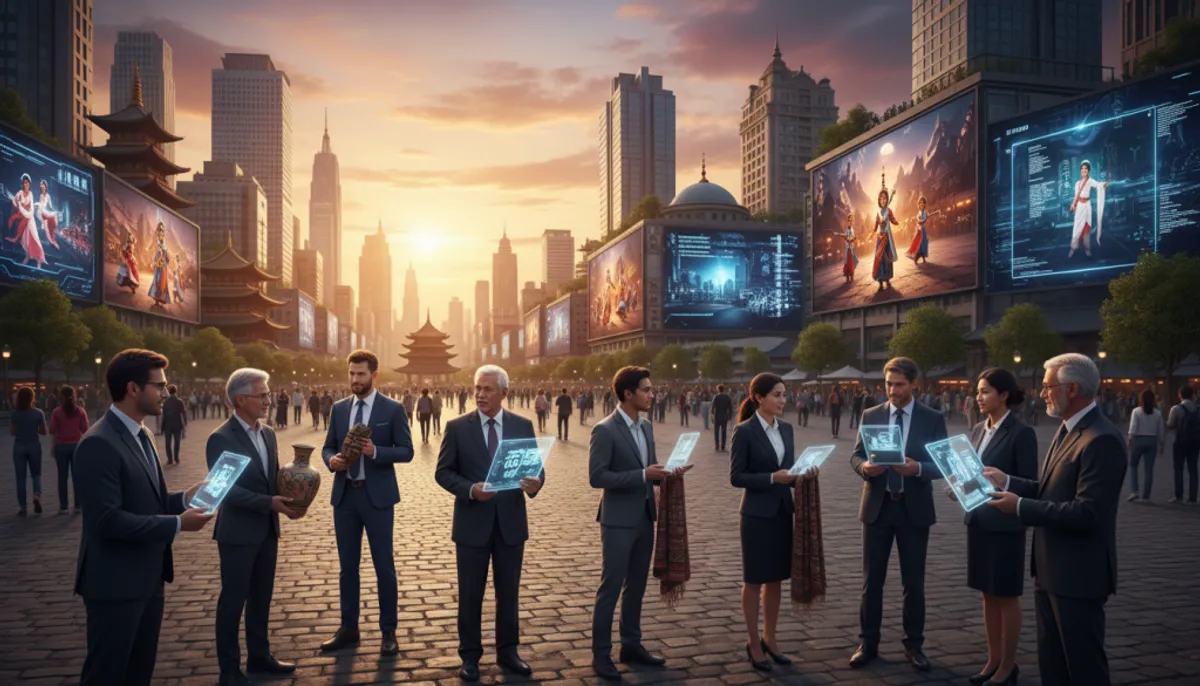
This mission encounters several major obstacles. It is necessary to preserve authenticity while remaining open to new expressions.
Preserving traditions in the face of innovation
Preserving our heritage does not mean freezing it in the past. The essential thing is to adapt it to contemporary contexts.
This dynamic approach ensures its sustainability. It allows us to maintain its value intact while keeping it alive.
The obstacles to cultural accessibility
Many barriers limit access to works. Some are material: geographic distances or economic costs.
Other barriers are psychological. The difficulty in approaching certain creations stems from a feeling of illegitimacy.
Christian Ruby criticizes this hierarchical vision. It favors high value added experiences at the expense of inclusive approaches.
| Type of obstacle | Manifestation | Possible solution |
|---|---|---|
| Psychological | Feeling of illegitimacy | Adapted mediation |
| Geographic | Distance from locations | Actions outside the walls |
| Economic | Cost of activities | Solidarity pricing |
Overcoming these challenges requires a comprehensive approach. Everyone must feel empowered to participate fully.
Future perspectives for modern culture
A profound metamorphosis is taking place in the cultural landscape, driven by new audience expectations. The coming years will see the emergence of hybrid forms blending physical and digital.
This evolution responds to a growing desire for active participation. Spectators now aspire to become co-creators of their artistic experience.
Emerging trends and digital revolution
Virtual and augmented reality are transforming our approach to works. These technologies create total immersions that disrupt conventions.
Artificial intelligence opens up unprecedented creative horizons. It questions our very definition of artistic authenticity.
Environmental issues will also influence practices. A search for sustainable and responsible formats is gradually becoming necessary.
The future of culture lies in this delicate balance. We must preserve the patrimonial essence while embracing innovations.
Conclusion
Our journey through traditions and innovation reveals an essential truth. Our heritage is not a frozen museum but a living ecosystem that breathes in rhythm with our time.
Universal access remains the main challenge. Everyone must be able to appropriate this heritage without barriers. Individuals who thrive are those who find in culture a source of personal growth.
We must approach this universe as a common good present everywhere. From prestigious institutions to our daily home, these riches surround us. Harmony arises when our values meet those of our environment.
This common home that is our collective heritage offers the resources to build an inclusive society. Let us preserve what deserves transmission while welcoming innovations. Together, let us create a future where everyone finds their place.
FAQ
What exactly is "culture with a capital c"?
It is a vision that encompasses classical works and traditions, but also their encounter with modernity. It includes art, music, literature, and the values that shape our collective life.
How does modernity influence traditional practices?
New technologies, such as virtual museum tours, make art more accessible. They also create new sharing spaces, allowing these practices to evolve while retaining their essence.
What is the role of personal experiences in culture?
Each lived moment, such as a visit to the Louvre or a concert, enriches our relationship with the works. These individual experiences build our well-being and our connection to society.
Can culture really promote social inclusion?
Absolutely! Initiatives in neighborhoods, supported by institutions like the Centre Pompidou, allow all individuals to have easy access to creation. This strengthens living together.
What are the challenges of transmitting this heritage today?
The main challenge is to preserve the value of traditions while integrating innovation. We must also overcome financial or geographical obstacles for universal accessibility.
RelatedRelated articles
- 16 Feb 2026·4 min readCulture Scrapbooking 15: The Art of Creating with Modern TechniquesArticles
 Immerse yourself in the August, September, and October 2024 issue of this magazine dedicated to creative hobbies. It opens the doors to a universe rich in inspiration and colors. Discover a team of passionate creators who share their unique projects...