
Welcome to this captivating exploration of an overlooked heritage. The Tigrayan people represent about 6% of the country's population, with deep roots in northern Ethiopia.
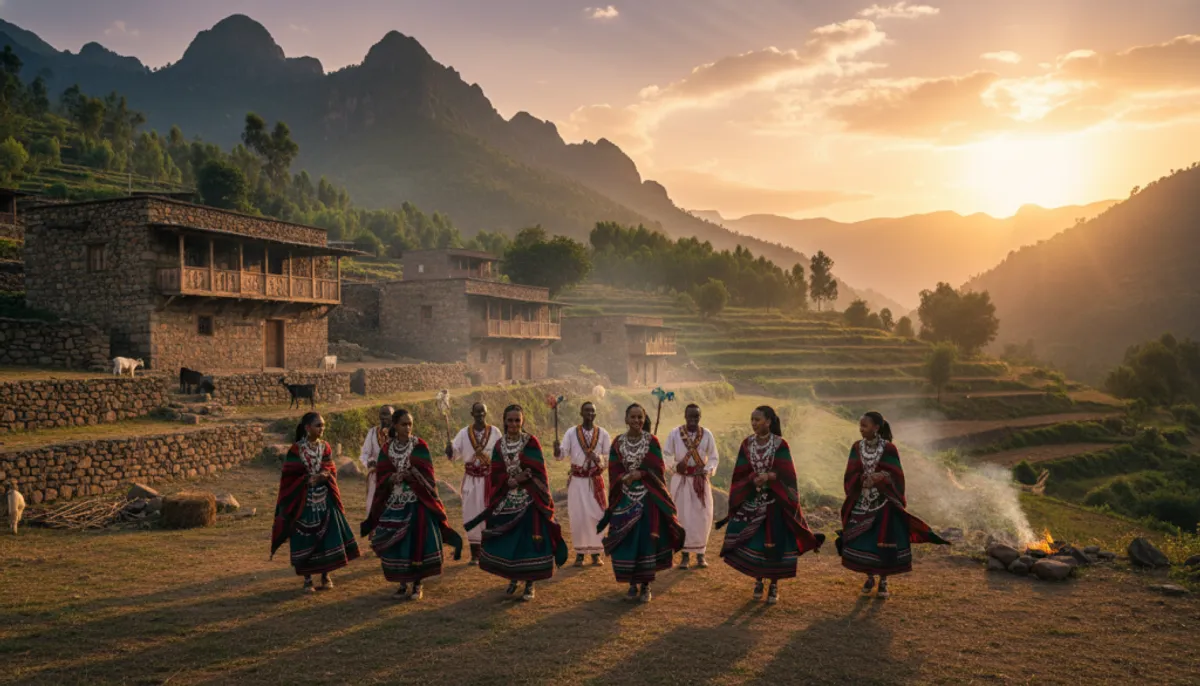
This article invites you to discover an exceptional heritage. Community traditions and a political system based on democratic deliberation distinguish this community.
The millennial history dates back to the ancient Aksumite empire. It developed through medieval and imperial influences that shaped its unique identity.
We will examine how this heritage has been passed down from generation to generation. You will gain a better understanding of the specificities that make the Tigrayans the guardians of a remarkable heritage.
Key Points to Remember
- The Tigrayan people represent about 6% of the Ethiopian population
- Millennial history dating back to the Aksumite empire
- Community traditions and unique political system
- Cultural heritage passed down through generations
- Deep roots in the northern region of Ethiopia
- Medieval and imperial influences on cultural development
Historical Roots and Cultural Heritage
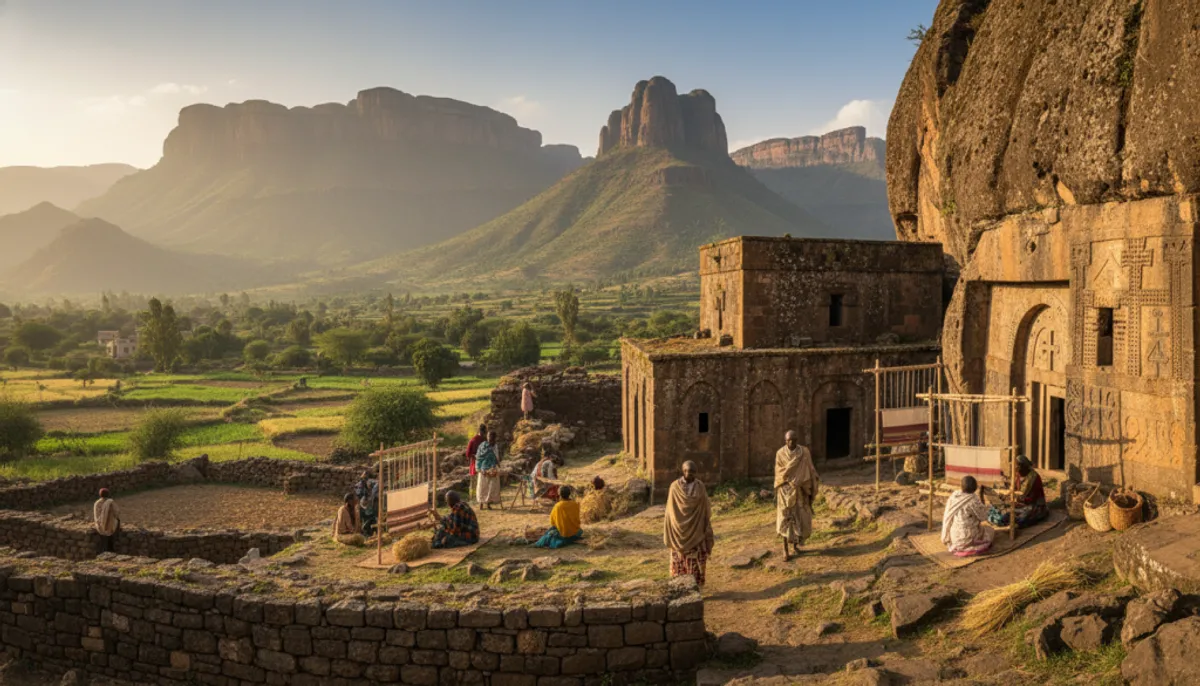
The roots of this population run deep into the medieval past of the region. Their history dates back to the first century AD with the Aksumite empire.
Medieval and Imperial Influences
From the 15th century, a centralizing movement sought to unify the various populations. The leaders aimed to extend their power across the entire country.
This community resisted complete integration. It maintained its traditions in the face of the unifying model promoted from the capital.
The Transmission of Ancestral Knowledge and Customs
Despite pressures, the transmission of knowledge continued for many years. The elders preserved customary rights in the villages.
In the 19th century, the Ethiopian state modernized its institutions. But local populations retained their democratic practices.
Their community system contrasted with the imperial project. This cultural resistance lasted throughout the 20th century.
Tigrayan Culture: Traditions, Customs, and Ways of Life
In the mountainous territories of northern Ethiopia, a form of direct democratic governance has persisted for centuries. This collective approach truly distinguishes the local way of life.
Community Rituals and Practices
The political system is based on deliberation, an open discussion where every voice matters. Important decisions emerge from collective consensus.
The area comprises about ten territories with distinct clan identities. Each has its customary rights and ancestral traditions.
The elders play a crucial role as mediators and guardians of knowledge. They ensure oral transmission between generations.
Traditional agricultural practices adapt to the rugged terrain. Terrace techniques and water management testify to a millennia-old expertise.
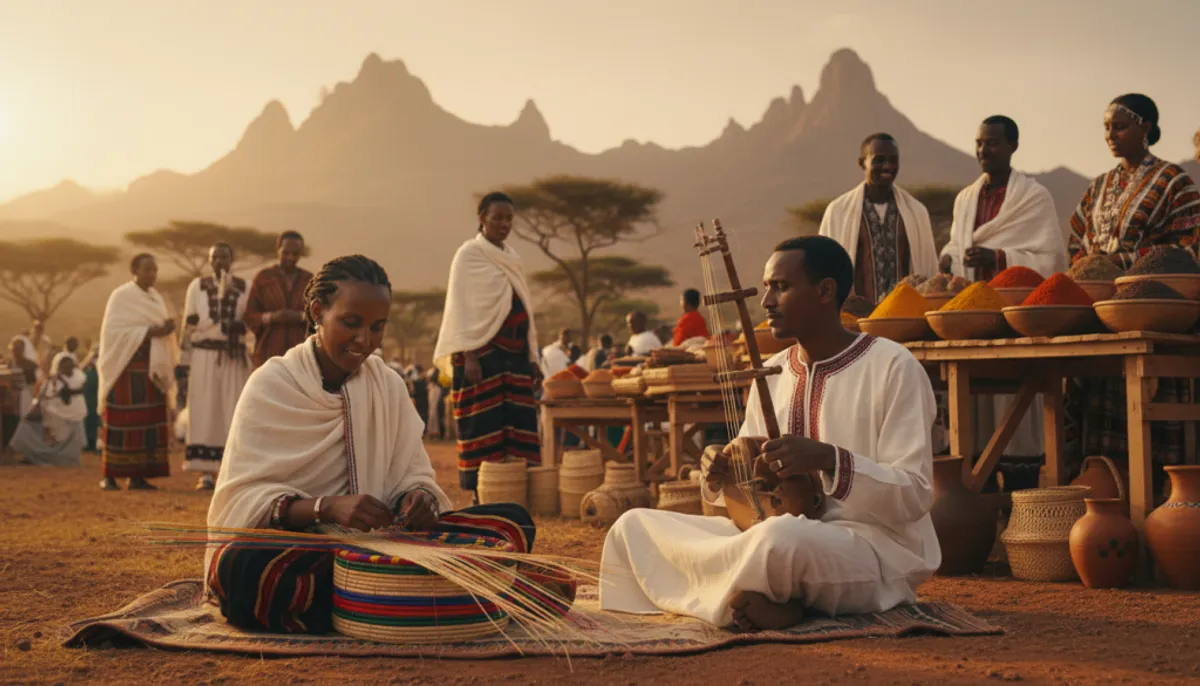
The Tigrinya language conveys identity through songs and proverbs. Extended family structures reinforce community solidarity.
Hospitality and respect for sacred places form the foundation of social relations. Rock-hewn churches serve as points of spiritual gathering.
The Impact of Conflicts on Cultural Heritage
The conflict that erupted in November 2020 has profoundly affected the historical heritage of this region. Since the beginning of hostilities, millennia-old sites have become battlegrounds.
Damage to Religious and Historical Sites
The al-Nejashi mosque, thirteen centuries old, has suffered considerable damage. Its green dome has a gaping hole after the assault by troops.
Hajj Siraj Mohammed, the guardian for fifty years, testifies:
“It is not just about us; all Muslims around the world have been shocked.”
The Debre Damo monastery has also reportedly been fired upon. In Aksum, hundreds of civilians lost their lives during a religious festival.
| Historical Site | Construction Date | Type of Damage |
|---|---|---|
| Al-Nejashi Mosque | 7th century | Damaged dome |
| Debre Damo Monastery | 6th century | Shooting and shelling |
| City of Aksum | Millennial | Civilian massacre |
The Challenges of Reconstruction and Preservation
The war has shattered the centuries-old tradition of sacred places as refuges. More than twenty researchers have issued an urgent call after several months of violence.
Historian Éloi Ficquet emphasizes that reconstruction goes beyond mere physical restoration. Heritage has no value without the human communities connected to it.
Rehabilitation will require years of work and reconciliation. Repairing the ties between the state and the population remains the main challenge.
Ethnic and Political Dynamics in Ethiopia
Latent ethnic tensions in Ethiopia exploded into an open war at the end of 2020. Prime Minister Abiy Ahmed then launched a military offensive against the Tigray region.
The Confrontation of Political and Cultural Projects
This conflict illustrates the clash between three distinct political visions. Each major ethnic group defends its conception of the state.
The Tigrayans favor a decentralized community model. The Amharas aspire to reconnect with a unifying imperial project. The Oromos propose a democratic rotational system.
| Ethnic Group | Population Percentage | Political Project | Position in the Conflict |
|---|---|---|---|
| Oromos | 35% | Democratic generational rotation | Divided (some support Abiy Ahmed) |
| Amharas | 20% | Unifying imperial monarchy | Support for the central government |
| Tigrayans | 6% | Decentralized federalism | Opposition to central power |
The Tigray People's Liberation Front has about 250,000 fighters according to the International Crisis Group. The Tigrayan army has even threatened the capital Addis Ababa.
The UNHCR speaks of a “large-scale humanitarian crisis” with hundreds of thousands of people threatened by famine.
This crisis affects a country of 110 million inhabitants. The search for peace remains a major challenge for the entire region.
Conclusion
At the end of this exploration, the exceptional heritage of the Tigrayans reveals a fascinating history of resilience. This community has managed to preserve its unique traditions despite contemporary challenges.
The political system based on democratic deliberation demonstrates remarkable social organization. Customary rights and local autonomy are essential pillars of this identity.
Recent conflicts have highlighted the urgency of protecting this heritage. Reconstruction goes beyond merely restoring physical sites.
It requires reweaving the ties between communities. The preservation of living traditions remains fundamental to giving meaning to this heritage.
At the end of this study, we hope to have shed light on the richness of this unique culture. Its protection will benefit all of humanity, which stands to gain from preserving this extraordinary diversity.
FAQ
What are the main origins of Tigrayan culture?
Its roots lie in the history of the Aksumite empire, a powerful medieval kingdom. This imperial heritage has strongly influenced its language, traditions, and unique identity over the centuries.
How are traditions preserved today?
Transmission occurs orally, by elders within families and communities. Rituals, music, and crafts perpetuate ancestral customs, despite current challenges.
What is the impact of the civil war on heritage?
The conflict has caused considerable damage to millennia-old historical and religious sites. Preservation has become a crucial issue for the memory of the people and future peace.
What are the political issues related to this culture?
The Tigray region is at the heart of tensions between different national political projects. These complex ethnic and cultural dynamics deeply shape the country's situation.