
Our existence rests on a subtle balance between physical well-being and the enrichment of the mind. An innovative approach now unites these two fundamental dimensions to improve our daily lives.
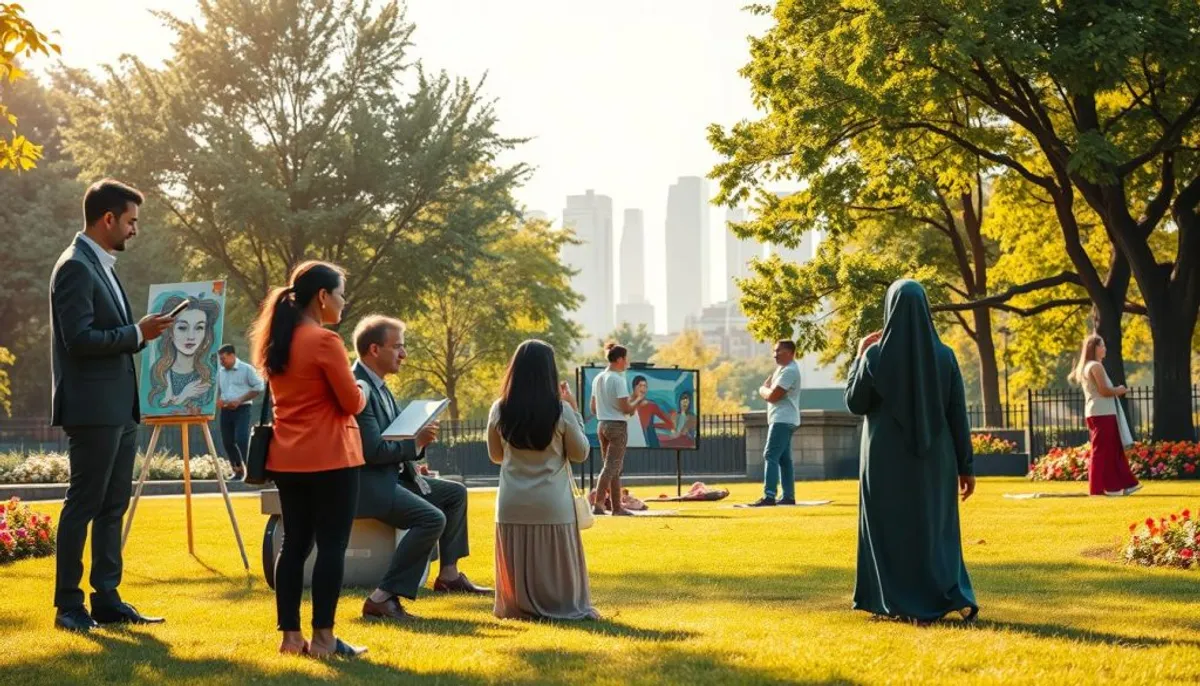
This vision transforms care environments. It creates more human and welcoming spaces for all users and staff. Access to artistic activities during times of fragility provides valuable support.
In France, particularly in Auvergne-Rhône-Alpes, this approach is gaining recognition. It is no longer seen as a luxury but as a necessity for quality of life.
Investing in artistic projects within medical establishments is becoming essential. This fosters the overall well-being of individuals, whether they are hospitalized or supported in specialized facilities.
Key Points to Remember
- The alliance of physical well-being and spiritual enrichment improves quality of life.
- Artistic activities humanize care environments.
- This approach benefits everyone: patients, residents, and professionals.
- The Auvergne-Rhône-Alpes region is a pioneering territory in this area.
- Integrating art into medical establishments is a necessity, not a luxury.
- This approach provides significant support during times of fragility.
- It contributes to the overall well-being of the individuals supported.
Context and Issues of the Culture and Health Program
The "Culture in Hospital" program finds its roots in a visionary ministerial collaboration initiated in 1999. This first agreement between the ministries responsible for these areas laid the foundations for an innovative policy.
In 2010, a new agreement reinforced this framework after eleven years of experimentation. The implementation of the HPST law gives a regulatory dimension to this system.
History and Regulatory Framework
The regional health agencies thus acquire the mission to support establishments. This evolution over more than twenty years transforms a one-off initiative into a structured program.
The current legal framework is based on clearly defined competencies. Article L. 1431-2 of the CSP formalizes this concerted implementation.
Partnerships Between Ministries and Institutions
Three major players support this policy: the ARS, the DRAC, and the Region. Their common commitment is reflected in the inclusion of this dimension in their strategic documents.
This tripartite agreement ensures a balanced distribution of the workload. It guarantees the sustainability of the program and its territorial anchoring.
The regional policy of Auvergne-Rhône-Alpes fully integrates this approach. This coordination enhances the effectiveness of actions on the ground.
The Objectives and Benefits for Daily Life
These initiatives create bridges between the medical world and ordinary social life. The main objectives allow each individual to maintain their artistic journey during hospitalization while respecting the legitimate culture.
Regular access to creative practices significantly reduces loneliness. People thus maintain a valuable connection with the outside world.
New living spaces are emerging within establishments. They become more welcoming for all users.
The quality of professional relationships improves thanks to these collaborations. Caregivers, patients, and artists work hand in hand.
These third spaces connect institutions to their territory. They promote exchanges and strengthen social inclusion.
The Regional System in Auvergne-Rhône-Alpes
The Auvergne-Rhône-Alpes region deploys a structured system to facilitate the integration of artistic activities within medical establishments. This local adaptation relies on essential tripartite collaboration.
Call for Projects and Multi-Year Support
Each year, a call for projects is launched to all health and medico-social establishments. This initiative allows for the support of new creative ideas.
The second system offers support over several years. Thirteen projects benefit from this support between 2024 and 2026 for better sustainability.
Role of the ARS, DRAC, and Region
The ARS ensures the implementation in the establishments. The DRAC provides its artistic expertise. The region guarantees territorial anchoring.
These three actors work together to process the files. They allocate grants and follow project holders throughout the year.
This shared governance ensures the quality of the program. It allows for support tailored to each situation in the region.
Programs and Actions Offered within the Culture and Health Program
The "Culture in Hospital" program represents a major advance in integrating artistic practices within medical establishments. This historic initiative promotes the involvement of artists with the individuals supported.
Each year, around one hundred medical establishments collaborate with as many creative structures. These partnerships generate a rich diversity of proposals, thus offering numerous cultural opportunities in France.
“Culture in Hospital” Initiative and Its Variants
The actions proposed cover a wide range of disciplines. Live performances, creative workshops, and exhibitions enliven care spaces.
Artists' residencies allow for in-depth exchanges. This immersion creates transformative dynamics for all participants.
Educational and Artistic Actions in the Medico-Social Sector
The scope of intervention is gradually expanding to medico-social structures. CAMSP, CMPP, and CSAPA are developing tailored initiatives.
These programs particularly target individuals facing specific difficulties for several years. The focus is on inclusion and personal expression.
| Type of Action | Main Benefits | Target Groups |
|---|---|---|
| Creative Workshops | Personal expression and socialization | Patients and residents |
| Live Performances | Escapism and sensory stimulation | Hospitalized individuals |
| Artists' Residencies | Extended exchanges and collective creation | Medical communities |
| Exhibitions | Visual enrichment and dialogue | Users and staff |
The diversity of disciplines mobilized meets the varied needs of the audiences. Music, theater, and visual arts offer multiple pathways to fulfillment.
Procedures and Eligibility Criteria to Join the Program
Access to the program is based on specific eligibility criteria and a structured application process. This system is aimed at health establishments in Auvergne-Rhône-Alpes, whether public, ESPIC, or private.
Managing organizations and medico-social services can also participate. They must support individuals with disabilities or loss of autonomy.
Access Modalities and Submission of Files
Each call for projects has a specific terms of reference. This document details the eligibility criteria and application modalities.
Submissions are made exclusively on the platform demarches.simplifiees.fr. Only files declared admissible are processed by the regional commission.
The terms of reference also specify the criteria for allocating aid. It sets the timeline to be respected for each step of the process.
We advise establishments to carefully consult this framework before submitting their project. This preparation maximizes the chances of selection and funding.
Support for Actors and Professionals
A comprehensive support system assists project holders at all levels. This organization guarantees the quality of artistic initiatives in the medical field.
Role of Local and Regional Committees
The regional commission brings together the three main funders. It carries out an essential mission of support throughout the process.
This body drafts the terms of reference and evaluates the files. It also allocates grants to selected projects.

Local committees function as exchange collectives. They bring together all actors interested in artistic projects.
Involvement of Associations and Health Professionals
The association InterSTICES structures regional cooperation. It brings together part of the network of professionals.
Health professionals actively collaborate with artists. Doctors, nurses, and psychologists co-construct projects tailored to indoor culture.
This collaboration within establishments enriches everyone's skills. It fosters more relevant interventions for users, particularly by integrating elements of French style.
Impact on Social Inclusion and Quality of Life
Social inclusion becomes a tangible reality thanks to artistic actions in care settings. These initiatives profoundly transform the daily lives of hospitalized individuals or those in a fragile situation.
Regular access to creative practices significantly reduces isolation. Individuals thus maintain a valuable connection with their external environment.
New living spaces are emerging within establishments. These third spaces create bridges between the medical institution and the community.
The integration of establishments into their territory is strengthened. These places become more open and welcoming to the entire community.
The benefits are particularly pronounced for individuals in situations of disability or vulnerability. Active participation in local culture enhances their sense of belonging.
This holistic approach integrates the physical, psychological, and social dimensions of well-being. It contributes to a better quality of life on a daily basis for all users while reflecting cultural evolution in the West.
The territory benefits from enhanced social cohesion due to these exchanges. Health establishments become full-fledged actors in the local dynamic.
This public policy demonstrates that art can be a powerful vector for inclusion. It transforms difficult situations into opportunities for social participation.
Testimonials and Feedback on Implementation
Île-de-France perfectly illustrates the success of this innovative approach over the years. The number of initiatives supported has more than tripled between 2005 and 2016.
This growth reflects the gradual appropriation by health establishments. The structures in Île-de-France have managed to create lasting links with the artistic world.
Concrete Examples of Successful Initiatives
Projects diversify according to the audiences and health establishments. Each structure adapts artistic practices and religious practices to its specificities.
Over a period of several years, these initiatives have demonstrated their transformative impact. The time devoted to this approach bears fruit.
| Type of Initiative | Concerned Establishment | Observed Benefits |
|---|---|---|
| Artists' Residencies | Psychiatric Hospitals | Improvement of the social climate |
| Writing Workshops | Geriatric Services | Enhanced personal expression |
| Live Performances | Retirement Homes | Sensory stimulation |
| Exhibitions | CAMSP and CMPP | Intergenerational dialogue |
The implementation of these projects creates valuable links between health establishments and their territory. These practices are sustainable.
Testimonials from professionals confirm the positive impact over a long period. The time invested in these structures produces lasting results.
Conclusion
Beyond the immediate benefits, this public policy opens sustainable perspectives for social inclusion. The culture health program represents much more than a simple artistic initiative.
This approach has evolved over the years to meet the changing needs of establishments and territories. It is gradually integrating new audiences into its scope of action.
The future prospects are promising, with a strong commitment to strengthening the links between art and well-being. We invite all actors to join this transformative initiative.
The future of care lies in a holistic vision that fully integrates the creative dimension. This transversal policy serves as an exemplary model for the entire sector.
FAQ
What is the Culture and Health program?
It is a system that encourages artistic projects within health and medico-social establishments. It aims to improve the well-being of individuals through cultural actions.
Who can participate in this program?
Health structures, associations, artists, and cultural actors from Auvergne-Rhône-Alpes can propose an initiative, often through an annual call for projects.
What are the benefits for residents and patients?
These actions promote social connections, reduce isolation, and improve quality of life. They provide a very positive moment of escape and creation.
How can an establishment submit a file?
They must respond to a call for projects, generally managed in cooperation by the ARS, the DRAC, and the Region. Support is offered for implementation.
What type of activities is supported?
A great diversity! This ranges from artistic practice workshops (theater, music, visual arts) to artists' residencies or performances directly in living spaces.
Who finances these initiatives in the territory?
Funding is collaborative, often involving the Regional Health Agency (ARS), the Regional Directorate of Cultural Affairs (DRAC), and the Regional Council.