
The recent figures are alarming. According to data presented at the National Library of France, a large portion of young people is unaware of historical events and fundamental institutions. These statistics point to a worrying decline in basic knowledge levels.
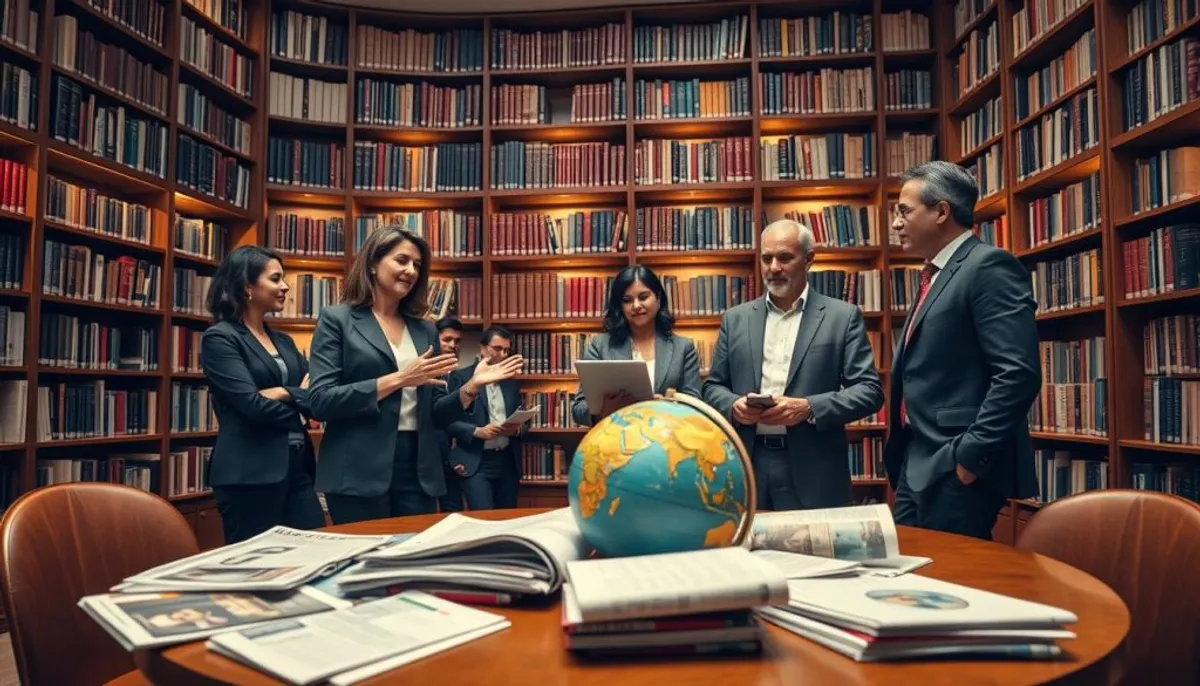
Why is this knowledge so crucial today? It is not about accumulating dates, but about forging reference points. General knowledge allows for a better understanding of our society and helps develop critical thinking in a complex world.
As Édouard Herriot said, “Culture is what remains when we have forgotten everything”. These things we assimilate structure our thinking and identity. This culture gives meaning to the world around us.
This article offers accessible methods to enrich your knowledge, regardless of your starting point. We will explore concrete tools and applications in everyday life.
Understanding general knowledge and its evolution
The concept of extensive knowledge has ancient philosophical origins that continue to inspire us. This notion has traversed centuries, adapting to the realities of each era.
Origins and historical foundations
Cicero already compared this intellectual training to the “cultivation of the soul”. This metaphor illustrates its necessity for personal development.
Throughout history, each period has defined its own vision. The Greek scholar, the honest man of the 17th century, and the modern citizen represent successive ideals.
Transition to the digital age
Our relationship with knowledge is undergoing a radical transformation. Michel Serres describes this revolution in “Petite Poucette”.
Instant access to information profoundly changes our approach. Some see it as a liberation for creativity. Others fear a depletion of knowledge.
Despite these upheavals, this training retains an essential part of our identity. It continues to structure our thinking in a world that is constantly changing.
The importance of developing an interest in general knowledge
Beyond personal enrichment, mastering varied knowledge opens unexpected doors. This general knowledge serves as a true toolbox for navigating our complex society.
A lever for academic and professional success
A good level of general knowledge is a determining asset during studies. Students who possess this background easily stand out in their essays.
As an entrepreneur points out, “lack of general knowledge is detrimental to job access”. This training enables adaptation to all professional situations.
General knowledge also allows for creating links between different fields. Each new piece of knowledge naturally integrates into an existing network.
Stimulating curiosity and critical thinking
The development of this skill nurtures natural curiosity. It is an active exploration motivated by the desire to understand.
This approach stimulates critical thinking by allowing comparisons with historical or scientific facts. It develops an ability for independent analysis.
In the face of complex information, a good level of general knowledge provides solid reference points. Understanding the importance of general knowledge facilitates sorting and interpreting data.
Tools to enrich your knowledge
Several avenues are available for those wishing to broaden their intellectual horizons. These tools allow for a concrete and accessible approach to general knowledge.

Exhibitions, museums, and cinema
Museums are privileged tools for discovering our heritage. In France, free access for those under 26 makes culture accessible to all.
Cinema offers a captivating way to approach complex concepts. Projects like “Cinema for All” show how films can perfectly illustrate abstract philosophical notions.
These sensory experiences enrich our understanding of the world. They transform learning into a personal adventure.
Readings, lectures, and online resources
Reading remains fundamental for developing one’s general knowledge. Each book opens new fields of knowledge, thanks to total immersion.
Lectures and digital resources perfectly complement this approach. TED Talks and online courses allow for exploring various topics flexibly.
These different things naturally integrate into our daily life. Everyone can thus progress at their own pace, thanks to adapted methods.
The diversity of formats makes cultural enrichment accessible to all. Each person can find their own way to learn and grow intellectually.
General knowledge and the education system in France
From primary school, French students begin to build their intellectual heritage. History, geography, and literature form the pillars of this progressive education.
These subjects allow young people to develop a solid foundation of knowledge. This structured approach ensures a fundamental level of culture for all students.
Specialized training and courses
In higher education, general knowledge courses reach a new dimension. At Sciences Po Aix, a teacher explains how these courses create bridges between disciplines.
Gabriel Attal announced a “shock of knowledge” to raise the level of the French school. This initiative responds to the worrying observation regarding mastery of the fundamentals.
Some high schools organize tests to raise awareness among students. These assessments particularly prepare them for the baccalaureate, where the exams value these knowledge.
Specialized courses are not limited to transmitting knowledge. They also teach methods for learning autonomously and using these skills during exams.
The role of technology in accessing knowledge
Screens have transformed our relationship with knowledge in just a few years. An expert emphasizes that new technologies are remarkable facilitators for accessing knowledge.
This digital transformation raises a fundamental question: how to use these tools without becoming dependent on them? The balance between advantages and limits requires reflection.
The advantages of digital technology for learning
Internet offers an unprecedented means of access to information. You can find in a few clicks what once took hours in the library.
This democratization allows everyone to enrich their general knowledge. The resources seem endless, far beyond what a brain can memorize.
Digital exchanges create new intellectual connections. Data can be verified instantly and discoveries shared in real time.
The limits and dangers of instant information
But easy access does not guarantee real appropriation. As an entrepreneur warns, digital does not provide the fundamentals.
An information found online only becomes knowledge if we integrate it into our personal base. Without this step, it remains superficial.
The philosopher Alain reminded us that being cultured means “going back to the source”. Digital shortcuts do not replace this work of assimilation.
| Aspect | Digital Advantage | Limit to Consider |
|---|---|---|
| Access to information | Speed and comprehensiveness | Risk of superficiality |
| Learning process | Immediate facilitation | Absence of lasting appropriation |
| Development of intelligence | Cognitive stimulation | Dependence on algorithms |
True general knowledge requires time and discernment. It transforms raw information into personal intelligence, far beyond the mere effect of digital trends.
The link between general knowledge and critical thinking
In the face of the growing complexity of global issues, our ability to think independently relies on a foundation of diverse knowledge. General knowledge is not limited to accumulating information, but primarily develops our capacity for reasoning and our critical mind.
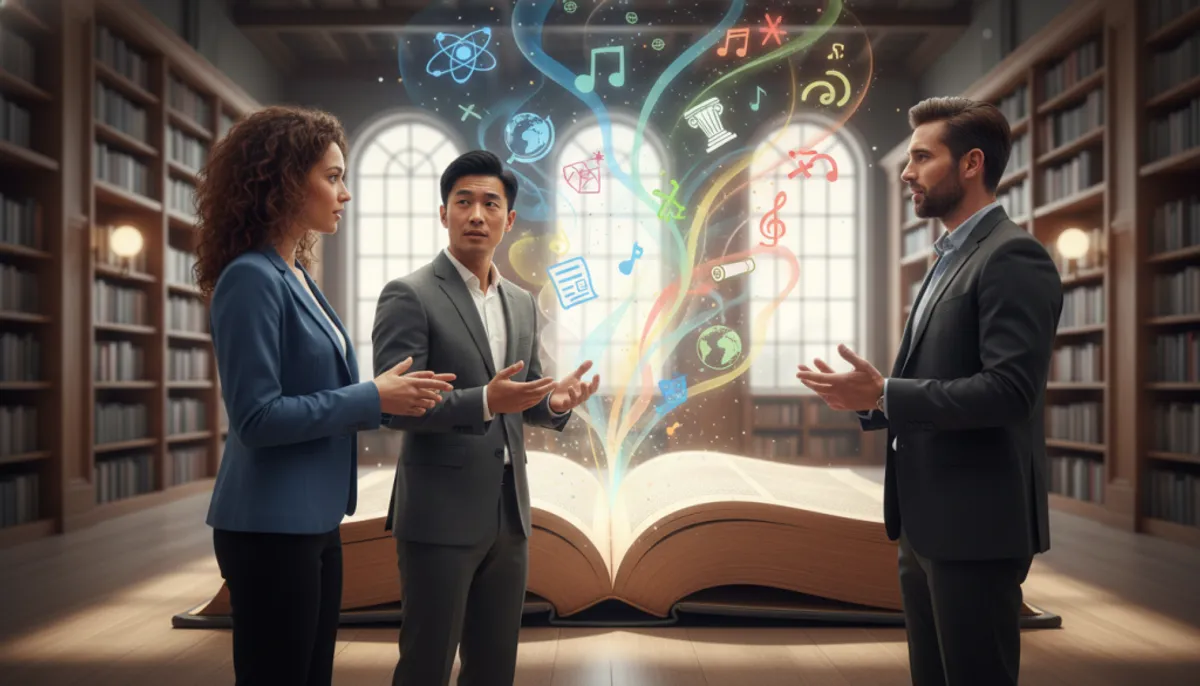
As Edgar Morin emphasizes, being cultured means “having a minimum of knowledge from extremely diverse origins, and being able to communicate them with each other”. This approach nourishes our personal examination and helps us not to blindly rely on authority judgments.
Analyzing current events and societal debates
General knowledge can help us analyze current events by placing each issue in an appropriate historical perspective. This forges our ability to develop independent analyses on various topics.
Jean Rostand specifies that true culture manifests in “the quality of judgment, logical demand, the appetite for proof”. It allows understanding the complexity of things rather than settling for simplistic answers.
In our era of instant information, the critical mind nourished by general knowledge is essential for distinguishing reliable information. It gives meaning to contemporary issues and helps us build nuanced reflections.
Each new fact assimilated enriches our understanding of the world. General knowledge thus transforms raw information into personal intelligence, far beyond the mere effect of digital trends.
Practical applications to boost your culture
How to turn curiosity into a daily habit? General knowledge enriches through simple methods that naturally integrate into our lives. One engaging way is to participate in a cultural quiz. Here are some concrete ways to progress effortlessly.
Techniques for autonomous learning
No need to read complex books! Listen to podcasts during your commutes. Watch captivating documentaries. These simple things build a solid foundation of knowledge.
Participate in quizzes like “Questions for a Champion”. This playful way tests your general knowledge and reveals your gaps. Each mistake becomes an opportunity to learn.
Concrete examples of integration into daily life
Transform your routine. Visit an exhibition on the weekend. Read a news article every morning. General knowledge can thus develop through small regular actions.
As an expert reminds us: “Knowledge requires accepting to take your time”. This gradual development ensures lasting assimilation.
The role of discussions and intergenerational exchanges
At a dinner, a question arises? Avoid the smartphone. Debate together! Everyone shares their knowledge in a positive dynamic.
Propose exchanges: “I’ll explain Europe if you guide me in manga”. These informal courses enrich all participants.
| Method | Main Advantage | Time Needed |
|---|---|---|
| Daily podcasts | Learning during commutes | 15 minutes a day |
| Cultural quizzes | Identification of gaps | Variable depending on the activity |
| Intergenerational exchanges | Multiple perspectives | Integrated into conversations |
These life courses transform the acquisition of knowledge into a shared adventure. Your general knowledge naturally grows through these daily things.
General knowledge in professional and civic life
Beyond specialized skills, contemporary organizations recognize the importance of a broader vision of the world. This transversal approach becomes a true asset in various contexts.
An asset in competitions and interviews
General knowledge constitutes a valuable differential during selections. It allows candidates to stand out against others with similar profiles.
An HR expert emphasizes that this training offers “a significantly better long-term yield”. Companies appreciate this ability to connect different fields.
The BiblioTech program at Stanford illustrates this trend. It creates bridges between the humanities and the professional world.
Impact on civic and social engagement
General knowledge also allows one to become an informed citizen. It provides reference points for participating in societal debates.
Each individual can thus develop a nuanced analysis of contemporary issues. The younger generations find valuable tools in it.
This general training allows for enriched exchanges and facilitated social integration. It creates common references within society.
| Field of Application | Professional Advantage | Civic Benefit |
|---|---|---|
| Competitions and interviews | Differentiation of candidates | Critical analysis ability |
| Adaptation in business | Versatility and broad vision | Understanding of social issues |
| Human relations | Enriched communication | Intergenerational dialogue |
Companies are of course looking for specialized skills. But they also value this culture that nourishes collective intelligence.
For young people as well as for every individual, this general knowledge remains a determining asset. It opens perspectives both professionally and civically.
Conclusion
As Nathalie Bulle points out, general knowledge is “less something we have than something we are”. It shapes our identity far beyond mere accumulated knowledge.
In an age of early specialization, reaffirming this culture becomes urgent for our society. It enables each individual to understand the complexity of the contemporary world.
Take the time to cultivate your personal interests. This approach gives meaning to your life and enriches your relationship with the world.
The tools for developing your general knowledge have never been more accessible. With curiosity and perseverance, this quest becomes an enriching journey until the end.
FAQ
How to simply define general knowledge today?
Is it really useful for my career?
Absolutely! In the professional world, a good level is highly valued. It allows for adaptation, better communication, and finding innovative solutions. It is a real plus during a job interview or for advancement.
Where to start to improve it?
The best starting point is your curiosity! Choose a topic that fascinates you. You can visit a museum, read an article, or listen to a podcast. The important thing is to enjoy learning, little by little.
Do new technologies help or hinder the acquisition of this knowledge?
They are a wonderful tool if used correctly. The internet provides access to an incredible amount of information. But one must remain vigilant and verify sources to avoid fake news.
How can I encourage my children to develop their curiosity?
Integrate learning into everyday life. Discuss movies, books, or current events together. Ask them questions to sharpen their critical sense. Show them that knowledge is everywhere, not just in school.