
Welcome to a journey along the East African coast, a region vibrant where a unique culture has emerged. This fascinating world, cradled by the Indian Ocean, is the cradle of a blended civilization with a rich heritage.
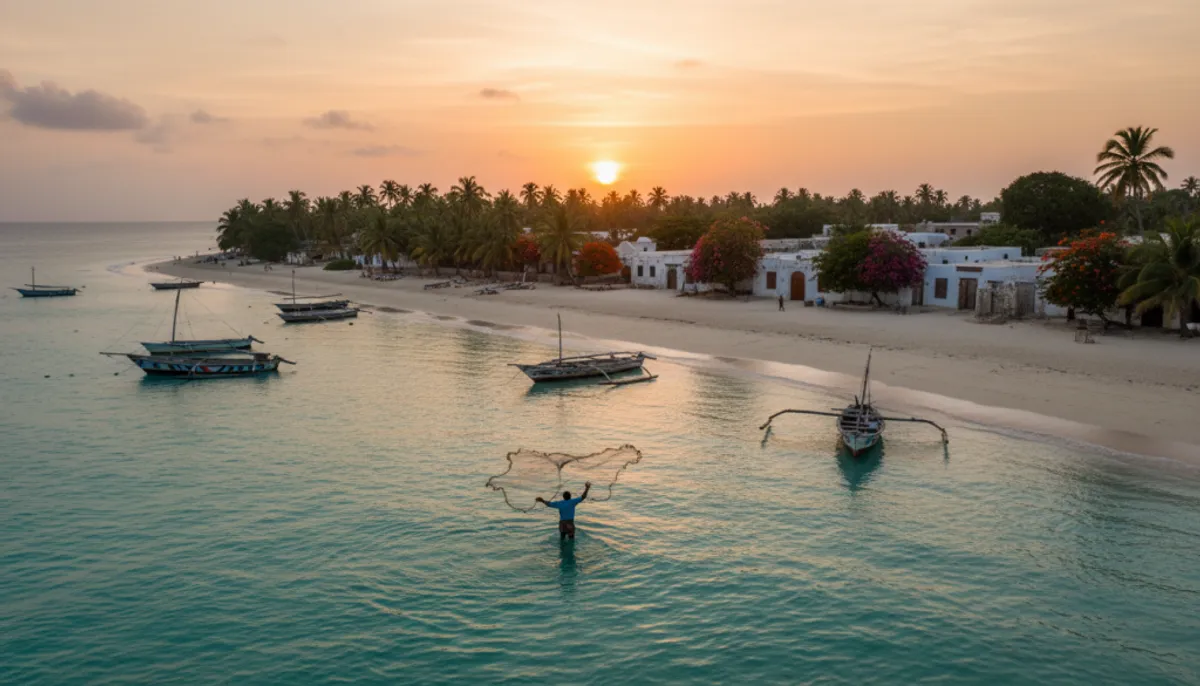
The term Swahili itself tells us a story. It originates from the Arabic word meaning “coast,” reflecting the fundamental importance of the sea to these populations.
This society was born from the encounter between Bantu communities and Arab and Persian influences. Prosperous city-states like Zanzibar, Mombasa, and Kilwa formed the heart of this Swahili civilization. They developed a common identity, brilliant and open to the world.
From Somalia to Mozambique, including the Comoros archipelagos, this culture has created a coherent space. Its legacy continues to dynamically influence the entire region today.
Key Points to Remember
- The Swahili culture was born on the East African coast.
- It is a unique blend of Bantu, Arab, and Persian influences.
- The word “Swahili” comes from Arabic and means “coast.”
- City-states like Zanzibar and Mombasa were its centers.
- Its influence extended from Somalia to Mozambique.
- This civilization was renowned for its maritime prosperity.
- Its legacy remains very much alive in the region today.
Introduction to the Ultimate Guide on Swahili Culture
This guide invites you to discover the foundations of a unique identity in East Africa. We accompany you in exploring this extraordinary civilization, designed to be accessible to all curious minds.
Overview and Historical Context
Understanding this society requires going back in time. Its history begins with the meeting of local peoples and travelers from afar.
This fusion gave birth to something completely new. It developed in a region strategic, at the crossroads of maritime routes.
Guide Objectives to Understand Regional Influence
Our objective is clear: to provide you with a comprehensive view of origins and evolution. We highlight how this society connected different worlds.
Its influence radiated well beyond its initial borders. This guide explains why it remains so relevant to appreciate African diversity today.
Origins and Historical Foundations
Let’s go back in time to discover the deep roots of this coastal civilization. Its history begins long before the modern era, with testimonies that shed light on its beginnings.
Ancient Beginnings and Early Testimonies
As early as the 2nd century, documents like The Periplus of the Erythraean Sea already describe trade exchanges. This text mentions Yemeni merchants who contracted marriages with local populations.
Ptolemy's Geography, revised in the 4th century, confirms these ancient relationships. Archaeology provides tangible evidence with sites dating back to the 1st century BC.
These excavations revealed Egyptian and Parthian ceramics. Coins from various civilizations were also discovered in the region.
Migrations and Cultural Interactions
Bantu peoples gradually migrated along the East African coast. Their settlement at the beginning of our era marked a crucial step.
These movements of populations fostered fruitful exchanges. Marriages between Arab traders and local inhabitants enriched the blending.
This fusion gave birth to a unique identity. It developed over several centuries, creating the solid foundations of this civilization.
The Role of Trade in the Evolution of Civilization
The trade network of the Indian Ocean constituted the backbone of this civilization's prosperity. These exchanges transformed the region into a major economic crossroads.
The Trade Routes of the Indian Ocean
The monsoon regime created ideal conditions for navigation. The winds blew in one direction for six months, then reversed course.
This natural system allowed merchants to plan their journeys precisely. They connected East Africa with Arabia, India, and even China.
The Impact of City-States on Regional Trade
Urban centers like Kilwa and Mombasa controlled these lucrative networks. They accumulated immense wealth through the trafficking of precious goods.
Ivory, gold from the Sofala mines, and rhinoceros horns were among the most sought-after commodities. Copper and pearls complemented this flourishing trade.
In 1414, an embassy from the city of Malindi presented a giraffe to the emperor of China. This event symbolizes the extent of exchanges in this Indian ocean.
The Birth and Spread of Kiswahili
The emergence of Kiswahili represents a captivating chapter in the history of this region. This unique language developed through interactions between different communities.
Linguistic Origins and Arab and Bantu Influences
Kiswahili finds its roots in Bantu languages. Its very name reveals this dual origin. The term comes from the Arabic word “sahil” meaning “coast,” with the Bantu prefix “ki” designating the language.
As early as the 8th century, a form of proto-Swahili began to appear. By the 9th century, this language was already spoken in northern settlements. It then spread south along the coast.
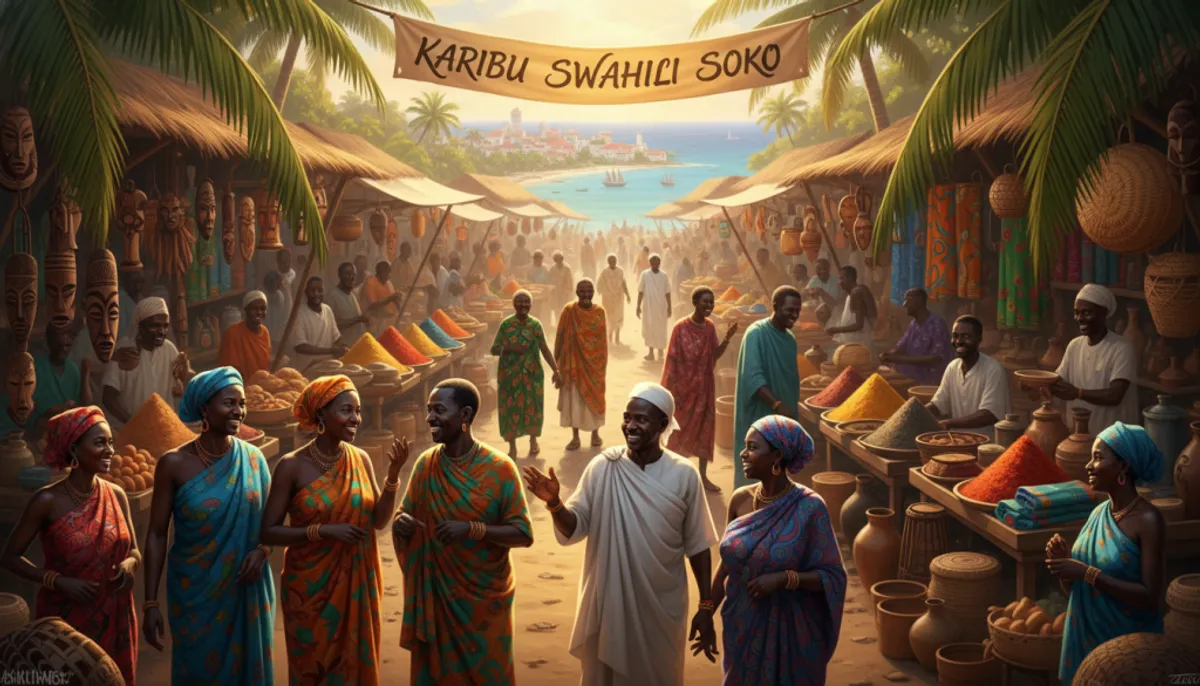
The linguistic structure of Kiswahili is fascinating. About 35% of its vocabulary comes from Arabic. It also includes Persian influences, creating a rich linguistic mosaic.
The Transformation of Kiswahili Writing
Initially, Swahili was transcribed in ajami, using Arabic characters. This writing system reflected the dominant cultural influences of the time.
In the 19th century, under European influence, writing evolved towards Latin characters. This transformation facilitated the spread of the language. It also allowed for broader standardization.
Today, Kiswahili is spoken by over 50 million people. It serves as an official language in several African countries. Its history testifies to the power of cultural exchanges.
Swahili Culture and Its Artistic Contributions
Artistic expression constitutes a fundamental pillar of East African coastal identity. These creations reflect the unique fusion of influences that characterize this society.
Music, Poetry, and Oral Traditions
Music occupies a central place in daily life. Taarab represents the most popular genre, with its slow rhythms inspired by Indian and Arab melodies.
Sung in the local dialect, this music captivates with its unique harmony. It unites different musical traditions into a coherent symphony.
Poetry, called Ushahiri, serves as a mirror to the collective soul. The words become tools for expressing emotions and transmitting values.
Poems like Inkishafi teach good behavior and religious precepts. These works preserve ancestral traditions while evolving over time.
Modern evolution gave birth to bongo in the 1990s. This style fuses American hip-hop with traditional taarab.
Artists like Diamond Platnumz popularize this musical culture internationally. Their success demonstrates the vitality of Swahili artistic traditions.
These artistic expressions continue to evolve, incorporating contemporary influences. They preserve the essence of culture while remaining dynamic.
The words and melodies weave a living link between past and present. This artistic richness defines the modern Swahili identity.
Influence of Islam and Religious Syncretism
The gradual Islamization has shaped spiritual practices along the East African coast. This process unfolded over several centuries, creating a unique religious form.
Islamization Process on the East African Coast
The penetration of Islam began as early as the late 7th century. It first affected the islands close to the coast in the 10th century.
The continental coast experienced this transformation in the 13th century. Adoption was gradual by the local population.
The Coexistence of Muslim and Animist Practices
Swahili Islam harmoniously integrates ancestral beliefs. The inhabitants practice ancestor worship alongside Muslim rituals.
This fusion respects local traditions while adhering to Islamic precepts. Daily prayers coexist with beliefs in spirits.
Muslim Swahilis fast during Ramadan and give alms. This approach reflects the adaptability characteristic of the coastal peoples.
Architecture and Urbanism in the Swahili World
Swahili urbanism has shaped remarkable cities that combine functionality and architectural beauty. This unique approach has produced a distinctive built landscape along the East African coast.
Stone Cities and Traditional Structures
Swahili architecture is distinguished by its innovative construction techniques. Builders used coastal coral and granite cut into slabs.
They assembled these materials with lime or clay. This method created solid and durable structures.
Royal palaces sometimes reached two stories. The homes of wealthy inhabitants featured inner courtyards and flowering gardens.
Some residences even had swimming pools. This luxury reflected the prosperity of the merchants.
Comparison of Regional Styles and External Influences
The architecture of the Swahili world retains original traditions. It differs significantly from Arab and Persian styles.
The “stone cities” like Kilwa impressed travelers. Ibn Battuta described it as one of the most beautiful cities in the world.
The urban organization included narrow streets lined with palm trees. Stone benches lined the walls of buildings.
This construction reflects an African identity adapted to the tropical climate. It coexists with wooden houses in rural areas.
Cultural Exchanges and the Diversity of Influences
The interactions between communities have shaped a unique model of coexistence. This historical encounter between different human groups has produced an original society where diversity becomes strength.
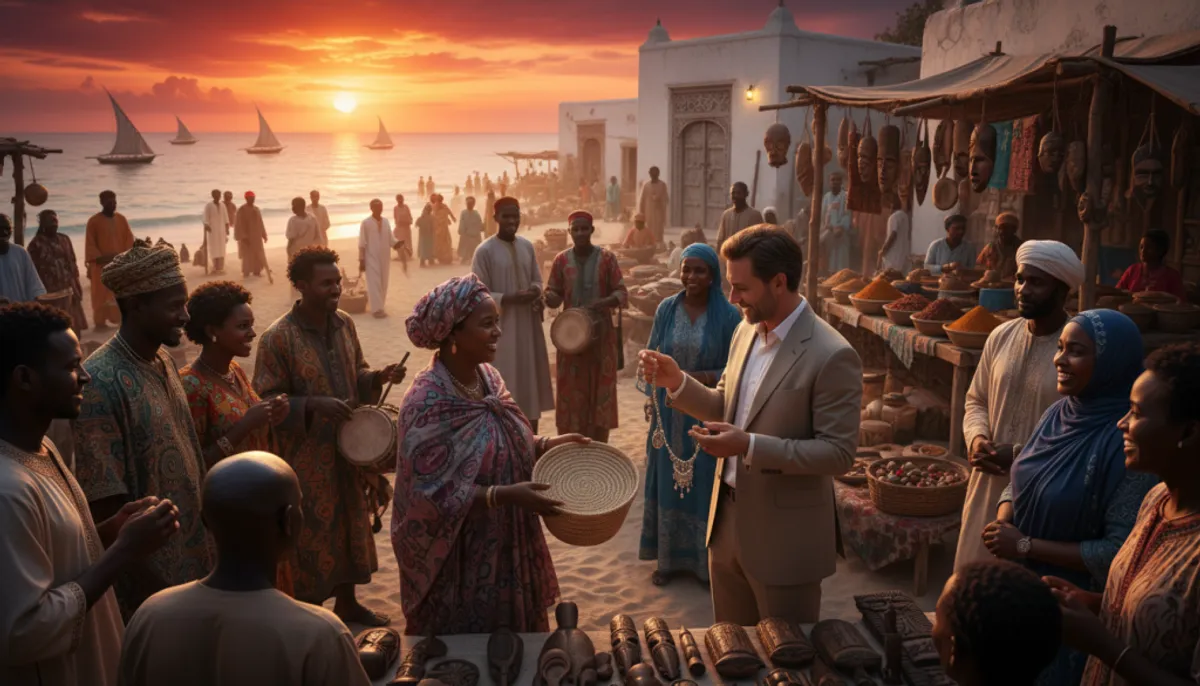
Interactions Between Indigenous Populations and Arab Migrants
The relationships between Arab-Persian migrants and Bantu populations were characterized by their peaceful nature. This harmony allowed for an intense and fruitful process of acculturation.
The different peoples shared power between local authorities and newcomers. This collaboration created a remarkable multicultural society.
It is important to clarify that the original peoples were entirely African and Black. The visible blending today results from later periods.
Enrichment Through International Trade
The exchanges of trade brought Indian, Chinese, and Middle Eastern influences. International traders constantly enriched this culture.
These exchanges allowed for geographical expansion inland. The continental part up to Kasongo in the DRC was affected thanks to this dynamic.
Cultural diversity thus became the fundamental characteristic of this civilization. Constant exchanges forged a unique and resilient identity.
The Portuguese and Ottoman Influence on the Swahili Region
A period of conflicts and transformations began when Portuguese navigators reached African shores in 1498. Vasco da Gama arrived on the coast with three caravels in March of that year, marking the beginning of a difficult era for this prosperous region.
Conquests, Pillaging, and Local Resistance
The Portuguese quickly launched their conquests. They captured Sofala in 1503. Then in 1505, they seized Kilwa and Mombasa. The latter city was pillaged and burned, causing immense suffering to the inhabitants.
Resistance organized against this domination. In 1528, Mombasa revolted once again against the Portuguese occupier. The city was unfortunately sacked again after this heroic rebellion.
The Ottoman Empire also intervened in the 16th century. It engaged in several naval expeditions in the Indian Ocean to counter Portuguese influence. Battles pitted the two powers against each other in this strategic region.
The final liberation occurred in 1698. The imam of Muscat, Sayyid Said bin Sultan Al-Busaid, mobilized an army of 3,000 men. They took back Mombasa from the Portuguese, then Kilwa and Pemba the following year.
The Portuguese were definitively expelled from the coast in 1729. Their presence had profoundly affected the trade and prosperity of the city-states. The inhabitants were finally able to rebuild their society after these difficult decades.
Renaissance and Modernization of Swahili Culture
The ability to adapt is the true driving force behind contemporary cultural renaissance. This flexibility allows ancestral practices to harmoniously integrate into our times.
The Reappropriation of Ancestral Traditions
Young generations are actively rediscovering their heritage. They study history at African and international universities.
This conscious reappropriation preserves customs while making them relevant. Traditional clothing now fuses with contemporary touches.
Adaptation to Contemporary Environments
Traditional housing evolves with the times. Homes retain their distinctive architecture while incorporating electricity and modern amenities.
Current technologies become tools for dissemination. Social media allows sharing this wealth with the entire world.
| Traditional Aspect | Modern Adaptation | Result |
|---|---|---|
| Coral Architecture | Electricity and Bathrooms | Comfort Preserving Aesthetic |
| Ancestral Clothing | Fusion with Current Styles | Contemporary Elegance |
| Oral Transmission | Digital Documentation | Heritage Preserved |
| Taarab Music | Hip-Hop Fusion | New Audiences |
This flexibility ensures the continued vitality of practices. It demonstrates how to preserve essence while evolving.
Swahili Culture in Modern Daily Life
The contemporary vitality of this coastal civilization manifests in every aspect of modern existence. This society maintains its traditions while evolving with its time.
Language, Music, and Visual Arts in the Media
The Kiswahili language shines internationally with over 50 million speakers. Films like The Lion King have popularized expressions like “Hakuna Matata.”
Traditional music fuses with contemporary styles. It reaches new audiences through digital platforms.
Fashion, Gastronomy, and Local Festivities
Women wear colorful kangas with inspiring slogans. Men don elegant kanzus for special occasions.
Gastronomy blends Indian, Arab, and African influences. Coconut rice forms the base of many dishes.
| Culinary Element | Main Ingredients | Influences |
|---|---|---|
| Coconut Rice | Rice, Coconut Milk | African |
| Seafood Dishes | Fish, Shellfish | Coastal |
| Spice Mixes | Curry, Cardamom | Indian |
Local markets remain lively places of exchange. The community gathers there to buy traditional products.
Festivities like Kwanzaa show international influence. These activities celebrate heritage with joy and pride.
Conclusion
The coastal civilization of the Indian ocean represents a remarkable model of cultural resilience. For over a millennium, this society has thrived through exchanges between different peoples and worlds.
Born from Bantu populations, it has been enriched by Arab, Persian, and Indian contributions. This fusion has created much more than just a simple community – a sophisticated commercial civilization.
Despite Portuguese invasions and other historical challenges, this tradition has survived with exceptional strength. Today, Kiswahili shines in several countries and international universities.
The unique architecture, taarab music, and gastronomy with varied spices testify to this lasting richness. The islands and coasts keep these traditions alive while adapting them.
This culture remains a brilliant example of syncretism and adaptation for the whole world. It shows how to preserve its essence while evolving with its time.
FAQ
Where does the Kiswahili language come from?
Kiswahili was born several centuries ago on the East African coast. It mixes Bantu roots with many Arabic words, thanks to trade exchanges in the Indian Ocean. It is a language that unites the peoples of the region.
What are the typical dishes of this region?
The gastronomy is very varied! Dishes like pilau (spiced rice) or wali na maharage (rice and beans) can be found. The use of spices like clove and cardamom shows the influence of traders.
How has Islam influenced traditions?
Islam arrived with Arab merchants. It greatly influenced celebrations, rituals, and even architecture. However, the ancient animist customs of local populations often coexist with Muslim practices.
Where can we see traditional architecture today?
In cities like Stone Town in Zanzibar or on Lamu Island. One can admire coral stone houses with beautiful carved doors. This unique construction is a true cultural treasure.
Is Swahili music still popular?
Absolutely! Styles like Taarab, which blend Arab and African sounds, are very vibrant. Music and poetry remain at the heart of community life and festivities.